The 2003 Iraq War was built on a lie: the case that Iraq had weapons of mass destruction was deliberately fabricated to justify a war already decided on
By Colin PetersonJuly 12, 2026
Where the evidence lands →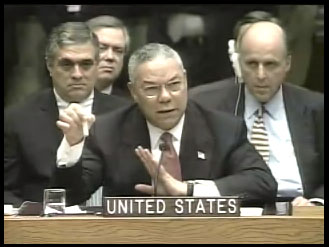
That the George W. Bush administration in the United States, together with Tony Blair's government in Britain, did not merely get the intelligence on Iraq wrong but deliberately fabricated or knowingly exaggerated the case that Iraq possessed weapons of mass destruction, in order to justify an invasion that had already been decided upon for other reasons, and then concealed that the case was manufactured.
The factual core is established: no active WMD stockpiles were ever found, the Iraq Survey Group concluded Iraq's programs had been dismantled after 1991, and three separate official inquiries found that key prewar assessments were overstated or unsupported by the underlying intelligence. What is not established, and is genuinely disputed, is the further claim that officials knowingly and deliberately lied, as opposed to a catastrophic intelligence failure compounded by motivated reasoning. No inquiry that examined the question has found deliberate deception at the top.
Believed by: Polling has long shown large minorities, and at times majorities, believing the public was intentionally misled. Surveys in the years after the invasion repeatedly found that around half or more of Americans, and larger shares in Britain, said the Bush and Blair governments had deliberately exaggerated or lied about the WMD threat rather than simply gotten the intelligence wrong.
The full story
The case, and its collapse
The public argument for war was, for a time, remarkably concrete. It was not a vague claim that Iraq was dangerous; it was a specific inventory. In October 2002 the US intelligence community produced a classified National Intelligence Estimate, Iraq's Continuing Programs for Weapons of Mass Destruction, judging that Iraq possessed chemical and biological weapons and was reconstituting its nuclear program. Four months later, on 5 February 2003, Secretary of State Colin Powell carried the case to the UN Security Council, holding up a vial to illustrate how little anthrax it would take to shut down a city, describing mobile biological weapons laboratories, and citing aluminum tubes he said were meant for enriching uranium.
The invasion followed on 20 March 2003. And then the inventory came up empty. The coalition assembled the Iraq Survey Group, a team of some 1,700 experts, to find the weapons. It could not, because they were not there. Its final report, delivered by special adviser Charles Duelferin September 2004, concluded that Iraq had no WMD stockpiles at the time of the invasion and that its unconventional weapons programs had been essentially dismantled after the 1991 Gulf War and years of sanctions. The single most important factual claim used to justify the war was false, and the government's own investigators are the ones who established it.
That is the settled foundation of this case, and it is unusual. Most conspiracy theories argue about whether the official story is true. Here the official story, as sold in 2002 and 2003, has already been withdrawn by the officials themselves. The live dispute is not about the weapons. It is about the minds of the men who described them.
The case that it was a lie
The argument that this was deliberate, not merely mistaken, does not rest on a single claim. It rests on a pattern, and the pattern is genuinely disquieting.
Start with the specific falsehoods, because they were not vague. The mobile biological-weapons labs Powell described traced largely to an Iraqi defector codenamed Curveball, whom German intelligence had already flagged as unreliable and possibly fabricating; he later publicly admitted he had made the story up. The aluminum tubespresented as evidence of a nuclear program had been assessed by analysts at the Department of Energy and the State Department's own intelligence bureau as far more consistent with conventional artillery rockets. The claim that Iraq sought uranium from Niger, which reached President Bush's 2003 State of the Union address, rested on documents that turned out to be crude forgeries. In each case, the doubt existed inside the government before the public was told the opposite.
Then there is the document that gave the theory its slogan. In 2005 a British record surfaced, dated 23 July 2002, minuting a meeting of Tony Blair's most senior advisers. In it the head of the Secret Intelligence Service, reporting on his talks in Washington, is recorded saying that military action was “now seen as inevitable” and that “the intelligence and facts were being fixed around the policy.” This was not a critic's accusation; it was Britain's own spy chief, in a secret briefing to the Prime Minister, eight months before the war.
“Military action was now seen as inevitable... the intelligence and facts were being fixed around the policy.”
Finally there is the sequence. The evidence that the administration wanted regime change well before it built the WMD case is substantial: officials weighed action against Iraq in the days after the September 2001 attacks, and Deputy Defense Secretary Paul Wolfowitzwas quoted saying that weapons of mass destruction had been settled on as the justification “for bureaucratic reasons,” because it was the one rationale on which everyone inside the government could agree. Put the predetermined war together with the pre-existing dissents that were filtered out and the specific claims that proved false, and the case for deliberate deception writes itself: the conclusion came first, and the evidence was recruited to serve it.
Failure, or fraud?
The uncomfortable answer is that the official account is not exculpatory. It describes a failure so total that it can look, from a distance, exactly like a plot. But intelligence failure and deliberate lying are different claims, and the bodies that investigated hardest found the first and could not establish the second.
Three separate inquiries looked. The Senate Select Committee on Intelligence, reporting unanimously in July 2004, found that most of the major key judgments in the 2002 estimate were “either overstated, or were not supported by, the underlying intelligence reporting.” The Robb-Silberman Commission, appointed by Bush himself, reported in 2005 that the intelligence community had been “dead wrong in almost all of its prewar judgments,” a devastating verdict, but one it explicitly attributed to a failure of analysis rather than to political manipulation, stating it found no evidence that analysts had bent their conclusions under pressure. In Britain, the Chilcot Inquiryconcluded in 2016 that the case had been presented with “a certainty that was not justified,” that Blair had overstated the threat, and that the process had been badly flawed, yet it stopped short of finding that he had lied or acted in bad faith.
The pattern in these findings matters. Each had access to far more than the public, and each landed in the same place: a system that convinced itself, presented its conviction with unwarranted confidence, and was catastrophically wrong. That is a grave charge. It is not the charge of knowingly asserting a falsehood.
The Duelfer Report adds a further complication for the deliberate-lie thesis. It found that Saddam Hussein had deliberately cultivated ambiguity about his weapons, partly to deter Iran, and that this misdirection worked well enough that even members of his own inner circle believed some capability survived. If genuine belief in Iraqi WMD extended into Saddam's own government, the notion that Western leaders uniquely knew the truth and hid it becomes harder to sustain. The most likely reading, on the evidence gathered so far, is motivated reasoning at scale: a leadership that wanted a particular answer, an intelligence system primed to supply it, and dissents that were discounted rather than heard. That is a real and serious indictment. It is distinct from proven, deliberate fabrication, which no inquiry has established against any named official.
Why the lie is the default story
For a large part of the public, the deliberate-deception version is not a fringe theory at all; it is the common-sense reading. Understanding why means seeing what the honest record asks people to hold in their heads instead.
The intelligence-failure account is psychologically unsatisfying in a specific way. It has no villain, only a diffuse machinery of analysts, briefers, and politicians each nudging the answer toward what the moment wanted. It asks you to believe that a war which killed hundreds of thousands flowed not from malice but from overconfidence, groupthink, and a handful of bad sources. A deliberate lie, by contrast, has agency and a shape. It converts an unbearable accident into a comprehensible crime, and in doing so it restores a kind of moral order: someone chose this, and someone can be blamed.
The theory also draws strength from being partly true at every turn. The weapons really were absent. The claims really were false. The dissents really did exist and really were sidelined. A predetermined appetite for war really is documented. Each of these is solid ground, and from solid ground the final step, that the falsity was known and intended, feels less like a leap than a natural completion. When four-fifths of the story is confirmed, the mind tends to grant the fifth.
And Iraq became a template. It taught a generation to treat official cases for war as presumptively dishonest, so that the WMD episode is now invoked as the master example whenever governments claim a threat, often with far less evidence of bad faith than the Iraq record itself actually contains. The belief endures partly because it has become a lens, and a lens is not easily set down.
Two findings, held together
The verdict has to carry two findings that sit uneasily together, and refusing to collapse them into one is the whole discipline of this case.
What is substantiated is damning enough on its own. Iraq had no WMD stockpiles; the government's own Iraq Survey Group established it. The 2002 estimate and Powell's UN presentation contained claims that were false, some of them contradicted by dissenting analysts before the war. The Senate committee found the key judgments unsupported by the evidence; the Robb-Silberman Commission called the intelligence “dead wrong”; Chilcot found the British case advanced with a certainty that was not justified. A war was fought over a threat that did not exist, and it was sold with a confidence the underlying intelligence never earned. None of that is in dispute here.
What is not substantiated is the further and larger claim: that this was a knowing, deliberate fabrication by named officials who privately understood Iraq was disarmed. No inquiry that examined the question has found that. The prevailing findings point to motivated reasoning, groupthink, and a policy fixed in advance of the evidence, which is a severe charge but a different one from the deliberate lie. The interior knowledge that would prove the stronger claim has never been shown, and given the documented breadth of genuine (mistaken) belief in Iraqi weapons, it cannot simply be assumed.
So the rating is disputed, and the word is exact. The case for war was false and was oversold: that is settled. Whether it was a lie, in the full sense of officials asserting what they knew to be untrue, is not settled, and pretending otherwise in either direction, whether to convict or to exonerate, would misrepresent a record that genuinely stops short of the answer so many feel certain they already have.
What's still unexplained
- Did any decision-maker knowingly assert something they believed to be false, or did overconfidence and motivated reasoning lead them to genuinely believe a case that was not there? Every inquiry that examined this, the Senate committee, the Robb-Silberman Commission, and Chilcot, landed on intelligence failure and unwarranted certainty rather than deliberate deception. That is a finding, but it is also an absence: proving the interior knowledge of officials is close to impossible, and the question is not closed to the satisfaction of many who lived through it.
- Why were so many dissents filtered out of the public case? The Energy and State Department doubts about the aluminum tubes, and the warnings about Curveball's reliability, existed in the system before the war but did not reach the public presentations with anything like their original force. Whether this reflects deliberate suppression, bureaucratic groupthink, or the ordinary way institutions converge on a preferred answer under political pressure remains genuinely disputed.
- What did the head of MI6 actually mean by intelligence being “fixed around the policy”? The single most quoted piece of documentary evidence for the deliberate-lie thesis turns on the reading of one word, and the participants and historians who have examined the full record do not agree on whether it describes fabrication or merely the selective marshaling of intelligence toward a decision already taken.
- Would any administration have reached the same wrong conclusion? Saddam Hussein obstructed inspectors and, per the Duelfer Report, cultivated ambiguity about his capabilities to deter enemies, behavior that arguably invited exactly the misreading that occurred. Whether a leadership genuinely trying to get the answer right would still have concluded Iraq had WMD is a counterfactual the record cannot settle, and it bears directly on how much of the failure was honest error and how much was chosen.
Point by point
The claim: No weapons of mass destruction were ever found, which proves the entire case was false.
What the record shows: The first half is fully substantiated; the second is where care is needed. The Iraq Survey Group, the coalition's own 1,700-strong weapons hunt, concluded in the 2004 Duelfer Report that Iraq had no active WMD stockpiles and that its chemical, biological, and nuclear programs had been dismantled after the 1991 Gulf War and sanctions. That the stated threat did not exist is beyond dispute. But a claim being false is not the same as its makers knowing it was false. The Duelfer Report also found that Saddam had preserved the ambiguity around his weapons deliberately, partly to deter Iran, and that even members of his own inner circle believed some capability still existed. A false premise can be arrived at honestly.
The claim: The specific claims made to the public, mobile bioweapons labs, aluminum tubes, uranium from Niger, were things officials already knew to be untrue.
What the record shows: Many of the specific claims were indeed false, and dissents existed before the war. The mobile-lab claim traced largely to Curveball, an Iraqi defector German intelligence had flagged as unreliable; the aluminum tubes were assessed by the Energy Department and State Department's own analysts as more consistent with conventional rockets than centrifuges; the Niger uranium story rested on documents later shown to be forged. These dissents are documented in the NIE's own footnotes and in the Senate report. What the inquiries did not establish is that decision-makers knew the claims were false when they made them. Powell later called his UN presentation a “blot” on his record and said he had been given information that was wrong and, in his words, in some cases deliberately misleading, but he attributed this to being misled by flawed intelligence rather than to his own deception. Whether dissents were suppressed deliberately or discounted through overconfidence is exactly the contested point.
The claim: The Downing Street Memo proves the intelligence was “fixed around the policy,” which is documentary evidence of deliberate fabrication.
What the record shows: The memo is genuine, and its most quoted line is real: the head of Britain's MI6, reporting on Washington in July 2002, is recorded saying “the intelligence and facts were being fixed around the policy.” On its face that is damning. The dispute is over the word “fixed.” Critics read it as fabricated; defenders, including some of the meeting's participants, say it meant the intelligence was being marshaled and organized around an already-chosen policy, that is, selectively emphasized rather than invented. The Chilcot Inquiry, which had access to the full British record, found the case was presented with unwarranted certainty and that judgments were not challenged as they should have been, but it did not conclude that Blair or his officials fabricated intelligence or acted in bad faith. The memo is powerful evidence of a predetermined policy; it is contested evidence of a deliberate lie.
The claim: The war was decided first and the WMD case was reverse-engineered to sell it, which is the mechanism of the lie.
What the record shows: There is real evidence that regime change was the goal well before the WMD case was assembled. Records show the administration weighed action against Iraq soon after the September 2001 attacks, and Deputy Defense Secretary Paul Wolfowitz was quoted saying WMD was settled on as the justification “for bureaucratic reasons” because it was the one rationale everyone could agree on. The Downing Street record likewise says military action was “seen as inevitable.” This supports the view that the war was policy-driven and the intelligence was recruited to serve it, a form of motivated reasoning. But a predetermined desire for war does not by itself prove that officials privately believed Iraq was disarmed and lied about it. The prevailing finding of the ISG, that genuine (if mistaken) belief in Iraqi WMD was widespread even among Iraqis, cuts against the idea that leaders were knowingly asserting something they knew to be false.
Timeline
- 2002-07-23A record of a Downing Street meeting of Blair's senior advisers, later leaked and published in 2005 as the Downing Street Memo, states that in Washington “military action was now seen as inevitable” and that “the intelligence and facts were being fixed around the policy.” The meaning of “fixed” is disputed to this day.
- 2002-10The US intelligence community publishes a classified National Intelligence Estimate, Iraq's Continuing Programs for Weapons of Mass Destruction, judging that Iraq has active chemical and biological weapons and is reconstituting its nuclear program. It contains dissents from the State Department's intelligence bureau and the Department of Energy that are not reflected in the public case.
- 2003-02-05Secretary of State Colin Powell presents the case to the UN Security Council, citing mobile biological weapons labs, aluminum tubes for uranium enrichment, and stockpiles of chemical agent. Several of the central claims rest on sources, including a defector codenamed Curveball, whose reliability had already been questioned inside the intelligence community.
- 2003-03-20The US-led coalition invades Iraq. No active stockpiles of chemical, biological, or nuclear weapons are found then or afterward.
- 2004-07-09The Senate Select Committee on Intelligence releases its Report on the U.S. Intelligence Community's Prewar Intelligence Assessments on Iraq, finding unanimously that most of the major key judgments in the 2002 NIE were “either overstated, or were not supported by, the underlying intelligence reporting.”
- 2004-09-30The Iraq Survey Group's final report, the Comprehensive Report of the Special Advisor to the DCI on Iraq's WMD (the Duelfer Report), concludes that Iraq had no WMD stockpiles at the time of the invasion and that its programs had been essentially dismantled after 1991, while noting Saddam Hussein retained the intent to rebuild them once sanctions lifted.
- 2005-03-31The Robb-Silberman Commission, appointed by President Bush, reports that the intelligence community was “dead wrong in almost all of its prewar judgments” about Iraqi WMD, calling it a major intelligence failure but finding no evidence that analysts altered their judgments under political pressure.
- 2006–2008The Senate committee's Phase II reports compare prewar public statements with what the intelligence actually supported, concluding that many statements were not substantiated, while dividing along party lines over whether officials had deliberately misrepresented the evidence.
- 2016-07-06Britain's Iraq Inquiry, chaired by Sir John Chilcot, finds that the case for war was presented with “a certainty that was not justified,” that peaceful options had not been exhausted, and that Blair overstated the threat, while stopping short of finding that he lied or acted in bad faith.
From the case file
The actual records: declassified, released, or leaked. We link straight to each document in its official archive, so you never have to take our word for it. Read the originals yourself.
Iraq's Continuing Programs for Weapons of Mass Destruction (October 2002 National Intelligence Estimate, declassified key judgments)
The classified estimate at the heart of the prewar case, judging that Iraq had active chemical and biological weapons and was reconstituting a nuclear program. Its own footnotes carry the State and Energy Department dissents that the public presentations largely left out.
Read the document: National Security Archive (GWU) →Comprehensive Report of the Special Advisor to the DCI on Iraq's WMD (the Duelfer Report)
The coalition's own weapons hunt reporting that Iraq had no WMD stockpiles at the time of the invasion and that its programs had been dismantled after 1991, while finding Saddam had deliberately preserved ambiguity about his capabilities to deter Iran.
Read the document: U.S. Government Publishing Office →Report on the U.S. Intelligence Community's Prewar Intelligence Assessments on Iraq (S. Rept. 108-301)
The bipartisan Senate finding that most of the major key judgments in the 2002 estimate were overstated or unsupported by the underlying intelligence, documenting the gap between what was reported and what was actually known.
Read the document: U.S. Congress →Report to the President of the Commission on the Intelligence Capabilities of the United States Regarding Weapons of Mass Destruction (the Robb-Silberman Report)
The Bush-appointed commission's conclusion that the intelligence community was “dead wrong in almost all of its prewar judgments” on Iraq, framed explicitly as an analytic failure while finding no evidence that analysts changed their judgments under political pressure.
Read the document: U.S. Government Publishing Office →The Report of the Iraq Inquiry (the Chilcot Report)
Britain's exhaustive public inquiry, finding the case for war was presented with a certainty that was not justified and that peaceful options had not been exhausted, while stopping short of concluding that Tony Blair lied or acted in bad faith.
Read the document: UK National Archives (web archive) →Other case files that cite the same sources
The factual core is established: no active WMD stockpiles were ever found, the Iraq Survey Group concluded Iraq's programs had been dismantled after 1991, and three separate official inquiries found that key prewar assessments were overstated or unsupported by the underlying intelligence. What is not established, and is genuinely disputed, is the further claim that officials knowingly and deliberately lied, as opposed to a catastrophic intelligence failure compounded by motivated reasoning. No inquiry that examined the question has found deliberate deception at the top.
Reviewed by Colin Peterson · Last reviewed July 12, 2026 · How we rate
Common questions
Is Iraq WMD true?
The factual core is established: no active WMD stockpiles were ever found, the Iraq Survey Group concluded Iraq's programs had been dismantled after 1991, and three separate official inquiries found that key prewar assessments were overstated or unsupported by the underlying intelligence. What is not established, and is genuinely disputed, is the further claim that officials knowingly and deliberately lied, as opposed to a catastrophic intelligence failure compounded by motivated reasoning. No inquiry that examined the question has found deliberate deception at the top.
What is Iraq WMD?
In the run-up to the March 2003 invasion, the United States and Britain told the world that Iraq possessed chemical and biological weapons and was reconstituting a nuclear program. No such stockpiles existed. The government's own Iraq Survey Group concluded that Iraq's unconventional weapons had been destroyed years earlier, and official…
What does the evidence show?
The first half is fully substantiated; the second is where care is needed. The Iraq Survey Group, the coalition's own 1,700-strong weapons hunt, concluded in the 2004 Duelfer Report that Iraq had no active WMD stockpiles and that its chemical, biological, and nuclear programs had been dismantled after the 1991 Gulf War and sanctions. Tha…
Why do people believe it?
The founding premise is simply true, which is rare for a conspiracy theory. The weapons did not exist, and the government's own weapons hunt said so. When a nation is taken to war over a threat that turns out to be fictional, “they lied” is the most economical explanation the mind reaches for, and it does not require inventing any facts.
What is still unresolved?
Did any decision-maker knowingly assert something they believed to be false, or did overconfidence and motivated reasoning lead them to genuinely believe a case that was not there? Every inquiry that examined this, the Senate committee, the Robb-Silberman Commission, and Chilcot, landed on intelligence failure and unwarranted certainty r…
Sources
- 1.Comprehensive Report of the Special Advisor to the DCI on Iraq's WMD, with Addendums (the Duelfer Report), Iraq Survey Group / U.S. Government Publishing Office (govinfo) (2004)
- 2.Report on the U.S. Intelligence Community's Prewar Intelligence Assessments on Iraq (S. Rept. 108-301), U.S. Senate Select Committee on Intelligence (2004)
- 3.Report to the President: The Commission on the Intelligence Capabilities of the United States Regarding Weapons of Mass Destruction (the Robb-Silberman Report), U.S. Government Publishing Office (govinfo) (2005)
- 4.The Report of the Iraq Inquiry (the Chilcot Report), The Iraq Inquiry (UK), archived by The National Archives (2016)
- 5.Iraq's Continuing Programs for Weapons of Mass Destruction (declassified key judgments of the October 2002 National Intelligence Estimate), U.S. National Intelligence Council, via the National Security Archive, George Washington University (2002)
- 6.Remarks to the United Nations Security Council, February 5, 2003, Colin L. Powell, U.S. Department of State (2001–2009 archive) (2003)
- 7.Senate Intelligence Committee Unveils Final Phase II Reports on Prewar Iraq Intelligence, U.S. Senate Select Committee on Intelligence (2008)
- 8.U.S. Intelligence on WMDs in Iraq, FactCheck.org, Annenberg Public Policy Center (2008)
Embed this case file on your site
Paste this snippet to show this case file as a small card, with a link back to the full write-up. Free to use.
<iframe src="https://theconspiratory.com/embed/iraq-wmd" title="The Conspiratory verdict" width="520" height="190" style="border:0;max-width:100%" loading="lazy"></iframe>Help us investigate
This is a living case file. If you spot an error or know evidence we missed, tell us, and weigh in on where you land.
Where do you land?
Cast your read on this one.
Comments
Add your take. Comments are read and approved by a human before they appear, so keep it on topic and civil. Please do not accuse named, living people of crimes.