The wrong men were convicted of assassinating Malcolm X, and the FBI and NYPD buried evidence of it
By Colin PetersonJuly 12, 2026
Where the evidence lands →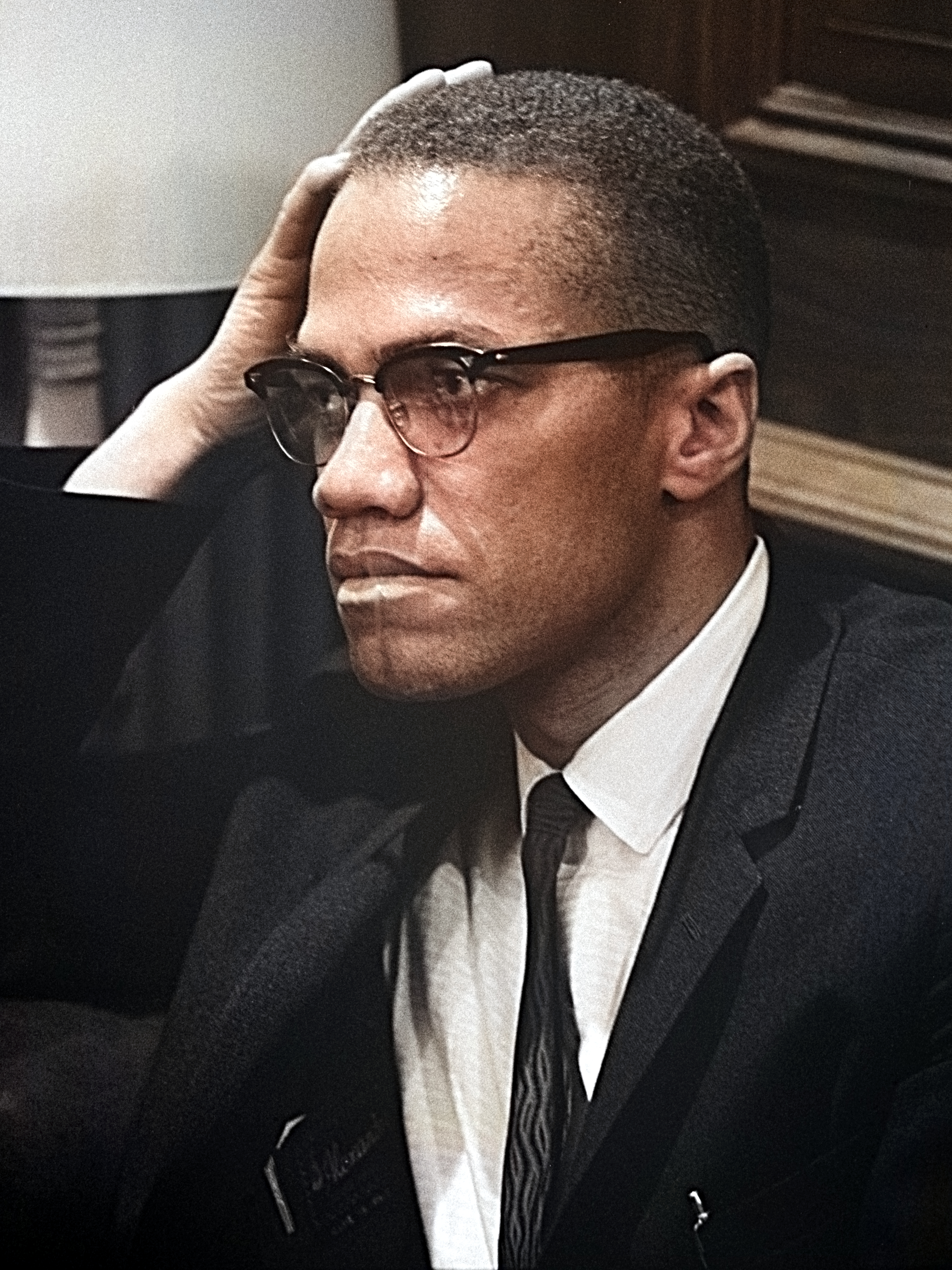
That two of the three men convicted of assassinating Malcolm X, Muhammad Aziz and Khalil Islam, were innocent and were framed while the real accomplices went free, and that the FBI and the New York Police Department, which had Malcolm X under close surveillance and had informants in the room, possessed evidence of that innocence and possibly foreknowledge of the plot, and withheld it.
Two of the three men convicted, Muhammad Aziz and Khalil Islam, were formally exonerated in 2021 after a joint Manhattan DA and Innocence Project reinvestigation found that the FBI and NYPD had withheld exculpatory evidence; New York later paid a $36 million settlement. That the case was corrupted is now established. The wider claim, that the agencies had foreknowledge of or a hand in the killing itself, is documented only in part and remains unresolved.
The full story
The killing, and the men who went to prison for it
On the afternoon of 21 February 1965, Malcolm X rose to speak at the Audubon Ballroom in the Washington Heights neighborhood of Upper Manhattan, before a few hundred people gathered for a rally of his newly formed Organization of Afro-American Unity. Moments after he greeted the crowd, a disturbance broke out near the front, and in the confusion gunmen opened fire. Malcolm X was struck many times and died within the hour. He was 39. A week earlier his home in Queens had been firebombed, and he had spoken openly of expecting to be killed.
One man, Talmadge Hayer (who later took the name Mujahid Abdul Halim), was shot in the leg and seized by the crowd at the scene. Two others were arrested in the following weeks: Norman 3X Butler, later Muhammad Aziz, and Thomas 15X Johnson, later Khalil Islam. All three were members of the Nation of Islam, the movement Malcolm X had risen to prominence within and then broken with, acrimoniously and publicly, the year before. In March 1966 a jury convicted all three of first-degree murder, and each was sentenced to life.
The trouble with the verdict was visible from the first. Hayer admitted his own guilt but testified, under oath, that Butler and Johnson had nothing to do with the killing and were not even there. The jury convicted them anyway. Butler and Johnson insisted they were innocent, and both had accounts of being elsewhere; Butler, a known Nation of Islam enforcer whose face Malcolm X's people would have recognized instantly, was an improbable choice to send into that particular room. For their supporters, the case never stopped looking wrong.
The case that the wrong men were framed
The argument that this was a wrongful conviction did not depend on speculation, and in the end it was proven. But long before it was proven, the pieces were there for anyone willing to look. Start with Hayer. He was the one assailant caught in the act, and he never wavered from a single account: he had done it, Butler and Johnson had not, and he would not name the men who had. Then, in 1977 and 1978, he went further, swearing detailed affidavits that named four other men, all from a Nation of Islam mosque in New Jersey, as his actual accomplices, and describing how the killing was organized. The courts declined to reopen the case.
Around that testimony sat a set of uncomfortable facts about who had been watching. Malcolm X was one of the most heavily surveilled Black leaders in America. The FBI had tracked him for years, and the same Bureau ran the covert campaign against Black political movements documented in its COINTELPRO program. An undercover NYPD officer from the department's Bureau of Special Services was embedded in Malcolm X's own security detail and was among those who tried to revive him as he lay dying. Informants were close on every side. It strained belief that the authorities had learned nothing useful about a threat to a man they watched so closely.
The one gunman caught at the scene confessed, cleared the two men beside him in the dock, and named other accomplices; the state convicted those two men anyway, and kept the papers that backed him up for fifty-five years.
And there was the setting itself. A week after a firebombing, at a rally where Malcolm X had voiced fear for his life, the visible police presence at the ballroom was strikingly thin. Whatever the reasons, the picture that formed over the decades, of a compromised investigation, buried leads, and real killers left untouched while two innocent men served twenty years, was not paranoia. In 2021 it was substantially confirmed.
What 2021 settled, and what it left open
The exoneration is real and it is important, and precisely because it is so strong, it is worth spelling out what it did and did not establish. In January 2020 Manhattan District Attorney Cyrus Vance Jr., working with the Innocence Project and the Shanies Law Office, opened a formal reinvestigation. Twenty-two months later, on 18 November 2021, the convictions of Aziz and Islam were vacated. Vance apologized. Islam had died in 2009 and did not live to see it; Aziz was 83.
What the reinvestigation found is specific. The FBI and the NYPD had held evidence that pointed away from the two men and never disclosed it: FBI reports describing the assailants in terms that did not fit Aziz or Islam, indications that undercover officers and informants had been present in or near the ballroom, an instance of the FBI instructing a source to conceal that he was an informant, and a witness account NYPD never turned over. Under the constitutional rule requiring disclosure of favorable evidence, this was suppression, and the DA's own motion concluded the men could not have had a fair trial. The $36 million settlement in 2022 followed from that finding.
That is a proven wrongful conviction resting on withheld government evidence. It is not, however, the same as proof that the FBI or NYPD planned the assassination, ordered it, or knowingly stood aside to let it happen. Those are the claims the fuller conspiracy makes, and the 2021 findings do not reach them. Suppressing evidence after a killing, whether to protect informants, to avoid embarrassment, or out of indifference to two Black defendants, is a serious wrong that does not require foreknowledge of the murder to explain it.
The question of who actually pulled the triggers alongside Hayer is likewise unresolved. He named four men; journalists and, later, the DA examined candidates; one man long identified by researchers as the shotgunner died in 2018 without ever being charged. But no one beyond the original three defendants has ever been prosecuted, and the 2021 reinvestigation brought no new charges. Muhammad Aziz has since sued the federal government, alleging the FBI concealed its role in the case; those allegations are contested and unproven. The honest boundary runs here: the frame-up and the cover-up are documented, the orchestration is not.
Why the larger conspiracy took hold
Most conspiracy theories have to fight the official record. This one, in its central claim, was eventually endorsed by it, and that changes the psychology entirely. For fifty-five years, people who said the wrong men were convicted were told they were reading too much into a closed case. Then the state conceded they had been right all along. When doubt is vindicated that dramatically, every remaining doubt gains credibility, whether or not it deserves the same confidence.
The surveillance context does the rest of the work. It is simply true that the FBI watched Malcolm X for years, that it ran a documented campaign to disrupt Black political movements, and that an undercover officer sat inside his security. Against that backdrop, the leap from “they hid evidence afterward” to “they wanted him dead” feels short, even though it crosses from what is proven to what is not. The agencies' own history of hostility toward Malcolm X supplies a motive the theory can always point to.
There is also the pull of a clean ending. The documented story is diffuse: a Nation of Islam feud that turned murderous, a sloppy and biased investigation, decades of official inertia, evidence lost in files. A single directing hand, a state that arranged the killing and framed the innocent to hide it, is easier to hold and more satisfying to condemn than a diffuse failure with many authors. Malcolm X's stature as a martyr sharpens the wish for an answer equal to the loss, and a bureaucratic account of negligence and suppression can feel too small to carry it.
The wrong men, and the limit
The disciplined verdict holds two findings at once. The first is now beyond serious dispute: two of the three men convicted of assassinating Malcolm X were innocent, and they were convicted because the FBI and the NYPD withheld evidence that would have helped clear them. A court vacated the convictions, a district attorney apologized, and New York paid $36 million. On the specific charge that the case was corrupt and that the wrong men went to prison, the theory was correct.
The second finding is a limit. The proven wrong is the suppression of exculpatory evidence and the wrongful conviction that followed, not a demonstrated plot by the agencies to carry out or permit the killing. Foreknowledge, complicity, and orchestration remain, on the public record, questions rather than conclusions. Hayer's named accomplices were never charged; the extent of what the informants and undercover officers knew before that afternoon has never been fully disclosed; Aziz's claim that the FBI concealed a role of its own is still being litigated.
That is why this case is rated disputed rather than substantiated or unproven. Its documented core is strong enough that the label “conspiracy theory” no longer fits the wrongful-conviction claim at all; the state has conceded it. But the larger story the doubters tell, of agencies that did more than bury paperwork, outstrips what the evidence has so far shown. Both things are true together, and keeping them apart is the whole of a fair reading.
What's still unexplained
- How much did the FBI and NYPD know in advance? Both agencies had informants close to Malcolm X and inside the Nation of Islam, and an undercover officer was on his security detail. Whether that network produced advance warning of the specific plot, and what was done with any such warning, has never been fully answered from the record.
- Who were the real assassins, and why were they never prosecuted? Hayer named four other men from a New Jersey mosque. Investigators and journalists have identified candidates over the years, but no one beyond the three original defendants was ever charged, and the 2021 reinvestigation did not bring new charges.
- Why was security at the Audubon Ballroom so light that day? Malcolm X had just survived a firebombing and had asked that police not be conspicuous, but the thinness of the protection at a rally under known threat remains debated, and the internal decisions behind it are not fully public.
- How much more remains in undisclosed files? The exoneration turned on documents that surfaced only after 55 years. What else the FBI and NYPD hold on the assassination, and whether it would change the picture of who was responsible, is unknown, and Aziz's federal litigation continues to seek it.
Point by point
The claim: Two of the three convicted men were innocent, and the state now admits it.
What the record shows: This is established. In November 2021 a New York court vacated the convictions of Muhammad Aziz and Khalil Islam after a 22-month reinvestigation by the Manhattan District Attorney and the Innocence Project. The prosecution's own motion to vacate concluded there had been a failure to disclose exculpatory evidence and that neither man could have received a fair trial. In 2022 New York City and State agreed to a $36 million settlement. No physical evidence had ever tied either man to the killing.
The claim: The FBI and NYPD were holding evidence that pointed away from the two men, and kept it from the defense.
What the record shows: Documented. The reinvestigation found FBI records that described the assailants in ways inconsistent with Aziz and Islam, reports that undercover officers and informants were present in or around the Audubon Ballroom, and an instance in which the FBI directed a source not to reveal his informant status. NYPD had a witness account it did not turn over. Under the Supreme Court's Brady rule, evidence favorable to the accused must be disclosed; the DA's office found that it was not. Malcolm X had long been a surveillance target of the same FBI that ran the covert COINTELPRO campaign against Black political movements, which is part of why the withholding drew such suspicion.
The claim: The man caught at the scene named the real accomplices, and they were never charged.
What the record shows: Confirmed as to the naming, unresolved as to the truth of it. Talmadge Hayer, the only assailant seized that night, confessed and from 1977 swore affidavits identifying four other men from a New Jersey Nation of Islam mosque as his co-conspirators, while insisting Aziz and Islam were not involved. Some of those men were investigated by journalists and, decades later, by the DA; one long identified as the shotgun-wielder died in 2018 without ever being charged. Whether Hayer's account is complete has never been tested in court.
The claim: The withheld evidence proves the agencies helped orchestrate the murder.
What the record shows: This is the leap the record does not yet support. What the 2021 findings establish is suppression of exculpatory evidence and a compromised prosecution, a grave failure in its own right. They do not establish that the FBI or NYPD planned the assassination, ordered it, or deliberately let it happen. Aziz's later federal suit alleges the FBI concealed its role; those allegations are contested and unproven. Foreknowledge, negligence and active complicity are different claims, and only the withholding of evidence has been formally proven.
Timeline
- 1965-02-21Malcolm X is shot dead while addressing an Organization of Afro-American Unity rally at the Audubon Ballroom in the Washington Heights section of Manhattan. One man, Talmadge Hayer (later Mujahid Abdul Halim), is seized at the scene by the crowd; the killing follows the firebombing of Malcolm X's home a week earlier.
- 1966-03Three men are convicted of first-degree murder: Hayer, Norman 3X Butler (later Muhammad Aziz) and Thomas 15X Johnson (later Khalil Islam). All three are members of the Nation of Islam, the group Malcolm X had bitterly broken with the year before.
- 1966At trial Hayer confesses his own guilt but testifies that Butler and Johnson had nothing to do with it and were not present. The jury convicts all three anyway. Butler and Johnson maintain their innocence and offer alibis.
- 1977–1978Hayer swears detailed affidavits stating again that Butler and Johnson are innocent and naming four other men, all from a Nation of Islam mosque in New Jersey, as his actual accomplices. Courts decline to reopen the case.
- 1985–1987Butler (Aziz) is paroled in 1985 and Johnson (Islam) in 1987, each after roughly two decades in prison. Both continue to insist they were framed; historians and activists keep pressing the point for another generation.
- 2020-01Manhattan District Attorney Cyrus Vance Jr., with the Innocence Project and the Shanies Law Office, opens a formal joint reinvestigation, spurred in part by renewed scrutiny of the case in a 2020 documentary.
- 2021-11-18A New York judge vacates the convictions of Aziz and Islam. The reinvestigation concludes that the FBI and NYPD had withheld documents pointing to the men's innocence, and Vance apologizes on behalf of law enforcement. Islam had died in 2009; Aziz is exonerated at 83.
- 2022-10-30New York City and State agree to pay a combined $36 million (about $26 million from the city, $10 million from the state) to Aziz and to Islam's estate to settle their wrongful-conviction claims.
From the case file
The actual records: declassified, released, or leaked. We link straight to each document in its official archive, so you never have to take our word for it. Read the originals yourself.
Motion to Vacate the Convictions of Muhammad Aziz and Khalil Islam
The prosecution's own court filing joining the Innocence Project to vacate the convictions. It concludes that exculpatory evidence held by the FBI and NYPD was never disclosed and that Aziz and Islam could not have received a fair trial.
Read the document: Manhattan District Attorney →Malcolm Little (Malcolm X) FBI file collection
The FBI's own surveillance files on Malcolm X, spanning years of monitoring by the Bureau that also ran COINTELPRO. The reinvestigation drew on Bureau records like these to show the agency held descriptions and informant material never given to the defense.
Read the document: FBI Vault →Historic Exonerations of Muhammad A. Aziz and Khalil Islam
The Innocence Project's account of the joint reinvestigation, detailing the FBI and NYPD documents withheld from the defense and the finding that no physical evidence ever tied either man to the murder.
Read the document: Innocence Project →Men Exonerated in Malcolm X Killing to Receive $36 Million
Contemporaneous reporting on the settlement in which New York City and State agreed to pay a combined $36 million to Aziz and to Islam's estate, the financial acknowledgment that the two convictions were wrongful.
Read the document: NPR →Other case files that cite the same sources
Two of the three men convicted, Muhammad Aziz and Khalil Islam, were formally exonerated in 2021 after a joint Manhattan DA and Innocence Project reinvestigation found that the FBI and NYPD had withheld exculpatory evidence; New York later paid a $36 million settlement. That the case was corrupted is now established. The wider claim, that the agencies had foreknowledge of or a hand in the killing itself, is documented only in part and remains unresolved.
Reviewed by Colin Peterson · Last reviewed July 12, 2026 · How we rate
Common questions
Is Malcolm X assassination true?
Two of the three men convicted, Muhammad Aziz and Khalil Islam, were formally exonerated in 2021 after a joint Manhattan DA and Innocence Project reinvestigation found that the FBI and NYPD had withheld exculpatory evidence; New York later paid a $36 million settlement. That the case was corrupted is now established. The wider claim, that the agencies had foreknowledge of or a hand in the killing itself, is documented only in part and remains unresolved.
What is Malcolm X assassination?
Malcolm X was shot dead at the Audubon Ballroom in Harlem on 21 February 1965. Three men were convicted, but one confessed and always swore the other two were innocent, and for decades their supporters said the case was rotten. In 2021 the state agreed: after a 22-month reinvestigation, Muhammad Aziz and the late Khalil Islam were exoner…
What does the evidence show?
This is established. In November 2021 a New York court vacated the convictions of Muhammad Aziz and Khalil Islam after a 22-month reinvestigation by the Manhattan District Attorney and the Innocence Project. The prosecution's own motion to vacate concluded there had been a failure to disclose exculpatory evidence and that neither man cou…
Why do people believe it?
The core of the theory turned out to be true. The state itself conceded that two innocent men were convicted and that law enforcement hid the evidence, which is a rare and powerful vindication of doubters who were dismissed for decades.
What is still unresolved?
How much did the FBI and NYPD know in advance? Both agencies had informants close to Malcolm X and inside the Nation of Islam, and an undercover officer was on his security detail. Whether that network produced advance warning of the specific plot, and what was done with any such warning, has never been fully answered from the record.
Sources
- 1.Affirmation and Legal Analysis in Support of Motion to Vacate Convictions (People v. Aziz and Islam), Manhattan District Attorney's Office (2021)
- 2.Historic and Long Overdue Exonerations of Muhammad A. Aziz and Khalil Islam for the 1965 Assassination of Malcolm X, Innocence Project (2021)
- 3.Convictions of Muhammad Aziz and Khalil Islam are dismissed in Malcolm X murder, NPR (2021)
- 4.Muhammad Aziz and Khalil Islam to be exonerated in killing of Malcolm X, The Washington Post (2021)
- 5.The men exonerated in the Malcolm X killing will receive $36 million, NPR (2022)
- 6.Men wrongly convicted of killing Malcolm X to get $36 million settlement, The Washington Post (2022)
- 7.Man exonerated in the killing of Malcolm X accuses FBI of hiding proof of his innocence in lawsuit against US government, CNN (2023)
- 8.FBI Records: The Vault, Malcolm Little (Malcolm X), Federal Bureau of Investigation
Embed this case file on your site
Paste this snippet to show this case file as a small card, with a link back to the full write-up. Free to use.
<iframe src="https://theconspiratory.com/embed/malcolm-x-assassination" title="The Conspiratory verdict" width="520" height="190" style="border:0;max-width:100%" loading="lazy"></iframe>Help us investigate
This is a living case file. If you spot an error or know evidence we missed, tell us, and weigh in on where you land.
Where do you land?
Cast your read on this one.
Comments
Add your take. Comments are read and approved by a human before they appear, so keep it on topic and civil. Please do not accuse named, living people of crimes.