Malaysia Airlines Flight 370 was diverted, landed or shot down, and its true fate is being covered up
By Colin PetersonJuly 12, 2026
Where the evidence lands →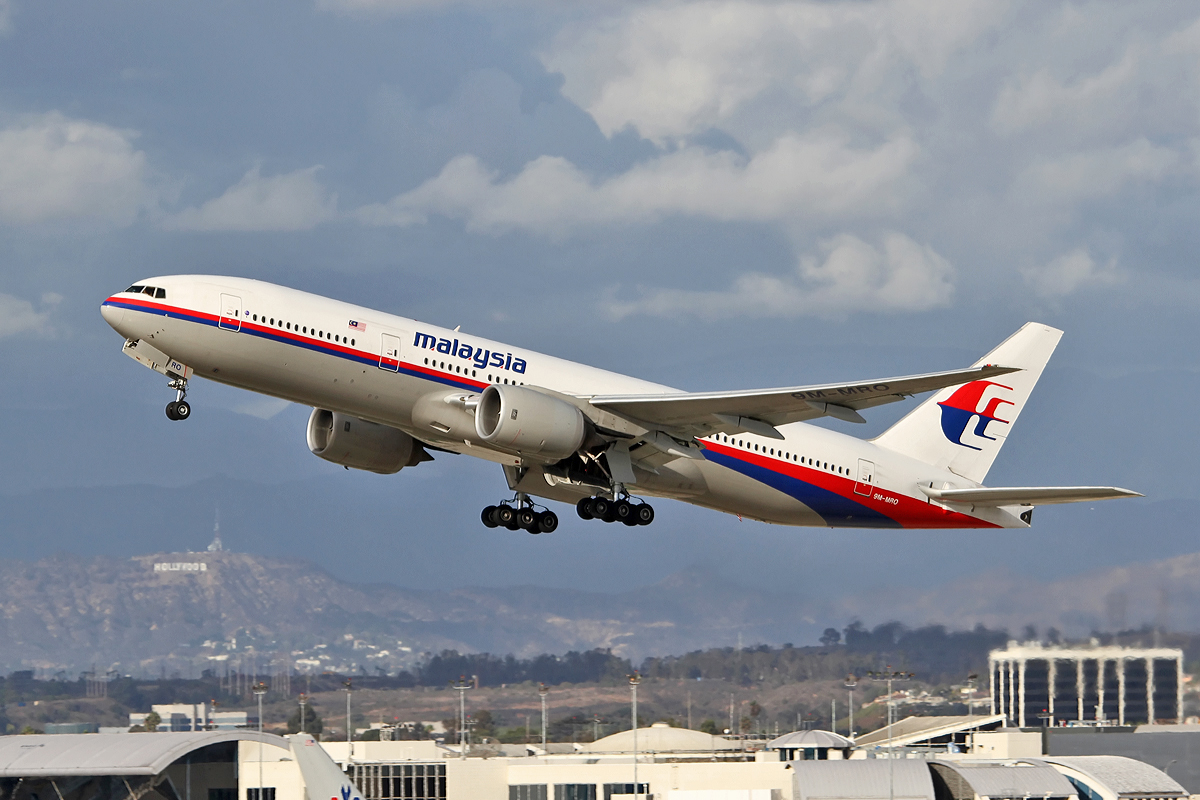
That MH370 did not simply crash and sink by accident, but was deliberately diverted and either landed intact at a secret location such as the US military base on Diego Garcia, hijacked for some undisclosed purpose, or shot down, and that one or more governments know what actually happened to the aircraft and its 239 occupants and are concealing it.
The disappearance is real and still unexplained, and that vacuum is where the theories live. But the documented best evidence, the Inmarsat satellite handshakes and the debris recovered along the western Indian Ocean, points to an uncontrolled crash in the remote southern Indian Ocean. The specific conspiracy claims, that the plane was landed intact at Diego Garcia or that governments know exactly what happened and are hiding it, are unproven, and the intact-landing versions are positively contradicted by the physical evidence.
Believed by: Belief that the full truth is being withheld is widespread, especially among victims' families, and Diego Garcia and hijack scenarios have circulated globally since the first week. The finding rated here is not the fact of the disappearance, which is undisputed, but the cover-up and intact-diversion claims, which remain unsupported.
The full story
The night a wide-body simply disappeared
Malaysia Airlines Flight 370 pushed back from the gate at Kuala Lumpur International Airport just after midnight on 8 March 2014, bound for Beijing with 239 people aboard: 227 passengers and 12 crew, on a Boeing 777-200ER registered 9M-MRO. It was a routine red-eye on a reliable aircraft. Forty minutes into the flight, over the South China Sea, the last words came from the cockpit at 01:19: “Good night, Malaysian three seven zero.”
About two minutes later, as the flight reached waypoint IGARI at the boundary where Malaysian controllers hand traffic to Vietnam, the transponder stopped responding and the aircraft dropped off secondary radar. In the gap between two countries' airspace, at the exact seam where a plane is least closely watched, MH370 became invisible to civilian air traffic control.
It did not, however, stop flying. Malaysian military primary radar later revealed an unidentified track turning sharply back to the west, recrossing the Malay Peninsula and heading up the Strait of Malacca before fading near the Andaman Sea at about 02:22. And a communications satellite over the Indian Ocean kept exchanging brief automated “handshakes” with the aircraft's satellite terminal until 08:19, hours after every other trace was gone. Those faint electronic pings, never designed to locate anything, became the only record of where the plane went, and the foundation of everything argued since.
Why so many are sure the truth is being hidden
The suspicion does not come from nowhere, and it is worth stating at its strongest. Start with the sheer improbability. In an age when phones are tracked to the metre and airliners bristle with transponders and datalinks, a 250-tonne jet flew for hours and then vanished so completely that, years on, no one can point to the wreck. That alone makes an ordinary accident feel like an insult to common sense.
Then there are the anomalies, and these are real. The communications went dark at the precise handover between Malaysian and Vietnamese control, the moment of least scrutiny. The aircraft did not continue on course or ditch nearby; it wheeled around and flew for hours in the wrong direction. No distress call was ever made. The 2018 safety report itself judged that the turn-back was most likely flown by hand and declined to rule out unlawful interference by a third party. When the official investigators concede that much, ordinary people can hardly be blamed for suspecting more.
A modern airliner flew for hours after going dark and then disappeared so cleanly that, more than a decade later, no one can point to the wreck.
The authorities did not inspire confidence, either. Malaysia's early public account was confused and shifting: timelines changed, the military radar track was not disclosed at first, and families were left with contradictions. And there is Diego Garcia, a closed US naval base far out in the Indian Ocean, exactly the kind of secretive facility that a “the plane was taken somewhere” story reaches for. Put the impossibility, the anomalies, the fumbling officialdom and the convenient secret base together, and the belief that someone knows more than they are saying becomes easy to understand.
What the satellite data and the debris actually say
The trouble for the dramatic versions is that the physical evidence, while it has not produced a wreck, is not silent. It points, consistently, in one direction, and it points away from an intact landing.
The satellite handshakes carry two kinds of information. The timing of each ping fixes how far the aircraft was from the satellite, tracing a series of arcs across the globe; the final one, at 08:19, is the famous “seventh arc.” The frequency of the signal carries a Doppler signature that depends on how the aircraft was moving, and that signature let Inmarsat and the investigators distinguish a northern track from a southern one. The answer was south: into the empty southern Indian Ocean, not north toward central Asia or the central Indian Ocean where Diego Garcia sits. The northern corridor was ruled out. That single result dismantles the most popular map of a hijacked plane spirited to a hidden runway.
Then the ocean returned its own evidence. In July 2015 a wing flaperon washed ashore on Réunion Island, and French investigators matched internal part and serial numbers, traced through the component's maker, to 9M-MRO, the missing airframe. Over the following year more than twenty pieces surfaced in Mozambique, South Africa, Mauritius, Madagascar and Tanzania, their locations and timing consistent with independent ocean-drift models tracing back to the southern search zone. Debris that separates from an airframe and floats for a year across an ocean is the signature of a crash, not of a jet parked intact on a tarmac.
The frequency data pointed south, into empty ocean, and the debris drifted west exactly as a southern crash would send it: two independent lines of evidence, one conclusion.
The Diego Garcia claim in particular collides with all of this. The satellite data sends the aircraft the wrong way, the debris field sits far from the base, and US officials flatly rejected the scenario at the time. As for the search proving a cover-up: Australia's transport safety bureau openly documented a sweep of roughly 120,000 square kilometres of some of the deepest seabed on the planet, published its final report and its drift modelling, and Ocean Infinity extended the hunt in 2018 and again from 2025. That is a decade of public, expensive, transparent searching. It is precisely not what concealment looks like.
Why the mystery keeps generating theories
Uncertainty is the engine here. Most conspiracy theories have to argue against a settled official account; this one grows in a space where there genuinely is no full answer. The wreck has not been positively located, the cause has not been established, and the people best placed to know have said, honestly, that they do not. A vacuum that large pulls in explanations the way a low-pressure system pulls in weather.
The disappearance also offends a deep modern assumption: that everything is tracked. When a jetliner slips that net, the mind resists “it crashed and we cannot find it” and reaches for agency instead, for someone who did this and knows where it is. A hijack, a shoot-down, a secret landing: each converts an unbearable blankness into a story with a villain and, crucially, a body of hidden knowledge that could in principle be recovered. That is more consoling than deep water and silence.
Grief sharpens all of it. For families who never got wreckage, remains or a cause, the official “most likely” can feel like abandonment, and the suspicion that someone is withholding the truth is, in part, a refusal to accept a loss without explanation. Add a real secret base, a real turn-back that no one can explain, and an early officialdom that really did muddle its story, and the theories have just enough genuine material to keep rebuilding themselves.
A crash, not a cover-up
The verdict here has to hold two things apart. The disappearance is real, and important parts of it are genuinely unexplained: the deliberate-looking turn-back, the silenced communications, the missing wreck. Those anomalies are documented, and this file does not wave them away. What is not established is the further claim rated here, that the plane was landed or hidden intact, or that some government possesses the full answer and is concealing it.
On the current record, the best physical evidence describes an uncontrolled flight into the remote southern Indian Ocean ending in a crash: the satellite handshakes place the aircraft on a southern arc and rule out the northern route, and confirmed debris drifting onto western Indian Ocean shores matches that crash and that geography. Where a specific theory requires an intact aircraft, above all the Diego Garcia diversion, the evidence does not merely fail to support it; it points the other way, and officials rejected it outright.
So the label is unproven, and deliberately so. No living person has been shown to have hijacked, shot down or hidden this aircraft, and the investigators themselves named no culprit and reached no motive. Real questions remain open: who moved the plane and why, exactly where it lies, why it went silent. Those are reasons to keep searching, which is exactly what is still happening. They are not evidence of a cover-up, and they do not turn a catastrophic, still-mysterious accident into a proven plot.
What's still unexplained
- Who changed the aircraft's course, and why? The 2018 report concluded the turn-back was probably manual and would not rule out third-party interference, but it identified no person and reached no motive. Leading hypotheses, including deliberate action by someone in the cockpit and a hijack or onboard emergency, remain unproven, and this file does not assert any of them as fact.
- Where, precisely, did the aircraft come down? The seventh handshake defines an arc, not a point, and even after drift modelling narrowed the priority zone, the searched seabed has not yielded a confirmed wreck, so the exact impact location is still unknown.
- Why was there no distress call and no further use of the aircraft's communication systems after the turn-back? Whether the silence reflects a deliberate act, incapacitation of those aboard, or a cascading failure has never been settled.
- The captain's personal flight simulator was found to contain a route into the far southern Indian Ocean, which some read as chilling and others as one of thousands of practice routes with no established link to the flight. Its significance is genuinely disputed and has not been resolved.
Point by point
The claim: The plane could have flown north and been landed intact somewhere hidden, like the US base at Diego Garcia, rather than crashing.
What the record shows: This is the claim the physical evidence most directly contradicts. The automated satellite handshakes recorded until 08:19 carry two measurements: a timing offset that fixes the aircraft's distance from the satellite (the 'arcs'), and a frequency offset whose Doppler signature distinguishes a northbound from a southbound track. That frequency analysis pointed south, away from Diego Garcia and central Asia, and the northern corridor was ruled out. Debris then washed up thousands of kilometres away on the western Indian Ocean rim, exactly where drift models say wreckage from a southern crash would go, not near a base in the central Indian Ocean. The Diego Garcia diversion was explicitly rejected by US officials, and an intact landing is hard to square with a flaperon and other pieces that separated from the airframe and floated. A plane that lands safely does not shed debris across an ocean.
The claim: The transponder and communications going dark, and the deliberate turn-back, prove a sophisticated act that authorities are covering up.
What the record shows: Part of this is documented, and it is genuinely strange. The transponder and the ACARS reporting did stop, and the 2018 safety report judged the turn-back was probably flown by hand rather than caused by a failure, and could not exclude unlawful interference by a third party. But 'a deliberate act happened aboard the aircraft' is a different claim from 'a government knows the whole truth and is hiding it.' Investigators were unusually candid that they could not establish who altered the flight path or why, and named no perpetrator. A deliberate diversion by someone on the plane and an official cover-up are not the same thing, and only the first has support.
The claim: Years of searching turned up nothing, which shows the authorities are not really looking or are concealing the crash site.
What the record shows: The search is one of the most extensive and openly documented in history, which is the opposite of concealment. Australia's transport safety bureau led an underwater hunt across about 120,000 square kilometres of some of the deepest, least-charted seabed on Earth, published its methods and its final report, and commissioned independent drift and oceanographic modelling. Ocean Infinity then searched further in 2018 and again from 2025. Not finding a wreck in that terrain reflects the imprecision of a single satellite arc drawn across an abyssal ocean, not a hidden site. Absence of a located wreck is a measure of how hard the ocean is, not evidence of a plot.
The claim: The recovered debris was planted or is inconsistent, so it cannot be trusted as proof of a crash.
What the record shows: The debris is among the strongest physical anchors in the whole case. The Réunion flaperon was tied to the specific missing airframe, 9M-MRO, by internal part and serial numbers traced through the component's manufacturer, not by appearance alone. Subsequent pieces recovered around the Indian Ocean rim were consistent in type, marine growth and drift timing with an origin in the southern search zone in March 2014. To be planted, the material would have had to be genuine parts of that exact aircraft, distributed across multiple countries over more than a year in patterns matching independent ocean-drift models, a far more elaborate proposition than a crash.
Timeline
- 2014-03-08MH370 departs Kuala Lumpur at 00:42 local time for Beijing. At 01:19 the cockpit signs off to Malaysian controllers with 'Good night, Malaysian three seven zero'; about two minutes later, near waypoint IGARI over the South China Sea at the handoff to Vietnamese airspace, the transponder stops and the aircraft vanishes from secondary radar.
- 2014-03-08Malaysian military primary radar tracks an unidentified aircraft turning back westward, crossing the Malay Peninsula and continuing up the Strait of Malacca before radar contact is lost at about 02:22 over the Andaman Sea.
- 2014-03-08A satellite over the Indian Ocean continues to record automated hourly 'handshakes' with the aircraft's satellite terminal until 08:19, hours after all other contact was lost, placing the plane somewhere along a vast arc when it likely ran out of fuel.
- 2014-03-24Analysing the handshake timing and frequency data, the UK satellite operator Inmarsat and investigators conclude the aircraft flew south into the remote southern Indian Ocean. Malaysia announces the flight 'ended' there with no survivors, though no wreckage has yet been found.
- 2015-07-29A wing flaperon washes ashore on Réunion Island in the western Indian Ocean, the first piece of physical debris. French investigators, matching internal serial numbers through the part's manufacturer, later confirm it came from 9M-MRO, the missing aircraft.
- 2015–2016More than twenty pieces of debris later wash up in Mozambique, South Africa, Mauritius, Madagascar and Tanzania, several confirmed or assessed as almost certainly from MH370, all consistent with drift from a southern Indian Ocean crash site.
- 2017-01-17After scouring roughly 120,000 square kilometres of seabed without success, Malaysia, Australia and China suspend the underwater search.
- 2018-07-30The Malaysian ICAO Annex 13 Safety Investigation Report is released. It cannot determine the cause, rules out common mechanical or fire scenarios as sole explanations, judges the turn-back likely to have been made manually, and declines to rule out unlawful interference by a third party, while identifying no culprit.
- 2025-03Malaysia agrees terms with the seabed-survey firm Ocean Infinity to resume the search on a 'no find, no fee' basis, with a 70 million US dollar payment only if the wreckage is located.
From the case file
The actual records: declassified, released, or leaked. We link straight to each document in its official archive, so you never have to take our word for it. Read the originals yourself.
Safety Investigation Report, Malaysia Airlines Boeing B777-200ER (9M-MRO), MH370/01/2018
The official Annex 13 investigation. It could not determine the cause, ruled out common mechanical and fire scenarios as sole explanations, assessed the turn-back as most likely manual, and declined to rule out unlawful interference by a third party while naming no perpetrator.
Read the document: Ministry of Transport Malaysia →The Search for MH370 (satellite communications analysis)
The Inmarsat team's open-access, peer-reviewed account of how the automated satellite handshakes were analysed. The timing offsets fixed the arcs, and the frequency (Doppler) signature distinguished a southern track from a northern one, placing the aircraft in the southern Indian Ocean and ruling out the northern route.
Read the document: Cambridge Core (The Journal of Navigation) →Bayesian Methods in the Search for MH370
The Australian Defence Science and Technology Group's open-access monograph on the probabilistic analysis that defined the underwater search zone. Combining flight dynamics, the satellite measurements, radar data, and drift modelling, it located the highest-probability crash site along the seventh arc in the southern Indian Ocean.
Read the document: SpringerLink (open access) →The disappearance is real and still unexplained, and that vacuum is where the theories live. But the documented best evidence, the Inmarsat satellite handshakes and the debris recovered along the western Indian Ocean, points to an uncontrolled crash in the remote southern Indian Ocean. The specific conspiracy claims, that the plane was landed intact at Diego Garcia or that governments know exactly what happened and are hiding it, are unproven, and the intact-landing versions are positively contradicted by the physical evidence.
Reviewed by Colin Peterson · Last reviewed July 12, 2026 · How we rate
Common questions
Is MH370 true?
The disappearance is real and still unexplained, and that vacuum is where the theories live. But the documented best evidence, the Inmarsat satellite handshakes and the debris recovered along the western Indian Ocean, points to an uncontrolled crash in the remote southern Indian Ocean. The specific conspiracy claims, that the plane was landed intact at Diego Garcia or that governments know exactly what happened and are hiding it, are unproven, and the intact-landing versions are positively contradicted by the physical evidence.
What is MH370?
On 8 March 2014, Malaysia Airlines Flight 370, a Boeing 777-200ER carrying 239 people from Kuala Lumpur to Beijing, dropped off air traffic control screens and was never seen again. It is the most confounding aviation mystery of the modern era: a wide-body jet that vanished in an age of constant surveillance. Into that silence poured the…
What does the evidence show?
This is the claim the physical evidence most directly contradicts. The automated satellite handshakes recorded until 08:19 carry two measurements: a timing offset that fixes the aircraft's distance from the satellite (the 'arcs'), and a frequency offset whose Doppler signature distinguishes a northbound from a southbound track. That freq…
Why do people believe it?
The core fact is astonishing and true: a modern wide-body airliner with 239 people aboard vanished, and more than a decade later the wreck has not been positively located. When something that seems impossible actually happens, an ordinary accident can feel like an inadequate explanation.
What is still unresolved?
Who changed the aircraft's course, and why? The 2018 report concluded the turn-back was probably manual and would not rule out third-party interference, but it identified no person and reached no motive. Leading hypotheses, including deliberate action by someone in the cockpit and a hijack or onboard emergency, remain unproven, and this…
Sources
- 1.Safety Investigation Report, Malaysia Airlines Boeing B777-200ER (9M-MRO), MH370/01/2018, Malaysian ICAO Annex 13 Safety Investigation Team, Ministry of Transport Malaysia (2018)
- 2.The Search for MH370, Ashton, Shuster Bruce, Colledge & Dickinson (Inmarsat), The Journal of Navigation (2015)
- 3.Bayesian Methods in the Search for MH370 (open access), Davey, Gordon, Holland, Rutten & Williams, Defence Science and Technology Group / Springer (2016)
- 4.The Operational Search for MH370 (final report), Australian Transport Safety Bureau (2017)
- 5.How Did Inmarsat Deduce Possible Flight Paths for MH370?, SIAM News, Society for Industrial and Applied Mathematics (2014)
- 6.France says wing part found at Reunion is from MH370, Al Jazeera (2015)
- 7.Malaysia Airlines Flight 370 disappearance theories, Wikipedia (2024)
- 8.MH370 search deal with Ocean Infinity extended for another year, Free Malaysia Today (2026)
Embed this case file on your site
Paste this snippet to show this case file as a small card, with a link back to the full write-up. Free to use.
<iframe src="https://theconspiratory.com/embed/mh370" title="The Conspiratory verdict" width="520" height="190" style="border:0;max-width:100%" loading="lazy"></iframe>Help us investigate
This is a living case file. If you spot an error or know evidence we missed, tell us, and weigh in on where you land.
Where do you land?
Cast your read on this one.
Comments
Add your take. Comments are read and approved by a human before they appear, so keep it on topic and civil. Please do not accuse named, living people of crimes.