Robert F. Kennedy was killed by a second gunman, not by Sirhan Sirhan alone
By Colin PetersonJuly 12, 2026
Where the evidence lands →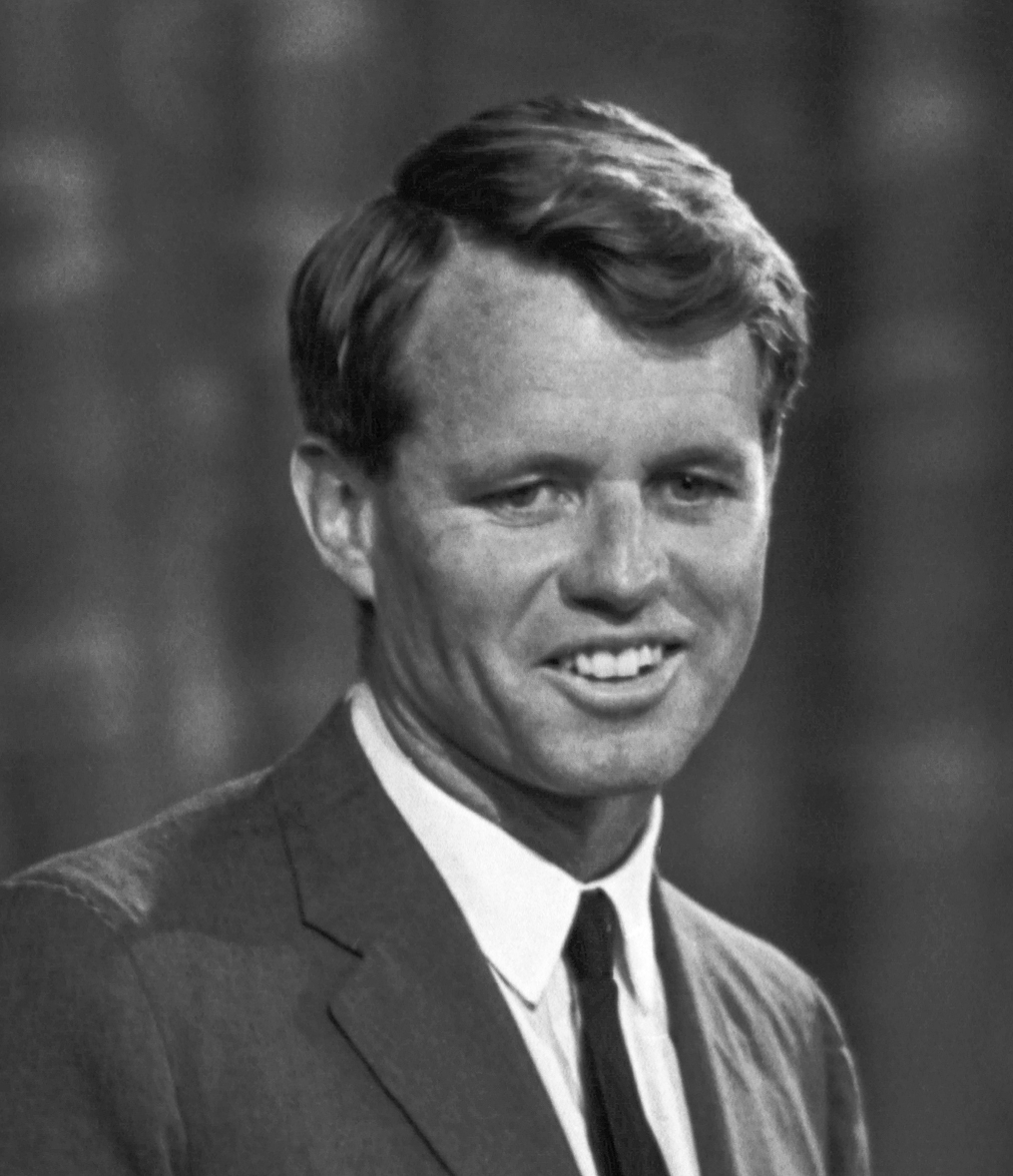
That Senator Robert F. Kennedy was not killed by Sirhan Sirhan acting alone, but that a second gunman fired the fatal shot: that more bullets were discharged in the pantry than Sirhan's revolver could hold, that the autopsy and acoustic evidence point to a shot from behind and below that Sirhan was not positioned to fire, and that Sirhan may have acted as a programmed or manipulated patsy who has no memory of the shooting.
Sirhan Sirhan was seized at the scene with the gun in his hand, was convicted, and remains in prison. But the case carries one genuinely unresolved anomaly: the autopsy found the fatal shot was fired from behind at close range, while every witness placed Sirhan in front of Kennedy. Disputes over the number of shots and the Pruszynski audio recording are real and contested. No second shooter has ever been identified or proven, and the conviction stands.
The full story
The pantry, and the wound
Just after midnight on 5 June 1968, Robert F. Kennedy finished a victory speech in the ballroom of the Ambassador Hotel in Los Angeles. He had just won the California Democratic primary, and the nomination suddenly looked within reach. To avoid the crowd, his party cut through a narrow kitchen pantry behind the stage. There, a 24-year-old man named Sirhan Sirhan stepped forward with a .22 caliber revolver and began firing.
Kennedy was hit, along with five other people in the crowded pantry. Bystanders wrestled Sirhan to a steam table and pinned his gun hand, but not before the weapon was emptied. Kennedy was rushed to hospital and died about a day later, in the early hours of 6 June. Sirhan was arrested at the scene, still gripping the revolver. On the basic facts of who fired, there was never any mystery: dozens of people saw it.
The mystery is in the autopsy. Los Angeles County Chief Medical Examiner Thomas Noguchi, one of the most respected forensic pathologists in the country, examined Kennedy and reached a conclusion that has troubled the case ever since: the shot that killed Kennedy entered behind his right ear, and the powder residue on the skin indicated the muzzle had been about an inch away when it fired. It was a wound inflicted from behind, at contact range. And that is not where the witnesses put Sirhan.
Why serious people still doubt the lone-gunman account
The case for a second gun does not depend on treating Sirhan as innocent. He fired a gun in that pantry; that is not in dispute. The doubt is narrower and, for that reason, harder to wave away: that the physical evidence does not fit one shooter firing every shot.
Start with the wound. Noguchi found a fatal shot fired from behind Kennedy's head, from roughly an inch away. But the men who were closest to Kennedy, including Karl Uecker, the hotel maitre d' who was holding Kennedy's arm and leading him through, said Sirhan was in front of them and that the gun never came close to touching Kennedy. Someone firing from the front, several feet away, does not leave a near-contact wound behind the ear.
The coroner found the fatal shot was fired from an inch behind Kennedy's head. Every witness who was close enough to know put Sirhan in front of him.
Then there is the count. Sirhan's revolver held eight rounds. Three struck Kennedy and five other people were wounded, which uses up all eight; yet police officers and FBI agents reported seeing what looked like additional bullet holes in the pantry's door frames and ceiling. If those were bullet holes, the arithmetic breaks, because a single eight-shot revolver cannot account for them. The evidence that might have settled the question is gone: the Los Angeles police destroyed the door frames and ceiling panels after the trial, saying there was no room to store them. To many, burning the one thing that could confirm or kill the second-gun theory looked less like housekeeping than like a door quietly closed.
The ballistics never fully reassured either. When a court ordered a panel of seven firearms experts to re-examine the weapon and bullets in 1975, they could not conclusively match the fatal rounds to Sirhan's revolver, and they faulted the original criminalist's work. And decades later the Pruszynski recording, an audio tape from inside the pantry, was read by analyst Philip Van Praag as containing more shots than the gun could fire, some too closely spaced for one revolver. Each of these threads has a rebuttal. But together they are why this case, unlike so many, has never quietly closed.
What holds the conviction together
For all the anomalies, the case that Sirhan alone killed Kennedy is not thin. It rests on the most direct kind of evidence there is: he was caught in the act, gun in hand, by a room full of people.
The rear wound, which is the strongest anomaly, has a mundane possible explanation. Kennedy was not standing still and facing his killer. He had turned to his left to shake hands with kitchen staff at the moment the shooting began, a movement several witnesses described. A man turning that way can expose the back and right side of his head to a shooter standing in front of him. That does not make the near-contact distance easy to reconcile, and honest accounts admit as much, but it means the wound is not proof of a shooter positioned behind Kennedy.
On the bullet count, the official position is that no more than eight shots were ever confirmed. The marks in the door frames were never established to be bullet holes; no bullets were recovered from them beyond the number Sirhan's gun could fire, and investigators treated the reported extra holes as unconfirmed. The destruction of the frames was a real failure of evidence handling, and it fuels suspicion, but a lost exhibit is not the same as a recovered ninth bullet. And the 1975 firearms panel, for all its criticism of the original work, did not find a second gun; it found that the evidence could not be pushed to a clean conclusion in either direction.
The acoustic claim is contested on its own terms. The Pruszynski tape is old, noisy, and degraded, and specialists disagree sharply about whether it can support any reliable shot count at all; echoes and other sounds can be misread as gunfire. When Sirhan's lawyers brought the recording and the second-gun argument before the courts, the courts did not find it strong enough to disturb the verdict. And the programmed-assassin theory, the idea that Sirhan was hypnotically conditioned, has never produced a controller, a method, or any evidence beyond Sirhan's own claimed amnesia.
The result is a conviction with loose threads rather than a solved case with a hidden second shooter. A genuine anomaly in the record is a reason to keep asking questions. It is not, on its own, the identification of another gunman, and no such gunman has ever been named or found.
Why the doubt has outlived everyone
Some conspiracy theories survive on feeling alone. This one survives partly on a diagram: a wound behind the ear, an accused man in front, and a distance that does not match. That concreteness is what has kept it alive for more than half a century, through official reviews that were supposed to put it to rest.
The context did the rest. Robert Kennedy was killed in the summer of 1968, a year that had already taken Martin Luther King Jr., and less than five years after his own brother was shot in Dallas. The idea that two Kennedys and King could each fall to a lone, unremarkable young man with a cheap weapon strained the sense that great events should have causes to match. A hidden network restored the proportion.
The period also made the darkest version believable. In the years after the assassination, real intelligence-agency abuses came to light, including documented research into hypnosis and behavioral control. Against that backdrop, the notion of a programmed assassin who remembers nothing did not read as science fiction; it read as an extension of things the government had actually done. Sirhan's consistent claim that he cannot recall the shooting gave the story a place to live.
And the institutions handed the doubters their best material. Sealed files, an original investigation later faulted by experts, and above all the burning of the door frames turned ordinary bureaucratic failure into apparent proof of concealment. Once the public has watched the one piece of evidence that could resolve a question get destroyed, no official reassurance fully lands.
An anomaly, not a conspirator
The verdict here holds two things at once. Sirhan Sirhan fired a revolver at Robert Kennedy in a crowded pantry, was convicted, and remains in prison; that is documented and not in serious dispute. And the record contains a real anomaly, the mismatch between a rear, near-contact fatal wound and every witness who placed the accused in front, that has never been fully resolved.
What has not been shown is the rest: that a second gunman fired the fatal shot, that more than eight bullets were provably discharged, that the Pruszynski recording reliably proves a second weapon, or that Sirhan was programmed to kill. Each of these is contested, and each runs into the same wall: no second shooter has ever been identified, no ninth bullet recovered, and no controller found. The courts have repeatedly declined to overturn the conviction, which stands.
The anomalies are genuine, and the destruction of key evidence means some of them can never now be closed. But an unresolved question is not a discovered conspirator. Until firm evidence of a second gunman actually surfaces, the second-gun theory sits exactly where the record leaves it: a serious, unsettled doubt resting on top of a conviction that has not been overturned.
Watch
What's still unexplained
- The rear, near-contact fatal wound and the witness accounts placing Sirhan in front have never been fully reconciled. The turning-head explanation is plausible but has not closed the gap to everyone's satisfaction, and it remains the case's most durable puzzle.
- Because the LAPD destroyed the pantry door frames and ceiling panels, the physical question of how many shots were fired can no longer be answered definitively. The evidence that might have settled the bullet count is simply gone.
- The 1975 firearms panel could neither prove a second gun nor cleanly match the recovered bullets to Sirhan's revolver, leaving the ballistics record less conclusive than a straightforward lone-gunman account would imply.
- The Pruszynski recording has never been adjudicated by a neutral scientific body. Van Praag's shot count and the rebuttals from other acousticians sit unresolved in the literature, so the audio evidence neither confirms nor rules out a second weapon.
Point by point
The claim: More bullets were fired than Sirhan's revolver could hold. His gun took eight rounds, but investigators counted more impacts, which means a second gun.
What the record shows: This is a real and long-running dispute, not a settled fact in either direction. Sirhan's Iver Johnson revolver held eight rounds; three struck Kennedy and five other people were wounded, which can account for all eight. The controversy is over apparent extra bullet holes that police officers and FBI agents said they saw in the pantry's door frames and ceiling panels, which some counts push past eight and toward ten or more. Officials countered that those marks were not confirmed bullet holes and that no recovered bullets exceeded the eight the gun could fire. The question can no longer be resolved cleanly because the LAPD destroyed the door frames and ceiling tiles after the trial, citing a lack of storage. A destroyed piece of evidence is an anomaly and an embarrassment; it is not, by itself, a second gun.
The claim: The autopsy proves the fatal shot came from behind at point-blank range, but every witness placed Sirhan in front of Kennedy.
What the record shows: This is the strongest anomaly in the case. Dr. Thomas Noguchi, a widely respected coroner, testified that the fatal bullet entered behind Kennedy's right ear and that powder residue indicated the muzzle was about one inch from the skin, a rear, near-contact wound. Yet witnesses in the pantry, including Karl Uecker, who was gripping Kennedy's arm, consistently described Sirhan firing from in front and said the gun never got within that distance of Kennedy's head. Defenders of the lone-gunman finding argue that Kennedy was turning to his left to shake hands, which could have exposed the back-right of his head to a shooter in front, and that the chaotic scene makes precise positioning hard to reconstruct. The mismatch between the wound and the witnesses is genuine and has never been fully reconciled, but it does not by itself identify a second shooter.
The claim: An acoustic recording made in the pantry captured more than eight shots, including double-shots too fast for one revolver, proving a second gun.
What the record shows: The Pruszynski recording, made by a reporter present during the shooting, is the basis for this claim. In 2008 audio analyst Philip Van Praag reported that his examination found 13 shots, some spaced too closely together to have come from a single-action revolver like Sirhan's, and that some sounds carried an acoustic signature suggesting a second weapon. His interpretation is contested. Other qualified acousticians have argued the tape is too degraded and noisy to yield a reliable shot count, that echoes and other sounds can be mistaken for gunfire, and that the analysis is not conclusive. When Sirhan's lawyers put the recording before federal courts, the courts did not find it sufficient to overturn the conviction. The recording is a live scientific dispute, not an accepted proof.
The claim: Sirhan was a programmed or hypnotized patsy, a Manchurian candidate who genuinely does not remember firing the shots.
What the record shows: This is the most speculative part of the theory. Sirhan has long said he has no memory of the shooting, and his defense has at times argued he was in a dissociated or hypnotically induced state, an idea that draws on Cold War fears of mind-control programs. There is, however, no evidence that anyone conditioned or directed him, and no controller has ever been identified. Related lore about a woman in a polka-dot dress said to have been seen near the scene rests on witness accounts that investigators examined and found unreliable, with the central account discredited at the time. Amnesia and a haunting cultural narrative are not evidence of programming; on the record, the hypno-patsy claim remains unsubstantiated.
Timeline
- 1968-06-05Shortly after midnight, having just won the California primary, Kennedy is walking through the kitchen pantry of the Ambassador Hotel when Sirhan Sirhan, a 24-year-old Palestinian-born man, opens fire with a .22 caliber Iver Johnson revolver. Kennedy and five bystanders are wounded. Sirhan is wrestled to the ground still holding the gun.
- 1968-06-06Kennedy dies of his wounds at Good Samaritan Hospital, about 26 hours after the shooting.
- 1968-06Los Angeles County Chief Medical Examiner Thomas Noguchi conducts the autopsy. He finds the fatal bullet entered behind Kennedy's right ear and that the muzzle was roughly one inch away, based on powder residue on the skin. Witnesses who were beside Kennedy describe Sirhan firing from in front of him.
- 1969-04-17Sirhan is convicted of first-degree murder in a Los Angeles court. He is sentenced to death six days later.
- 1972After the California Supreme Court strikes down the state's death penalty, Sirhan's sentence is commuted to life imprisonment.
- 1975Amid persistent doubts, a court orders a panel of seven firearms examiners to re-test Sirhan's revolver and the recovered bullets. The panel finds no conclusive ballistic proof of a second gun, but also cannot cleanly match the fatal bullets to Sirhan's weapon, and the original criminalist's work is criticized as careless.
- 1977A special counsel report commissioned by the Los Angeles District Attorney concludes there is no persuasive evidence of a second gunman, while conceding gaps in the original investigation.
- 2008At the American Academy of Forensic Sciences meeting, audio analyst Philip Van Praag presents his study of the Pruszynski recording, an audio tape made by a reporter in the pantry, arguing it captures 13 shots including closely spaced pairs that a single revolver could not fire. Other acoustics experts dispute the reading.
- 2011Sirhan's attorneys cite the Pruszynski analysis in federal court filings seeking to overturn the conviction. The courts decline to grant relief, and the conviction stands.
- 2021-08-27A two-member California parole panel recommends Sirhan for parole at his sixteenth suitability hearing, finding he no longer poses a threat to public safety. Two of Kennedy's sons support release; others in the family object.
- 2022-01-13Governor Gavin Newsom reverses the parole recommendation, stating that Sirhan still poses a current threat to public safety.
- 2024-08-16The parole board again denies Sirhan parole, as it did in 2023. He remains imprisoned in San Diego, eligible to seek parole again in the future.
From the case file
The actual records: declassified, released, or leaked. We link straight to each document in its official archive, so you never have to take our word for it. Read the originals yourself.
Robert F. Kennedy Assassination Investigation Records (Special Unit Senator files)
The roughly 50,000-page investigative record of Special Unit Senator, the LAPD task force that ran the RFK case, including interviews, ballistics material, and photographs. Held sealed for years and now at the California State Archives, it is the primary documentary base for the disputes over shot count and evidence handling.
Read the document: California State Archives →Robert F. Kennedy Assassination Investigation Records: Collection Guide
The finding aid describing the LAPD Special Unit Senator collection in detail: what the investigation produced, how the evidence was catalogued, and what survives. It is the roadmap researchers use to locate the ballistics files and physical-evidence records at the heart of the second-gun question.
Read the document: California State Archives →Robert F. Kennedy (Assassination) file
The FBI's released investigative file on the assassination, opened through the Bureau's FOIA Library. It documents the federal side of the inquiry alongside the LAPD's, including reports on the pantry scene and the physical evidence.
Read the document: FBI Vault →Autopsy Report on Senator Robert F. Kennedy
Dr. Thomas Noguchi's autopsy report, the source of the case's central anomaly. It records that the fatal shot entered behind Kennedy's right ear and that powder residue indicated the muzzle was about one inch from the skin, a rear, near-contact wound that witnesses say does not match where they saw Sirhan standing.
Read the document: Autopsy Files archive →Other case files that cite the same sources
Sirhan Sirhan was seized at the scene with the gun in his hand, was convicted, and remains in prison. But the case carries one genuinely unresolved anomaly: the autopsy found the fatal shot was fired from behind at close range, while every witness placed Sirhan in front of Kennedy. Disputes over the number of shots and the Pruszynski audio recording are real and contested. No second shooter has ever been identified or proven, and the conviction stands.
Reviewed by Colin Peterson · Last reviewed July 12, 2026 · How we rate
Common questions
Is RFK assassination true?
Sirhan Sirhan was seized at the scene with the gun in his hand, was convicted, and remains in prison. But the case carries one genuinely unresolved anomaly: the autopsy found the fatal shot was fired from behind at close range, while every witness placed Sirhan in front of Kennedy. Disputes over the number of shots and the Pruszynski audio recording are real and contested. No second shooter has ever been identified or proven, and the conviction stands.
What is RFK assassination?
Senator Robert F. Kennedy was shot at the Ambassador Hotel in Los Angeles just after winning the California Democratic primary, and died the next day. Sirhan Sirhan was caught firing a revolver in the pantry, was convicted of first-degree murder, and is still imprisoned. Yet the forensic record contains an anomaly that has never gone awa…
What does the evidence show?
This is a real and long-running dispute, not a settled fact in either direction. Sirhan's Iver Johnson revolver held eight rounds; three struck Kennedy and five other people were wounded, which can account for all eight. The controversy is over apparent extra bullet holes that police officers and FBI agents said they saw in the pantry's…
Why do people believe it?
The central anomaly is forensic, not political. A respected coroner found a rear, near-contact fatal wound, and the witnesses put the accused in front. That is a concrete, technical contradiction, and technical contradictions are far harder for the public to dismiss than a vague feeling that something is off.
What is still unresolved?
The rear, near-contact fatal wound and the witness accounts placing Sirhan in front have never been fully reconciled. The turning-head explanation is plausible but has not closed the gap to everyone's satisfaction, and it remains the case's most durable puzzle.
Sources
- 1.Robert F. Kennedy Assassination Investigation Records, California State Archives, California Secretary of State
- 2.Robert F. Kennedy (Assassination) file, FBI Records: The Vault
- 3.Robert Kennedy Assassination research archive, Mary Ferrell Foundation
- 4.RFK assassination witness tells CNN: There was a second shooter, CNN (2012)
- 5.Prosecutors, attorneys argue: Was there a second gunman in RFK assassination?, CNN (2012)
- 6.The assassination of Robert F. Kennedy: an analysis of the senator's injuries and neurosurgical care, Journal of Neurosurgery (2018)
- 7.Sirhan Sirhan, RFK's assassin, denied parole by board whose members had recommended it in 2021, CNN (2023)
- 8.Sirhan Sirhan, in Prison in San Diego, Again Denied Parole in Assassination of Sen. Kennedy, Times of San Diego (2024)
Embed this case file on your site
Paste this snippet to show this case file as a small card, with a link back to the full write-up. Free to use.
<iframe src="https://theconspiratory.com/embed/rfk-assassination" title="The Conspiratory verdict" width="520" height="190" style="border:0;max-width:100%" loading="lazy"></iframe>Help us investigate
This is a living case file. If you spot an error or know evidence we missed, tell us, and weigh in on where you land.
Where do you land?
Cast your read on this one.
Comments
Add your take. Comments are read and approved by a human before they appear, so keep it on topic and civil. Please do not accuse named, living people of crimes.