The September 11 attacks were an inside job: the towers were brought down by controlled demolition and the US government orchestrated or allowed them
By Colin PetersonJuly 12, 2026
Where the evidence lands →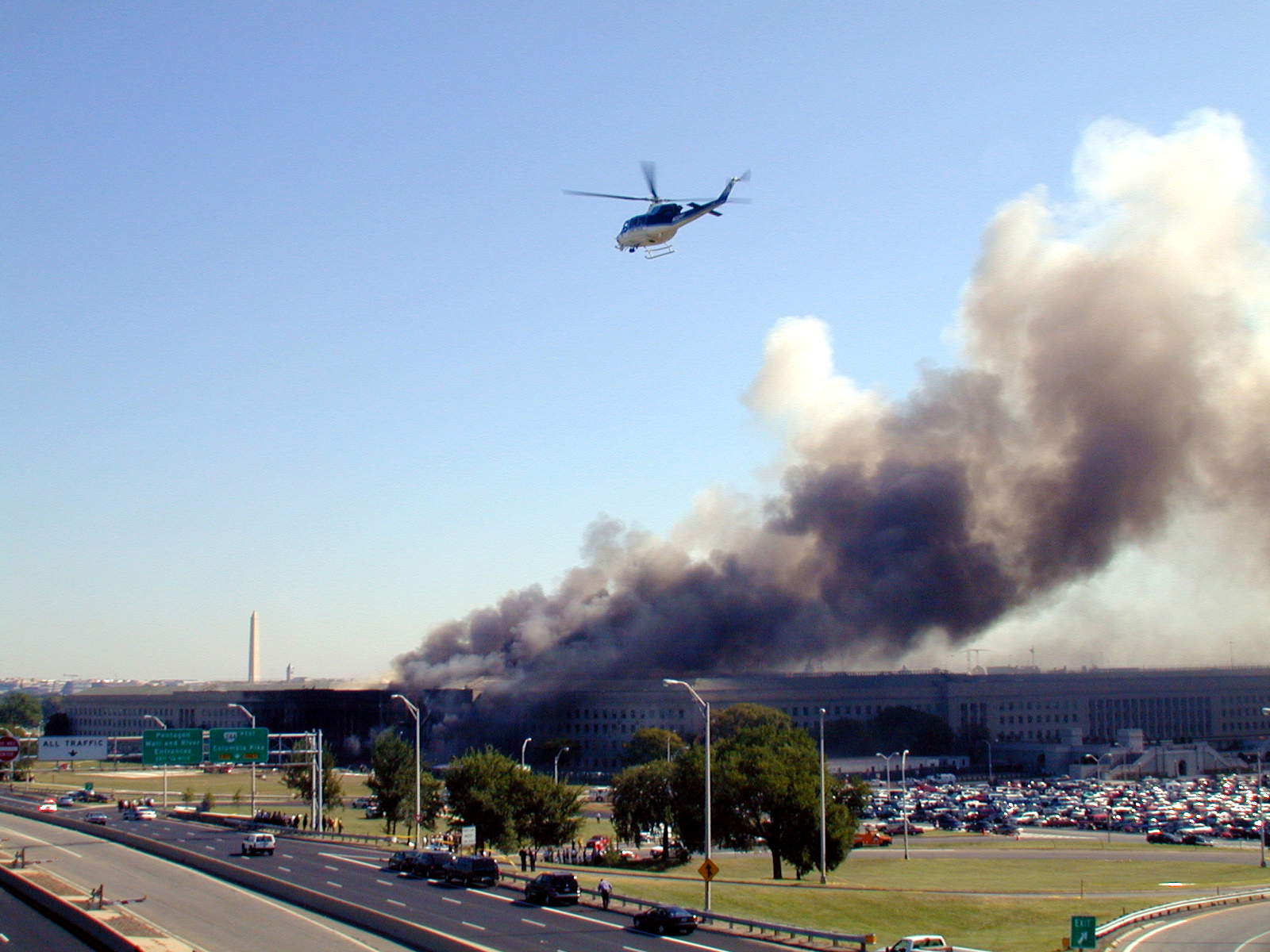
That the September 11 attacks were not simply carried out by al-Qaeda but were an inside job: that the Twin Towers and World Trade Center 7 were brought down by controlled demolition using explosives or incendiaries placed in advance, and that elements of the US government either planned and executed the attacks (MIHOP, made it happen on purpose) or knew they were coming and deliberately allowed them (LIHOP, let it happen on purpose), afterward concealing the truth behind the official investigations.
The core of the theory, that pre-planted explosives felled the towers, is not merely unproven but contradicted by the physical and engineering record: NIST's multi-year investigations traced the collapses to impact damage and fire, and found no evidence of explosives or thermite. The orchestration claims (that officials planned the attacks, MIHOP, or knowingly let them happen, LIHOP) rest on a real and documented foundation of pre-9/11 intelligence failures, but an intelligence failure is not the same as a plot, and no evidence of a plot has surfaced.
Believed by: Belief in some form of official complicity has been persistently high. Polls over the past two decades have found sizeable minorities doubting the official account: a 2006 Scripps Howard/Ohio University survey found about 36% of Americans thought it at least somewhat likely that federal officials either took part in the attacks or took no action to stop them, and later international polling found similar or larger shares abroad. Belief in the narrower controlled-demolition claim is smaller but durable.
The full story
What is documented, and what is in dispute
Begin with the part that is not in question, because nearly three thousand people died in it and they are owed that much. On the morning of 11 September 2001, nineteen members of al-Qaeda hijacked four transcontinental airliners. At 8:46 a.m. American Airlines Flight 11 struck the North Tower of the World Trade Center; at 9:03 a.m. United Airlines Flight 175 struck the South Tower. At 9:37 a.m. American Airlines Flight 77 hit the Pentagon. United Airlines Flight 93, its passengers now aware of the other attacks, crashed in a field near Shanksville, Pennsylvania at 10:03 a.m. after they stormed the cockpit. The South Tower collapsed at 9:59 a.m., the North Tower at 10:28 a.m. Late that afternoon, at 5:20 p.m., a third World Trade Center skyscraper, the 47-story Building 7, which no plane had hit, also fell.
That al-Qaeda planned and carried out the attacks is one of the most thoroughly documented facts of the century. The 9/11 Commission reconstructed the plot in detail, from Khalid Sheikh Mohammed's proposal to Osama bin Laden through the hijackers' flight training and travel. Bin Laden acknowledged responsibility. What the “inside job” family of theories contests is not that the planes flew, but a set of further claims layered on top: that the buildings were destroyed not by the impacts and fires but by explosives placed inside them in advance, and that the US government itself either staged the whole operation (the position known as MIHOP, made it happen on purpose) or knew it was coming and let it proceed (LIHOP, let it happen on purpose), then buried the truth.
Holding those claims to account requires a discipline this file tries to keep throughout: separating documented failures, of which there were real ones, from an orchestrated plot, of which there is no evidence, and separating unanswered questions from answered ones. An intelligence failure is not a conspiracy. A counterintuitive collapse is not a demolition. Both distinctions do a great deal of work here.
The case the movement makes
Taken at its strongest, the demolition argument is not stupid, and pretending otherwise explains nothing about why it persists. It rests on a handful of observations that genuinely do give a thoughtful person pause the first time they encounter them.
The centerpiece is Building 7. It was not hit by an aircraft. Its collapse, captured on video, is smooth, symmetrical, and vertical: the roofline drops almost as a single object, straight down. To an eye trained on demolition footage, it looks like a demolition. And the movement can point to something NIST itself conceded: for roughly 2.25 seconds, the building's north face fell at literal free-fall acceleration, as if nothing at all were beneath it. NIST did not volunteer that figure; it appeared in the final report only after independent analyst David Chandler measured the descent and pressed the agency on its draft. A building resisting its own collapse should decelerate as it crushes the structure below; free fall, however briefly, means for that instant there was no resistance.
To an eye trained on demolition footage, the fall of Building 7 looks like a demolition. That resemblance is the engine of the entire movement.
Then there is the molten metal. Video shows a glowing orange stream pouring from the South Tower minutes before it fell; first responders and cleanup crews described molten material and pockets of intense heat in the rubble for weeks. Office fires, the argument runs, cannot melt structural steel, so something hotter, thermite or its cousins, must have been at work. Physicist Steven Jones and, later, a 2009 paper by Niels Harrit and colleagues claimed to have found unreacted “thermitic material” in the settled dust. Add the speed and totality of the collapses, the near-symmetry of the towers' fall, and the fact that steel was cleared from the site with what critics considered unseemly haste, and the demolition case assembles itself into something that feels, to many, like a pattern.
The orchestration case draws on different fuel, and firmer-seeming fuel. The government was warned. The President's Daily Brief of 6 August 2001 carried the headline Bin Ladin Determined to Strike in US. The FBI's “Phoenix memo” had flagged extremists training at American flight schools; Zacarias Moussaoui had been arrested weeks before the attacks; the intelligence “chatter” that summer was so loud that the CIA director later said the system was “blinking red.” If the warnings were that clear, the LIHOP proponent asks, how is inaction anything but a choice? And within eighteen months the same administration led the country into Iraq on claims about weapons that did not exist, which for a large audience retired the assumption that officials would never deceive the public into war.
What the engineering actually found
The demolition claims have been tested more exhaustively than almost any conspiracy theory in history, because the collapses were also an engineering catastrophe that the profession needed to understand. The National Institute of Standards and Technology spent years on it, with dozens of outside experts, thousands of photographs and videos, recovered steel, and detailed computer models. Its conclusions are specific, and they do not support demolition.
For the Twin Towers, NIST found that each aircraft severed perimeter and core columns on impact and, crucially, blasted the sprayed fireproofing off the steel over whole floors. The ensuing fires, no longer held back by insulation, did not need to melt anything. Structural steel loses about half its strength by roughly 600 degrees Celsius, well within reach of an ordinary office fire; the floor trusses sagged, pulled the now-unprotected perimeter columns inward, and once a critical number buckled, the upper block descended onto the floors below and the collapse became unstoppable. This is why the “fire can't melt steel” slogan misfires: nobody claimed it did. Weakening, not melting, is the mechanism.
Building 7is the more interesting case, because its collapse really was unprecedented and really does need explaining. NIST's account is that debris from the North Tower ignited fires that burned unfought for hours (the water mains were broken, and the building had been evacuated). Thermal expansion pushed a floor beam that shoved a key girder off its seat at column 79; the floors around it collapsed, leaving column 79 laterally unsupported over many stories; it buckled, the failure propagated through the interior, and only then did the exterior shell, now an empty box with its core gone, fall as the near-uniform object the videos show. The free fall follows from this, not against it: once the interior had dropped away unseen, there was, for those two-odd seconds, almost nothing left under the facade to slow it. NIST's reluctance to test the debris for explosive residue is a fair methodological criticism. It is not evidence that residue existed.
On thermite and molten steel, the physical record cuts hard against the claim. The bright stream from the South Tower is consistent with molten aluminum from the aircraft mixed with other materials, not necessarily steel at all. Heat lingering in the rubble reflects prolonged oxygen-starved smoldering, which sustains high temperatures across many metals without any incendiary. The US Geological Survey analyzed the dust and found no thermite residue; NIST judged that thermite could not plausibly have cut the columns. The 2009 “thermitic material” paper, the movement's scientific keystone, appeared in a marginal pay-to-publish journal whose editor-in-chief resigned over its acceptance, and its red-gray chips are consistent with commonplace primer paint. A controlled demolition of three steel skyscrapers would also require miles of charges wired in advance without detection, and would announce itself with a deafening, rhythmic sequence of detonations that no recording of the day captured.
Nobody ever claimed the fire melted the steel. Steel loses half its strength long before it melts, and weakening, not melting, is what the buildings needed to fall.
The Pentagonclaims collapse under even lighter scrutiny. Flight 77's impact was witnessed by hundreds, clipped a line of highway light poles on its approach, left recovered airframe debris, and killed passengers and crew who were identified by DNA; a flight recorder was retrieved from the wreckage. The “too small a hole” argument simply misunderstands what happens when a thin aluminum airliner meets a reinforced building: it does not leave a tidy silhouette. And the LIHOP argument, though built on real failures, asks the warnings to carry weight they cannot bear. The 6 August brief was a historical summary, not a tactical alert; it named no target, date, or method. The 9/11 Commission called the result a failure of imagination and coordination. Missing a vague warning is damning as incompetence. It is not the same as wanting the attack to land, and nothing in the record shows anyone did.
The specific claims, examined one by one
The movement is not a single claim but a cluster of them, and each stands or falls on its own evidence. We examine the largest separately, so the case for and against each can be weighed in full:
- Was World Trade Center Building 7 a controlled demolition? The movement's single most-cited pillar, set against what the NIST investigation actually found.
- Did a missile, rather than Flight 77, hit the Pentagon? The eyewitness, forensic, and structural record against the “no plane” claim.
- Was United Flight 93 secretly shot down? The real, never-executed shoot-down authorization, and why the crash site and recorders point to the passenger revolt.
- Did pre-attack “put option” trades prove insider foreknowledge? What the SEC review and the 9/11 Commission traced the unusual trades to.
- The false claim that 4,000 Jews were warned to stay home, an antisemitic hoax that this site reports and debunks as such.
Why the belief took hold and endures
If the engineering is this settled, the interesting question becomes psychological: why does a large minority still doubt it, twenty years on? The answer is not stupidity. It is a convergence of forces that would strain anyone's trust.
Start with proportion. The mind resists the idea that an atrocity of this magnitude could have so small and so shabby a cause as nineteen men with knives exploiting lax airport security. A hidden state conspiracy is horrifying, but it is proportionate; it makes the size of the wound match the size of the hand that inflicted it. Randomness and institutional sloppiness, by contrast, offer no such consolation and no one to hold fully responsible.
Then add the specific, genuine strangeness of Building 7. Most people carry no memory of it at all, so when they first see the footage, it arrives with the force of a secret: a skyscraper no plane touched, folding straight down, that “they never told you about.” The counterintuitiveness is real, and the failure of the official story to penetrate popular memory as thoroughly as the towers did leaves a vacuum the theory fills.
Over all of it hangs Iraq. The case for war on weapons of mass destruction unraveled almost in real time, and it did so while 9/11 truth was taking shape online. That sequence taught a durable lesson, that officials will construct false pretexts for war, and audiences applied it backward to 9/11 itself. Whether or not the inference holds, the emotional logic is powerful: once you have watched a government mislead you into one war, its denials about the event that launched the era lose their authority. The medium finished the job. Loose Change and its imitators arrived exactly as online video went mass-market, and the form (anomaly after anomaly, scored and slowed, none required to resolve) is almost perfectly designed to manufacture doubt without ever having to build a coherent alternative.
Finally, the theory keeps one foot on solid ground, which most do not. It can point to a real titled brief, a real ignored memo, a real Commission enumerating real failures. That factual anchor lends the rest a borrowed credibility. The trick, and the trap, is that the documented failure to prevent is quietly swapped for a fantasized decision to permit, and the short distance between those two sentences hides how far apart they actually are.
An attack, not an inside job
The verdict has to do two things at once, and refusing either is a kind of dishonesty. The controlled-demolition claim is not simply unproven; on the physical and engineering evidence it is contradicted. Three multi-year investigations, the recovered steel, the absence of explosive residue or the unmistakable acoustic signature of demolition, and a worked-out mechanism for each collapse all point the same way: the buildings came down because of the impacts and the fires. The Pentagon “no plane” claims are contradicted by an overwhelming forensic and eyewitness record. On those points the file does not hedge.
The orchestration claims sit differently, and demand the more careful language. The pre-9/11 intelligence failures are real, documented, and serious; the government of a superpower had fragments of warning it did not assemble in time. That is a genuine scandal, and it remains a legitimate open subject, including newer questions about possible foreign, not domestic, support for some hijackers. But a failure to connect warnings is evidence of dysfunction, not design. No document, witness, or forensic trace has ever shown that any official planned the attacks or made a decision to let them succeed. On the current record, MIHOP and LIHOP are unproven, and the specific demolition thesis they lean on is worse than unproven.
Nearly three thousand people were killed that day by a documented enemy using a method we now understand in exhausting detail. They are not served by pretending the questions do not exist, and they are not served by answers the evidence cannot carry. The failures deserve accountability. The attack does not need a hidden hand to be the atrocity it was.
What's still unexplained
- Why were the pre-9/11 warnings not acted on more decisively? This is a real and only partly answered question. The 9/11 Commission documented the failures but could not fully explain why specific dots (the Phoenix memo, the Moussaoui arrest, CIA knowledge of two hijackers inside the US) were never connected, and its own members later criticized the cooperation they received from agencies. That the warnings were mishandled is settled; exactly how so much was missed is not, though nothing in the gap points to intent.
- The 28 pages and the question of foreign, not domestic, foreknowledge. A long-classified section of a 2002 congressional inquiry, released in 2016, and later FBI files explored possible support for some hijackers from within Saudi Arabia. This is a live and legitimate line of inquiry, but it concerns possible foreign complicity, the opposite of the 'inside job' thesis, and it does not implicate the demolition or orchestration claims.
- Why did NIST decline to test the WTC 7 debris for explosive or thermite residue? NIST's position was that its collapse hypothesis accounted for the observations and that a residue test was not warranted, which critics find unsatisfying even if the underlying model holds. The decision not to test is a genuine methodological criticism; it is not, on its own, evidence that residue would have been found.
- Why was so much of the WTC steel recycled before it could be exhaustively examined? The rapid removal of structural steel from the site drew criticism from fire investigators at the time who wanted more preserved. The handling of the debris is a legitimate forensic complaint about the investigation's raw material, distinct from any claim about what the destroyed evidence would have shown.
Point by point
The claim: World Trade Center 7 fell at free-fall acceleration, straight down into its own footprint. A building cannot do that from fire alone; only a controlled demolition, with columns cut simultaneously, produces free fall.
What the record shows: NIST's final report does confirm a period of free fall, and this is the movement's strongest single point. Measuring the north face, NIST described three stages of descent and acknowledged that during stage two, lasting about 2.25 seconds (some eight stories), the building fell at essentially gravitational acceleration. That admission came only after independent analyst David Chandler pressed the point on NIST's draft. But NIST's explanation is structural, not evasive: by the time the visible exterior began to drop, the interior structure had already failed progressively out of view, so for that brief interval there was little left below the falling facade to resist it. Fire-driven thermal expansion, NIST found, pushed a floor beam that walked a critical girder off its seat near column 79; the ensuing internal floor collapses left column 79 unbraced, it buckled, and the failure cascaded before the shell came down as a unit. Free fall over a couple of seconds is consistent with that sequence. It is not, by itself, evidence of cutting charges, and no explosives residue or the acoustic signature of demolition (which is loud and distinctive) was ever documented.
The claim: Molten steel was found pouring from the South Tower and glowing in the rubble for weeks, and independent researchers detected thermite in the dust. Office fires cannot melt steel; thermite can.
What the record shows: The premise contains a real fact and a wrong inference. It is true that office fires (roughly 1,000 degrees Celsius at their hottest) cannot melt structural steel, which liquefies near 1,500 degrees. But the collapses were never attributed to melted steel. Steel loses roughly half its strength by about 600 degrees, and weakening, not melting, is what NIST concluded brought the buildings down. The bright molten flow seen leaving the South Tower is consistent with aluminum from the aircraft and other molten metals and materials, not necessarily steel. Reports of molten metal in the rubble weeks later reflect prolonged, oxygen-starved smoldering in the debris piles, which can sustain very high localized temperatures across many metals. On thermite: the US Geological Survey's analysis of WTC dust found no thermite residue, and NIST judged it highly unlikely that thermite could have severed the columns. The 2009 'active thermitic material' paper is contested at the level of its basic chemistry, its red-gray chips being consistent with ordinary primer paint, and it appeared in a journal whose editor resigned over its publication.
The claim: No large plane hit the Pentagon. The impact hole was too small for a Boeing 757, there was too little recognizable wreckage, and the damage looks more like a missile or a smaller aircraft.
What the record shows: This claim is contradicted by an unusually large and varied body of evidence. American Airlines Flight 77, a Boeing 757, struck the Pentagon at 9:37 a.m., killing all 59 aboard (plus the five hijackers) and 125 people inside the building. A row of ground light poles was clipped and knocked down on the approach path; hundreds of witnesses, many of them commuters on the adjacent highway, saw the airliner. Aircraft debris was recovered, victims and hijackers aboard the plane were identified by DNA, and one of the flight recorders was retrieved. The 'small hole' argument misreads the impact: a thin-skinned airliner does not punch a clean airplane-shaped hole through a reinforced masonry building; the wings and tail largely disintegrated against the facade while the fuselage penetrated. The physical, forensic, and eyewitness records all describe Flight 77.
The claim: The government had specific warnings and did nothing, which shows it wanted the attacks to happen (LIHOP). The August 6 President's Daily Brief was even titled 'Bin Ladin Determined to Strike in US.'
What the record shows: The warnings were real, and this is the part of the theory built on genuine documented ground. The 9/11 Commission established a serious pattern of missed signals: the 6 August 2001 President's Daily Brief headlined 'Bin Ladin Determined to Strike in US'; the FBI's July 2001 'Phoenix memo' flagging extremists at US flight schools; the August 2001 arrest of Zacarias Moussaoui; and a general spike in threat reporting that CIA Director George Tenet later described as 'the system was blinking red.' What the Commission concluded, though, was failure, not complicity: failures of imagination, policy, capabilities, and management, with warnings that were vague as to time, place, and method and were not connected across agencies. A missed or mishandled warning is evidence of dysfunction. It is not evidence that anyone wanted the attacks to succeed, and no document or witness has established that anyone did.
Timeline
- 2001-09-11Nineteen al-Qaeda hijackers seize four airliners. American 11 and United 175 strike the North and South Towers of the World Trade Center; American 77 hits the Pentagon; United 93 crashes in Shanksville, Pennsylvania after passengers fight back. The South Tower falls at 9:59 a.m., the North Tower at 10:28 a.m. At 5:20 p.m., World Trade Center 7, not struck by any plane, also collapses.
- 2002-05FEMA publishes its World Trade Center Building Performance Study (FEMA 403), an early engineering assessment. It attributes the collapses to impact and fire but calls its own understanding preliminary, and its tentative language about WTC 7 in particular becomes a seed for later suspicion.
- 2004-07The 9/11 Commission releases its final report, laying out the al-Qaeda plot in detail and cataloguing a cascade of pre-attack intelligence and policy failures. Its scope is the plot and the government's response, not the structural collapses.
- 2005-09NIST issues its final report on the Twin Towers (NCSTAR 1), concluding that aircraft impact, dislodged fireproofing, and the resulting fires, not explosives, caused each tower to collapse.
- 2005-2006The internet documentary Loose Change spreads virally, and physicist Steven E. Jones circulates a paper arguing the towers were demolished with thermite. Richard Gage founds Architects & Engineers for 9/11 Truth in 2006. The organized 'Truth movement' takes shape.
- 2008-11NIST publishes its final report on World Trade Center 7 (NCSTAR 1A), the first known collapse of a tall building driven principally by fire. After criticism, the report explicitly acknowledges a roughly 2.25-second period of near free-fall descent and explains it through progressive internal failure.
- 2009A paper by Niels Harrit, Steven Jones and others claims to find 'active thermitic material' in WTC dust. Published in a minor open-access journal, it is widely criticized; the journal's editor-in-chief resigns over its handling. It becomes a cornerstone citation for demolition proponents nonetheless.
From the case file
The actual records: declassified, released, or leaked. We link straight to each document in its official archive, so you never have to take our word for it. Read the originals yourself.
The 9/11 Commission Report: Final Report of the National Commission on Terrorist Attacks Upon the United States
The authoritative public account of the al-Qaeda plot and the government's response, including a detailed catalogue of the pre-9/11 intelligence and policy failures that the LIHOP theory draws on. Its scope is the plot, not the structural collapses; it found failure and dysfunction, not complicity.
Read the document: U.S. Government Publishing Office (GovInfo) →Final Report on the Collapse of the World Trade Center Towers (NIST NCSTAR 1)
NIST's final engineering report on the Twin Towers, concluding that aircraft impact, dislodged fireproofing, and the resulting fires (weakening, not melting, the steel) drove each collapse, and finding no evidence of controlled demolition using pre-planted explosives.
Read the document: NIST Publications →Final Report on the Collapse of World Trade Center Building 7 (NIST NCSTAR 1A)
NIST's final report on WTC 7, the first known collapse of a tall building driven principally by fire. It traces the failure to thermal expansion dislodging a critical girder at column 79 and the progressive internal collapse that followed, and explicitly addresses the roughly 2.25-second period of near free-fall descent.
Read the document: NIST Publications →World Trade Center Building Performance Study (FEMA 403)
The early, self-described preliminary engineering assessment issued before the fuller NIST investigations. Its tentative language, especially about WTC 7, became an early seed for demolition suspicion; the later NIST reports superseded its most provisional conclusions.
Read the document: FEMA (Internet Archive copy) →Other case files that cite the same sources
The core of the theory, that pre-planted explosives felled the towers, is not merely unproven but contradicted by the physical and engineering record: NIST's multi-year investigations traced the collapses to impact damage and fire, and found no evidence of explosives or thermite. The orchestration claims (that officials planned the attacks, MIHOP, or knowingly let them happen, LIHOP) rest on a real and documented foundation of pre-9/11 intelligence failures, but an intelligence failure is not the same as a plot, and no evidence of a plot has surfaced.
Reviewed by Colin Peterson · Last reviewed July 20, 2026 · How we rate
Common questions
Is 9/11 inside job true?
The core of the theory, that pre-planted explosives felled the towers, is not merely unproven but contradicted by the physical and engineering record: NIST's multi-year investigations traced the collapses to impact damage and fire, and found no evidence of explosives or thermite. The orchestration claims (that officials planned the attacks, MIHOP, or knowingly let them happen, LIHOP) rest on a real and documented foundation of pre-9/11 intelligence failures, but an intelligence failure is not the same as a plot, and no evidence of a plot has surfaced.
What is 9/11 inside job?
On 11 September 2001, nineteen al-Qaeda hijackers flew passenger jets into the World Trade Center and the Pentagon and crashed a fourth plane in Pennsylvania, killing nearly three thousand people. Within months a counter-narrative took shape: that the Twin Towers and the third skyscraper to fall that day, World Trade Center 7, were destr…
What does the evidence show?
NIST's final report does confirm a period of free fall, and this is the movement's strongest single point. Measuring the north face, NIST described three stages of descent and acknowledged that during stage two, lasting about 2.25 seconds (some eight stories), the building fell at essentially gravitational acceleration. That admission ca…
Why do people believe it?
The scale of the horror demands a proportionate cause. That nineteen men with box cutters could kill nearly three thousand people and topple icons of American power feels intolerably disproportionate; a vast inside plot, monstrous as it is, restores a sense that an event this large must have had a correspondingly large and deliberate han…
What is still unresolved?
Why were the pre-9/11 warnings not acted on more decisively? This is a real and only partly answered question. The 9/11 Commission documented the failures but could not fully explain why specific dots (the Phoenix memo, the Moussaoui arrest, CIA knowledge of two hijackers inside the US) were never connected, and its own members later cri…
Sources
- 1.The 9/11 Commission Report: Final Report of the National Commission on Terrorist Attacks Upon the United States, U.S. Government Publishing Office (GovInfo) (2004)
- 2.Final Report on the Collapse of the World Trade Center Towers (NIST NCSTAR 1), National Institute of Standards and Technology (2005)
- 3.Final Report on the Collapse of World Trade Center Building 7 (NIST NCSTAR 1A), National Institute of Standards and Technology (2008)
- 4.World Trade Center Building Performance Study: Data Collection, Preliminary Observations, and Recommendations (FEMA 403), Federal Emergency Management Agency (via Internet Archive) (2002)
- 5.Questions and Answers about the NIST WTC 7 Investigation, National Institute of Standards and Technology (2011)
- 6.Questions and Answers about the NIST WTC Towers Investigation, National Institute of Standards and Technology (2011)
- 7.20 Years Later: NIST's World Trade Center Investigation and Its Legacy, National Institute of Standards and Technology (2021)
- 8.Final Reports from the NIST World Trade Center Disaster Investigation, National Institute of Standards and Technology (2008)
- 9.Debunking 9/11 Myths: Why Conspiracy Theories Can't Stand Up to the Facts, Popular Mechanics (Hearst) (2006)
Embed this case file on your site
Paste this snippet to show this case file as a small card, with a link back to the full write-up. Free to use.
<iframe src="https://theconspiratory.com/embed/september-11-inside-job" title="The Conspiratory verdict" width="520" height="190" style="border:0;max-width:100%" loading="lazy"></iframe>Help us investigate
This is a living case file. If you spot an error or know evidence we missed, tell us, and weigh in on where you land.
Where do you land?
Cast your read on this one.
Comments
Add your take. Comments are read and approved by a human before they appear, so keep it on topic and civil. Please do not accuse named, living people of crimes.