Israel deliberately attacked the USS Liberty in 1967 and both governments covered it up
By Colin PetersonJuly 12, 2026
Where the evidence lands →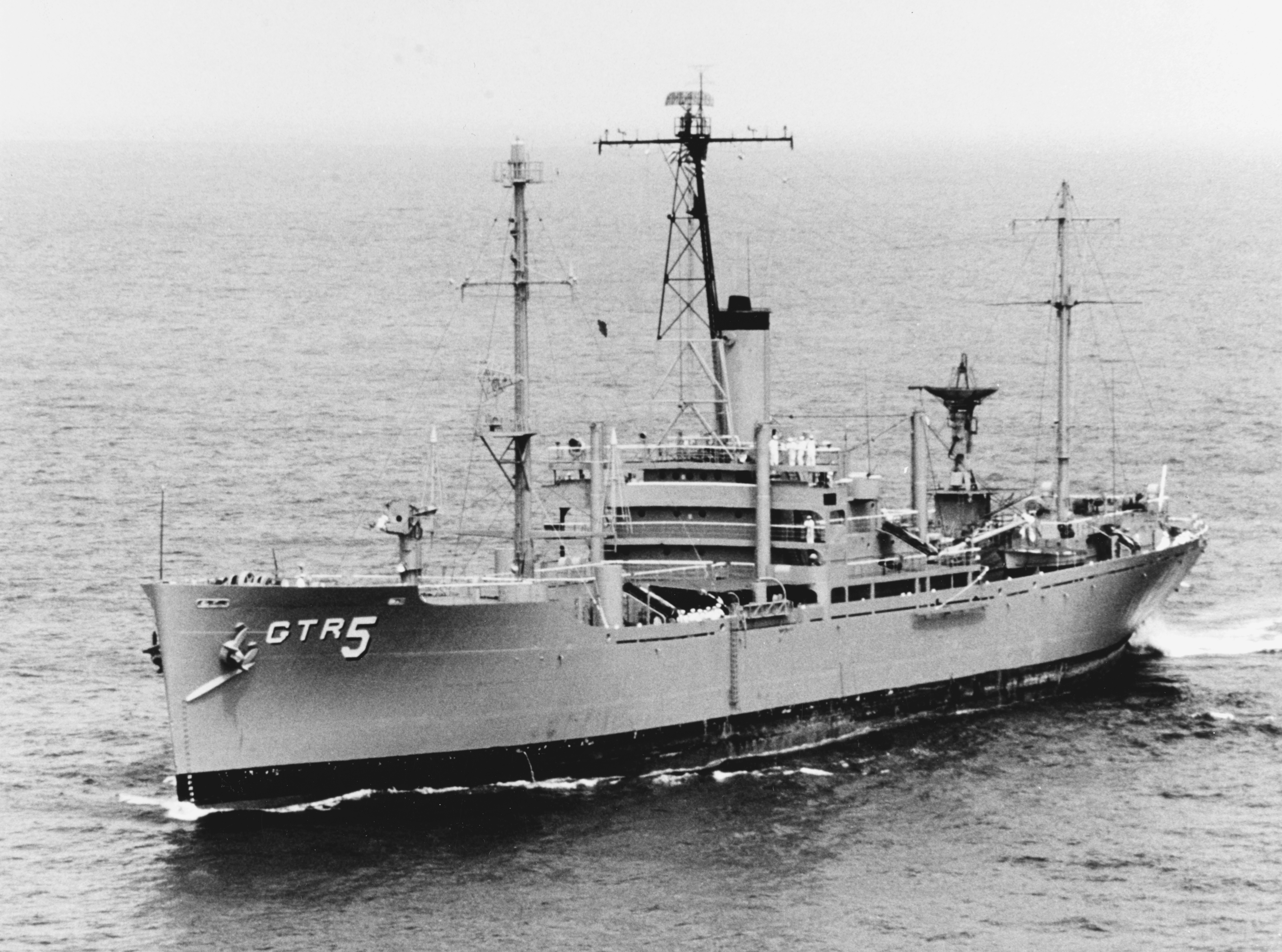
That the Israeli attack on the USS Liberty was not a mistake but a deliberate assault on a vessel Israel knew to be American, intended to stop the ship from intercepting Israeli communications during the Six-Day War, and that both the Israeli and US governments then concealed the truth, steering the official inquiries toward a mistaken-identity finding to preserve the relationship between the two countries.
The attack, the 34 dead, Israel's apology and compensation, and the official mistaken-identity finding are all documented. The claim rated here, that Israel knowingly attacked a US ship and that the two governments then buried the truth, rests on serious but circumstantial arguments, the markings, the duration, disputed intercepts, and dissenting officials, and has never been definitively established either way.
Believed by: There is no reliable polling on the question. The surviving crew, organized as the USS Liberty Veterans Association, have pressed for a fresh congressional inquiry for decades, and the belief that the attack was deliberate is widely held among them and shared by some former senior US military and intelligence figures.
The full story
The ship, and the afternoon of 8 June
The USS Liberty was not a warship in any ordinary sense. Designated a technical research ship, she was a lightly armed vessel packed with antennas and listening gear, crewed jointly by the Navy and the Naval Security Group to intercept radio and electronic signals. In early June 1967, as the Six-Day War erupted between Israel and its Arab neighbors, she was sent to cruise in international waters off the northern Sinai, roughly 25 nautical miles offshore, to monitor the communications of a region suddenly at war.
On the afternoon of 8 June 1967, in clear weather, she was attacked. First came Israeli jets, Mirage and Mystere aircraft, raking the ship with cannon fire, rockets, and napalm. Then three Israeli motor torpedo boats closed in and launched five torpedoes; one struck the starboard side and tore open the compartments where much of the intelligence crew worked, killing most of the men who died. When it was over, 34 Americans were dead and 171 wounded, out of a crew of fewer than three hundred. The Liberty, holed and burning but still afloat, kept herself moving until she reached the ships of the US Sixth Fleet.
Within hours, Israel told Washington that its forces had struck the ship by mistake, believing her to be an Egyptian vessel, and offered apologies and help. Over the years that followed, Israel paid compensation to the families of the dead, to the wounded, and for the damage to the ship. None of the paragraphs above is seriously in dispute. What has been argued about, bitterly, for more than fifty years, is a single question that the facts above do not answer: did Israel know it was firing on an American ship?
The case that it was no mistake
The survivors' case does not rest on a single smoking gun. It is built from an accumulation of details that, taken together, many find impossible to square with an honest error. Start with the ship herself. She was in international waters, in clear daylight, flying an American flag, and marked on her hull with large identifying letters. Israeli aircraft had reconnoitered her repeatedly that morning, hours before the shooting began. To the men aboard, the notion that trained pilots then failed to recognize a distinctive American intelligence ship is not a fog-of-war excuse but an insult.
Then there is the shape of the attack. It was not a single strafing pass and a horrified radio call. It came in waves, jets and then torpedo boats, over an extended period, and survivors have testified that the boats fired on the ship and on life rafts even after the torpedo strike. In their reading, that is not what a mistake looks like once it is recognized; it is what determination looks like.
To the men aboard, the idea that trained pilots failed to recognize a distinctive American ship after hours of reconnaissance was not an excuse but an insult.
The dissent reaches well beyond the crew. Captain Ward Boston, the Navy lawyer who served as counsel to the 1967 Court of Inquiry, swore an affidavit decades later stating his conviction that the attack was deliberate and that the inquiry had been steered to a mistaken-identity finding. An unofficial panel chaired by Admiral Thomas Moorer, a former chairman of the Joint Chiefs of Staff, concluded in the 2000s that the attack was intentional. And in his book Body of Secrets, author James Bamford reported that some senior figures inside the National Security Agency had privately doubted, from the beginning, that so prolonged an assault on so well-marked a ship could have been an accident. The believers' argument is that when the crew, the inquiry's own counsel, a former Joint Chiefs chairman, and voices within the intelligence establishment all reach the same conclusion, it deserves more than the official shrug it received.
The case for a tragic error
The official finding is not a comfortable one either, and it does not ask anyone to believe that nothing went wrong. It asks something narrower: that what went wrong was catastrophic incompetence and confusion in the middle of a war, not a knowing decision to kill Americans. On the evidence assembled by a long line of investigators, that is where the record points.
The Israeli account is that the Liberty was mistaken for the Egyptian ship El Quseir, that its identifying flag was not clearly seen, and that its forces believed throughout that they were engaging a hostile vessel in a combat zone, near a coast where Israeli troops were fighting and where an earlier report had raised fears of a shore bombardment. Once the torpedo boats closed and recognized the ship as American, in this telling, they broke off and offered assistance. Israel apologized within hours, and over the following years paid compensation for the dead, the wounded, and the ship.
Crucially, the mistaken-identity conclusion was not reached once and then defended by a single interested party. The US Navy Court of Inquiry found it in 1967. So, in their own reviews, did the CIA, congressional committees, and, in its internal cryptologic history, the NSA, the very agency whose intercepts the deliberate-attack theory leans on. That history leans toward accident while candidly noting unresolved questions; it does not read as a document manufacturing a cover story. An Israeli inquiry likewise found error rather than crime. For the deliberate-and-covered-up reading to hold, every one of these separate bodies, across two governments and several decades, would have had to reach or maintain the same false conclusion.
The circumstantial points for deliberateness, powerful as they feel, each have an innocent reading. Ship recognition from a fast jet is genuinely unreliable; flags do go limp or get shot away; wartime engagements do run long and chaotic; and a rushed inquiry and a quiet medal ceremony are consistent with an embarrassed government wanting an incident to disappear, which is not the same thing as a government hiding a known massacre. Captain Boston's late affidavit is a serious claim, but it is uncorroborated by the contemporaneous record and sits against the inquiry's own documents. None of this proves the attack was an accident. It establishes that the innocent explanation cannot be ruled out, which is a very different situation from a proven crime.
Why the belief endures
Some conspiracy beliefs survive on thin evidence. This one endures on strong feeling and real grievance, which makes it far more durable. At its center are living survivors who watched shipmates die and were then told to keep quiet, and who have spent their lives insisting that the country they served has never given them the honest accounting they are owed. That is not a fringe internet theory; it is a wound carried by the people who were there.
The belief also draws on a structural distrust that needs no anti-Semitic edge to operate, though the subject unfortunately attracts that edge too. The United States and Israel were building a close and strategically vital alliance, and it is simply true that Washington had reasons not to want a public rupture over the incident. Where a real motive for discretion exists, the suspicion of concealment follows naturally, and every still- classified file and every muted official gesture feeds it.
Finally, the theory offers the same thing many do: a shape. A story in which a ship was knowingly attacked and the truth deliberately buried has villains, intention, and a moral spine. It is easier to hold, and easier to be angry at, than a story about recognition errors, panicked pilots, and bureaucratic embarrassment compounding into 34 deaths that no one intended and no one was punished for. The honest account is more diffuse and, in its way, more disturbing, because it offers no one to hold responsible.
Attack, yes; deliberate, unproven
The careful verdict has to keep two things separate, and the discipline of this case lies in refusing to collapse them. The attack happened; 34 Americans died and 171 were wounded; Israel apologized and paid compensation; and a series of official US and Israeli inquiries concluded it was a case of mistaken identity. All of that is documented. The rated claim is different and more specific: that Israel knew it was attacking a US ship and that the two governments then concealed that knowledge. That claim is unproven.
It is unproven in a precise sense. The arguments for deliberate intent are serious, and they come from serious people, the survivors, the inquiry's own counsel, a former Joint Chiefs chairman. But they remain circumstantial: the markings, the duration of the attack, contested readings of intercepts, and inferences from official secrecy. No released record establishes that Israeli forces identified the ship as American and attacked anyway, and the official finding, reaffirmed independently by multiple bodies over decades, is mistaken identity. Neither side has ever been placed beyond reasonable doubt.
This file does not tell the survivors they are wrong; the evidence does not support that certainty any more than it supports the opposite. It says only that the true intent behind the attack on the Liberty has never been definitively established, that reasonable and informed people continue to divide over it, and that the honest label for a knowing attack plus a coordinated cover-up, on the public record as it stands, is not proven and not debunked but genuinely open.
What's still unexplained
- Why did the attack continue as long as it did, and why did torpedo boats press in after the air strikes, if the target was believed to be a minor Egyptian vessel already disabled? The extended, two-phase character of the engagement has never been reconciled to everyone's satisfaction with a simple, brief error.
- What is in the intercepts and cryptologic records that remain classified more than half a century on? The government has released a great deal, yet the persistence of withheld material keeps alive the suspicion that the most decisive evidence, in either direction, has not been made public.
- How should Captain Ward Boston's sworn 2004 statement be weighed? The counsel to the Court of Inquiry declaring, decades later, that the finding was dictated is a serious allegation from an insider, but it is uncorroborated by the contemporaneous record and contradicts the inquiry's own documents, and no neutral body has ever adjudicated the conflict.
- How could Israeli identification have gone so wrong after hours of observation? The official explanation, that the ship was taken for the Egyptian El Quseir, requires mistaking a large, modern US vessel for a much smaller and older one, and whether that is a plausible fog-of-war error or an implausible one is precisely where honest observers still divide.
Point by point
The claim: The Liberty was flying a US flag, clearly marked, and in daylight and clear weather, so experienced Israeli pilots and torpedo crews must have known it was American.
What the record shows: Partly documented, and the strongest single point for the deliberate case. The Court of Inquiry found the ship was in international waters, properly marked with the hull letters GTR-5, and attacked in clear weather, and Israeli aircraft had overflown and observed it earlier that day. Against that, Israel argued the identifying flag may have hung limp in light wind or been shot away early, that aerial recognition of ship types is error-prone, and that a torpedo-boat crew concluded the target matched the Egyptian horse-carrier El Quseir, a far smaller and older ship. The markings make an innocent error harder to credit, but they do not by themselves prove that any Israeli aircrew actually read the ship's identity and pressed on regardless.
The claim: The attack was too long, too coordinated, and too determined to be a mistake, and the torpedo boats even fired on the life rafts.
What the record shows: The sequence is real; its meaning is disputed. The assault unfolded over an extended period, jets first and then torpedo boats, and survivors reported that the boats fired on rafts and the ship after the torpedo strike. Israel's account is that its forces believed throughout that they were engaging an enemy combatant in a war zone, and that the torpedo boats broke off and offered help once they closed and recognized the ship as American. Whether the duration and the fire on the rafts reflect knowing malice or the compounding errors and confusion of a fast-moving wartime engagement is exactly the point on which the two readings diverge, and the record does not settle it.
The claim: US signals intercepts prove that Israel identified the ship as American before and during the attack.
What the record shows: Not established on the public record. The NSA released recordings of Israeli helicopter crews communicating after the attack, and authors such as James Bamford have argued that intercepted communications show Israeli awareness of the ship's identity. But the NSA's own declassified history and successive official reviews concluded that the available intercepts do not demonstrate prior knowledge that the target was a US vessel, and some relevant records remain classified. The intercepts are cited by both sides; none released so far amounts to a clear admission of knowing intent.
The claim: The US government suppressed the truth, silencing survivors and steering the inquiry to protect its relationship with Israel.
What the record shows: Mixed, and the crux of the cover-up claim. Survivors were instructed not to discuss the incident publicly, the Court of Inquiry ran only about a week, and the Medal of Honor was awarded in an unusually muted setting, all of which fuel suspicion. Captain Ward Boston, counsel to the inquiry, later swore that its conclusion had been dictated in advance. Yet the deliberate-and-covered-up reading has to account for the fact that Israel apologized, paid compensation, and cooperated with US claims, and that a long series of US bodies, the Navy, the CIA, congressional committees, and the NSA, each separately reaffirmed mistaken identity rather than reversing it. Reticence and a fast inquiry are documented; a proven, coordinated concealment of known intent is not.
Timeline
- 1967-06-05The Six-Day War begins between Israel and its Arab neighbors. The USS Liberty (AGTR-5), a lightly armed Navy technical research ship operated with the Naval Security Group to collect signals intelligence, is ordered toward the eastern Mediterranean off the Sinai coast.
- 1967-06-08In the early afternoon, in clear weather and international waters roughly 25 nautical miles off the northern Sinai, the Liberty is attacked by unmarked Israeli Mirage and Mystere jets with cannon, rockets, and napalm, then by three Israeli motor torpedo boats that launch five torpedoes. One strikes the starboard side, tearing open the intelligence spaces. Thirty-four Americans are killed and 171 wounded.
- 1967-06-08Within hours Israel notifies the US that its forces attacked the ship in error, believing it to be an Egyptian vessel, and offers apologies and assistance. The Liberty, badly holed but afloat, makes its own way to a rendezvous with US Sixth Fleet ships.
- 1967-06-10A US Navy Court of Inquiry convenes under the authority of Admiral John S. McCain Jr., with Rear Admiral Isaac Kidd presiding. Meeting for roughly a week, it concludes that available evidence points to a case of mistaken identity and finds no basis to attribute the attack to a knowing assault on a US ship.
- 1968-06-11The Liberty's commanding officer, Captain William McGonagle, receives the Medal of Honor. Unusually for the award, it is presented not by the President at the White House but by the Secretary of the Navy at the Washington Navy Yard, a low-key ceremony that critics later cite as evidence the incident was being kept quiet.
- 1968–1980Israel pays compensation in stages: about $3.3 million to the families of the dead (1968), about $3.6 million to the wounded (1969), and roughly $6 million in a 1980 settlement for damage to the ship, alongside a formal apology.
- 1981The National Security Agency completes an internal cryptologic history, Attack on a SIGINT Collector, the U.S.S. Liberty. Released in redacted form years later, it leans toward mistaken identity while acknowledging that important questions about Israeli intent remain unresolved.
- 2003–2004The NSA declassifies further records, including recordings of Israeli helicopter crews after the attack. Separately, Captain Ward Boston, the Navy lawyer who served as counsel to the 1967 Court of Inquiry, signs a public affidavit stating that he believed the attack was deliberate and that the inquiry had been directed to conclude otherwise, a charge the official record does not corroborate. An unofficial panel chaired by former Joint Chiefs chairman Admiral Thomas Moorer also concludes the attack was deliberate.
From the case file
The actual records: declassified, released, or leaked. We link straight to each document in its official archive, so you never have to take our word for it. Read the originals yourself.
Attack on a SIGINT Collector, the U.S.S. Liberty
The NSA's own internal cryptologic history of the attack. It leans toward the mistaken-identity conclusion while acknowledging that significant questions about Israeli intent were never fully resolved, and it is the central official document that both sides of the debate quote.
Read the document: U.S. Government Publishing Office (GovInfo) →SRH-256: Attack on the U.S.S. Liberty
A Navy cryptologic history of the incident, held in the Naval History and Heritage Command's online reading room. It documents the ship's mission, the sequence of the attack, and the Navy's contemporaneous account of what happened off the Sinai.
Read the document: Naval History and Heritage Command →Memorandum From the Joint Chiefs of Staff on the USS Liberty Fact-Finding Team
The record, published in the State Department's Foreign Relations of the United States series, of the ad hoc military fact-finding team assembled immediately after the attack, one of several official investigations that fed the mistaken-identity finding.
Read the document: U.S. Department of State, Office of the Historian →U.S.S. Liberty Declassified Documents and Audio Releases
The NSA's public release collection, including recordings and translations of Israeli helicopter crews in the aftermath of the attack. It is the raw material the deliberate-attack argument draws on, and which official reviews concluded does not establish prior knowledge that the target was American.
Read the document: National Security Agency →Other case files that cite the same sources
The attack, the 34 dead, Israel's apology and compensation, and the official mistaken-identity finding are all documented. The claim rated here, that Israel knowingly attacked a US ship and that the two governments then buried the truth, rests on serious but circumstantial arguments, the markings, the duration, disputed intercepts, and dissenting officials, and has never been definitively established either way.
Reviewed by Colin Peterson · Last reviewed July 12, 2026 · How we rate
Common questions
Is USS Liberty true?
The attack, the 34 dead, Israel's apology and compensation, and the official mistaken-identity finding are all documented. The claim rated here, that Israel knowingly attacked a US ship and that the two governments then buried the truth, rests on serious but circumstantial arguments, the markings, the duration, disputed intercepts, and dissenting officials, and has never been definitively established either way.
What is USS Liberty?
On 8 June 1967, during the Six-Day War, Israeli jets and torpedo boats attacked the USS Liberty, an American signals-intelligence ship in international waters off the Sinai. Thirty-four US sailors were killed and 171 wounded. Israel called it a tragic case of mistaken identity, apologized, and paid compensation; a US Navy Court of Inquir…
What does the evidence show?
Partly documented, and the strongest single point for the deliberate case. The Court of Inquiry found the ship was in international waters, properly marked with the hull letters GTR-5, and attacked in clear weather, and Israeli aircraft had overflown and observed it earlier that day. Against that, Israel argued the identifying flag may h…
Why do people believe it?
The core facts are horrifying and undisputed: an ally killed 34 American sailors and wounded 171 in international waters, and no one was ever held to account. When the baseline is that stark, the leap to deliberate intent feels small.
What is still unresolved?
Why did the attack continue as long as it did, and why did torpedo boats press in after the air strikes, if the target was believed to be a minor Egyptian vessel already disabled? The extended, two-phase character of the engagement has never been reconciled to everyone's satisfaction with a simple, brief error.
Sources
- 1.Attack on a SIGINT Collector, the U.S.S. Liberty, William D. Gerhard and Henry W. Millington, National Security Agency (U.S. Cryptologic History) (1981)
- 2.SRH-256: Attack on the U.S.S. Liberty, Naval History and Heritage Command (1967)
- 3.Foreign Relations of the United States, 1964–1968, Volume XIX, Arab-Israeli Crisis and War, 1967, U.S. Department of State, Office of the Historian (2004)
- 4.Memorandum From the Joint Chiefs of Staff to Secretary of Defense McNamara (fact-finding team report on the USS Liberty), U.S. Department of State, Office of the Historian (FRUS 1964–1968, Vol. XIX, Doc. 337) (1967)
- 5.U.S.S. Liberty (declassified documents and audio releases), National Security Agency
- 6.USS Liberty incident, Wikipedia
- 7.Fifty Years Later, NSA Keeps Details of Israel's USS Liberty Attack Secret, The Intercept (2017)
- 8.The Attack on the Liberty: The Untold Story of Israel's Deadly 1967 Assault on a U.S. Spy Ship, James Scott, Simon & Schuster (2009)
Embed this case file on your site
Paste this snippet to show this case file as a small card, with a link back to the full write-up. Free to use.
<iframe src="https://theconspiratory.com/embed/uss-liberty" title="The Conspiratory verdict" width="520" height="190" style="border:0;max-width:100%" loading="lazy"></iframe>Help us investigate
This is a living case file. If you spot an error or know evidence we missed, tell us, and weigh in on where you land.
Where do you land?
Cast your read on this one.
Comments
Add your take. Comments are read and approved by a human before they appear, so keep it on topic and civil. Please do not accuse named, living people of crimes.