The 1979 Vela flash over the South Atlantic was a covered-up covert nuclear test
By Colin PetersonJuly 12, 2026
Where the evidence lands →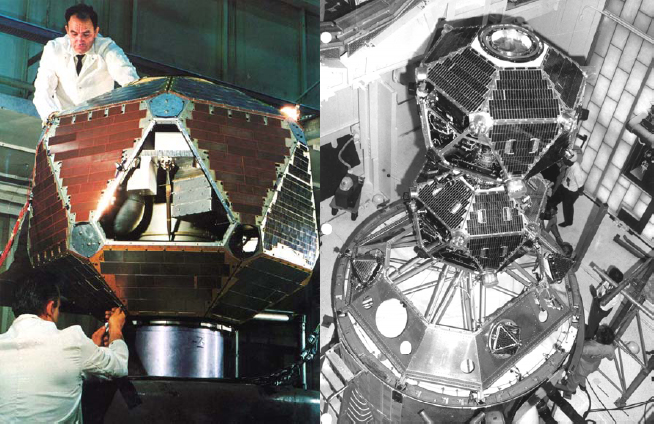
That the double flash detected by the Vela 6911 satellite on 22 September 1979 was a real, low-yield nuclear explosion, most probably a covert weapons test conducted jointly by Israel and apartheid South Africa in the remote South Atlantic or southern Indian Ocean, and that the Carter administration, wary of the diplomatic fallout, worked to explain the event away and bury the evidence that it had happened.
The detection is real: on 22 September 1979 the US Vela 6911 satellite recorded the double-flash signature it was built to catch, the same signature it had logged for dozens of confirmed nuclear tests. A White House scientific panel chaired by Jack Ruina concluded in 1980 that it was probably not a nuclear blast, possibly a micrometeoroid striking the aging satellite. But military intelligence analysts, the Naval Research Laboratory, and later declassified records and scholarship lean the other way, toward a real low-yield test widely suspected to be a joint Israeli-South African one. That test has never been officially confirmed and no perpetrator is established, so the cover-up claim rates as a strong but unproven suspicion, with the Israel/South Africa attribution the leading hypothesis rather than a proven fact.
Believed by: A large share of arms-control specialists and nuclear-intelligence veterans have long treated the event as a probable nuclear test; the identity of any tester remains disputed, and the US government has never publicly confirmed one.
The full story
The flash the satellite was built to see
The United States put the Vela satellites into orbit for one narrow, specific job. After the 1963 Partial Test Ban Treaty outlawed nuclear tests in the atmosphere, in space, and underwater, someone had to be able to tell if a signatory cheated. The answer was a constellation of sensors watching the Earth for the unmistakable optical fingerprint of a nuclear fireball: a very fast, very bright first flash, a brief dip as the expanding fireball cools and obscures itself, and then a slower, longer second flash as it grows and reheats. That double pulse is hard to fake and hard to mistake, and the instrument tuned to catch it, the bhangmeter, had recorded it for dozens of confirmed detonations.
At roughly 00:53 GMT on 22 September 1979, the satellite designated Vela 6911, launched a decade earlier in 1969, saw the pattern. It saw it over the far southern ocean, in the empty water near the Prince Edward Islands between the southern tip of Africa and Antarctica. Both of the satellite's bhangmeters registered the event, and the signal it traced looked, to the people whose profession was reading these signals, like the real thing. The system built to detect a clandestine nuclear test had, on the face of it, just detected one.
None of that is in serious dispute. The detection happened, the instrument was working, and the signature it recorded was the signature it existed to find. Everything contested in this case flows from the next question, the one the US government spent the following year fighting over: was the thing the satellite saw actually a bomb?
The case that a bomb went off
Take the believers' case at its strongest, because a great many serious people inside the US government held it. Start with the detector's pedigree. Vela was not a general-purpose camera that happened to catch something odd; it was a nuclear-test alarm with a clean record, and it rang. To dismiss the one alert that looks exactly like the event the system was designed for, you need a positive alternative explanation, and the innocent explanations on offer have always felt strained to the alarm's defenders.
Then the corroboration began to accumulate. The Naval Research Laboratory studied the hydroacoustic record, the sound of the event as it travelled through the ocean, and concluded in a lengthy classified analysis that the signals were consistent with a nuclear explosion near the Prince Edward Islands. The Defense Intelligence Agencyread the evidence as pointing to a test, and the CIA's own analysts put the probability of a nuclear detonation at better than ninety percent. When the White House panel came back with its skeptical finding, DIA officials were scathing; the agency's deputy director for scientific and technical intelligence, Jack Varona, called the study a “whitewash”driven by “political considerations” and built on “flimsy” reasoning.
A sensor built to catch a secret nuclear test caught exactly the signature it was built for, and the government's own military analysts spent years insisting that was no accident.
The suspicion reached the top. In a diary entry from early 1980, President Jimmy Carterrecorded a “growing belief among our scientists that the Israelis did indeed conduct a nuclear test explosion in the ocean near the southern end of Africa.” And the case did not fade with time. In 2018, physicists Lars-Erik De Geer and Christopher Wright published a detailed reassessment in Science & Global Security resting, in their words, on three pillars: the original optical signal, the hydroacoustic data, and traces of iodine-131, a short-lived fission product, later found in the thyroids of Australian sheep in a pattern they argued matched a fallout plume drifting from a low-yield test in the southern Indian Ocean. Four decades on, the weight of new analysis was pushing toward a bomb, not away from one.
The panel that explained it away
Against all that stands the finding that became the semi-official US position, and it deserves a fair hearing rather than a sneer. In the autumn of 1979 the White House science adviser, Frank Press, convened an ad hoc panel of eminent outside scientists, chaired by MIT electrical engineer and arms-control veteran Jack Ruina, to weigh the evidence independently of the intelligence agencies. On 23 May 1980, it reported that the event was probably not a nuclear explosion.
Its reasoning was not frivolous. The panel noted that the recorded light curve, while broadly double-flash-shaped, deviated in its details from the clean signature of a known nuclear test. It observed that the alert had come from only one satellite and that other sensors had not clearly and independently confirmed a blast. Crucially, US aircraft sent to sample the air over the suspected site had not trapped the fresh radioactive debris a real atmospheric test should have thrown into the sky. To explain the flash innocently, the panel raised the possibility of a so-called zoo event: some rare natural or instrumental artifact. Its most-quoted suggestion was that a tiny micrometeoroid could have struck the decade-old satellite, throwing off a small cloud of debris that briefly reflected sunlight into the bhangmeters and mimicked the two-pulse pattern.
The honest weight of this is real: absence of captured fallout is a genuine problem for the nuclear reading, and a decade-old satellite is a plausible thing to malfunction. But the panel proved nothing. It reasoned from gaps and oddities to a probability, under acknowledged diplomatic pressure, and against the contrary judgement of the very agencies whose job was nuclear intelligence. A micrometeoroid producing, by chance, the one signature the instrument was built to recognize is itself an extraordinary coincidence. “Probably not,” from a divided process, is a long way from a case closed.
Why the cover-up story endures
The Vela story has kept its grip for forty years, and not mainly because of amateur speculation. It endures because the people best placed to know disagreed, on the record, and because the version the public was handed was the more convenient one for Washington to believe. When the official answer is also the answer that spares the government an ugly diplomatic problem, suspicion follows almost automatically, whether or not it is deserved.
The context supplied the motive. In late 1979 the Carter administration was straining to ratify the SALT II arms-control treaty, managing a delicate relationship with Israel in the wake of the Camp David accords, and navigating pressure over its ties to apartheid South Africa. Publicly confirming that a US ally had detonated a nuclear device in defiance of the test-ban regime would have detonated something else: a political crisis with no good options. A finding of “probably not a bomb” made all of those problems disappear. To many observers, that is exactly why it looks suspect.
The suspected culprits fit the frame too. Israel and South Africa had a documented military and technical relationship, and South Africa controlled the very islands nearest the flash. That two secretive states, one of which has never confirmed possessing nuclear weapons at all, could run a covert test and then simply never admit it is entirely believable, which lets the theory treat the missing confession not as a hole in the case but as proof of how well the secret was kept. Claims like those of the convicted spy Commodore Dieter Gerhardt, who spoke of a joint test he had heard called Operation Phenix, feed the narrative even when, as he himself admitted, they rest on hearsay rather than firsthand knowledge. And every subsequent tranche of declassified documents, showing how genuinely unresolved the internal debate was, reinforces the sense that the tidy public answer was papering over a messier truth.
A dispute the record never closed
Two things have to be held together here, and the discipline of the case is refusing to collapse them. The detection was real and the scientific dispute was real; the identity of a perpetrator, and the deliberate cover-up, are not proven. Those statements do not contradict each other, and the fair verdict lives in the space between them.
What is documented: Vela 6911 recorded the double-flash signature it was built to detect; the Naval Research Laboratory, the DIA, and CIA analysts read the event as probably nuclear; the Ruina panel concluded it probably was not; a senior intelligence official called that panel a whitewash; Carter privately suspected an Israeli test; and later analysis, up to the 2018 reassessment, has tended to strengthen the nuclear reading. What is not documented is a confession, a captured debris cloud from 1979, or any official confirmation of who, if anyone, set off a bomb.
So the balance of the later evidence and scholarship leans toward a nuclear test, and the leading hypothesis names Israel and South Africa. But leaning is not proving. No perpetrator is established, the single strongest skeptical point (the missing fresh fallout) has never been fully resolved, and no government has confirmed the event. That is why the label here is unproven rather than substantiated or debunked: a strong, credentialed, decades-old suspicion that a covert test was carried out and smoothed over, sitting on top of a detection nobody disputes, but never carried across the line into confirmed fact. It is one of the rare cases where the responsible reading and the suspicious one point the same way, and still cannot close.
What's still unexplained
- Why did the light signal fall short of a perfect match? The Ruina panel leaned on the argument that the recorded double flash deviated somewhat from an ideal nuclear signature. Defenders of the nuclear reading say a low-yield or unusual device and the geometry of the detection can account for that, but the exact shape of the curve, and how much weight it should bear, is still argued.
- Where was the fallout? US aircraft flew sampling missions to catch airborne debris from a suspected blast and did not return a clear signature at the time. The later iodine-131-in-sheep argument tries to fill that gap, but the initial failure to trap fresh fallout remains the single strongest point for the skeptics and has never been fully reconciled with the nuclear reading.
- How firm was the corroborating sensor data really? The Naval Research Laboratory's hydroacoustic conclusion and the ionospheric and other readings cited over the years are suggestive, yet much of the underlying data is technical, partly classified, or open to competing interpretation, so honest analysts still differ on how decisively it points to a bomb.
- If it was a test, whose was it, and was it even a single event? The Israel-South Africa hypothesis is the front-runner, but responsibility has never been confirmed, alternative attributions have been floated, and even the assumption that the flash marks one deliberate weapons test rather than some other phenomenon cannot be closed on the public record.
Point by point
The claim: The satellite that saw the flash was purpose-built to detect nuclear tests and had never cried wolf before.
What the record shows: This is accurate and is the core of the case. The Vela system existed specifically to catch atmospheric nuclear explosions, and its bhangmeters had reliably recorded the double-flash signature of dozens of confirmed detonations without a known false alarm of this kind. On 22 September 1979 both bhangmeters on Vela 6911 registered the pattern. The dispute is not about whether the satellite fired an alert; it is about whether, this one time, a bomb was really what it saw.
The claim: Independent sensors, from underwater microphones to fallout in sheep, back up a real nuclear blast.
What the record shows: Partly, and this is where the later evidence tilts toward a test. The Naval Research Laboratory analyzed hydroacoustic signals (sound carried through the ocean) and concluded they were consistent with a nuclear shot near the Prince Edward Islands. Traces of iodine-131, a short-lived fission product, later turned up in the thyroids of Australian sheep in a pattern De Geer and Wright argued fit a fallout plume from a southern-ocean test. But none of this is airtight: no debris cloud was ever captured by aircraft sampling flights sent to hunt for it, and each strand of corroboration has been challenged. It strengthens the suspicion without closing it.
The claim: A White House panel proved it was not a bomb, just space junk hitting an old satellite.
What the record shows: Overstated. The Ruina panel concluded the flash was probably not nuclear and floated a micrometeoroid impact as a possible innocent cause, but it proved no such thing. It reasoned largely from the absence of clear corroboration and from oddities in the light curve, and it was assembled under real diplomatic pressure. Its own government critics, at the Naval Research Laboratory and the Defense Intelligence Agency, regarded the finding as unpersuasive, and one senior intelligence official called it a whitewash. A 'probably not' from a divided panel is not the same as a demonstrated non-event.
The claim: The perpetrator is known: it was a joint Israeli-South African test.
What the record shows: Not established, though it is the leading hypothesis. The circumstantial case is real: apartheid South Africa and Israel had a documented military relationship, South Africa controlled the islands nearest the blast, and Carter privately suspected an Israeli test. A convicted Soviet spy in the South African navy, Commodore Dieter Gerhardt, later claimed the event was a joint test he had heard called 'Operation Phenix,' but he acknowledged he had no direct, firsthand knowledge of it. No government has ever confirmed responsibility, and the specific Israel-South Africa attribution rests on inference, not proof.
Timeline
- 1963–1970The United States launches the Vela satellites to police the 1963 Partial Test Ban Treaty, which barred nuclear tests in the atmosphere, in space, and underwater. Each carries bhangmeters, optical sensors tuned to the distinctive double flash of a nuclear fireball: a brief first pulse, a dip, then a longer second pulse. Vela 6911 goes up in 1969.
- 1979-09-22At about 00:53 GMT, Vela 6911 records a textbook double flash over the far southern ocean near the Prince Edward Islands, between southern Africa and Antarctica. Both of the satellite's bhangmeters see it, and the signal matches the pattern the system had logged for dozens of prior confirmed nuclear detonations.
- 1979-10The detection triggers alarm across the US government. Early intelligence assessments lean toward a nuclear test; the CIA later puts the odds at better than 90 percent. The Carter administration, mid-way through a fragile push to ratify the SALT II arms treaty and manage relations with both Israel and South Africa, treats the finding as diplomatically explosive.
- 1980-05-23An ad hoc panel of outside scientists convened by White House science adviser Frank Press and chaired by MIT's Jack Ruina reports that the signal was probably not a nuclear explosion. It notes that no other sensor clearly corroborated a blast and suggests the flash could have been a 'zoo event': possibly sunlight glinting off debris knocked loose by a micrometeoroid striking the decade-old satellite.
- 1980The panel's verdict does not settle the argument. The Naval Research Laboratory's own lengthy study of hydroacoustic data points toward a nuclear event near the Prince Edward Islands, and Defense Intelligence Agency officials dismiss the White House study as a 'whitewash' driven by 'political considerations.' President Carter privately records a 'growing belief among our scientists that the Israelis did indeed conduct a nuclear test.'
- 1997South African deputy foreign minister Aziz Pahad is widely reported as confirming that the 1979 flash was a South African test, though his office quickly muddies the account, and the remark is later described as referring only to persistent rumors rather than a firm admission.
- 2016–2019The National Security Archive publishes successive tranches of declassified CIA, State Department, and Pentagon records on the event, showing how divided and unresolved the internal assessments were and how much the Ruina panel's skepticism was contested from within the government.
- 2018Physicists Lars-Erik De Geer and Christopher Wright publish a detailed reanalysis in Science & Global Security, arguing that the optical signal, hydroacoustic data, and traces of iodine-131 later found in Australian sheep thyroids together point to a low-yield nuclear test near the Prince Edward Islands.
From the case file
The actual records: declassified, released, or leaked. We link straight to each document in its official archive, so you never have to take our word for it. Read the originals yourself.
The Vela Incident: Nuclear Test or Meteorite? (Electronic Briefing Book No. 190)
A curated set of declassified US intelligence and diplomatic records on the flash, including the assessments that put the odds of a nuclear detonation high and the internal criticism of the Ruina panel's skeptical conclusion. The raw material that shows how divided the government was.
Read the document: National Security Archive →The Vela Flash: Forty Years Ago
A 2019 release of further declassified documents marking the fortieth anniversary, tracing the unresolved internal debate over whether Vela 6911 had detected a real nuclear test and how the Carter administration handled the diplomatic risk.
Read the document: National Security Archive →Foreign Relations of the United States, 1977–1980, Vol. XVI, Southern Africa, Doc. 293 (Interagency Assessment)
An interagency assessment reproduced in the official State Department documentary history, capturing the government's contemporaneous, cautious internal reading of the South Atlantic event and the policy questions it raised.
Read the document: U.S. State Department, Office of the Historian →The detection is real: on 22 September 1979 the US Vela 6911 satellite recorded the double-flash signature it was built to catch, the same signature it had logged for dozens of confirmed nuclear tests. A White House scientific panel chaired by Jack Ruina concluded in 1980 that it was probably not a nuclear blast, possibly a micrometeoroid striking the aging satellite. But military intelligence analysts, the Naval Research Laboratory, and later declassified records and scholarship lean the other way, toward a real low-yield test widely suspected to be a joint Israeli-South African one. That test has never been officially confirmed and no perpetrator is established, so the cover-up claim rates as a strong but unproven suspicion, with the Israel/South Africa attribution the leading hypothesis rather than a proven fact.
Reviewed by Colin Peterson · Last reviewed July 12, 2026 · How we rate
Common questions
Is Vela Incident true?
The detection is real: on 22 September 1979 the US Vela 6911 satellite recorded the double-flash signature it was built to catch, the same signature it had logged for dozens of confirmed nuclear tests. A White House scientific panel chaired by Jack Ruina concluded in 1980 that it was probably not a nuclear blast, possibly a micrometeoroid striking the aging satellite. But military intelligence analysts, the Naval Research Laboratory, and later declassified records and scholarship lean the other way, toward a real low-yield test widely suspected to be a joint Israeli-South African one. That test has never been officially confirmed and no perpetrator is established, so the cover-up claim rates as a strong but unproven suspicion, with the Israel/South Africa attribution the leading hypothesis rather than a proven fact.
What is Vela Incident?
Just before dawn on 22 September 1979, a veteran US surveillance satellite over the far southern ocean recorded a brief, intense double flash: the optical fingerprint of a nuclear explosion, and the very thing the satellite had been launched to detect. What followed was a decade-long argument inside the US government that has never fully…
What does the evidence show?
This is accurate and is the core of the case. The Vela system existed specifically to catch atmospheric nuclear explosions, and its bhangmeters had reliably recorded the double-flash signature of dozens of confirmed detonations without a known false alarm of this kind. On 22 September 1979 both bhangmeters on Vela 6911 registered the pat…
Why do people believe it?
The detection is genuinely hard to wave away. A sensor built for exactly this purpose, with a clean track record, saw exactly the signature it was built to see. Explaining that away as a freak glitch asks the skeptic to believe the one anomaly happened to look precisely like the thing being watched for.
What is still unresolved?
Why did the light signal fall short of a perfect match? The Ruina panel leaned on the argument that the recorded double flash deviated somewhat from an ideal nuclear signature. Defenders of the nuclear reading say a low-yield or unusual device and the geometry of the detection can account for that, but the exact shape of the curve, and h…
Sources
- 1.The Vela Incident: Nuclear Test or Meteorite? (Electronic Briefing Book No. 190), National Security Archive, George Washington University (ed. William Burr and Jeffrey T. Richelson) (2006)
- 2.The Vela Flash: Forty Years Ago, National Security Archive, George Washington University (Nuclear Vault briefing book) (2019)
- 3.The Vela Incident: South Atlantic Mystery Flash in September 1979 Raised Questions about Nuclear Test, National Security Archive, George Washington University (2016)
- 4.Foreign Relations of the United States, 1977–1980, Volume XVI, Southern Africa, U.S. Department of State, Office of the Historian (2016)
- 5.The 22 September 1979 Vela Incident: Radionuclide and Hydroacoustic Evidence for a Nuclear Explosion, Lars-Erik De Geer and Christopher M. Wright, Science & Global Security, Vol. 26, No. 1 (pp. 20–54) (2018)
- 6.The 22 September 1979 Vela Incident: The Detected Double-Flash, Christopher M. Wright and Lars-Erik De Geer, Science & Global Security, Vol. 25, No. 3 (2017)
- 7.Blast From the Past: Why an Old Nuclear Mystery Still Matters, Foreign Policy (2019)
- 8.The Unspoken Alliance: Israel's Secret Relationship with Apartheid South Africa, Sasha Polakow-Suransky, Pantheon Books (2010)
Embed this case file on your site
Paste this snippet to show this case file as a small card, with a link back to the full write-up. Free to use.
<iframe src="https://theconspiratory.com/embed/vela-incident" title="The Conspiratory verdict" width="520" height="190" style="border:0;max-width:100%" loading="lazy"></iframe>Help us investigate
This is a living case file. If you spot an error or know evidence we missed, tell us, and weigh in on where you land.
Where do you land?
Cast your read on this one.
Comments
Add your take. Comments are read and approved by a human before they appear, so keep it on topic and civil. Please do not accuse named, living people of crimes.