The aswang, a shape-shifting, blood-drinking creature of Philippine folklore, exists as a literal being
By Colin PetersonJuly 8, 2026
Where the evidence lands →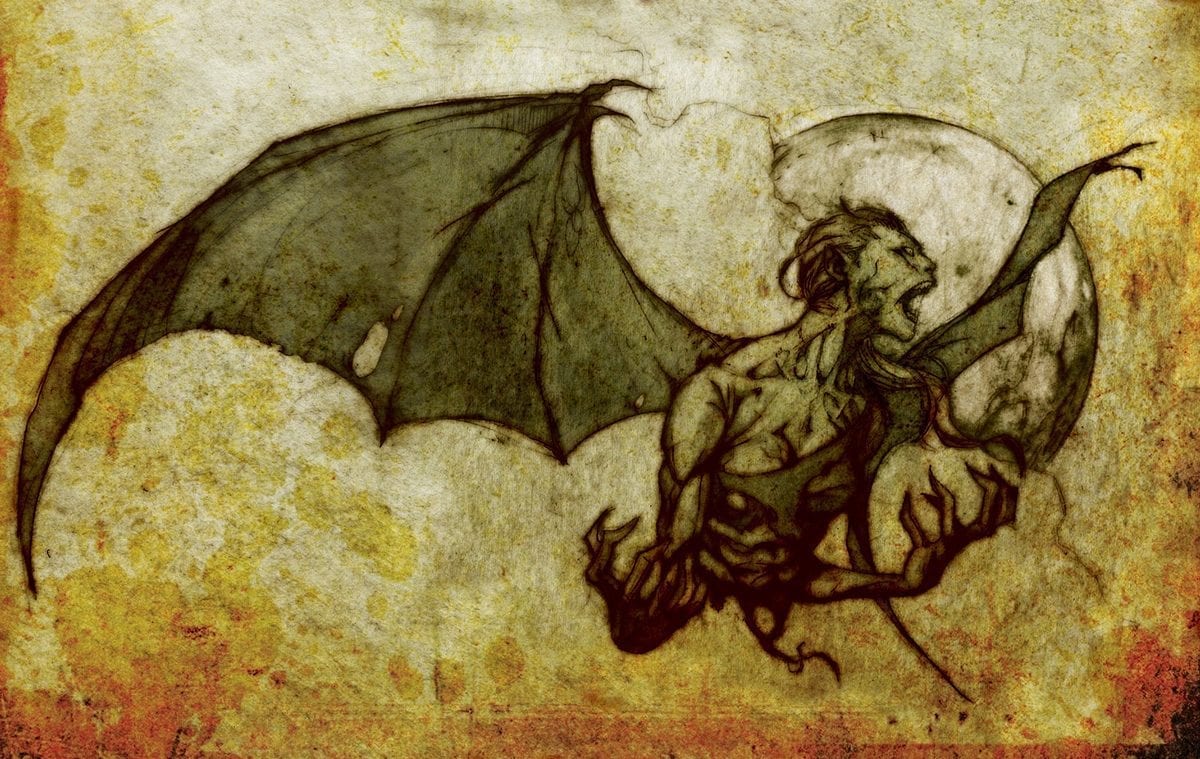
That the aswang is not merely a folkloric figure but a literal living creature: a human-seeming being able to transform into an animal or to detach part of its body, that hunts at night and feeds on human blood, flesh, or the unborn, and that continues to exist undetected in the rural Philippines.
The aswang is one of the oldest and most deeply rooted figures in Philippine folklore, a genuine tradition documented in Spanish colonial records from the late 16th century and studied seriously by folklorists ever since. That the tradition is real and culturally important is not in question. The claim we rate is narrower: that a literal shape-shifting, blood-drinking creature physically exists. No verified body, remains, or repeatable evidence has ever established such a being. This file treats the folklore with respect and rates only the physical claim, not the belief or the culture that carries it.
Believed by: Known across the Philippines and the Filipino diaspora as folklore. Belief in a literal aswang persists in some rural communities, most strongly associated with the Western Visayas, especially the province of Capiz, where the label still carries real social weight.
The full story
What is documented
Begin with what is solid, because a great deal here is. The aswang is a real and ancient thread of Philippine folklore, not a modern hoax and not a foreign import. It is best understood as an umbrella term rather than a single creature: the folklorist Maximo D. Ramos grouped the many beings gathered under the name into families that loosely parallel Western figures, the vampire, the self-severing viscera-sucker (the manananggal), the weredog, the witch, and the ghoul. Across regions the details shift, which is exactly what a living oral tradition looks like.
The written record runs deep. Spanish friars and chroniclers in the late 16th century, among them the Franciscan Juan de Plasencia, recorded native beliefs and named an osuang or asuang among the beings that communities most feared. That places the tradition in the documentary record more than four centuries ago, on top of an oral history older still.
So the question this file weighs is not whether the aswang tradition is real. It plainly is, and it deserves to be treated with respect as a genuine part of Philippine culture. The narrower question is whether the literal claim, that a physical shape-shifting, blood-drinking creature actually exists and hunts today, is supported by evidence. Those are different questions, and this case turns on keeping them apart.
The case believers make
The strongest version of the belief is not a comic-book monster; it is an appeal to depth and consistency. The aswang has been feared for centuries, described in remarkably stable terms, the ordinary neighbor by day and the predator by night, across communities that had little contact with one another. To many, a figure this old and this widespread cannot be simply nothing.
Believers can also point to the fact that outsiders recorded it. Spanish missionaries, no friends of native belief, still wrote the aswang down. And the tradition is tied to real, painful history: in communities that suffered sudden infant and maternal deaths and unexplained illness, the aswang named a threat and gave people something to do about it.
A tradition carried for four hundred years, feared, recorded, and still alive, is a serious cultural fact. The question is what kind of fact it is.
The honest form of the case is not that a specimen has been produced. It is that a belief this deep, this old, and this consistent should not be waved away, and that the experiences behind it, the fear, the loss, the sense of a predator in the dark, were real to the people who lived them.
Where the literal claim breaks down
Respect for the tradition is one thing; the physical claim is another, and it is here that the evidence runs out. In more than four centuries of intense belief, no verified specimen, no remains, and no repeatable observation of a shape-shifting, blood-drinking creature has ever been established. What the record holds, abundantly, is testimony and story. That documents a belief. It does not document a biology.
The consistency that impresses believers is better explained by shared culture than by a shared animal. Ramos and other folklorists found not one uniform creature but a family of related beings whose traits vary by region and blur into one another, the fingerprint of oral transmission, not of a species. Motifs travel because they are told, retold, and adapted, which is how folklore everywhere behaves.
The colonial record, read carefully, cuts against the literal claim as much as for it. The friars were cataloguing and condemning native belief, and several scholars argue that the aswang as later documented was partly a colonial construction, a way of recasting the pre-colonial babaylan, respected priestess-healers, as something monstrous. On that reading, part of what we call the aswang is a record of suppression, not a sighting of a creature.
And the one famously drained body in the modern record was a fabrication. That episode belongs in its own section, because it shows precisely how a powerful belief can be manufactured into apparent evidence.
The corpse that was staged
In the early 1950s, during the Hukbalahap rebellion, the American officer Edward Lansdale worked with Philippine forces on counterinsurgency. In his 1972 memoir he described using aswang belief as a weapon. Agents first seeded rumors that an aswang was haunting a hill held by insurgents. Then, after the rumors had time to spread, a patrol member was ambushed and his body left drained and marked to look like an aswang killing. When comrades found it, the unit is said to have abandoned the position.
The episode is often retold as if it were a brush with the supernatural. It is the opposite. It is a documented case of a fabricated aswang, produced deliberately by people who knew exactly how potent the belief was. If anything, it is evidence of how readily a drained body can be staged, and how quickly fear supplies the rest.
The most famous aswang killing of the twentieth century was arranged by men who did not believe in the aswang at all.
That is the general shape of the physical claim. Where deaths, disappearances, or drained bodies have been blamed on the aswang, ordinary causes, illness, crime, predation, or, as here, deliberate deception, have not been ruled out by any verified evidence. A story can be true as culture and still fail as biology.
Why the belief endures
The aswang persists for reasons that have little to do with whether a creature exists, and much to do with what the belief does for the people who hold it. It is, first, genuinely old, carried across generations and colonial rupture, which gives it an authority that no passing rumor can match.
It also explains the unbearable. In communities that faced sudden infant and maternal death and unexplained sickness, a named predator gave shape to grief and offered precautions that restored a sense of control. A frightening world with a name for the danger can feel more survivable than one without.
The belief has been refreshed repeatedly by the powerful: colonial preachers who found it useful, a Cold War operation that exploited it, and a long line of films, comics, and stories that keep it vivid. Each retelling lends the figure new apparent life.
It carries, finally, a real social edge. In some places the label still attaches to midwives, healers, and elderly women living alone. That pattern deserves sober attention, not for what it says about monsters, but for what it says about how suspicion falls on the marginal. Treating an accusation as proof has harmed real people, which is one more reason to hold the folklore and the literal claim firmly apart.
Folklore, not a literal creature
Hold the two claims apart, and the case resolves cleanly. The aswang as folklore is authentic, ancient, and culturally important, documented for more than four centuries and alive today. Nothing here diminishes that, and it should be met with respect rather than ridicule.
The literal creature, a physical shape-shifting, blood-drinking being that exists and hunts, is a different claim, and it has never been established. There is no verified specimen, no remains, and no repeatable evidence; the consistency of the tradition is explained by shared culture, the colonial record documents belief and its suppression rather than a monster, and the most famous modern "killing" was staged.
The honest posture is the one this tradition itself invites: to take the aswang seriously as culture, memory, and lived belief, while declining to convert a rich folklore into a biological fact it has never supported. The story is real. The creature, on the evidence, remains unproven, and the people the accusation still touches deserve to be kept in view.
What's still unexplained
- How much of the aswang as we know it is pre-colonial and how much was reshaped by the Spanish encounter, especially the recasting of the babaylan? Historians and folklorists still debate the balance, and the sources are fragmentary.
- Why does the tradition cluster so strongly in the Western Visayas, and Capiz above all? Regional concentration of a folk figure is a real and interesting pattern that cultural history, not cryptozoology, is best placed to explain.
- What is the responsibility of media and institutions when a living belief still leads to the stigmatizing of real people, particularly women and healers? This is an open ethical question the legend raises today.
- How should a respectful account weigh a tradition that is authentic and valuable as culture while its literal-creature claim remains unproven? Holding both at once, without mockery and without credulity, is the honest posture this case asks for.
Point by point
The claim: A literal shape-shifting, blood-drinking creature stalks the rural Philippines.
What the record shows: No verified physical evidence has ever been produced: no specimen, no remains, no repeatable observation that survives scrutiny. What exists is a large and valuable body of testimony, oral tradition, and cultural record. That documents a belief, richly and authentically, but it does not establish a biological creature. The absence of any confirmable physical trace, across centuries of intense belief, is what keeps the literal claim unproven.
The claim: Spanish colonial records prove the aswang is real, since Europeans documented it too.
What the record shows: The colonial records are genuine and important, but they document what people believed and feared, not a captured creature. Friars and chroniclers were recording native cosmology, often to catalogue and suppress it. Some scholars read these accounts as evidence that the aswang figure was partly shaped, and darkened, by the colonial encounter itself, particularly in how it was mapped onto native women and healers. The written record is strong evidence for the tradition and weak evidence for a monster.
The claim: So many consistent sightings across regions cannot all be invented.
What the record shows: Consistency of a folk figure across a culture reflects shared storytelling, not a shared animal. Folklorists such as Maximo Ramos found not one uniform creature but a family of related beings that vary by region, which is the signature of a living oral tradition rather than a single species. Recurring motifs, the ordinary neighbor by day, the predator by night, the taste for the vulnerable, are how folklore transmits, not proof of a population of creatures.
The claim: Real events, like drained bodies, show the aswang is more than a story.
What the record shows: The most famous drained body in the aswang record was staged. During the Huk rebellion, a psychological-warfare operation deliberately produced an aswang-style corpse to frighten insurgents, and its architect later described the trick in print. That episode shows how powerful the belief was and how it could be exploited; it is the opposite of proof that a creature exists. Where deaths or disappearances have been blamed on the aswang, ordinary explanations, illness, predation, crime, fear, have not been ruled out in favor of the supernatural by any verified evidence.
The claim: People accused of being aswang really are aswang.
What the record shows: The historical and social record points the other way. Aswang accusations have fallen heavily on midwives, healers, unusual or reclusive individuals, and elderly women living alone, a pattern that tracks social suspicion and marginalization rather than any tested trait. Treating the accusation as confirmation reverses the burden of proof and, in practice, has harmed real people. This is a reason to handle the belief soberly, not evidence for a creature.
Timeline
- Pre-colonialIn pre-colonial Philippine societies, spiritual life centered on the babaylan, respected priestess-healers (often women) who led rituals, healing, and mediation with the spirit world. Beliefs in night-feeding and shape-shifting beings existed within a rich oral cosmology long before any written record.
- 1589Franciscan missionary Juan de Plasencia sets down accounts of Tagalog customs and supernatural beliefs; Spanish chroniclers of this era record an "osuang" or "asuang" among the beings native communities most feared. These are among the earliest surviving written references to the tradition.
- 16th–17th c.As Spanish friars catalogue and condemn indigenous belief, some scholars argue the colonial project recast the babaylan and other native spiritual leaders, especially women, as malevolent aswang, turning a source of pre-colonial authority into a figure of dread. The aswang becomes entangled with the suppression of native religion.
- 17th–19th c.Aswang lore consolidates regionally, taking on distinct local forms across the archipelago. The Western Visayas, and Capiz in particular, become the tradition's most famous heartland, a reputation the province still carries.
- 1930s–1960sFolklorist Maximo D. Ramos undertakes a systematic study of Philippine lower mythology, collecting and classifying aswang accounts from across the country and mapping the tradition's regional variety.
- 1950sDuring the Hukbalahap rebellion, U.S. officer Edward Lansdale, working with Philippine forces, exploits aswang belief as psychological warfare: agents seed rumors that an aswang haunts a hill held by insurgents, then leave a drained corpse to be found. The tactic, recounted in Lansdale's own 1972 memoir, is a documented case of folklore turned into a weapon.
- 1969Ramos publishes his taxonomic framework, grouping the many aswang beings into categories that parallel Western creatures: the vampire, the self-segmenting viscera-sucker, the weredog, the witch, and the ghoul. The work becomes a standard reference for scholars of the tradition.
- 2011Canadian filmmaker Jordan Clark releases the documentary The Aswang Phenomenon, examining the legend's history and its persistence; the associated Aswang Project becomes a widely used free resource on Philippine mythology.
- PresentThe aswang endures in film, fiction, and living belief. In parts of Capiz and elsewhere, accusations still attach to midwives, herbalists, and elderly women living alone, and some families are reported to have relocated to escape the label.
The aswang is one of the oldest and most deeply rooted figures in Philippine folklore, a genuine tradition documented in Spanish colonial records from the late 16th century and studied seriously by folklorists ever since. That the tradition is real and culturally important is not in question. The claim we rate is narrower: that a literal shape-shifting, blood-drinking creature physically exists. No verified body, remains, or repeatable evidence has ever established such a being. This file treats the folklore with respect and rates only the physical claim, not the belief or the culture that carries it.
Reviewed by Colin Peterson · Last reviewed July 8, 2026 · How we rate
Common questions
Is The aswang true?
The aswang is one of the oldest and most deeply rooted figures in Philippine folklore, a genuine tradition documented in Spanish colonial records from the late 16th century and studied seriously by folklorists ever since. That the tradition is real and culturally important is not in question. The claim we rate is narrower: that a literal shape-shifting, blood-drinking creature physically exists. No verified body, remains, or repeatable evidence has ever established such a being. This file treats the folklore with respect and rates only the physical claim, not the belief or the culture that carries it.
What is The aswang?
The aswang is an umbrella term in Philippine folklore for a family of night-feeding, shape-shifting beings: the blood-drinking vampire type, the self-severing viscera-sucker (the manananggal), the weredog, the witch, and the ghoul. Described as an ordinary neighbor by day and a predator by night, the aswang has been feared for centuries,…
What does the evidence show?
No verified physical evidence has ever been produced: no specimen, no remains, no repeatable observation that survives scrutiny. What exists is a large and valuable body of testimony, oral tradition, and cultural record. That documents a belief, richly and authentically, but it does not establish a biological creature. The absence of any…
Why do people believe it?
The tradition is genuinely ancient and culturally central. The aswang is not a modern invention or an import; it is woven through centuries of Philippine oral culture, which gives it a depth and authority that a passing rumor never has.
What is still unresolved?
How much of the aswang as we know it is pre-colonial and how much was reshaped by the Spanish encounter, especially the recasting of the babaylan? Historians and folklorists still debate the balance, and the sources are fragmentary.
Sources
- 1.Aswang, Wikipedia (2026)
- 2.The Maximo Ramos Taxonomical Classifications of the Aswang, The Aswang Project (2016)
- 3.PSYWAR in the Philippines: ASWANG of the CIA, The Aswang Project (2016)
- 4.From Babaylan to Aswang?, The Aswang Project (2016)
- 5.False Fang: When the CIA Staged a Vampire Attack, Mental Floss (2017)
- 6.How the CIA Used 'Vampires' to Fight Communism in the Philippines, HowStuffWorks (2020)
- 7.Inside The Disturbing Legend Of The Aswang, The Monster Of Filipino Folklore, All That's Interesting (2022)
- 8.Edward Lansdale, Wikipedia (2026)
Embed this case file on your site
Paste this snippet to show this case file as a small card, with a link back to the full write-up. Free to use.
<iframe src="https://theconspiratory.com/embed/aswang" title="The Conspiratory verdict" width="520" height="190" style="border:0;max-width:100%" loading="lazy"></iframe>Help us investigate
This is a living case file. If you spot an error or know evidence we missed, tell us, and weigh in on where you land.
Where do you land?
Cast your read on this one.
Comments
Add your take. Comments are read and approved by a human before they appear, so keep it on topic and civil. Please do not accuse named, living people of crimes.