A giant serpent-like creature lives in Bear Lake on the Utah-Idaho border, carrying off swimmers and eluding capture
By Colin PetersonJuly 8, 2026
Where the evidence lands: Contradicted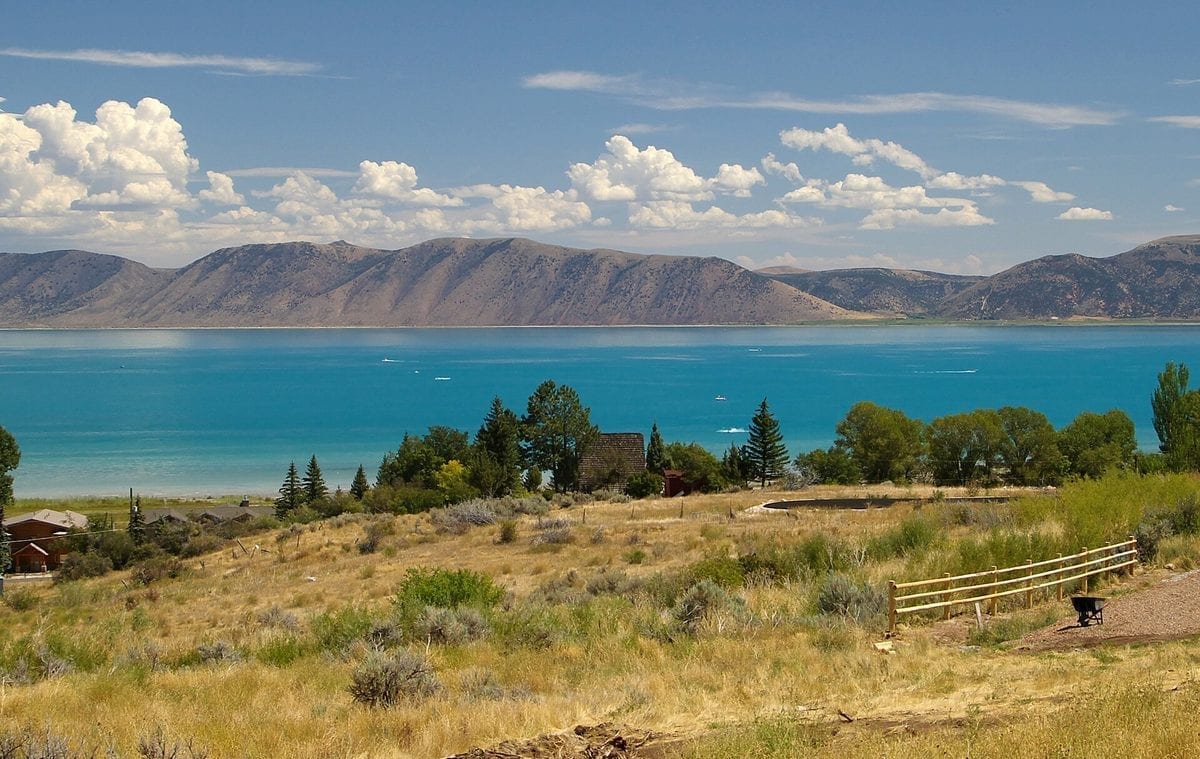
That Bear Lake is home to a real, living, unclassified creature: a serpent or reptile-like animal, often described as tens of feet long with a head likened to a cow, otter, alligator, or walrus, that surfaces from time to time, has attacked people and animals, and has never been captured or scientifically identified.
Contradicted. The Bear Lake Monster as the public knows it traces to a single source: a July 1868 dispatch in the Deseret News by Joseph C. Rich, a settler and correspondent, who years later admitted the piece was, in his own phrase, a wonderful first-class lie. That is the claim we rate here, that a literal, undiscovered giant creature inhabits Bear Lake, and it is debunked, not because a lake can ever be proven empty but because the specific legend that seeded every later sighting was fabricated by its author and no physical evidence (no carcass, no bone, no verified photograph, no sonar contact) has surfaced in more than 150 years. What is on the record is real and is treated with respect below: a durable regional folklore tradition, framed by Rich as rooted in older Indigenous storytelling, that outlived its own confessed hoax and became a beloved part of Utah and Idaho culture.
Believed by: A regional folklore audience in northern Utah and southern Idaho, sustained today more as celebrated local heritage and a tourism draw than as literal belief, though occasional sincere sighting reports still appear
The full story
What is documented
Start with what is solidly on the record, because it is unusually clear. On 31 July 1868, the Deseret News in Salt Lake City published a letter from a local correspondent named Joseph C. Rich, reporting that a serpent-like monster had been seen in the waters of Bear Lake, the large turquoise lake that straddles the Utah-Idaho border. Rich framed the creature as part of an older tradition among Native people of the area and relayed several recent settler sightings.
The descriptions in that founding account did not agree with one another. Some witnesses gave the creature a head like a cow, others an otter, a crocodile, or a walrus; some put its length at forty or fifty feet, others at far less; some gave it short legs, others none at all. The story spread rapidly, more reports followed, and within a generation the Bear Lake Monster was one of the best-known lake legends in the American West.
All of that is genuine folklore history and is now treated as such: Utah State University's folklore program has studied the tradition, and in 2025 a roadside heritage marker was dedicated near the lake. So the question this file weighs is not whether the legend exists, plainly it does, but whether a literal, living creature lies behind it.
The tradition underneath
Before turning to the creature claim, the Indigenous strand deserves care rather than decoration. Native peoples of the Bear Lake region, including bands of the Shoshone, have long and meaningful traditions connected to the lake and its landscape. Rich's 1868 dispatch invoked such a tradition, describing a serpent said to inhabit the water.
Folklorists urge caution here. Rich's piece was a settler-era newspaper creation that gestured at Indigenous tradition; it is not a faithful ethnographic record, and reading his later-confessed hoax back onto Native storytelling would misrepresent both. The honest position is twofold: real Indigenous traditions surrounding Bear Lake exist and deserve respect on their own terms, and the popular monster, the one printed in a Salt Lake City newspaper and retold by settlers, is a distinct, documented, nineteenth-century phenomenon with a known author.
Keeping those apart matters. A genuine cultural tradition near a lake is not, and was never meant to be, proof that a literal animal swims in it.
The case people make
The believer's case is worth stating at its strongest. The story did not appear in a supermarket tabloid; it ran in a real, respected newspaper, written by a known local figure, and framed as older tradition rather than idle rumor. To an 1868 reader that carried the weight of reportage.
And the reports did not stop. Sightings recur across more than a century, from letters in the early 1900s to a child's account in the 1930s to a Boy Scout leader in the 1940s and a tour-boat operator in 2002. The lake itself cooperates with the legend: Bear Lake is large, deep, and an arresting shade of turquoise, exactly the kind of place where the imagination grants that something could be down there.
A vivid story, printed as fact, in a place that looks like it could hide a monster, and witnesses who keep coming forward. The pull is easy to feel. The question is whether any of it touches a real animal.
The strongest honest form of the case is not that a creature has been proven, but that a genuine, persistent tradition, with sincere witnesses across generations, ought not be waved away as nothing at all.
A first-class lie
The tradition is real. The creature is a different matter, and here the case collapses at its source. Roughly a quarter-century after his dispatch, Joseph C. Rich himself admitted that the original story was invented, calling it, in his own words, a wonderful first-class lie.
That confession is decisive because every later strand of the legend descends from Rich's single seeded report. A document whose own author says he fabricated it cannot document a real animal. And the internal evidence always pointed the same way: the founding descriptions contradicted each other, a head like a cow or an otter or a crocodile, forty feet long or far shorter, with legs or without. That scatter is the fingerprint of a story taking shape in many retellings, not of one species observed repeatedly.
Then there is the silence of the physical record. A breeding population of animals tens of feet long would leave traces: a washed-up carcass, a bone, a clear photograph, a sonar return. Bear Lake is finite, heavily used for recreation, and studied by biologists, who find several notable native fish and nothing like a serpent. In more than 150 years, not one physical trace has surfaced. Where evidence should exist and does not, the absence is itself the answer.
Why the monster outlived its maker
If the story was confessed a hoax in the 1890s, why did sightings keep coming in 1907, 1937, 1946, and 2002? Because a legend, once embedded, stops needing its author.
A confession rarely catches up with a good story. People who grow up on a tale often never hear that its originator recanted, so the legend keeps its felt reality across generations. Meanwhile the lake supplies a steady stream of ambiguous glimpses, waves, swimming deer or elk, large fish, drifting logs, each of which an eye primed for a monster can read as the monster.
And there are incentives to keep it alive. The Bear Lake Monster is now local identity and local livelihood: a monster-shaped tour boat, festivals, a heritage marker. The widely reported 2002 sighting came from a tour-boat operator, at the opening of the summer season, whose business is built on the legend. None of that requires bad faith by most tellers; a beloved story simply gathers reasons to persist that have nothing to do with whether an animal exists.
The Bear Lake Monster is a real and remarkable thing. It is a piece of folklore, not a piece of zoology, and it has thrived for a century and a half precisely because it never needed to be true.
A confessed hoax
Hold the two claims apart, as this file has throughout. The folklore tradition is genuine, well documented, and worth celebrating; it is now studied by a university folklore program and marked at the lakeside, and it connects, if loosely and with care, to older Indigenous storytelling that stands on its own. Nothing here disparages any of that.
The claim we rate is narrower and different: that a literal, undiscovered giant creature lives in Bear Lake. That claim traces to a single 1868 newspaper dispatch whose author later admitted it was a fabrication, it rests on mutually contradictory descriptions, and it has produced no physical evidence in more than a century and a half. On that claim the rating is Contradicted.
A lake can never be proven empty, and that is not the standard used here. The standard is whether the specific, famous claim has anything solid beneath it, and this one has a confessed hoax at its root and an unbroken absence of evidence above it. The Bear Lake Monster earns its place in this encyclopedia as one of the country's most charming and instructive legends, a case study in how a single well-told lie can outlive its teller and become, in the end, a genuine and beloved part of a region's culture.
What's still unexplained
- How much of Rich's 1868 account, if any, drew on a genuine pre-existing Indigenous tradition about Bear Lake, and how much he invented outright, is a real question for folklorists that does not bear on whether a literal creature exists.
- Why some sincere sighting reports continued to appear long after the confession is an interesting question about how legends propagate, distinct from the question of the animal's reality.
- What ordinary phenomena (large native fish, swimming game animals, wave patterns, floating debris) individual honest witnesses actually saw in specific reported cases usually cannot be reconstructed at this distance, though none of the surviving descriptions requires an unknown species.
Point by point
The claim: The 1868 Deseret News account documented real sightings of a real creature by named settlers.
What the record shows: The account's own author later disowned it. Joseph C. Rich acknowledged, decades afterward, that the story was a fabrication, a wonderful first-class lie. Every strand of the modern legend descends from that single seeded report. A source that the author himself confessed he made up cannot serve as documentation that the creature exists.
The claim: So many independent witnesses over more than a century cannot all be mistaken.
What the record shows: The volume of reports documents a durable and interesting folklore tradition, not an animal. Once a vivid, widely publicized story exists, later sightings tend to follow its template, and the Bear Lake reports are notably inconsistent with one another (a head like a cow, then an otter, then an alligator; forty feet, then much smaller; legs, then none). That scatter is the signature of expectation and misidentification, not of a single species seen repeatedly.
The claim: A creature tens of feet long could hide in a lake as large and deep as Bear Lake.
What the record shows: Bear Lake is sizable but finite, heavily used for recreation, and studied by biologists; it supports several notable native fish but nothing resembling a giant serpent. A breeding population of very large animals would leave physical traces: carcasses, bones, clear photographs, sonar returns. In more than 150 years none has appeared. Absence of any such trace, where traces would be expected, weighs heavily against the claim.
The claim: Reports kept coming even after Rich confessed, which shows the sightings were not just his invention.
What the record shows: Continued sightings after a confessed hoax are exactly what folklorists expect; they show the story's cultural staying power, not the creature's reality. The 2002 tour-boat report, timed to the opening of the tourist season by an operator whose business is built on the legend, illustrates how commercial and social incentives can keep a debunked tale in circulation without any animal behind it.
The claim: The legend rests on genuine Indigenous tradition about a creature in the lake, so something real lies underneath it.
What the record shows: Native peoples of the region do have deep traditions connected to Bear Lake, and those deserve respect on their own terms. But Rich's 1868 dispatch is a settler-era newspaper creation that invoked such tradition rather than faithfully recording it, and folklorists caution against reading his hoax back onto Indigenous storytelling. A real cultural tradition existing near the lake is not evidence that a literal monster inhabits it.
Timeline
- Pre-1868Native peoples of the Bear Lake region, including bands of the Shoshone, have long-standing oral traditions tied to the lake. Joseph C. Rich's later account would invoke such a tradition, describing a serpent-like creature said to inhabit the water; how closely his telling reflected any specific pre-existing story is itself disputed by folklorists.
- 1868-07-31The Deseret News, the Salt Lake City newspaper of the Latter-day Saint community, publishes a letter from correspondent Joseph C. Rich reporting that a monster has been seen in Bear Lake by several settlers. Descriptions vary wildly from witness to witness: a head like a cow, an otter, a crocodile, or a walrus; a length of forty to fifty feet or much less; short legs or none at all.
- 1868The report captures wide attention across Utah Territory and beyond. Further sightings and letters follow in its wake, and the creature becomes a talking point throughout the region, with the varying, contradictory descriptions treated as evidence of a real but poorly glimpsed animal.
- 1868Interest reaches Latter-day Saint leadership. By later accounts, church president Brigham Young took enough interest to have a large rope sent to the settlement of Paris, Idaho, near the lake, so the creature could be caught if it appeared. No creature was taken.
- 1870s to 1880sOccasional new reports keep the legend alive as settlement of the valley continues. The monster becomes a fixture of local lore, retold in newspapers and around the lake.
- 1890sRoughly a quarter-century after his original dispatch, Joseph C. Rich publicly acknowledges that the story was invented, calling it a wonderful first-class lie. The admission does not end the tradition; if anything the legend is by now self-sustaining.
- 1907 to 1946Sightings continue well after the confession. A 1907 letter in a Logan, Utah newspaper describes two men whose camp was attacked and a horse killed; a young child is said to have seen the creature in 1937; a Boy Scout leader reports a sighting in 1946. Each keeps the story circulating.
- 2002Bear Lake tour-boat operator Brian Hirschi reports seeing a green, red-eyed serpent surface near his monster-shaped pontoon boat. The report appears at the start of the summer tourist season, and skeptics note his commercial interest in the legend. It is among the last widely reported sightings.
- 2025-04-25A Legends and Lore roadside marker for the Bear Lake Monster, researched by a Utah State University folklore graduate student and funded by the William G. Pomeroy Foundation, is dedicated in Garden City, Utah, the state's first marker in that series. The monster is now formally recognized as regional folklore heritage.
Contradicted. The Bear Lake Monster as the public knows it traces to a single source: a July 1868 dispatch in the Deseret News by Joseph C. Rich, a settler and correspondent, who years later admitted the piece was, in his own phrase, a wonderful first-class lie. That is the claim we rate here, that a literal, undiscovered giant creature inhabits Bear Lake, and it is debunked, not because a lake can ever be proven empty but because the specific legend that seeded every later sighting was fabricated by its author and no physical evidence (no carcass, no bone, no verified photograph, no sonar contact) has surfaced in more than 150 years. What is on the record is real and is treated with respect below: a durable regional folklore tradition, framed by Rich as rooted in older Indigenous storytelling, that outlived its own confessed hoax and became a beloved part of Utah and Idaho culture.
Reviewed by Colin Peterson · Last reviewed July 8, 2026 · How we rate
Common questions
Is Bear Lake Monster true?
Contradicted. The Bear Lake Monster as the public knows it traces to a single source: a July 1868 dispatch in the Deseret News by Joseph C. Rich, a settler and correspondent, who years later admitted the piece was, in his own phrase, a wonderful first-class lie. That is the claim we rate here, that a literal, undiscovered giant creature inhabits Bear Lake, and it is debunked, not because a lake can ever be proven empty but because the specific legend that seeded every later sighting was fabricated by its author and no physical evidence (no carcass, no bone, no verified photograph, no sonar contact) has surfaced in more than 150 years. What is on the record is real and is treated with respect below: a durable regional folklore tradition, framed by Rich as rooted in older Indigenous storytelling, that outlived its own confessed hoax and became a beloved part of Utah and Idaho culture.
What is Bear Lake Monster?
Bear Lake is a large, strikingly turquoise lake straddling the Utah-Idaho line. In the summer of 1868 the Deseret News published a letter from a local correspondent, Joseph C. Rich, reporting that a serpent-like monster had been seen in its waters by several settlers, and framing the creature as part of an older tradition among Native pe…
What does the evidence show?
The account's own author later disowned it. Joseph C. Rich acknowledged, decades afterward, that the story was a fabrication, a wonderful first-class lie. Every strand of the modern legend descends from that single seeded report. A source that the author himself confessed he made up cannot serve as documentation that the creature exists.
Why do people believe it?
The setting sells the story. Bear Lake's unusual deep-turquoise color and considerable size make it feel mysterious, the kind of place where something could be hiding, which primes visitors to read any ripple or swimming animal as the monster.
What is still unresolved?
How much of Rich's 1868 account, if any, drew on a genuine pre-existing Indigenous tradition about Bear Lake, and how much he invented outright, is a real question for folklorists that does not bear on whether a literal creature exists.
Sources
- 1.Bear Lake Monster, Wikipedia (2025)
- 2.The legendary tale of the Bear Lake monster and the true story of the real Bear Lake monster, Deseret News (2023)
- 3.Bear Lake Monster: Is it real? Behind Utah history and sightings, Deseret News (2022)
- 4.From Myth to Marker: USU Folklore Program Brings Bear Lake Monster to Life, Utah State University (2025)
- 5.Bear Lake Monster Digital Collection, Utah State University Libraries (2023)
- 6.The Legend of the Bear Lake Monster, Utah State University, Melissa Anderson Asay graduate report (2023)
- 7.The Bear Lake Monster sparks tall tales, debate, revenue, NBC News (2004)
- 8.Bear Lake Monster, William G. Pomeroy Foundation (2025)
Embed this verdict on your site
Paste this snippet to show our sourced verdict as a small card, with a link back to the full case file. Free to use.
<iframe src="https://theconspiratory.com/embed/bear-lake-monster" title="The Conspiratory verdict" width="520" height="190" style="border:0;max-width:100%" loading="lazy"></iframe>Help us investigate
This is a living case file. If you spot an error or know evidence we missed, tell us, and weigh in on where you land.
Where do you land?
Cast your read on this one.
Comments
Add your take. Comments are read and approved by a human before they appear, so keep it on topic and civil. Please do not accuse named, living people of crimes.