Eight Chicago White Sox players conspired with gamblers to throw the 1919 World Series to the Cincinnati Reds
By Colin PetersonJuly 16, 2026
Where the evidence lands: Proven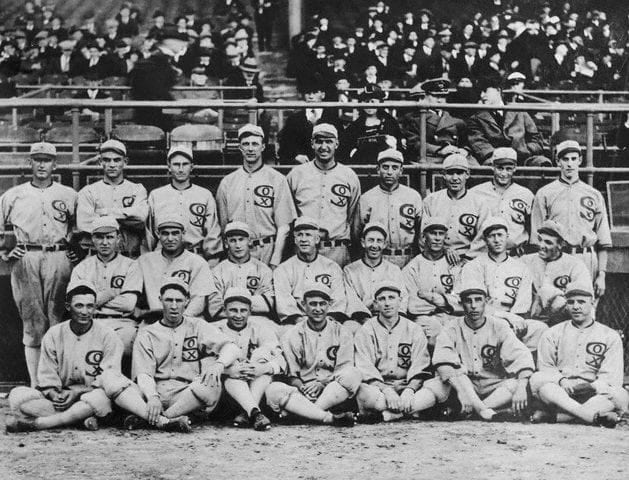
That the 1919 World Series was not lost on merit but deliberately thrown: that eight members of the Chicago White Sox conspired with professional gamblers to lose games in exchange for money, and that the sport's greatest championship was decided in advance by bribery rather than on the field.
Proven. The conspiracy is a matter of documented record, not speculation. Eight White Sox players, among them pitcher Eddie Cicotte and first baseman Chick Gandil, arranged with gamblers to lose the 1919 World Series in exchange for cash, and several confessed to a Cook County grand jury in 1920. A 1921 jury acquitted the players of criminal fraud after key confession documents vanished from the court files, but the next day Commissioner Kenesaw Mountain Landis banned all eight from professional baseball for life. As a claim that the Series was deliberately fixed, this is substantiated. What remains genuinely debated is narrower: exactly who pocketed how much, and how far Shoeless Joe Jackson actually took part, given that he led all hitters in the Series.
Believed by: This is the mainstream historical consensus, accepted by Major League Baseball, the Baseball Hall of Fame, historians and sportswriters; the surviving disputes are about degree and detail, not whether the fix happened.
The full story
The rare conspiracy that came with confessions
There is no argument to have about whether the 1919 World Series was fixed. Eight Chicago White Sox players agreed with a gambling ring to lose the best-of-nine series to Cincinnati, money changed hands, and several of them said so under oath.
Eddie Cicotte admitted to the Cook County grand jury in 1920 that he had taken $10,000. Joe Jackson and Lefty Williams gave statements describing the scheme. The grand jury record, the 1921 indictment, contemporary reporting and Commissioner Kenesaw Mountain Landis's permanent bans all point the same way, and Cincinnati won five games to three.
That is worth stating flatly at the top, because everything genuinely contested about this story sits downstream of it. The disputes are about who took what, and about one player in particular. They are not about whether it happened.
Not guilty, and banned for life anyway
In 1921 a jury acquitted all the defendants of criminal conspiracy. That verdict is part of the record and is regularly produced as though it settles the matter.
It turned on missing paper. The signed confessions and immunity waivers of Cicotte, Jackson and Williams had disappeared from the state's attorney's files before the trial began. A prosecution deprived of its central documents is a prosecution likely to fail, and this one did.
The distinction that matters is between two different questions. A criminal acquittal on a specific fraud charge, under a standard of proof beyond reasonable doubt and without the key exhibits, does not establish that the underlying conduct did not occur. Landis, applying a different standard for a different purpose, banned all eight from organised baseball for life the day after the verdict. Both outcomes stand, and they are answers to different questions.
The one part that genuinely will not resolve
Shoeless Joe Jackson is where the documented record runs out and the argument begins, and it has not stopped in a century.
Against him: he gave a grand jury statement, he was said to have accepted $5,000, and Landis banned him with the rest. For him: he hit .375 across the series with twelve hits and a home run, the best figures of anyone on either side, and he maintained to the end of his life that he had played to win.
Both of those can be true. A player can take money and then play hard, whether from conscience, from competitiveness, or because he had already been paid. The numbers do not settle intent, and neither does the statement, which was given in circumstances that later became part of the argument about the missing waivers. This file records the disagreement rather than resolving it, because the evidence does not resolve it either.
What fiction did to the record
The Black Sox is the rare case where the myth grew around a true story rather than in place of one, and the growth has still distorted it.
The line that everyone knows, a boy on the courthouse steps begging Say it ain't so, Joe, is almost certainly apocryphal. Eight Men Out and Field of Dreams supplied a shape the record does not quite have: underpaid players, a famously tightfisted owner in Charles Comiskey, and a tragic hero wronged by a vindictive commissioner.
Each of those has some grounding and none is the whole picture. The players were underpaid by modern standards and were also professional athletes who took bribes from gamblers. Comiskey was tightfisted and also the man whose team was corrupted. Holding those together is harder than the film version and closer to what happened.
Proven at the centre, argued at the edges
What this file rates is settled and has been for a hundred years. Players conspired with gamblers to lose a World Series, confessed to it, and were banned for life.
What remains open is narrower than the arguments around it suggest: the precise distribution of the money, and how far one player's participation went. Those are real questions with real evidence on both sides. They are not a route back to doubting the fix, and the tendency to run them together is how a proven scandal keeps getting relitigated as though it were an open case.
Watch
What's still unexplained
- How much money actually changed hands, and who kept what? Accounts of the payments differ, and because the trial confessions went missing, the exact distribution among the players and gamblers has never been fully pinned down.
- How far did Joe Jackson really participate? His grand jury statement and reported $5,000 place him inside the affair, yet he led all hitters in the Series and protested his innocence for decades. The gap between the two is the scandal's most durable argument.
- What was Arnold Rothstein's precise role? He was never charged and denied involvement, so his standing as the plot's financier rests on testimony and inference rather than a proven paper trail.
- Was Buck Weaver's lifetime ban just? He appears to have taken no money and played to win, and even the trial judge doubted his guilt, yet Landis barred him for knowing and not telling. The fairness of that standard is still debated.
Point by point
The claim: The 1919 World Series was deliberately thrown by White Sox players working with gamblers.
What the record shows: This is established fact. Several of the eight players confessed to the 1920 Cook County grand jury; Eddie Cicotte admitted taking $10,000, and Joe Jackson and Lefty Williams also gave statements describing the scheme. Contemporary reporting, the grand jury record, the 1921 indictment and Commissioner Landis's permanent bans all document a conspiracy to lose the Series for money. Historians and Major League Baseball treat the fix as settled history.
The claim: The players got away with it because a jury found them not guilty.
What the record shows: The 1921 jury did acquit all defendants of criminal conspiracy, and that acquittal is part of the legal record. But it turned heavily on missing evidence: the signed confessions and immunity waivers of Cicotte, Jackson and Williams had disappeared from the state's attorney's files before trial. A criminal acquittal on a fraud charge is not a finding that the Series was clean; the day after the verdict, Landis barred all eight for life on the baseball-administrative record.
The claim: Joe Jackson helped throw the Series just like the others.
What the record shows: Jackson's role is the most disputed part of the story. He gave a grand jury statement and was said to have accepted $5,000, and he was banned by Landis with the rest. Against that, his on-field numbers were the best of anyone in the Series: a .375 average with 12 hits, no errors charged in most accounts and a home run. He maintained his innocence for the rest of his life. The documented record places him inside the affair; how far he actually participated remains genuinely argued.
The claim: Every banned player was equally guilty of taking money to lose.
What the record shows: The eight were not identical cases. Reports and confessions indicate payments varied widely, with Gandil said to have kept far more than the roughly $5,000 that reached others. Third baseman Buck Weaver is the clearest exception: the record indicates he attended meetings where the fix was discussed but took no money and played to win, and even the trial judge said there was no evidence Weaver helped fix games. Landis banned him anyway, for knowing and staying silent. The uniform 'guilty' label flattens real differences in conduct.
The claim: A shadowy master gambler, Arnold Rothstein, financed and ran the whole plot.
What the record shows: Rothstein was widely named in hearings as the probable banker behind the bribes, and the belief is longstanding. But he was never charged, testified before the grand jury denying involvement, and the money appears to have flowed through intermediaries such as Sport Sullivan and Abe Attell. His exact role sits between documented suspicion and proven fact, which is why it endures as a debated point rather than a settled one.
Timeline
- 1919-09In the weeks before the Series, White Sox first baseman Chick Gandil approaches gambler Joseph 'Sport' Sullivan and, in meetings with teammates, sets up a scheme to lose the World Series for a payoff. Seven other players are drawn in to varying degrees: pitchers Eddie Cicotte and Lefty Williams, outfielders Joe Jackson and Happy Felsch, shortstop Swede Risberg, third baseman Buck Weaver and utility man Fred McMullin.
- 1919-10-01In Game 1 in Cincinnati, Cicotte hits leadoff batter Morrie Rath with a pitch in the first inning, later described as a prearranged signal to gamblers that the fix was on. Cicotte, famed for pinpoint control, is knocked out as the Reds win 9-1. The Reds go on to take the best-of-nine Series five games to three.
- 1919-10Sportswriter Hugh Fullerton, tipped off and suspicious of erratic play, writes columns questioning whether the Series was honest and marks up his scorecard with plays he found dubious, keeping the rumors alive through the winter.
- 1920-09-28Amid a Cook County grand jury investigation, Eddie Cicotte gives a tearful confession admitting he took $10,000 to help throw the Series. Jackson and Williams also give statements to the grand jury. The eight implicated players are suspended by White Sox owner Charles Comiskey.
- 1920-10-22The grand jury returns indictments; eight players and several gamblers are charged with conspiracy. New York racketeer Arnold Rothstein is widely named as the scheme's likely financier, though he is never charged and denies involvement in his own grand jury appearance.
- 1920-11In the wake of the scandal, baseball's club owners hand sweeping authority to a single Commissioner and install federal judge Kenesaw Mountain Landis, giving him broad power to act 'in the best interests of baseball.'
- 1921-07The players go on trial in Chicago. The signed confessions and immunity waivers of Cicotte, Jackson and Williams have gone missing from the state's attorney's files, gutting the prosecution's case.
- 1921-08-02The jury acquits all defendants of criminal conspiracy, citing insufficient evidence. Reports describe players and jurors celebrating together afterward.
- 1921-08-03One day after the acquittal, Commissioner Landis bans all eight players from organized baseball for life, declaring that no player who throws a game, or sits in a meeting where a fix is discussed and stays silent, will ever play professional baseball again.
- 2025-05-13Commissioner Rob Manfred removes the eight Black Sox players, along with Pete Rose and others, from MLB's permanently ineligible list, ruling that the lifetime ban ends at death. The move makes the long-deceased players eligible for Hall of Fame consideration but does not revisit the historical finding that the Series was fixed.
From the case file
The actual records: declassified, released, or leaked. We link straight to each document in its official archive, so you never have to take our word for it. Read the originals yourself.
Guide to the Black Sox Scandal Collection (American League)
The Hall of Fame's catalogued collection of Black Sox materials, including records tied to the grand jury investigation and 1921 trial. It is the institutional archive of the case, letting readers trace the primary documents behind the fix.
Read the document: National Baseball Hall of Fame →The Black Sox Trial: An Account (with primary trial documents)
An archive of the 1921 criminal trial, including reproduced testimony, the indictment and rulings. It documents both the acquittal and the surrounding record of confessions that had gone missing from the state's files.
Read the document: Famous Trials (UMKC) →Proven. The conspiracy is a matter of documented record, not speculation. Eight White Sox players, among them pitcher Eddie Cicotte and first baseman Chick Gandil, arranged with gamblers to lose the 1919 World Series in exchange for cash, and several confessed to a Cook County grand jury in 1920. A 1921 jury acquitted the players of criminal fraud after key confession documents vanished from the court files, but the next day Commissioner Kenesaw Mountain Landis banned all eight from professional baseball for life. As a claim that the Series was deliberately fixed, this is substantiated. What remains genuinely debated is narrower: exactly who pocketed how much, and how far Shoeless Joe Jackson actually took part, given that he led all hitters in the Series.
Reviewed by Colin Peterson · Last reviewed September 2, 2026 · How we rate
Common questions
Is Black Sox Scandal true?
Proven. The conspiracy is a matter of documented record, not speculation. Eight White Sox players, among them pitcher Eddie Cicotte and first baseman Chick Gandil, arranged with gamblers to lose the 1919 World Series in exchange for cash, and several confessed to a Cook County grand jury in 1920. A 1921 jury acquitted the players of criminal fraud after key confession documents vanished from the court files, but the next day Commissioner Kenesaw Mountain Landis banned all eight from professional baseball for life. As a claim that the Series was deliberately fixed, this is substantiated. What remains genuinely debated is narrower: exactly who pocketed how much, and how far Shoeless Joe Jackson actually took part, given that he led all hitters in the Series.
What is Black Sox Scandal?
The 1919 World Series between the Chicago White Sox and the Cincinnati Reds is the most famous fixed championship in American sports. The documented record is not in doubt: eight White Sox players agreed with a gambling ring to lose the best-of-nine Series, took payments, and several later confessed; Cincinnati won five games to three. T…
What does the evidence show?
This is established fact. Several of the eight players confessed to the 1920 Cook County grand jury; Eddie Cicotte admitted taking $10,000, and Joe Jackson and Lefty Williams also gave statements describing the scheme. Contemporary reporting, the grand jury record, the 1921 indictment and Commissioner Landis's permanent bans all document…
Why do people believe it?
Unlike most conspiracy theories, this one is true and documented, so 'believing' it costs nothing in credibility; the confessions, indictment and lifetime bans are all in the public record.
What is still unresolved?
How much money actually changed hands, and who kept what? Accounts of the payments differ, and because the trial confessions went missing, the exact distribution among the players and gamblers has never been fully pinned down.
Sources
- 1.Black Sox Scandal of 1919: Summary, Trial, Players, and Facts, Britannica (2025)
- 2.Black Sox Scandal, Wikipedia (2026)
- 3.The Black Sox Scandal, Society for American Baseball Research (SABR) (2020)
- 4.What Was the 1919 'Black Sox' Baseball Scandal?, History.com (2023)
- 5.The 1919 Chicago 'Black Sox' Scandal, U.S. Census Bureau (2024)
- 6.Pete Rose, 'Shoeless' Joe Jackson among players reinstated by MLB, ESPN (2025)
- 7.Pete Rose and 'Shoeless' Joe Jackson among players reinstated by MLB in historic decision, CNN (2025)
- 8.Joe Jackson World Series Stats, Baseball Almanac (2025)
- 9.1919 World Series, Wikipedia (2026)
Embed this verdict on your site
Paste this snippet to show our sourced verdict as a small card, with a link back to the full case file. Free to use.
<iframe src="https://theconspiratory.com/embed/black-sox-scandal" title="The Conspiratory verdict" width="520" height="190" style="border:0;max-width:100%" loading="lazy"></iframe>Help us investigate
This is a living case file. If you spot an error or know evidence we missed, tell us, and weigh in on where you land.
Where do you land?
Cast your read on this one.
Comments
Add your take. Comments are read and approved by a human before they appear, so keep it on topic and civil. Please do not accuse named, living people of crimes.