The boy recovered in 1913 was the missing Bobby Dunbar, and the mystery of the Louisiana child was solved
By Colin PetersonJuly 8, 2026
Where the evidence lands →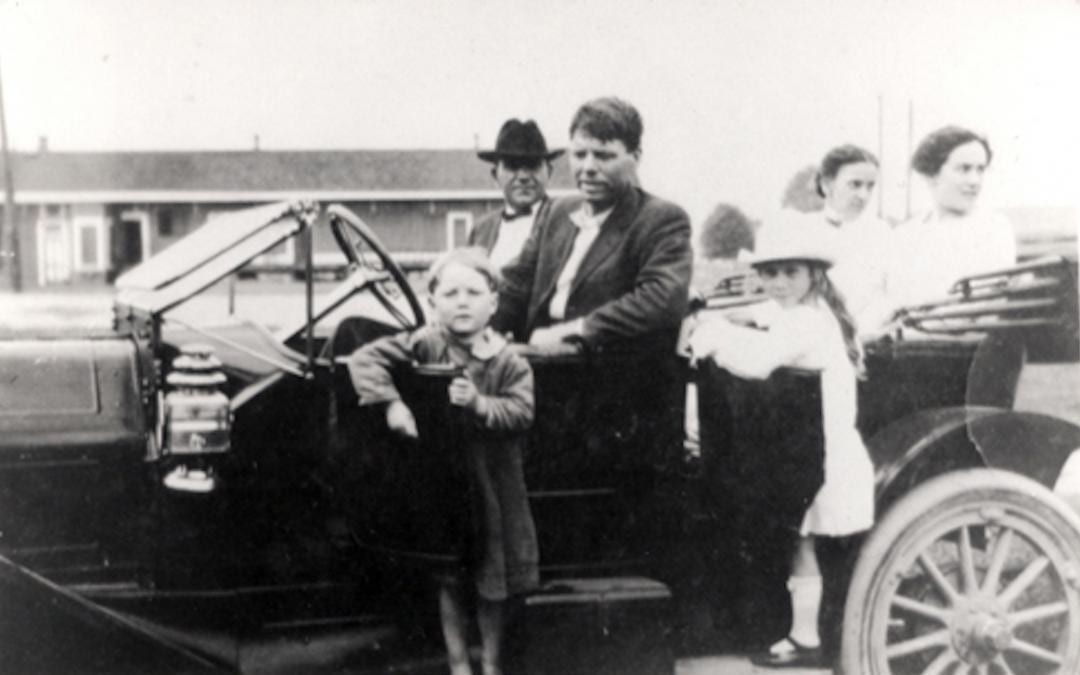
That the boy recovered in Mississippi in April 1913 was the same Bobby Dunbar who had vanished in Louisiana eight months earlier, and that his identification and return therefore solved the disappearance. In the broader sense rated here, the open question is what genuinely happened to the original Bobby Dunbar after he disappeared at Swayze Lake in 1912.
One part of this case is settled and one part is not, and they must be kept apart. In August 1912, four-year-old Bobby Dunbar vanished during a family fishing trip at Swayze Lake in St. Landry Parish, Louisiana. Eight months later a boy found in Mississippi was identified by the Dunbars as their son and raised as Bobby. In 2004, DNA testing established that the recovered boy was not biologically a Dunbar, which means the 1913 identification was mistaken and the child was almost certainly Bruce Anderson, the son of Julia Anderson of North Carolina. That much is substantiated. The claim we rate is narrower: what actually became of the original Bobby Dunbar, who disappeared in 1912. On that question the record supports no confident answer. This file names no culprit and accuses no one; the men and women at the center of it are long dead, and their descendants are not on trial.
Believed by: Historians, the journalists Tal McThenia and Margaret Dunbar Cutright who wrote the definitive account, listeners of the 2008 This American Life documentary, and the descendants of both the Dunbar and Anderson families, who now broadly accept the DNA finding
The full story
What is documented
Start with what the record firmly holds. On 23 August 1912, Percy and Lessie Dunbar took their two young sons on a camping and fishing trip to Swayze Lake, in St. Landry Parish, Louisiana, near Opelousas. Their four-year-old, Bobby, wandered from the camp and was gone. A search dragged the lake and weighed drowning, and even an alligator, before turning to the possibility of a kidnapping when no body was found. A reward was posted, and the case became national news.
Eight months later, in April 1913, a boy of about the right age was found in Mississippi traveling with an itinerant handyman, William Cantwell Walters. The Dunbars identified the child as Bobby and brought him home. A North Carolina woman, Julia Anderson, arrived and insisted the boy was her own son, Bruce, whom she had let Walters take on a short trip. The courts sided with the Dunbars. Walters was tried for kidnapping, convicted in 1914, and sentenced to life; his conviction was later overturned, and he was never retried.
The boy was raised as Bobby Dunbar and lived until 1966. Then, in 2004, DNA testing across the Dunbar line showed that he carried no Dunbar bloodline. The identification of 1913 had been wrong. The question this file rates is the one that the DNA did not answer: what truly happened to the child who vanished in 1912.
The boy who came back
The recovery in Mississippi was, at the time, treated as a triumph. After eight months and a nationwide search, a boy who fit the description was in hand, and a suspect was in custody. The Dunbars traveled to see him, and though contemporary accounts describe some initial hesitation, they came away convinced. They pointed to a scar on the foot and to moles, the kind of intimate marks a parent claims to know, and they took the child home to Opelousas as their son.
Against that stood Julia Anderson, an unmarried field hand from North Carolina, and William Walters, the handyman she had trusted. Their account was consistent: the boy was Bruce Anderson, given briefly into Walters' care. But Anderson was poor, an outsider, and a single mother in the Deep South of 1913, and when she was reportedly unable to pick the boy out with perfect certainty on first sight, that hesitation was read against her. The weight of a grieving, respectable local family, a captive press, and a courtroom fell on the other side.
The case that it really was Bobby
It is worth stating the identification's honest strength, because at the time it did not seem thin. The Dunbars were not strangers grasping at a stranger's child; they were parents who had lived with their son for four years and believed they recognized him. They cited specific physical marks. A court examined the competing claims and ruled for them. A jury, hearing the evidence, convicted the man who had the boy.
And the alternative required believing an itinerant handyman and a transient single mother over a settled local family, a hard sell in 1913 and not obviously the safer bet at the time. Two families each claimed the same boy with apparent sincerity, and the machinery of the day, the press, the court, the jury, lined up behind the Dunbars.
Two mothers, one boy, and no test on earth in 1913 that could tell them apart. The tragedy of the case is that everyone involved may have believed they were telling the truth.
That is the strongest form of the contemporary case: not that the identification was proven, but that it was sincere, corroborated by marks the family trusted, and endorsed by every institution then available to judge it.
Where the identification breaks down
The sincerity was real. The identification was still wrong, and in 2004 a test that did not exist in 1913 said so plainly. DNA profiling across the Dunbar family showed that the man raised as Bobby had no biological link to the Dunbars. The boy the family had claimed, loved, and raised for half a century was not their missing son.
Seen through that result, each pillar of the old case gives way. Physical marks like a scar or a mole are common and were never a genetic fingerprint; hopeful eyes can find them where they wish to. The court ruling and the conviction both rested on the premise that the boy was Bobby, so neither can be used to prove it, and the conviction was in any case overturned and never renewed. And Julia Anderson's claim, dismissed at the time because she was poor and an outsider, turned out to match the biology. The account that was disbelieved was the one the evidence later supported.
None of this makes the Dunbars villains. It makes them a family that mistook another woman's child for their own in the extremity of grief, and a court that could not tell the difference with the tools of 1913. The documented conclusion is narrow and firm: the recovered boy was not Bobby Dunbar.
Why an identity is so fiercely held
The most human part of this case is how completely the mistaken identity took hold, and stayed held, for generations. That is not a failure of intelligence. It is how memory and belonging work under pressure.
A parent who has lost a child for eight months, in a case the whole country is watching, does not perceive a boy of the right age neutrally. Hope shapes recognition. The wish to find a son can supply the certainty that the eyes cannot, and once the boy is home, every ordinary day of family life becomes further proof that he belongs.
The boy himself had no other story to tell. Raised from early childhood as a Dunbar, he had no rival memory, and his own life grew into the evidence. To question the identity later was to unsettle not an abstract fact but a family's entire sense of itself, which is why it took a granddaughter's patient research and a laboratory test to reopen what everyone had long since closed.
“They will always be my family” is how one descendant put the feeling. A DNA result can change who a boy was born to. It cannot simply erase who raised him.
One question settled, one open
Hold the two questions apart, because the answer differs for each. On whether the boy recovered in 1913 was Bobby Dunbar, the 2004 DNA testing is decisive: he was not, and he was almost certainly Bruce Anderson, Julia Anderson's son. That much is settled, and it vindicates a woman who was disbelieved in her own lifetime.
But the disappearance that began it all remains open. What happened to the real Bobby Dunbar, the four-year-old who walked away from a camp at Swayze Lake in August 1912, the record cannot say. He may have drowned, though no body was found. He may have wandered and met an animal in the swamp. He may have been taken. Each is possible; none is proven.
This file names no culprit and accuses no one. The people at the center of it are long dead, and the descendants of both families carry a history they did not choose. What the case leaves us is not a solution but a caution: that certainty, grief, and a nation's wish for a happy ending can, together, produce a settled answer that is sincerely believed and simply wrong, and that the child everyone was looking for was, in the end, never found.
What's still unexplained
- What actually became of the original Bobby Dunbar after he wandered from the camp in 1912? The record supports several possibilities, drowning, an animal, or abduction, and confirms none of them.
- If Bobby drowned at Swayze Lake, why was no body ever recovered despite the dragging of the lake, and what should be made of the hat reportedly found away from the water?
- The 2004 DNA result establishes who the recovered boy was not, and points strongly to Bruce Anderson, but the fate of the child who disappeared remains beyond the reach of the surviving evidence.
Point by point
The claim: The Dunbars positively identified the recovered boy as Bobby by scars, moles, and other physical marks.
What the record shows: Identification by grieving parents eight months after a disappearance is among the least reliable forms of evidence, prone to hope and suggestion, and accounts describe the Dunbars themselves hesitating at first. The 2004 DNA testing settled the point that the marks could not: the boy they raised carried no Dunbar bloodline, so whatever the family saw in 1913, the identification was mistaken.
The claim: A jury convicted William Cantwell Walters of kidnapping Bobby Dunbar, so guilt was established in court.
What the record shows: The 1914 conviction was overturned by the Louisiana Supreme Court, and the state chose not to retry Walters, so no final judgment of guilt ever stood. The verdict also rested on the premise that the recovered boy was Bobby, and the 2004 DNA result removed that premise. A conviction built on a mistaken identification cannot establish the crime it charged.
The claim: Julia Anderson was an outsider whose claim to the boy was reasonably discounted at the time.
What the record shows: Anderson consistently maintained that the child was her son, Bruce, whom she had permitted Walters to take, and she traveled to Louisiana to say so under oath. Her account was disbelieved in 1913, but the DNA finding in 2004 aligned with it. The record now reads as a claim that was dismissed and later vindicated, not a claim that was disproven.
The claim: The boy lived out a long life as Bobby Dunbar, which shows the matter was settled.
What the record shows: That the boy was raised, loved, and lived as Bobby says nothing about his origins. Testing of the next generation established no biological link to the Dunbars. A life lived under a name is not proof of the name; it is exactly what a mistaken but sincere identification produces.
The claim: The real Bobby Dunbar drowned in Swayze Lake in 1912, which explains the disappearance.
What the record shows: Drowning is a leading possibility, and it is why the lake was dragged, but no body was ever recovered despite the search, and the reported discovery of the boy's hat away from the water kept an abduction theory alive. Drowning remains plausible and unproven, one of several fates none of which the record can confirm.
Timeline
- 1912-08-23Percy and Lessie Dunbar take their sons on a fishing and camping trip to Swayze Lake in St. Landry Parish, Louisiana. Four-year-old Bobby wanders from the camp and disappears.
- 1912-08A search party drags the lake and considers drowning, and even an alligator, as explanations. When no body is recovered and the boy's hat is reportedly found some distance from the water, suspicion turns toward abduction.
- 1912With the body never found, Percy Dunbar and Opelousas officials conclude Bobby was kidnapped. A substantial reward is posted, and the search draws national newspaper attention across 1912 and 1913.
- 1913-04Authorities in Mississippi locate a boy of similar age traveling with William Cantwell Walters, an itinerant handyman. Walters says the child is Bruce Anderson, entrusted to him by the boy's mother, Julia Anderson of North Carolina.
- 1913-04The Dunbars travel to identify the boy. After initial uncertainty, they conclude from physical marks, including a foot scar and moles, that he is Bobby, and they take him home to Opelousas.
- 1913Julia Anderson arrives in Louisiana and insists the boy is her son, Bruce, whom she had allowed Walters to take on what was meant to be a short trip. The courts side with the Dunbars, and the boy remains with them.
- 1914Walters stands trial for kidnapping, is convicted, and is sentenced to life in prison. He maintains his innocence throughout.
- 1916After Walters has served roughly two years, the Louisiana Supreme Court overturns his conviction and grants a new trial. Citing the cost of the first, prosecutors decline to retry him, and he is released.
- 1999Margaret Dunbar Cutright, a granddaughter of the boy raised as Bobby, begins researching the family history and uncovers records that unsettle the long-accepted identification.
- 2004Prompted in part by a journalist's inquiry, the family agrees to DNA testing. Comparison across the Dunbar line shows the man raised as Bobby was not a biological Dunbar, indicating he was Julia Anderson's son, Bruce, and that the real Bobby was never found.
One part of this case is settled and one part is not, and they must be kept apart. In August 1912, four-year-old Bobby Dunbar vanished during a family fishing trip at Swayze Lake in St. Landry Parish, Louisiana. Eight months later a boy found in Mississippi was identified by the Dunbars as their son and raised as Bobby. In 2004, DNA testing established that the recovered boy was not biologically a Dunbar, which means the 1913 identification was mistaken and the child was almost certainly Bruce Anderson, the son of Julia Anderson of North Carolina. That much is substantiated. The claim we rate is narrower: what actually became of the original Bobby Dunbar, who disappeared in 1912. On that question the record supports no confident answer. This file names no culprit and accuses no one; the men and women at the center of it are long dead, and their descendants are not on trial.
Reviewed by Colin Peterson · Last reviewed July 8, 2026 · How we rate
Common questions
Is Bobby Dunbar true?
One part of this case is settled and one part is not, and they must be kept apart. In August 1912, four-year-old Bobby Dunbar vanished during a family fishing trip at Swayze Lake in St. Landry Parish, Louisiana. Eight months later a boy found in Mississippi was identified by the Dunbars as their son and raised as Bobby. In 2004, DNA testing established that the recovered boy was not biologically a Dunbar, which means the 1913 identification was mistaken and the child was almost certainly Bruce Anderson, the son of Julia Anderson of North Carolina. That much is substantiated. The claim we rate is narrower: what actually became of the original Bobby Dunbar, who disappeared in 1912. On that question the record supports no confident answer. This file names no culprit and accuses no one; the men and women at the center of it are long dead, and their descendants are not on trial.
What is Bobby Dunbar?
On 23 August 1912, Percy and Lessie Dunbar took their two young sons on a camping and fishing trip to Swayze Lake, near Opelousas in St. Landry Parish, Louisiana. Their four-year-old, Bobby, wandered from the camp and disappeared. A search dragged the lake, considered drowning and an alligator, then a kidnapping, and a large reward was p…
What does the evidence show?
Identification by grieving parents eight months after a disappearance is among the least reliable forms of evidence, prone to hope and suggestion, and accounts describe the Dunbars themselves hesitating at first. The 2004 DNA testing settled the point that the marks could not: the boy they raised carried no Dunbar bloodline, so whatever…
Why do people believe it?
Grief and hope are powerful editors of perception. Parents who had lost a child for eight months, in a case the whole country was following, had every reason to see their son in a boy of the right age, and sincere belief is not the same as accurate identification.
What is still unresolved?
What actually became of the original Bobby Dunbar after he wandered from the camp in 1912? The record supports several possibilities, drowning, an animal, or abduction, and confirms none of them.
Sources
- 1.Disappearance of Bobby Dunbar, Wikipedia (2024)
- 2.The Ghost of Bobby Dunbar (Episode 352), This American Life (2008)
- 3.The Strange Case of Bobby Dunbar, Country Roads Magazine (2012)
- 4.DNA clears up 1914 case, The Washington Times (2004)
- 5.A Case for Solomon: Bobby Dunbar and the Kidnapping That Haunted a Nation, Simon & Schuster (2012)
- 6.A Case for Solomon: Bobby Dunbar and the Kidnapping That Haunted a Nation, Publishers Weekly (2012)
- 7.Tal McThenia & Margaret Dunbar Cutright: A Case For Solomon, WAMU / The Diane Rehm Show (2012)
- 8.Bobby Dunbar's Disappearance And The Mystery Behind It, All That's Interesting (2021)
Embed this case file on your site
Paste this snippet to show this case file as a small card, with a link back to the full write-up. Free to use.
<iframe src="https://theconspiratory.com/embed/bobby-dunbar" title="The Conspiratory verdict" width="520" height="190" style="border:0;max-width:100%" loading="lazy"></iframe>Help us investigate
This is a living case file. If you spot an error or know evidence we missed, tell us, and weigh in on where you land.
Where do you land?
Cast your read on this one.
Comments
Add your take. Comments are read and approved by a human before they appear, so keep it on topic and civil. Please do not accuse named, living people of crimes.