The hills around Visoko, Bosnia are the world's oldest and largest ancient pyramids, and science won't admit it
By Colin PetersonJuly 12, 2026
Where the evidence lands: Contradicted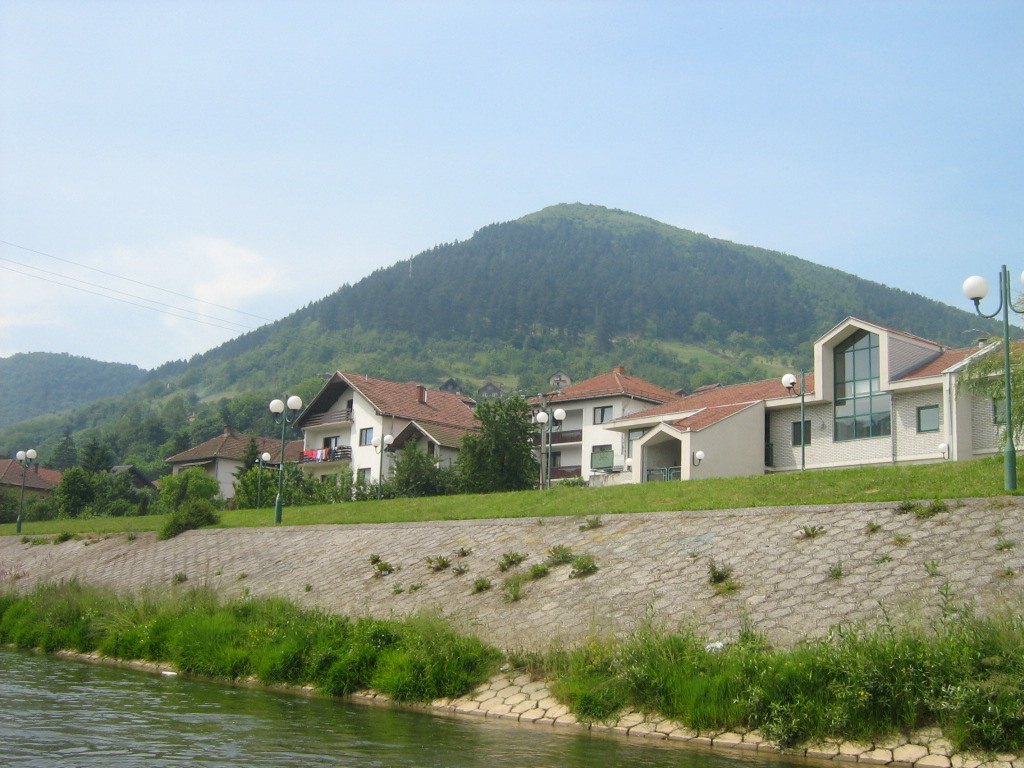
That several hills near Visoko in central Bosnia and Herzegovina, especially Visocica hill (renamed the 'Bosnian Pyramid of the Sun') along with a 'Pyramid of the Moon' and others, are gigantic human-made step pyramids many thousands of years old, larger than the pyramids of Egypt, faced with an artificial concrete, connected by a network of ancient tunnels, and in some tellings emitting a focused energy beam with healing properties, and that mainstream archaeology refuses to acknowledge this.
Contradicted. This one is not close. The hills near Visoko are natural landforms, flatirons on the flank of an eroded anticline, built from ordinary Miocene lake and river sediments, and geologists from Bosnia and abroad who examined them found no trace of human construction. The famous 'concrete blocks' are naturally cemented conglomerate and sandstone; the 'tunnels' are consistent with old mine works, not a 30,000-year-old network. The real treasure on the hill is genuine: the medieval royal town of Visoki. In 2006 the European Association of Archaeologists called the pyramid project a 'cruel hoax' that endangers real heritage. The claim is not suppressed; it has been examined at length and rejected.
Believed by: A large international audience of alternative-history and ancient-mysteries enthusiasts, many local residents and Bosnian officials who see national pride and tourism revenue in the site, and visitors drawn by claims of healing 'energy' in the tunnels
The full story
A pyramid appears above Visoko
In the autumn of 2005, a Bosnian-American businessman named Semir Osmanagich, who ran a metalworking company in Houston and had written books on the Maya and Atlantis, stood before the steep, oddly symmetrical hill that rises over the small central-Bosnian town of Visoko and announced that it was not a hill at all. It was, he said, a colossal step pyramid, built by a lost civilization, larger and far older than anything in Egypt. He named it the Bosnian Pyramid of the Sun.
The cast grew quickly. A neighboring hill became the Pyramid of the Moon, said to stand around 190 meters; others were christened the Pyramid of the Dragon, the Temple of Mother Earth, and the Pyramid of Love. The Pyramid of the Sun was billed at more than 220 meters, comfortably taller than the roughly 147-meter Great Pyramid of Giza, which would make it the largest pyramid on the planet. Ages offered for it ranged from twelve thousand to tens of thousands of years. Beneath the valley, Osmanagich said, an ancient tunnel network linked the structures, and from the summit rose a beam of energy.
Excavation began in April 2006 under a foundation Osmanagich created for the purpose. Trenches on the slopes exposed slabs of flat, layered rock, which the project presented as artificial paving and blocks of a lost concrete. Television crews arrived. Visitors came by the busload to a town that a decade earlier had sat near the front lines of a brutal war. A legend was being poured, in real time, over a Bosnian hillside. The trouble is that everything load-bearing about it is wrong.
Why the idea is so easy to want
Set the geology aside for a moment and the appeal is obvious, because the hills genuinely do look the part. Visocica's slopes meet in clean, triangular faces of a kind most people have never been told can form on their own. Standing at the base and looking up, “nature could not have made this” does not feel like superstition. It feels like the plain evidence of your eyes.
The timing mattered as much as the shape. Visoko had been battered in the 1990s, its economy and infrastructure wrecked, its people carrying the weight of the Bosnian War. Into that came a story of almost unbearable grandeur: that this exact place, of all places, held the oldest and largest monuments on Earth, proof of a magnificent deep history buried under the town. For a community that had lost a great deal, the pyramids offered pride, attention, and a future. Tour guides, cafe owners, and souvenir sellers found real work in it.
A wounded town was offered a magnificent past. It is not hard to understand why so many wanted the offer to be genuine.
And there was the satisfying shape of the underdog tale. An outsider without an archaeology degree says he has found something world-changing; the credentialed experts line up to say no. Told a certain way, that is a story about brave discovery against a smug establishment, a story people enjoy believing. Osmanagich, energetic and telegenic and happy to be called the Bosnian Indiana Jones, played the part well. None of this makes the pyramids real. It explains, fairly, why the claim found such willing ground.
What the hills actually are
The shape that looks impossible is, to a geologist, routine. It is called a flatiron: a steep, triangular facet left when erosion eats into the tilted, hard layers of rock on the limb of a fold. Visocica sits on the northern flank of an eroded anticline in the Miocene Sarajevo-Zenica basin. Its rock, sandstone, siltstone, mudstone, clay, and conglomerate, was laid down flat on the floor of an ancient lake and river system millions of years ago, then tilted as the ground folded, then sculpted by weather and streams into the angular hill we see. Flatirons like it appear the world over, from the American West to hills near Vladivostok that locals, too, nickname pyramids.
This was not a matter of opinion swapped across a dig. Bosnian geologists from the Faculty of Mining, Geology and Civil Engineering in Tuzla, led by Sejfudin Vrabac, surveyed Visocica and concluded it was a natural formation of layered clastic sediment shaped by ordinary post-Miocene processes. The archaeological geologist Paul Heinrich of Louisiana State University independently identified the hills as flatirons and noted how common such features are. The geologist and author Robert Schoch, no reflexive defender of orthodoxy, visited and reported finding natural rock and no pyramids.
The celebrated “concrete blocks” dissolve under the same lens. Naturally cemented conglomerate, breccia, and sandstone fracture along their bedding into flat, rectangular plates; the result looks engineered but is simply how the rock formed and broke. The great age, meanwhile, leans on radiocarbon figures such as roughly 29,000 years taken from bits of organic material. Dating a leaf in a crack tells you when the leaf lived, not that anyone built anything, and without secure, undisturbed stratigraphy and independent replication such numbers prove nothing about a “structure” that was never constructed.
The tidy rectangular slabs are not masonry. They are what layered sedimentary rock does when it splits along the way it was laid down.
As for the tunnels and the beam: the Ravne passages match old mine and dug works rather than a 30,000-year-old network, and the project has acknowledged widening and shoring them for tourists. Claims of a focused energy beam from the summit, beneficial ions, and healing air rest on uncontrolled measurements and wellness marketing, not on any replicated result. Put together, there is no anomaly left for a lost civilization to explain.
The real treasure, and the real damage
The most pointed irony is that Visocica does hold something precious, just not a pyramid. Its summit carries the ruins of Visoki, the medieval royal town and fortress at the heart of the Bosnian kingdom, first documented in 1355 in a charter of King Tvrtko I. The area around Visoko was a political center of medieval Bosnia. This is genuine, datable, nationally important heritage, the kind archaeologists actually cherish.
That is why the professional response was not a shrug but an alarm. In December 2006 the European Association of Archaeologists, then led by Anthony Harding, issued a joint statement signed by seven prominent members. It called the pyramid scheme “a cruel hoax on an unsuspecting public” that has “no place in the world of genuine science,” and it warned specifically that unscientific digging in pursuit of imaginary pyramids threatened the real archaeological and historical remains at Visoko. Scientists did not refuse to look. They looked, and then they raised their voices about the harm.
This reframes the whole “suppression” complaint. The establishment did not bury the discovery to protect its textbooks; it examined the site, published geological and archaeological conclusions, and objected loudly, in part out of concern that authentic Bosnian heritage was being disturbed in the search for a fantasy older one. A cover-up hides things. This was the opposite: an open, on-the-record rejection.
Why it persists anyway
A claim this thoroughly refuted keeps going because refutation was never really the point. The pyramids do work that facts do not touch. They give a hard-hit town identity and income; they give visitors a thrilling day and, for some, a hopeful sense of healing energy underground; they give a country a deep and glorious past to be proud of. Those needs are real even though the pyramids are not, and needs like that do not dissolve because a geologist explains flatirons.
The psychology is familiar from every lost-civilization story. There is the romance of a rewritten history, in which we are secretly older and greater than the dull consensus admits. There is the pleasure of distrusting gatekeepers, of siding with the bold amateur against the credentialed professor. There is the way a striking image, a mountain that looks like a pyramid, overrides a technical explanation that most people were never taught. And there is money and civic hope woven through it, which turns skepticism into something that feels like an attack on the town's livelihood.
It helps to separate the harmless from the harmful. If Visoko wants to celebrate its beautiful hills, run tours, and host a festival, no one is injured by that. The harm is narrower and specific: presenting the hills as proven ancient monuments miseducates the public, and digging for pyramids that are not there endangers the medieval heritage that genuinely is. One can enjoy the view, and the town, without pretending the geology says something it does not.
Natural hills, not pyramids
On the central claim, that the hills of Visoko are the largest and oldest man-made pyramids on Earth, the rating is debunked, about as squarely as this archive ever renders one. The hills are natural flatirons of Miocene sedimentary rock; the “blocks” are naturally cemented stone; the tunnels are old workings, not an ancient network; the great radiocarbon ages measure loose material, not a construction; and the energy beam has no replicated basis. Bosnian and international geologists reached these conclusions, and the European Association of Archaeologists put its name to a warning against the whole project.
The honest account keeps two smaller truths in view without letting them rescue the big one. Visoko really does hold remarkable heritage, the medieval royal town of Visoki, and its hills really are geologically handsome. Neither of those makes them pyramids. The story survives not because the evidence is close but because it satisfies something the evidence cannot: pride, hope, income, and the enduring romance of a hidden golden age. Those are human and understandable. They are also not the same thing as being true.
What's still unexplained
- The Ravne tunnel system's full extent, original purpose, and true age are only partly documented, and disentangling genuinely old mine workings from recent enlargement is legitimate archaeological work that has never been done to modern standards. None of that implies a 30,000-year-old pyramid; it is a real, mundane question the pyramid circus has obscured.
- How much authentic medieval and earlier heritage at and around Visocica, including the royal town of Visoki, has already been disturbed or lost to unscientific digging is not fully accounted for, and it is the question archaeologists most want answered.
Point by point
The claim: The hills are too symmetrical and pyramid-shaped to be natural; their triangular faces and near-cardinal orientation prove they were built.
What the record shows: Steep, triangular hillsides are a well-understood natural landform called a flatiron, produced where erosion cuts into the tilted, resistant rock layers on the flank of a fold. They occur all over the world, from the Front Range of Colorado to hills near Vladivostok that locals also nickname 'pyramids'. Visocica sits on the northern flank of an eroded anticline in the Miocene Sarajevo-Zenica basin; its layers were laid down flat under an ancient lake, then tilted and carved. Geologists who mapped the hill found nothing that requires a builder.
The claim: The excavations uncovered artificial 'concrete blocks' and paving, so the pyramid has a man-made outer casing.
What the record shows: The 'blocks' are naturally cemented conglomerate, breccia, and sandstone, sedimentary rock that fractures along its bedding planes into flat, blocky slabs. Geologists and materials specialists who examined samples described ordinary lithified sediment, not manufactured concrete. Layered clastic rock breaking into rectangular plates looks tidy to the eye, but the tidy shapes are a product of how the rock formed and split, not of masonry.
The claim: Radiocarbon dating of material at the site returned ages of tens of thousands of years, proving the structures are far older than Egypt's pyramids.
What the record shows: Dating loose organic material, such as leaves or soil in a crack, tells you the age of that material, not the age of a 'construction' that geologists say was never built. Radiocarbon on disturbed or natural deposits cannot establish a building phase without secure, undisturbed stratigraphy and independent replication, none of which the pyramid claim has produced. Extraordinary dates offered without that context do not carry the weight placed on them.
The claim: The tunnels beneath the valley are an ancient engineered network, and instruments detect an energy beam and healing properties.
What the record shows: The Ravne tunnels are consistent with old mine workings and later diggings; Osmanagich's own project has admitted enlarging and reinforcing them for visitors. Claims of a focused electromagnetic beam from the summit, beneficial ions, and healing effects are not supported by controlled measurement and belong to the wellness marketing around the site rather than to any replicated science. No peer-reviewed work confirms an anomalous energy source.
The claim: Mainstream archaeologists refuse to investigate because the discovery would rewrite history and embarrass them.
What the record shows: The opposite happened. Geologists, archaeologists, and the European Association of Archaeologists examined the site and published pointed conclusions against it, an unusually direct professional intervention. The real concern the specialists raised was preservation: Visocica hill carries the genuine medieval royal town of Visoki, first documented in 1355 under King Tvrtko I, and untrained pyramid excavation risks damaging authentic heritage. This is active rejection, not a cover-up.
Timeline
- 2005-10Semir Osmanagich, a Bosnian-American businessman based in Houston, Texas, visits Visoko and announces that the town's prominent triangular hill, Visocica, is a colossal man-made pyramid. He names it the Bosnian Pyramid of the Sun and soon identifies neighboring hills as a Pyramid of the Moon, a Pyramid of the Dragon, and others.
- 2006-04Excavations begin under Osmanagich's newly created Archaeological Park: Bosnian Pyramid of the Sun Foundation. Trenches expose slabs of layered rock that the project presents as artificial paving and 'concrete blocks'. The dig draws crowds, media, and government interest.
- 2006-06Egyptologist and geologist assessments begin to split the world in two. British archaeologist Anthony Harding, then president of the European Association of Archaeologists, visits and finds only natural rock; Osmanagich cites a visiting Egyptian geologist as support.
- 2006-12The European Association of Archaeologists issues a joint statement signed by seven prominent members, calling the pyramid scheme 'a cruel hoax on an unsuspecting public' with 'no place in the world of genuine science' and warning that it threatens real archaeological sites at Visoko.
- 2006–2007Bosnian geologists from the Faculty of Mining, Geology and Civil Engineering, led by Sejfudin Vrabac, conclude that Visocica is a natural formation of clastic sediments shaped by ordinary geological processes. Independent geologists including Paul Heinrich of Louisiana State University identify the hills as flatirons, a common landform.
- 2008 onwardOsmanagich shifts emphasis to the Ravne tunnel complex near the hills, promoting it as an ancient underground network with beneficial 'energy', negative ions, and healing properties. Radiocarbon figures such as roughly 29,000 years, obtained from organic material, are advanced as proof of great age.
- 2010s–2020sThe site matures into a stable tourist attraction with an annual conference, drawing hundreds of thousands of visitors over the years to a town whose economy had been shattered by the 1990s Bosnian War, even as the scientific verdict remains unchanged.
Contradicted. This one is not close. The hills near Visoko are natural landforms, flatirons on the flank of an eroded anticline, built from ordinary Miocene lake and river sediments, and geologists from Bosnia and abroad who examined them found no trace of human construction. The famous 'concrete blocks' are naturally cemented conglomerate and sandstone; the 'tunnels' are consistent with old mine works, not a 30,000-year-old network. The real treasure on the hill is genuine: the medieval royal town of Visoki. In 2006 the European Association of Archaeologists called the pyramid project a 'cruel hoax' that endangers real heritage. The claim is not suppressed; it has been examined at length and rejected.
Reviewed by Colin Peterson · Last reviewed July 12, 2026 · How we rate
Common questions
Is Bosnian pyramids true?
Contradicted. This one is not close. The hills near Visoko are natural landforms, flatirons on the flank of an eroded anticline, built from ordinary Miocene lake and river sediments, and geologists from Bosnia and abroad who examined them found no trace of human construction. The famous 'concrete blocks' are naturally cemented conglomerate and sandstone; the 'tunnels' are consistent with old mine works, not a 30,000-year-old network. The real treasure on the hill is genuine: the medieval royal town of Visoki. In 2006 the European Association of Archaeologists called the pyramid project a 'cruel hoax' that endangers real heritage. The claim is not suppressed; it has been examined at length and rejected.
What is Bosnian pyramids?
In 2005, a Houston-based Bosnian businessman named Semir Osmanagich looked at the steep, oddly symmetrical hills above the town of Visoko and declared them the largest and oldest pyramids on Earth: colossal structures raised by a lost civilization tens of thousands of years ago, taller than the Great Pyramid of Giza, linked by ancient tu…
What does the evidence show?
Steep, triangular hillsides are a well-understood natural landform called a flatiron, produced where erosion cuts into the tilted, resistant rock layers on the flank of a fold. They occur all over the world, from the Front Range of Colorado to hills near Vladivostok that locals also nickname 'pyramids'. Visocica sits on the northern flan…
Why do people believe it?
National pride and healing after catastrophe. Visoko sat near the front lines of the 1990s war, and a country recovering from that trauma had reason to embrace a story that its soil holds the oldest, grandest monuments on Earth. A wounded place was offered a magnificent past, and many understandably wanted it to be true.
What is still unresolved?
The Ravne tunnel system's full extent, original purpose, and true age are only partly documented, and disentangling genuinely old mine workings from recent enlargement is legitimate archaeological work that has never been done to modern standards. None of that implies a 30,000-year-old pyramid; it is a real, mundane question the pyramid…
Sources
- 1.The Mystery of Bosnia's Ancient Pyramids, Smithsonian Magazine (2009)
- 2.Researchers Helpless as Bosnian Pyramid Bandwagon Gathers Pace, Science (AAAS) (2006)
- 3.British Expert Nixes Bosnia Pyramid Claim, The Washington Post / Associated Press (2006)
- 4.Bosnian pyramid claims, Wikipedia
- 5.Geology of the Bosnian 'pyramids', Irna.fr (independent geological analysis)
- 6.Research Highlights The So-called 'Bosnian Pyramids', Robert M. Schoch (Boston University)
- 7.Whether Real Or A Hoax, Bosnian 'Pyramids' Bringing Concrete Benefits To Town, Radio Free Europe / Radio Liberty (2017)
- 8.Old town of Visoki, Wikipedia
Embed this verdict on your site
Paste this snippet to show our sourced verdict as a small card, with a link back to the full case file. Free to use.
<iframe src="https://theconspiratory.com/embed/bosnian-pyramids" title="The Conspiratory verdict" width="520" height="190" style="border:0;max-width:100%" loading="lazy"></iframe>Help us investigate
This is a living case file. If you spot an error or know evidence we missed, tell us, and weigh in on where you land.
Where do you land?
Cast your read on this one.
Comments
Add your take. Comments are read and approved by a human before they appear, so keep it on topic and civil. Please do not accuse named, living people of crimes.