The United States covertly worked for years to destabilize Salvador Allende's Chile before the 1973 coup
By Colin PetersonJuly 18, 2026
Where the evidence lands: Proven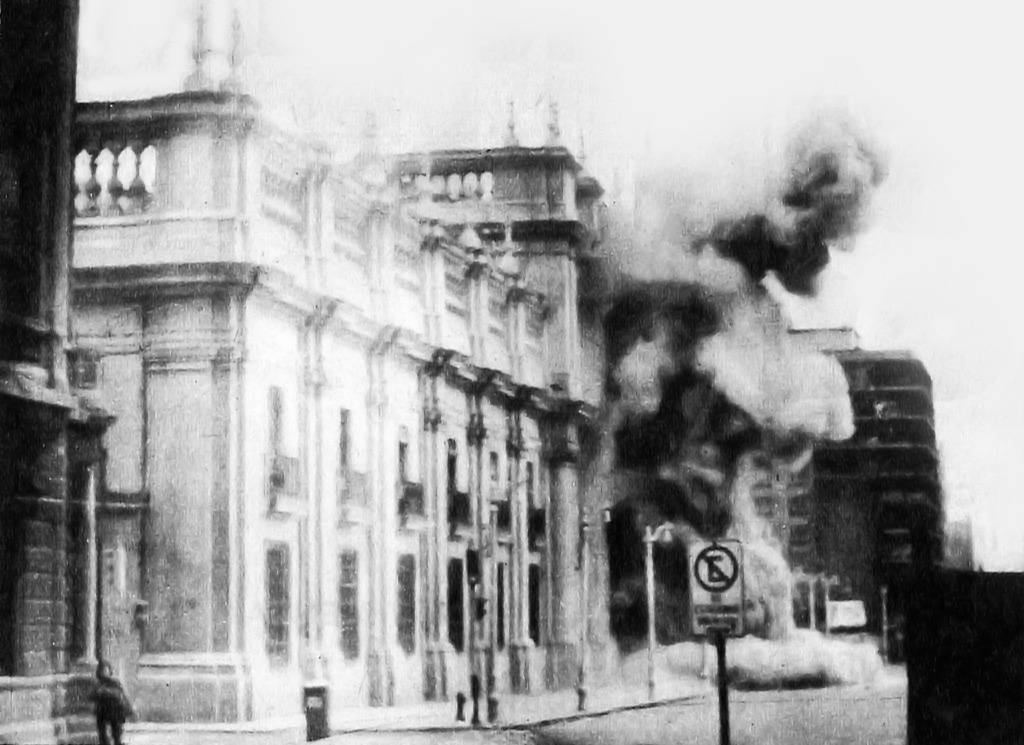
That from Salvador Allende's election in September 1970 until the military coup of September 11, 1973, the United States government, principally the CIA acting on orders from President Richard Nixon and national security adviser Henry Kissinger, ran a sustained covert program to prevent Allende from taking office and, failing that, to destabilize and overthrow his elected socialist government: spending millions of dollars to fund opposition parties, newspapers and strikes, and in 1970 backing a plot to abduct the constitutionalist army commander General René Schneider that ended in his death; and further, in the strongest version of the claim, that the United States directly organized and directed the September 11, 1973 coup that installed General Augusto Pinochet.
Proven. Confirmed by the Church Committee's own report and more than 20,000 declassified U.S. documents: Washington spent years and millions covertly working to prevent, and then to unseat, Allende. What the record does not establish is direct U.S. authorship of the September 11, 1973 coup itself, which the Chilean military planned and carried out.
Believed by: Confirmed by a U.S. Senate investigation and declassified files
The full story
An election Nixon would not accept
On 4 September 1970, Salvador Allende, a Marxist physician leading a left-wing coalition, won the largest share of the vote in Chile's presidential election. He had not won a majority, so under the Chilean constitution the decision passed to a joint session of Congress, which by long tradition confirmed the front-runner. Allende was, in every ordinary sense, about to become the democratically chosen president of a stable South American democracy.
In Washington the reaction was something close to alarm. On 15 September 1970, in a short meeting in the Oval Office, President Richard Nixon instructed CIA Director Richard Helms to prevent Allende from taking office. Helms's own handwritten notes of the conversation survive and are among the most quoted documents of the Cold War: “One in 10 chance perhaps, but save Chile... not concerned risks involved... $10,000,000 available, more if necessary... make the economy scream.” National security adviser Henry Kissinger, who chaired the committee overseeing covert action, would put the underlying attitude more bluntly in a related context: the issues were “much too important for the Chilean voters to be left to decide for themselves.”
What followed was not one operation but two. The Church Committee later labeled them Track I and Track II. Track I gathered the political, economic and propaganda tools: pressure on the Chilean Congress, bribery, a campaign of alarmist media, an effort to engineer a constitutional path around Allende. Track II was darker and more tightly held, run so secretly that the U.S. ambassador in Santiago and the interagency committee that normally approved covert action were kept in the dark. Its object was a military coup before Allende could be inaugurated.
The obstacle named Schneider
Track II ran into a single, principled obstacle: General René Schneider, commander-in-chief of the Chilean army. Schneider was a constitutionalist who held that the military had no business overturning an election, a doctrine so associated with him it carried his name. As long as he led the army, the generals the CIA needed would not move. Agency documents described him, with cold clarity, as the main barrier to a coup.
The plan the CIA supported was to abduct him and blame the kidnapping on the left, manufacturing the pretext for the army to seize power. Across October 1970 the agency was in contact with Chilean plotters, and it supplied weapons and money toward the scheme. Two attempts to grab Schneider failed. As the operation grew more reckless and split between rival factions, the CIA appears to have tried to pull back from one group led by the retired, volatile General Roberto Viaux. It was too late to matter. On the morning of 22 October 1970, would-be kidnappers ambushed Schneider's car; he drew his own pistol to resist and was shot. He died on 25 October, two days before Congress confirmed Allende.
The precise apportioning of blame has been argued ever since, including in a civil suit later brought by Schneider's family in U.S. courts. The CIA has maintained it did not want Schneider dead, only removed, and that the fatal attempt was carried out by a faction it had tried to stand down. That is a real distinction, and it matters. But it does not lift the agency clear: it had armed and financed a plot to kidnap a foreign army commander in order to trigger a coup, and that plot got him killed. The killing backfired on its own terms as well. Rather than provoking the army to intervene, it revolted Chilean opinion and helped clear Allende's path to the presidency.
The CIA armed a plot to abduct Chile's army commander to trigger a coup. The plot killed him, and the coup it was meant to spark did not come.
Three years of making it fail
Allende was inaugurated on 3 November 1970. With the effort to block him spent, U.S. policy shifted to a longer game: ensuring his government could not succeed. Over the next three years the CIA channeled covert money into the machinery of opposition. The Church Committee would total the spending on covert action in Chile between 1970 and the coup at roughly $8 million, on top of operations reaching back to 1963.
The money went to concrete things. Opposition political parties were subsidized to keep them fighting. Private-sector and civic groups hostile to Allende were funded. Above all, the CIA underwrote a propaganda campaign anchored by El Mercurio, Santiago's largest and most influential daily, which received well over a million dollars to sustain a relentless anti-Allende line. When waves of strikes convulsed Chile in 1972 and 1973, most damagingly a truckers' strike that choked a country dependent on road freight, U.S. funds reached organizations tied to the strikers. The strikes did not need to be wholly manufactured to be helped along; a government already struggling with hyperinflation and shortages could be pushed toward paralysis.
All of this is the documented, substantiated core of the story, and it is a serious one on its own. A superpower spent years and millions of dollars in a deliberate effort to render an elected government ungovernable. That is not a theory. It is the finding of a United States Senate committee and the content of tens of thousands of the government's own files.
What the record does, and does not, say about the coup
On 11 September 1973, the Chilean armed forces moved. The navy seized Valparaíso before dawn; by mid-morning the army and air force had Santiago. La Moneda, the presidential palace, was bombed and then stormed. Inside, President Allende died; a 2011 forensic investigation, including an exhumation and an international expert panel, concluded he had taken his own life with a rifle as the palace fell. General Augusto Pinochet, whom Allende had promoted to army commander weeks earlier, emerged as head of the junta and would rule Chile until 1990.
Here is where precision becomes the whole task. It is tempting, given everything above, to treat the coup as simply the CIA's operation reaching its climax. The declassified record does not support that. The Church Committee, which had access to the classified files, stated plainly that it found no evidence that the United States was directly involved in the 1973 coup. No released document shows the CIA planning the operation, choosing its date, or commanding the Chilean units that executed it. The coup was conceived and carried out by the Chilean military.
What the record does show is a United States that had spent three years trying to create exactly the conditions in which such a coup became likely, that stayed in contact with coup-minded officers, and that had, in the committee's own phrase, sought to foster a “coup climate.” When the military moved, Washington welcomed the result, recognized the junta quickly, and supported the new regime. The honest formulation is neither “the U.S. had nothing to do with it” nor “the CIA ran the coup.” It is that the United States spent years loading the conditions and signaling that a coup would not be unwelcome, and then embraced the men who carried one out, without the released evidence showing it authored the operation of 11 September itself.
“No evidence that the United States was directly involved in the 1973 coup.” That is not a defense of Washington. It is the boundary between what was proven and what was assumed.
What the files actually show
The verdict here is Proven, with the emphasis on what precisely was substantiated. That the United States ran a sustained covert campaign to keep Allende from power and then to bring his government down is not in dispute: it is documented by the Church Committee's report, by Helms's own notes of Nixon's orders, and by more than twenty thousand declassified records. The money for El Mercurio and the strikers, the two secret tracks, the plot that killed General Schneider: all of it happened, and the U.S. government has in effect conceded as much.
The part that remains narrower than the popular shorthand is the coup itself. The distance between orchestrating years of destabilization and directing the tanks of 11 September is real, and the released evidence places the United States on the first side of it and not, so far as the record shows, the second. That distinction is not an alibi; a government that spends three years trying to make a coup thinkable does not get to disown the coup when it comes. But it is the difference between a documented campaign of subversion and an undocumented claim of direct authorship, and keeping the two apart is what separates the proven history from the legend that grew around it.
What's still unexplained
- Exactly how close the United States came to the coup itself, as opposed to the years of destabilization that preceded it, remains genuinely disputed. The Church Committee found no evidence of direct U.S. involvement in the September 1973 operation, but it also documented sustained contact with coup-minded officers and a policy meant to foster what it called a 'coup climate.' Where 'created the conditions and signaled approval' ends and 'directed the coup' begins is a line the public record narrows but does not fully close, and further declassification could still move it.
- The precise chain of responsibility for General Schneider's death is still argued. The CIA backed a kidnapping plot and supplied weapons and money, then appeared to try to call off one faction days before the fatal attempt; whether that late reversal was genuine or merely deniability, and how much moral and legal responsibility the agency bears for a killing it says it did not intend, has been litigated (including a civil suit by Schneider's family) without a settled answer.
- How decisive U.S. covert spending actually was to Allende's fall, as against Chile's own deep political polarization, hyperinflation and institutional crisis, is a matter historians weigh differently. The money, propaganda and strike support were real and were meant to make the country ungovernable; disentangling their effect from homegrown economic and political failure is not something the documentary record settles cleanly.
- Significant operational records remain classified or redacted. The United States has released a very large diplomatic and intelligence file on Chile, but researchers note that the CIA's own covert-operations records are less complete than its diplomatic cables, leaving parts of the day-to-day conduct of Track II and later operations documented only in outline.
Point by point
The claim: Nixon personally ordered the CIA to stop Allende from taking power and to wreck Chile's economy.
What the record shows: Confirmed by the CIA's own contemporaneous notes. Richard Helms's handwritten record of the September 15, 1970 Oval Office meeting reads, in fragments, '1 in 10 chance perhaps, but save Chile... not concerned risks involved... $10,000,000 available, more if necessary... make the economy scream.' The Church Committee and later declassifications treat the meeting as the origin of the covert effort to prevent Allende's confirmation.
The claim: The CIA ran two parallel tracks against Allende, one political and one aimed at a coup.
What the record shows: Confirmed by the Church Committee report. 'Track I' covered political, economic and propaganda moves to block Allende's congressional confirmation; 'Track II' was a separate, more secret effort, run without the knowledge of the U.S. ambassador and the State Department's own committee, to instigate a military coup before Allende took office in 1970.
The claim: U.S. covert action played a role in the death of Chile's army commander, General René Schneider.
What the record shows: Proven, with an important limit. Schneider, a constitutionalist who opposed a coup, was an obstacle the CIA sought to remove, and the agency supplied weapons and money to Chilean plotters under Track II. The fatal October 22, 1970 attempt was carried out by a group the CIA had days earlier signaled it wanted to stand down, and Schneider drew a weapon and was shot. The CIA did not intend his death, but its documented backing of a kidnapping scheme is why its role is inseparable from the killing.
The claim: The United States spent millions to fund opposition media, parties and strikes inside Chile.
What the record shows: Confirmed. The Church Committee found the CIA spent roughly $8 million on covert activities in Chile between 1970 and the 1973 coup, with earlier operations dating to 1963. Documented recipients include opposition parties, private-sector organizations, and the newspaper El Mercurio, which received well over $1 million; funds also reached groups connected to the truckers' strikes that paralyzed the country in 1972 and 1973.
The claim: The United States planned, ordered and directed the September 11, 1973 coup.
What the record shows: Not established, and this is the crucial line. The Church Committee, with access to the classified record, stated it found no evidence that the United States was directly involved in the 1973 coup. Declassified files show years of destabilization, contact with coup-minded officers, and a U.S. posture that signaled a coup would not be unwelcome; they do not show the CIA planning the operation, setting its date, or commanding the Chilean units that carried it out. The coup was designed and executed by the Chilean military.
The claim: President Allende was murdered by the coup plotters or by U.S. agents.
What the record shows: Not supported by the physical evidence. Allende died inside La Moneda on September 11, 1973 as the palace was stormed. A 2011 forensic investigation ordered by a Chilean court, including an exhumation and an international expert panel, concluded he died by suicide, shot by an assault rifle held under his chin. The finding is consistent with the account of those with him in the palace; it does not diminish the U.S. role in the years of pressure that preceded the coup, but the killing itself was not a U.S. or coup-plotter execution.
The claim: Washington welcomed and quickly embraced the Pinochet dictatorship that followed.
What the record shows: Confirmed. The Nixon administration recognized the military junta promptly and provided economic and other support to the Pinochet government, which ruled until 1990. Declassified records also document extensive U.S. contemporaneous knowledge of the regime's repression, a separate and well-established part of the historical record.
Timeline
- 1970-09-04Socialist candidate Salvador Allende wins a plurality in Chile's presidential election. Because no candidate won a majority, the Chilean Congress must confirm the result in an October vote, opening a seven-week window U.S. officials move to exploit.
- 1970-09-15In a brief Oval Office meeting, President Nixon orders CIA Director Richard Helms to prevent Allende from taking power. Helms's handwritten notes record the instructions: '$10,000,000 available, more if necessary... make the economy scream.' This launches the covert effort later known as Track II.
- 1970-10Under Track II, the CIA works with Chilean officers to engineer a coup before Allende's confirmation. General René Schneider, the army commander who opposes military intervention, is targeted for abduction to remove that obstacle.
- 1970-10-22Schneider is shot during a botched kidnapping attempt by a Chilean group and dies three days later. The CIA had supplied weapons and money to plotters, though the fatal attempt was carried out by a faction it had, days earlier, tried to distance itself from.
- 1970-11-03Allende is inaugurated president. U.S. policy shifts from blocking his inauguration to undermining his government from within: what officials framed as making his rule untenable.
- 1971–1973The CIA channels covert funds to opposition parties, private-sector groups and the anti-Allende press, with the Santiago daily El Mercurio receiving well over $1 million. Money also reaches groups tied to the crippling truckers' strikes of 1972 and 1973.
- 1973-09-11The Chilean armed forces, led by army commander General Augusto Pinochet, launch a coup. La Moneda presidential palace is bombed and stormed; President Allende dies inside during the assault.
- 1975-12The U.S. Senate's Church Committee publishes 'Covert Action in Chile 1963-1973,' laying out the scale of U.S. spending and operations while stating it found no evidence the United States was directly involved in the 1973 coup itself.
- 2000sThe National Security Archive's Chile Documentation Project, led by Peter Kornbluh, obtains and publishes more than 20,000 declassified CIA, State Department and White House records, deepening the documentary picture of U.S. covert action.
From the case file
The actual records: declassified, released, or leaked. We link straight to each document in its official archive, so you never have to take our word for it. Read the originals yourself.
Covert Action in Chile 1963-1973 (Staff Report of the Select Committee)
The Church Committee's landmark staff report laying out the scale of U.S. covert operations against Allende, from Track I and Track II to the roughly $8 million in covert spending, while stating it found no evidence of direct U.S. involvement in the 1973 coup itself.
Read the document: U.S. Senate Select Committee on Intelligence →Helms Notes on Meeting with the President on Chile, 15 September 1970 ('make the economy scream')
CIA Director Richard Helms's contemporaneous handwritten notes of Nixon's Oval Office order to block Allende: '$10,000,000 available, more if necessary... make the economy scream.' Published in the official State Department FRUS series, this is the founding record of the covert effort.
Read the document: State Dept Office of the Historian (FRUS) →Other case files that cite the same sources
Proven. Confirmed by the Church Committee's own report and more than 20,000 declassified U.S. documents: Washington spent years and millions covertly working to prevent, and then to unseat, Allende. What the record does not establish is direct U.S. authorship of the September 11, 1973 coup itself, which the Chilean military planned and carried out.
Reviewed by Colin Peterson · Last reviewed July 18, 2026 · How we rate
Common questions
Is 1973 Chile coup true?
Proven. Confirmed by the Church Committee's own report and more than 20,000 declassified U.S. documents: Washington spent years and millions covertly working to prevent, and then to unseat, Allende. What the record does not establish is direct U.S. authorship of the September 11, 1973 coup itself, which the Chilean military planned and carried out.
What is 1973 Chile coup?
For three years the Nixon administration ran a covert campaign to keep Salvador Allende out of Chile's presidency, and then to make his government fail: funding opposition media and strikes, backing a plot that got Chile's army commander killed, and, in Nixon's own recorded instruction, moving to 'make the economy scream.' All of this is…
What does the evidence show?
Confirmed by the CIA's own contemporaneous notes. Richard Helms's handwritten record of the September 15, 1970 Oval Office meeting reads, in fragments, '1 in 10 chance perhaps, but save Chile... not concerned risks involved... $10,000,000 available, more if necessary... make the economy scream.' The Church Committee and later declassific…
Why do people believe it?
Because the core of it is documented, not alleged: a U.S. Senate committee and tens of thousands of the government's own declassified files confirm a years-long covert campaign to unseat an elected leader, which is a rare and damning admission.
What is still unresolved?
Exactly how close the United States came to the coup itself, as opposed to the years of destabilization that preceded it, remains genuinely disputed. The Church Committee found no evidence of direct U.S. involvement in the September 1973 operation, but it also documented sustained contact with coup-minded officers and a policy meant to f…
Sources
- 1.Covert Action in Chile 1963-1973 (Staff Report of the Church Committee), U.S. Senate Select Committee to Study Governmental Operations with Respect to Intelligence Activities (1975)
- 2.Covert Action in Chile: The Significance of the Church Committee Report 50 Years Later, National Security Archive, George Washington University (2025)
- 3.'Extreme Option: Overthrow Allende': The 40th Anniversary of the September 15, 1970 Meeting, National Security Archive, George Washington University (ed. Peter Kornbluh) (2020)
- 4.The CIA and Chile: Anatomy of an Assassination (the killing of General René Schneider), National Security Archive, George Washington University (2020)
- 5.Editorial Note: 'Make the economy scream' (Helms notes, 15 September 1970 meeting), Foreign Relations of the United States, 1969-1976, Vol. 21, U.S. State Department, Office of the Historian (1970)
- 6.1973 Chilean coup d'état, Encyclopaedia Britannica
- 7.The U.S. set the stage for a coup in Chile. It had unintended consequences at home, NPR (2023)
- 8.Former Chilean President Allende's death confirmed as suicide, CNN (2011)
- 9.The Pinochet File: A Declassified Dossier on Atrocity and Accountability, Peter Kornbluh, The New Press / National Security Archive (2013)
Embed this verdict on your site
Paste this snippet to show our sourced verdict as a small card, with a link back to the full case file. Free to use.
<iframe src="https://theconspiratory.com/embed/chile-coup-1973" title="The Conspiratory verdict" width="520" height="190" style="border:0;max-width:100%" loading="lazy"></iframe>Help us investigate
This is a living case file. If you spot an error or know evidence we missed, tell us, and weigh in on where you land.
Where do you land?
Cast your read on this one.
Comments
Add your take. Comments are read and approved by a human before they appear, so keep it on topic and civil. Please do not accuse named, living people of crimes.