The 1948 Chiles-Whitted object was a piloted craft of extraterrestrial or otherwise non-human origin
By Colin PetersonJuly 8, 2026
Where the evidence lands →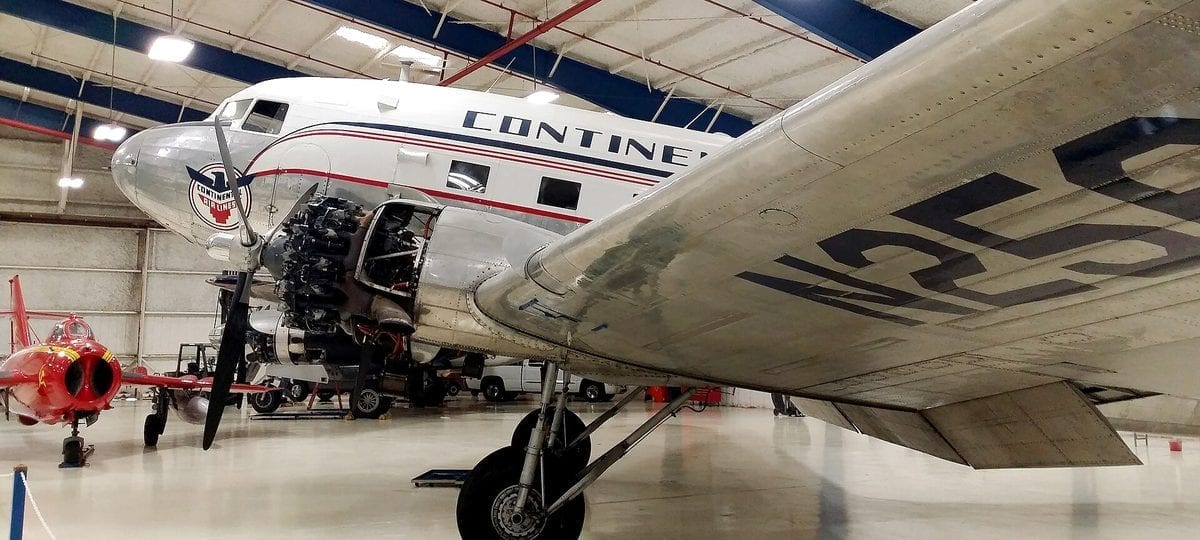
That the object Chiles and Whitted encountered over Alabama in July 1948 was a genuine structured vehicle, most often argued to be of extraterrestrial or otherwise non-human origin, whose windows, form, and controlled pull-up cannot be reconciled with a meteor and reveal an intelligently piloted craft.
The sighting is real and well documented: before dawn on 24 July 1948, two Eastern Air Lines pilots, Clarence Chiles and John Whitted, reported a fast, wingless, torpedo-shaped object with what looked like two rows of lit windows passing their DC-3 near Montgomery, Alabama, and it became a foundational Project Sign and Project Blue Book case. The rated claim is larger: that the object was a piloted, structured craft of non-human origin. That claim is unproven. The witnesses were experienced airmen and the report was taken seriously enough to help prompt Project Sign's suppressed interplanetary Estimate of the Situation; but the Air Force's standing explanation, a bright meteor or fireball, was never conclusively proven either, and no physical evidence ties the object to any craft. A windowed vehicle and a misperceived fireball are both possible, and neither is established.
Believed by: A durable audience within UFO research, where Chiles-Whitted is treated as one of the classic early pilot encounters. National polling over the past decade has repeatedly found that a majority of US adults think the government knows more about UAP than it discloses, and this 1948 case is often cited as an early example of that pattern.
The full story
What is documented
Start with what is not seriously in dispute. In the small hours of 24 July 1948, an Eastern Air Lines Douglas DC-3, Flight 576, was flying from Houston toward Atlanta and was near Montgomery, Alabama, at roughly 5,000 feet on a clear, moonlit night. Captain Clarence Chiles and first officer John Whitted, both experienced airline pilots, reported a bright object that closed on the aircraft, passed to their right, and climbed away.
Their descriptions, given independently and soon after landing, broadly matched: a wingless, torpedo or cigar-shaped object about 100 feet long, with a deep blue glow along its underside, what looked like two rows of lit square windows, and a long trail of orange-red flame. Both men said it pulled up sharply into cloud and vanished. A passenger reported a streak of light, and investigators later linked the sighting to a ground observer at Robins Air Force Base in Georgia who had noted a bright light passing overhead about an hour earlier.
The report reached the Air Force's first UFO study, Project Sign, and it mattered. As Sign supervisor Edward Ruppelt later put it, the Chiles-Whitted report shook investigators because here, for the first time, two reliable witnesses had been close enough to get a good look. So the question this file weighs is not whether the pilots saw something bright and startling. They did. It is whether the far larger claim built on top of that, that the object was a structured, piloted craft of non-human origin, has been established. It has not.
The case people make
The believers' version of this case is stronger than the skeptics' caricature of it, and it deserves to be stated at full strength. Chiles and Whitted were not thrill-seekers or anonymous tipsters. They were professional airline pilots, trained to identify what shares their sky and trusted with the lives of their passengers, and they filed a report that could only invite ridicule and risk their standing.
What they described was not a vague glow but a detailed machine. Two rows of lit windows. A blue underglow. A hull the length of an airliner. A trailing flame. And, most tellingly, a sharp pull-up into the clouds, a maneuver that reads as deliberate, as the act of something under control, and that a falling meteor simply cannot perform. To the pilots it felt like a near miss with a solid object, complete with wake turbulence.
The case did not stop at two men in a cockpit. A passenger saw a light; a serviceman on the ground saw a light. And the Air Force's own investigators were persuaded enough that Project Sign drafted a classified Estimate of the Situation reportedly concluding that objects like this one were interplanetary, a document senior command rejected and had destroyed.
Two airline captains, at close range, describing rows of windows on a wingless craft that then climbed away under apparent control, in a case serious enough to help push the Air Force's own study toward the interplanetary answer. That is not a campfire story.
At its best, the case is not the claim that a spaceship has been proven. It is the claim that credible professionals reported a structured object doing things a meteor cannot, that others saw something too, and that the official explanation has never sat easily with the details. Anyone who waves that away as obviously nothing is not engaging with the record.
Where the claim breaks down
The suspicion is reasonable; the certainty is not. The gap between the pilots saw something they could not identify and therefore it was a non-human craft is where the evidence runs out and the interpretation takes over.
Begin with the conditions. The object was in view for only a few seconds, at night, against a sky with no fixed reference for judging its size, range, or speed. This is precisely the situation in which even expert observers misjudge distance badly and in which the mind fills a bright, unfamiliar shape with familiar structure. Rows of windows are exactly the sort of pattern a human observer imposes on a glowing object seen for an instant through cockpit glass. The vividness of the description is not proof of a machine; it can equally be the signature of perception straining to make sense of a flash.
The pull-up, the theory's strongest card, cuts both ways. A genuine 90-degree climb would indeed sink the meteor account. But a fast object that is actually receding can appear to rise or bank, an illusion pilots know well, and nothing about the maneuver was measured. The same is true of the corroboration: the passenger and the ground observer reported a light, not windows, not a hull, not a controlled climb. A bright object crossing the southeastern sky that night is consistent with a fireball as readily as with a craft, so the extra witnesses strengthen the small claim, not the large one.
And the Estimate of the Situation, so often cited as the Air Force secretly agreeing, is the opposite of a proof. It was an internal opinion that senior command rejected for lack of evidence. That some investigators were convinced is a fact about 1948 belief inside a young program, not a physical finding about the object.
The meteor that never quite fit
The official explanation deserves candor, because treating it as settled fact would be as much of an overreach as the spacecraft claim. The Air Force's standing answer, a bright meteor or fireball, was offered with visible discomfort and has been picked at ever since.
J. Allen Hynek, the astronomer advising the program, proposed the meteor while openly conceding the fit was imperfect. The flaming trail and the brief duration pointed that way, but the rest did not sit comfortably. Later, Harvard's Donald Menzel tied the sighting to the Delta Aquariid meteor stream, active in late July, and argued the windows were an illusion of a fireball seen through glass. Critics answered that a fireball moving roughly horizontally, under a cloud deck, showing two neat rows of ports and finishing with a sharp pull-up, is a very strange fireball.
So the prosaic account has real gaps. But notice what that does and does not license. A shaky meteor explanation means the case is not closed; it does not mean it is closed in favor of a craft. Both readings are left standing: a fireball that the pilots, in a few startled seconds, dressed in false structure, or a genuine structured object that no instrument ever captured. Neither has been demonstrated.
That the meteor answer never quite fit is a reason to keep the case open, not a reason to fill the opening with a spacecraft. An unexplained light is unexplained, not identified.
The symmetry is the whole point. The skeptics have not shown that this was only a fireball and a trick of the eye, and the believers have not shown that it was a vehicle. What remains is a genuinely puzzling 1948 report that resisted the tidy explanation offered for it.
Why the case endures
Chiles-Whitted has outlived most sightings of its era, and it endures for reasons that are partly to its credit and partly independent of what the object actually was.
It endures because the witnesses were trustworthy. Most early UFO stories asked the public to believe an anonymous observer over official denial. This one offered named, experienced airline captains with reputations to lose, describing the same thing independently. That is a rare pairing, and it earns the case a hearing that flimsier reports never get.
It endures because the detail feels mechanical. Rows of windows and a controlled climb are the furniture of a machine, and a report full of that furniture reads as an encounter with a vehicle rather than a glimpse of a light. The subtlety, that a few seconds of night vision can manufacture exactly that furniture, is easy to lose beneath the specificity.
And it endures because of the buried Estimate. The knowledge that the Air Force's own study once wrote down the interplanetary answer and then destroyed the document is irresistible to a public primed to expect a cover-up. It lets the case carry the weight of an official secret, even though the secret was an opinion that was overruled, and it folds a single 1948 sighting into the much larger story of what the government is thought to know and hide.
A real sighting, no craft proven
Hold the two claims apart, because the discipline of this case lives entirely in the gap between them. The sighting is real: a credible, multi-witness report by professional pilots, investigated at the highest levels of the early Air Force UFO effort and never given an explanation that fully accounts for it. On that, there is little to argue. The non-human-craft conclusion is not established: no physical evidence ties the object to any vehicle, the vivid structure the pilots described is exactly what perception can invent in a few seconds of darkness, and the corroborating witnesses saw a light, not a machine.
This is not a debunking, and it should not be mistaken for one. Chiles-Whitted is not a hoax or a lie, and the standing meteor explanation is itself too shaky to call the matter closed. There is a real residual puzzle here, and the pilots deserve to be believed about the sincerity of what they experienced, if not automatically about what caused it.
What the file refuses is only the final leap: from we cannot identify it to it was a craft from elsewhere. That step needs evidence the record has never produced. Nearly eighty years on, there is still no instrument reading and no physical trace, only one of the most genuinely arresting pilot encounters in the early UFO record.
What's still unexplained
- What the pilots actually saw remains genuinely unresolved. The meteor or fireball explanation fits the flaming trail and brief duration but strains against the reported horizontal path, the apparent windows, and the sharp pull-up, and no account has cleanly reconciled every detail.
- How much of the structure the pilots described, the rows of windows in particular, was real and how much was the mind imposing a familiar pattern on a bright, fast-moving light cannot be recovered from testimony alone, and that distinction is the hinge of the whole case.
- Whether a single object accounts for the pilots' sighting, the passenger's streak, and the Robins Air Force Base observation, or whether these were separate events folded together after the fact, was never firmly established and would change how corroborated the encounter really is.
- Why Project Sign's Estimate of the Situation was ordered destroyed, and exactly what it argued, is known only secondhand through the recollections of Sign veterans, leaving a documented gap that fuels suspicion without resolving it.
Point by point
The claim: Two professional airline pilots at close range both saw a structured object with windows, so it must have been a real craft, not a natural phenomenon.
What the record shows: The credibility of the witnesses is the real strength of the case, and it is why the Air Force took it as seriously as it did. Chiles and Whitted were experienced commercial airmen with no obvious motive to invent a story that could threaten their careers, and their independent accounts broadly agreed. That establishes that something bright and startling passed the aircraft. It does not establish what it was. Even expert observers, given a fraction of a second against a night sky with no fixed reference for range or size, can badly misjudge distance and speed and can impose familiar structure, such as a row of windows, onto an unfamiliar glowing shape. A trustworthy report of an unidentified object is still a report of an unidentified object.
The claim: The object made a controlled 90-degree pull-up into the clouds, a maneuver no meteor can perform, so the meteor explanation is impossible.
What the record shows: This is the sharpest point in the believers' favor, and it is a fair objection to a lazy meteor account. A ballistic fireball travels a straight path and does not bank. But the reported pull-up rests on the same perceptual difficulty as the rest of the sighting: a bright object passing quickly can appear to climb or curve when it is actually receding, an illusion well known to pilots watching lights at night. The pull-up may have been a real maneuver, which would indeed defeat the meteor theory, or an artifact of perspective, which would not. Because the motion was never instrumented, the case cannot be settled from testimony alone, and the sincerity of the account does not resolve which reading is correct.
The claim: The standing official explanation is a meteor, and even the Air Force's own astronomer admitted it was a poor fit, so the prosaic account has effectively failed.
What the record shows: It is true that the meteor label was never comfortable. Hynek offered it while conceding the fit was imperfect, and Menzel's Delta Aquariid version has been criticized for the horizontal path, the long duration the pilots described, and the apparent windows. But a shaky prosaic explanation is not the same as a proven exotic one. That the fireball account leaves questions open means the case is unresolved, not that it is solved in favor of a non-human craft. The failure to firmly identify the object is why this file leaves the question open instead of closing it against the pilots; it is not evidence of what the object actually was.
The claim: The sighting was corroborated by a passenger and by a ground observer at Robins Air Force Base, which rules out a private hallucination.
What the record shows: The additional witnesses do reinforce that a genuine bright event occurred, and they weigh against the idea that the pilots simply imagined it. But they support the modest claim, not the large one. The passenger reported only a streak of light, not a windowed craft, and the Robins observer described a bright light passing overhead, again with no structure. Independent reports of a bright object crossing the southeastern sky that night are consistent with a fireball as readily as with a vehicle. Corroboration of a light is not corroboration of windows, wings, or intelligent control.
The claim: The report was serious enough to drive Project Sign's secret interplanetary Estimate of the Situation, which shows the Air Force itself believed it was a craft.
What the record shows: The Estimate is real history and genuinely striking: some Sign personnel were persuaded enough to write that the objects were interplanetary. But an internal document reflects what a group of investigators concluded, not what was proven, and General Vandenberg rejected it because it had not proved its case. That some officers found the report compelling is a fact about 1948 opinion inside the Air Force; it is not independent physical evidence about the object. The strongest institutional endorsement the case ever received was overruled for the same reason this file cannot endorse it either: assertion outpaced evidence.
Timeline
- 1948-07-24At roughly 2:45 a.m., Eastern Air Lines Flight 576, a DC-3 en route from Houston to Atlanta, is cruising near Montgomery, Alabama, at about 5,000 feet in clear moonlit conditions. Captain Clarence Chiles sees a glowing object approaching from ahead and to the right and alerts first officer John Whitted.
- 1948-07-24Both pilots report an object that passes to their right and pulls up. Chiles describes a wingless, torpedo-shaped craft about 100 feet long with a deep blue glow along the underside, two rows of lit square windows, and a trail of orange-red flame. The object appears to climb sharply into cloud and vanish. The pilots feel turbulence they attribute to its wake.
- 1948-07-24One passenger, later identified as Clarence McKelvie, reports seeing a bright streak of light out the window, though he does not describe structure or windows. The pilots, shaken, radio the sighting and file a report on landing.
- 1948-07Investigators connect the account to other reports from the same window of time, including a ground-crew observer at Robins Air Force Base near Macon, Georgia, who reported an extremely bright light passing overhead about an hour earlier, treated at the time as apparent corroboration.
- 1948-08Project Sign, the Air Force's first dedicated UFO study, investigates. The pilots' experience and reputation make the report hard to dismiss, and it becomes one of a small set of cases that convinces some Sign personnel that the objects are structured craft.
- 1948Sign personnel draft a classified Estimate of the Situation reportedly concluding that some sightings, Chiles-Whitted among them, are best explained as interplanetary. Air Force Chief of Staff General Hoyt Vandenberg rejects it for lack of proof, and the document is ordered destroyed, though its existence is later described by Sign veterans.
- 1949-1959Astronomer J. Allen Hynek, scientific consultant to Sign and its successors, argues the sighting is most plausibly a bright meteor or fireball, noting the flaming trail and brief duration, while acknowledging the fit is imperfect. By 1959 Project Blue Book formally lists the case as a meteor.
- 1963Harvard astronomer Donald Menzel elaborates the meteor case, tying the sighting to the Delta Aquariid meteor stream active in late July, and argues the windows were an illusion produced by a fireball glimpsed through cockpit glass. Critics counter that a horizontal fireball with a 90-degree pull-up and rows of ports is a strange fireball indeed.
From the case file
The actual records: declassified, released, or leaked. We link straight to each document in its official archive, so you never have to take our word for it. Read the originals yourself.
The sighting is real and well documented: before dawn on 24 July 1948, two Eastern Air Lines pilots, Clarence Chiles and John Whitted, reported a fast, wingless, torpedo-shaped object with what looked like two rows of lit windows passing their DC-3 near Montgomery, Alabama, and it became a foundational Project Sign and Project Blue Book case. The rated claim is larger: that the object was a piloted, structured craft of non-human origin. That claim is unproven. The witnesses were experienced airmen and the report was taken seriously enough to help prompt Project Sign's suppressed interplanetary Estimate of the Situation; but the Air Force's standing explanation, a bright meteor or fireball, was never conclusively proven either, and no physical evidence ties the object to any craft. A windowed vehicle and a misperceived fireball are both possible, and neither is established.
Reviewed by Colin Peterson · Last reviewed July 8, 2026 · How we rate
Common questions
Is Chiles-Whitted encounter true?
The sighting is real and well documented: before dawn on 24 July 1948, two Eastern Air Lines pilots, Clarence Chiles and John Whitted, reported a fast, wingless, torpedo-shaped object with what looked like two rows of lit windows passing their DC-3 near Montgomery, Alabama, and it became a foundational Project Sign and Project Blue Book case. The rated claim is larger: that the object was a piloted, structured craft of non-human origin. That claim is unproven. The witnesses were experienced airmen and the report was taken seriously enough to help prompt Project Sign's suppressed interplanetary Estimate of the Situation; but the Air Force's standing explanation, a bright meteor or fireball, was never conclusively proven either, and no physical evidence ties the object to any craft. A windowed vehicle and a misperceived fireball are both possible, and neither is established.
What is Chiles-Whitted encounter?
At about 2:45 a.m. on 24 July 1948, an Eastern Air Lines Douglas DC-3, Flight 576, was cruising near Montgomery, Alabama, when captain Clarence Chiles and first officer John Whitted reported a glowing object streaking toward them. Both men described a wingless, torpedo or cigar-shaped craft roughly 100 feet long, with what appeared to be…
What does the evidence show?
The credibility of the witnesses is the real strength of the case, and it is why the Air Force took it as seriously as it did. Chiles and Whitted were experienced commercial airmen with no obvious motive to invent a story that could threaten their careers, and their independent accounts broadly agreed. That establishes that something bri…
Why do people believe it?
The witnesses were credible professionals. Airline captains are trained observers trusted with hundreds of lives, and their word carries a weight that a roadside sighting never could. When two of them independently describe a windowed craft at close range, the account resists easy dismissal.
What is still unresolved?
What the pilots actually saw remains genuinely unresolved. The meteor or fireball explanation fits the flaming trail and brief duration but strains against the reported horizontal path, the apparent windows, and the sharp pull-up, and no account has cleanly reconciled every detail.
Sources
- 1.Chiles-Whitted UFO encounter, Wikipedia
- 2.Two Pilots Saw a UFO. Why Did the Air Force Destroy the Report?, History.com (A&E Television Networks) (2019)
- 3.Project Blue Book: The Chiles-Whitted UFO Encounter, July 24, 1948, Montgomery, Alabama, The Black Vault
- 4.The Chiles-Whitted Case, Montgomery, Alabama, July 24, 1948, UFO Evidence
- 5.Project Sign's Estimate of the Situation, HowStuffWorks
- 6.Project BLUE BOOK: Unidentified Flying Objects, U.S. National Archives
- 7.Project Blue Book, Wikipedia
Embed this case file on your site
Paste this snippet to show this case file as a small card, with a link back to the full write-up. Free to use.
<iframe src="https://theconspiratory.com/embed/chiles-whitted" title="The Conspiratory verdict" width="520" height="190" style="border:0;max-width:100%" loading="lazy"></iframe>Help us investigate
This is a living case file. If you spot an error or know evidence we missed, tell us, and weigh in on where you land.
Where do you land?
Cast your read on this one.
Comments
Add your take. Comments are read and approved by a human before they appear, so keep it on topic and civil. Please do not accuse named, living people of crimes.