UN Secretary-General Dag Hammarskjold's 1961 plane crash was no accident but a covered-up assassination
By Colin PetersonJuly 12, 2026
Where the evidence lands →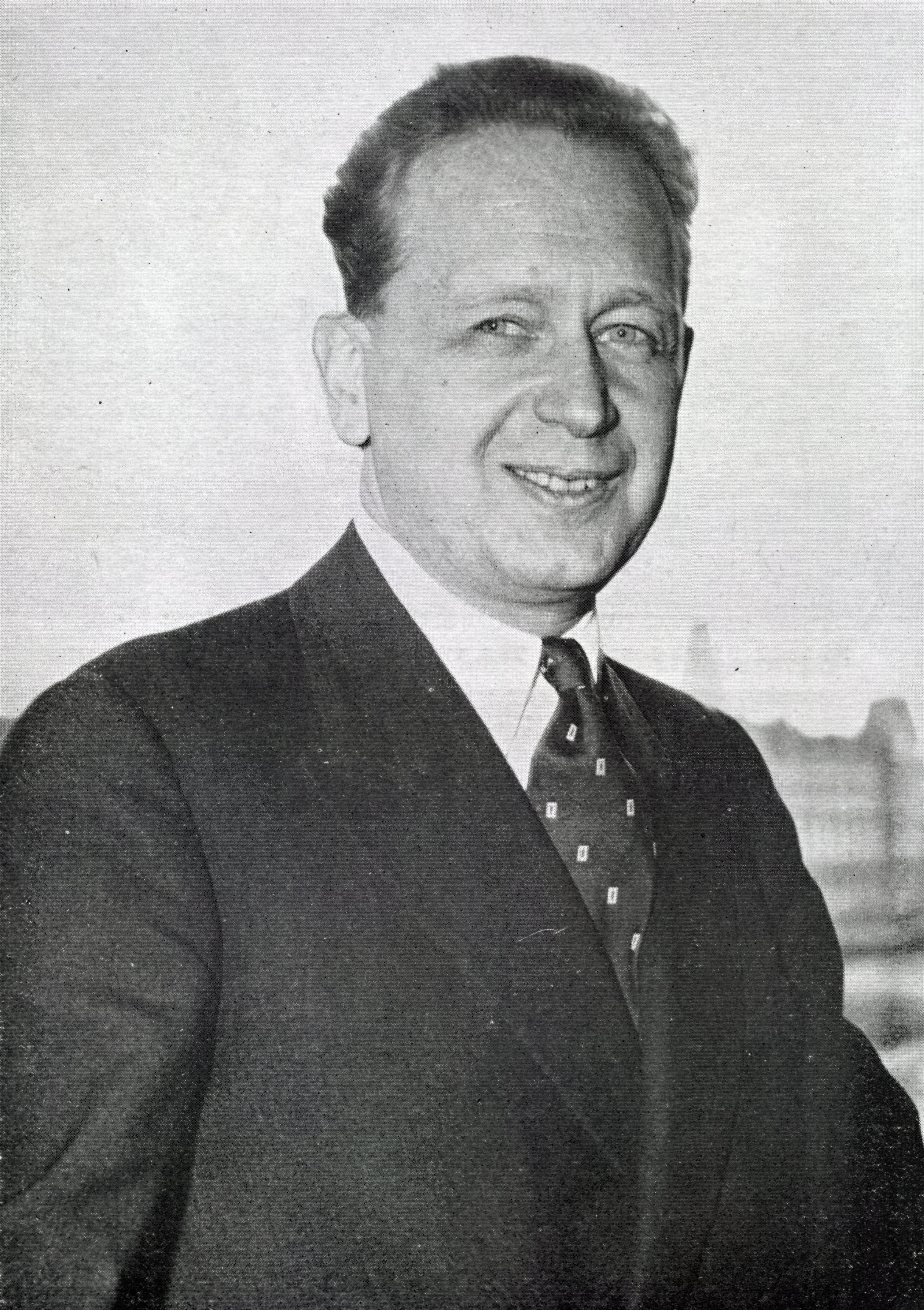
That Hammarskjold's plane did not crash by accident or pilot error but was deliberately brought down, by a shoot-down or by sabotage, and that Western governments, Katangan mining and mercenary interests, and/or intelligence services were behind it and afterward covered it up, suppressing witnesses and withholding the records that would prove what happened.
This is a genuine, still-open mystery, not a debunked one. What is on the record is unusually strong for a case this old: the first Rhodesian inquiries blamed pilot error, but the file has been reopened again and again, an independent commission of senior jurists in 2013 found the evidence of an external attack serious enough to warrant renewed investigation, and the UN's own appointed investigator has since concluded it is 'plausible' that an attack or threat brought the plane down while faulting the United States, the United Kingdom, and South Africa for very likely still withholding relevant records. What none of that establishes is who, if anyone, did it, or that the cause was not, in the end, an accident. The withholding is documented; the assassination is not proven.
Believed by: An unusually respectable coalition for a conspiracy case: historians, jurists, and UN officials who regard the cause as genuinely unresolved, alongside a wider public long convinced it was murder. The reopening has been driven as much by scholars and the United Nations itself as by conspiracy circles.
The full story
A Secretary-General, a ceasefire flight, and a crash in the dark
In September 1961 the Congo was coming apart, and Dag Hammarskjold had staked the authority of his office on holding it together. The mineral-rich province of Katanga had broken away under Moise Tshombe, propped up by Belgian mining money and a corps of foreign mercenaries, and the United Nations peacekeeping mission Hammarskjold had built was now fighting them. When a UN offensive stalled, he decided to fly to neutral ground at Ndola, across the border in British-run Northern Rhodesia, to negotiate a ceasefire in person.
He never arrived. The chartered Douglas DC-6B Albertina, flying a long, deliberately roundabout night route under near-radio-silence to keep clear of hostile aircraft, descended on its approach to Ndola shortly after midnight on 18 September 1961 and tore through forest about nine miles from the runway. Fifteen of the sixteen people aboard died in the crash and the fire that followed. The sole survivor, the acting security chief Sergeant Harold Julien, was found alive but badly burned and died of his injuries days later. Hammarskjold's body was found thrown clear of the wreck.
That much is not in dispute, and it is worth holding the record separate from everything that has been built on it. A sitting Secretary-General of the United Nations, arguably the most important neutral figure in the Cold War, died on a peace mission, in territory controlled by a colonial power with its own stake in the war he was trying to stop. The claim we rate is that this was no accident: that the plane was brought down on purpose and the truth buried. To weigh it fairly means keeping the solid facts, the crash, the inquiries, the withheld records, apart from the specific, unprovable versions of who did it.
Why the accident verdict never settled
The reason this case refuses to die is that the official explanation was weak from the start and has only weakened since. The first inquiries were run by the Rhodesian authorities, and they settled on pilot error: in effect, that a competent, well-rested crew flew a functioning aircraft gently into the ground on a clear night for no reason anyone could name. The United Nations' own commission, examining the same evidence in 1962, declined to endorse that and returned an open verdict, leaving attack and sabotage among the possibilities it could not rule out.
Around that hole in the record sit a cluster of anomalies. Numerous local witnesses, many of them Black Rhodesian charcoal burners and villagers, described seeing a second, smaller aircraft near the Albertina, or a flash or fire in the sky before it went down. The colonial board gave their accounts little weight, a dismissal later criticised as steeped in the racial assumptions of the time. Then there is the search: the wreck lay only about nine miles from a controlled airport where the plane was expected, and yet it took something like fifteen hours to reach it, a delay no one has ever satisfactorily explained.
A sitting Secretary-General died on a peace mission, in territory run by a colonial power with its own stake in the war he was trying to end. Suspicion of the official story is not, by itself, paranoid.
And Hammarskjold had made enemies who mattered. His opposition to the Katangan secession threatened Belgian and Anglo mining fortunes and the mercenaries fighting for Tshombe, and he had crossed Britain, France, and the Soviet Union at various moments. The motive was not hard to find. In 1998, documents surfaced at South Africa's Truth and Reconciliation Commission appearing to describe a plot to sabotage his plane; their authenticity was never established, but they put the question back on the international agenda.
The decisive shift came from respectable quarters. Historian Susan Williams's 2011 book gathered the witness testimony and the archival gaps into a serious case, prompting an independent commission of four senior jurists. In 2013 that commission concluded there was persuasive evidence the aircraft may have been forced into its descent by hostile action, and called on the UN to reopen the matter. The UN did. Its appointed investigator, former Tanzanian Chief Justice Mohamed Chande Othman, has since judged an external attack or threat to be a plausiblecause, and reported that the United States, Britain, and South Africa almost certainly still hold undisclosed records, very likely including intercepted radio traffic from the night. When the UN's own investigator says that, waving the case away is no longer an option.
What the evidence still cannot show
For all that, a hard line has to be drawn between “unresolved” and “proven murder,” because the second claim reaches well beyond what anyone can currently demonstrate. The word doing the honest work in the UN's findings is plausible. Othman keeps three possibilities explicitly open: an external attack, sabotage, and unintentional human error. He does not conclude the plane was shot down, and no document, no forensic reconstruction, and no credible confession has ever tied a specific attacker to the crash.
An accident remains entirely possible, and not as a strained defence. The Albertina was making a night approach to an unfamiliar field after a long, deliberately circuitous flight, under radio discipline that limited its contact with the ground. A controlled flight into terrain, a crew reading an altimeter setting wrong or descending too early on a dark approach, is one of the most common ways aircraft of that era were lost, and it fits the physical evidence without any need for a second plane. Fatigue, a misjudged descent, an instrument misread: none of that is glamorous, but all of it kills.
The supporting pillars of the attack theory are softer than they look. The witness accounts of a second aircraft and a flash are broadly consistent and were wrongly brushed aside, but night-time observation of a distant, possibly already-stricken plane is exactly the kind of testimony that can be sincere and mistaken at once. The 1998 “Operation Celeste” documents, so often cited as a smoking gun, have never had their authenticity established and are regarded by many serious researchers as probable fabrications. Motive, meanwhile, is not evidence: a long roster of powerful people who might have wanted Hammarskjold dead tells you why to investigate, not that any of them acted.
This is also where restraint is a duty rather than a courtesy. Over the years various named individuals, including mercenary pilots said to have flown for Katanga, have been floated as the person who fired the fatal burst. Those accusations have never been proven in any forum, the men in question denied them, and it is not this file's place to convict anyone by rumour. The correct posture is the UN's own: the possibility of an attack is real and unclosed, and the identity of any attacker is unknown.
Why it endures
Most conspiracy theories persist against the official record. This one persists partly because of it, which is what makes it unusual. When a body of distinguished jurists and the United Nations itself keep declaring the cause unresolved and worth investigating, a person who suspects foul play is not defying the authorities; they are agreeing with them. The belief has an institutional backbone few others can claim.
It draws on a genuine sense of injustice too. Hammarskjold became a martyr almost immediately, awarded the Nobel Peace Prize after his death and eulogised by John F. Kennedy as the greatest statesman of the century. A figure like that, killed en route to stop a war, slots naturally into the oldest of political stories: the good man destroyed by the powerful interests he threatened. The Cold War Congo, with its mercenaries, mining cartels, and duelling intelligence services, supplies a cast of plausible villains without anyone having to invent one.
The two things that most sustain the belief, though, are the colonial inquiry's treatment of the African witnesses and the continued withholding of records. The first looks like a system deciding in advance what it did not want to find; the second looks like that same instinct carried across sixty years. Even if every withheld file turned out to be innocuous, the refusal to open them keeps the suspicion alive, because secrecy around a dead peacemaker will always read as something to hide.
Open, not closed
On the core claim, that Hammarskjold's plane was deliberately brought down and the truth covered up, the case is authentically open: the UN's own investigator calls an external attack “plausible,” a commission of jurists found the evidence serious, and major governments are still sitting on records they are believed to hold. But “plausible” is not “proven,” no attacker has ever been identified, and a plain accident on a hard night approach remains a fully live explanation.
The honest position holds both halves at once. The specific, satisfying version, a named plot by a named party executed in a particular way, is not established by any evidence now public, and this file convicts no one. Yet the softer, more disquieting finding is solid: sixty years on, the cause of the death of a United Nations Secretary-General has never been settled, the first inquiry that called it an accident was neither neutral nor thorough, and states that likely hold the answer have chosen not to give it up. That second finding does not need the assassination to be true to be a scandal. Whether Hammarskjold was murdered or simply lost to the ordinary cruelty of a night flight gone wrong, the world is owed the records that could tell the difference, and it still does not have them.
What's still unexplained
- Why did it take roughly fifteen hours to reach a wreck lying only about nine miles from a controlled airport, when the plane was expected and, by some accounts, a flash was seen? The delay has never been convincingly explained and remains one of the case's most troubling anomalies.
- What is actually in the records the UN's investigator believes the United States, Britain, and South Africa still hold, particularly any intercepted radio traffic from the night? Until those archives are opened, the central factual question cannot be closed either way.
- Do the many, broadly consistent witness reports of a second aircraft and of fire in the sky reflect a real attacker, or the fallibility of night-time observation of a plane already in trouble? The sightings are the strongest hint of attack and the hardest to verify.
- What did Sergeant Harold Julien, the one man pulled alive from the wreck, actually witness? Fragmentary accounts of his statements before he died, including mentions of sparks or an explosion before impact, are tantalising but were recorded in conditions that make them impossible to rely on.
Point by point
The claim: The crash was a deliberate shoot-down or sabotage, and the official pilot-error finding was a cover-up.
What the record shows: The documented part is that the case is genuinely unresolved and has been formally reopened, not that a murder is proven. The 2013 Hammarskjold Commission of jurists concluded there was 'persuasive evidence' the plane may have been forced down by hostile action, and the UN's own investigator, Mohamed Chande Othman, has since assessed an external attack or threat to be a 'plausible' cause. But 'plausible' is not 'established.' No document, wreckage analysis, or confession has ever tied a specific attacker to the crash, and Othman himself keeps sabotage, an external attack, and unintentional human error all on the table as live possibilities.
The claim: Local African witnesses saw a second aircraft and flashes in the sky, and the colonial inquiry ignored them.
What the record shows: This kernel is real. Numerous witnesses near Ndola, many of them Black Rhodesian charcoal burners and villagers, described seeing a smaller aircraft near the Albertina, or a flash or fire in the sky before the crash. The 1962 Rhodesian inquiries gave their accounts little weight, a dismissal later criticised as reflecting the racial assumptions of colonial authorities, and Othman's UN review treated the same testimony as credible enough to matter. Even so, night-time eyewitness accounts of distant lights are notoriously fallible, and consistent sightings are suggestive rather than conclusive.
The claim: Hammarskjold had powerful enemies with a motive to kill him, so someone must have.
What the record shows: The motive is real; motive is not proof. By opposing the Katangan secession, Hammarskjold threatened Belgian and Anglo mining interests, the mercenaries fighting for Tshombe, and colonial and Cold War calculations in several Western capitals, and he had irritated Britain, France, and the Soviet Union at various turns. Powerful people had reason to want him gone. But a long list of parties with a grievance is a reason to investigate, not evidence that any of them acted, and this file names no individual as a killer.
The claim: The United States, Britain, and South Africa are hiding intelligence records that would prove an attack.
What the record shows: This is the strongest documented strand, and it stops short of proving the crime. Othman's UN reports conclude it is almost certain that these states, all of which had personnel and listening posts in the region, hold undisclosed records relevant to the crash, very likely including intercepted radio traffic from the night. The General Assembly has repeatedly urged them to release it, and their continued non-cooperation is on the record. Withholding relevant material is itself a serious finding. It fuels the suspicion of a cover-up without, by itself, establishing that the plane was attacked.
The claim: The official verdict was pilot error, so the matter is settled.
What the record shows: It is not settled, and never really was. The pilot-error conclusion came from Rhodesian inquiries whose thoroughness and neutrality have been widely questioned, while the United Nations' own 1962 commission pointedly returned an open verdict. The case has since been reopened by an independent commission of jurists and by the UN General Assembly itself. An accident, including a straightforward controlled flight into terrain on a difficult night approach, remains entirely possible; what is not accurate is the claim that the accident finding was ever authoritative and final.
Timeline
- 1960The Congo becomes independent from Belgium and immediately fractures. The mineral-rich province of Katanga secedes under Moise Tshombe, backed by Belgian mining money (notably Union Miniere du Haut-Katanga) and foreign mercenaries. The United Nations deploys a large peacekeeping operation, ONUC, and Hammarskjold stakes his tenure on holding the Congo together against the secession.
- 1961-09UN forces launch Operation Morthor against Katangan gendarmes and their mercenary officers, and the fighting goes badly. Hammarskjold, hoping to salvage a ceasefire, arranges to meet Tshombe on neutral ground at Ndola, across the border in British-run Northern Rhodesia.
- 1961-09-18The chartered Douglas DC-6B SE-BDY, named Albertina, flies a long, deliberately indirect night route under near-radio-silence to avoid hostile aircraft. Shortly after midnight, on approach to Ndola, it descends into forest about nine miles from the runway and is destroyed. Fifteen of the sixteen aboard, Hammarskjold among them, die at once; the acting security chief, Sergeant Harold Julien, is pulled alive from the wreck but dies of his injuries days later.
- 1962Two Rhodesian inquiries, a Board of Investigation and a Commission of Inquiry, attribute the crash to pilot error, in effect a controlled descent flown too low. A separate United Nations commission the same year cannot determine the cause and returns an open verdict, explicitly leaving sabotage and attack among the unexcluded possibilities.
- 1998During South Africa's Truth and Reconciliation Commission, documents surface appearing to describe a covert plot (labeled 'Operation Celeste') by a shadowy paramilitary outfit to sabotage Hammarskjold's aircraft. Their authenticity is never established and they remain fiercely disputed, but they reignite the question internationally.
- 2011–2013Historian Susan Williams publishes Who Killed Hammarskjold?, marshalling witness accounts and archival gaps. It prompts an independent Hammarskjold Commission of four senior jurists, which reports in 2013 that there is persuasive evidence the aircraft may have been forced into its descent by hostile action and urges the UN to reopen the case and seek records held by member states.
- 2015–2022The UN General Assembly authorizes a renewed investigation. A UN panel, then the appointed 'Eminent Person' Mohamed Chande Othman, former Chief Justice of Tanzania, issues a series of reports concluding it is plausible that an external attack or threat caused the crash, and finding it almost certain that the United States, the United Kingdom, and South Africa still hold undisclosed relevant records, including probable signals intercepts.
From the case file
The actual records: declassified, released, or leaked. We link straight to each document in its official archive, so you never have to take our word for it. Read the originals yourself.
Investigation into the conditions and circumstances resulting in the tragic death of Dag Hammarskjold and of the members of the party accompanying him (report of the Eminent Person, A/73/973)
The UN investigator's report to the General Assembly concluding it is 'plausible' that an external attack or threat caused the crash, keeping sabotage and human error open as alternatives, and finding it almost certain that the United States, the United Kingdom, and South Africa still hold undisclosed relevant records, including probable intercepted communications.
Read the document: United Nations Digital Library →Report of the Commission of Investigation into the Conditions and Circumstances resulting in the Tragic Death of Mr. Dag Hammarskjold and of Members of the Party Accompanying Him
The original 1962 United Nations commission report, which examined the same evidence as the Rhodesian inquiries but declined to endorse pilot error, returning an open verdict that left attack and sabotage among the possibilities it could not exclude.
Read the document: United Nations Digital Library →Other case files that cite the same sources
This is a genuine, still-open mystery, not a debunked one. What is on the record is unusually strong for a case this old: the first Rhodesian inquiries blamed pilot error, but the file has been reopened again and again, an independent commission of senior jurists in 2013 found the evidence of an external attack serious enough to warrant renewed investigation, and the UN's own appointed investigator has since concluded it is 'plausible' that an attack or threat brought the plane down while faulting the United States, the United Kingdom, and South Africa for very likely still withholding relevant records. What none of that establishes is who, if anyone, did it, or that the cause was not, in the end, an accident. The withholding is documented; the assassination is not proven.
Reviewed by Colin Peterson · Last reviewed July 12, 2026 · How we rate
Common questions
Is Hammarskjold plane crash true?
This is a genuine, still-open mystery, not a debunked one. What is on the record is unusually strong for a case this old: the first Rhodesian inquiries blamed pilot error, but the file has been reopened again and again, an independent commission of senior jurists in 2013 found the evidence of an external attack serious enough to warrant renewed investigation, and the UN's own appointed investigator has since concluded it is 'plausible' that an attack or threat brought the plane down while faulting the United States, the United Kingdom, and South Africa for very likely still withholding relevant records. What none of that establishes is who, if anyone, did it, or that the cause was not, in the end, an accident. The withholding is documented; the assassination is not proven.
What is Hammarskjold plane crash?
Just after midnight on 18 September 1961, the aircraft carrying Dag Hammarskjold, the second Secretary-General of the United Nations, came down in forest near Ndola, in what was then Northern Rhodesia (now Zambia). He was flying to broker a ceasefire in the Congo Crisis. All sixteen people aboard died; one, an American security officer,…
What does the evidence show?
The documented part is that the case is genuinely unresolved and has been formally reopened, not that a murder is proven. The 2013 Hammarskjold Commission of jurists concluded there was 'persuasive evidence' the plane may have been forced down by hostile action, and the UN's own investigator, Mohamed Chande Othman, has since assessed an…
Why do people believe it?
The case is genuinely open, and it is respectable bodies keeping it open. When four senior international jurists and the United Nations itself say the evidence of attack deserves renewed investigation, believing that something is wrong is not fringe thinking; it tracks the official position.
What is still unresolved?
Why did it take roughly fifteen hours to reach a wreck lying only about nine miles from a controlled airport, when the plane was expected and, by some accounts, a flash was seen? The delay has never been convincingly explained and remains one of the case's most troubling anomalies.
Sources
- 1.63 years later, mystery still surrounds death of Dag Hammarskjold, United Nations (2024)
- 2.Mystery still surrounds death of revered UN chief Hammarskjold, 63 years after tragic plane crash, UN News (2024)
- 3.Report of the Hammarskjold Commission (Commission of Jurists), The Hammarskjold Commission (Sir Stephen Sedley, Hans Corell, Richard Goldstone, Wilhelmina Thomassen) (2013)
- 4.Report of the Rhodesian Commission of Inquiry into the crash of SE-BDY, Federation of Rhodesia and Nyasaland, Commission of Inquiry (1962)
- 5.Dag Hammarskjold's Plane Crash: What Really Happened to the U.N. Chief, Foreign Policy (2022)
- 6.UN Leader Dag Hammarskjold Died in Mysterious Circumstances in 1961. What Really Happened?, History.com (2019)
- 7.UN extends probe into mysterious 1961 death of Secretary-General Hammarskjold, France 24 / AFP (2019)
- 8.Speaking truth to power: The killing of Dag Hammarskjold and the cover-up, The Conversation (2016)
Embed this case file on your site
Paste this snippet to show this case file as a small card, with a link back to the full write-up. Free to use.
<iframe src="https://theconspiratory.com/embed/dag-hammarskjold-crash" title="The Conspiratory verdict" width="520" height="190" style="border:0;max-width:100%" loading="lazy"></iframe>Help us investigate
This is a living case file. If you spot an error or know evidence we missed, tell us, and weigh in on where you land.
Where do you land?
Cast your read on this one.
Comments
Add your take. Comments are read and approved by a human before they appear, so keep it on topic and civil. Please do not accuse named, living people of crimes.