East Germany secretly doped thousands of its athletes, many of them minors, under a state-directed plan coordinated with the Stasi
By Colin PetersonJuly 16, 2026
Where the evidence lands: Proven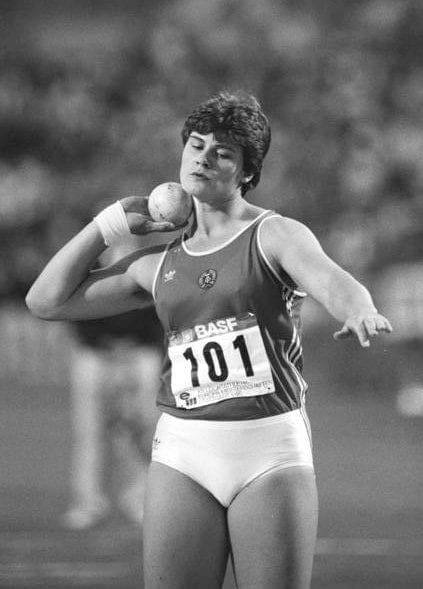
That East Germany's sporting success was not the product of training alone but of a secret, state-organized doping program: that party and sports officials, working with scientists, doctors and coaches and supervised by the Stasi, administered performance-enhancing drugs, chiefly the anabolic steroid Oral-Turinabol, to elite and junior athletes on a mass scale, often without the athletes' knowledge or consent and including children, and that this was formal state policy rather than the choices of rogue individuals.
Proven. This is one of the rare cases where the conspiracy claim is the documented history. Preserved Stasi and government files, recovered from secret archives after 1989, describe a centrally planned program (State Plan 14.25) that administered anabolic steroids to elite athletes, including minors, frequently without their knowledge. After reunification, German courts convicted sports officials, doctors and coaches of causing bodily harm to those athletes, and the German state later legislated compensation funds for the victims. What remains debated is scope and individual responsibility, not the existence of the program. As a claim that East Germany ran a systematic, state-directed doping system, the verdict is substantiated.
Believed by: Now the settled mainstream account, accepted by anti-doping bodies, historians, German courts and the surviving athletes; the only live disputes concern how many people were affected and who bears responsibility, not whether it happened
The full story
A doping programme with a filing number
What separates this from every other doping story is the paperwork. East Germany did not tolerate cheating or look away from it. It planned it, in writing, and gave the plan a bureaucratic designation: State Plan Theme 14.25.
Recovered government and Stasi files document a centralised system running from the early 1970s. Researchers Werner Franke and Brigitte Berendonk reconstructed it after 1989 from doctoral theses, medical reports and security documents, work that was later published in the scientific literature rather than left as allegation.
The principal drug was Oral-Turinabol, an anabolic steroid manufactured by the state-owned firm Jenapharm. Files and testimony describe daily rations handed out by coaches. Estimates drawn from the documents put the number of athletes exposed across the programme's life in the thousands.
Told they were vitamins
The detail that keeps this from being a story about sport is who it was done to. Girls recruited into elite sports schools, some in their early teens, were given steroids and told they were vitamins or recovery aids.
Andreas Krieger, the 1986 European shot put champion who competed as Heidi Krieger, testified to having been given Oral-Turinabol from the age of sixteen. The consequences described by athletes across the programme include virilisation, infertility, liver and heart damage, and psychological harm that outlasted their careers by decades.
Consent is the point. A doping programme in which adults choose to cheat is a sporting scandal. A programme in which the state administers steroids to children who are not told what they are taking is something else, and the German courts that later heard the cases treated it as such.
The rare case that ended in convictions
Most doping revelations end in bans, stripped medals and argument. This one ended in criminal court.
After reunification, German prosecutors brought cases against officials, doctors and coaches, and convictions followed. That matters for how this file rates the claim: the finding is not the conclusion of journalists or of a sporting tribunal but of a national legal system applying ordinary criminal law to what had been state policy a few years earlier.
It also produced something rarer than a verdict, which is a record. The trials, alongside the recovered files, mean the programme is documented at the level of individual names, drugs, dosages and dates, in a way that almost no comparable case is.
Everyone could see it and nobody could prove it
The results were extraordinary in real time. A country of about seventeen million was winning Olympic and world medals at a rate that made no demographic sense, concentrated in women's swimming and athletics.
Rivals said so at the time and were dismissed as bad losers, because suspicion is not evidence and the testing of the era could not catch what was being used. That gap between what was widely believed and what could be shown lasted the better part of two decades and closed only when the state that ran the programme ceased to exist.
It is worth holding onto for other cases. The evidence here did not arrive because testing improved or because an investigation succeeded. It arrived because a government fell and left its filing cabinets behind.
Not a rumour that turned out true, a policy that turned out documented
This file rates a claim that is proven to an unusual standard: contemporaneous state documents, scientific reconstruction, criminal convictions and the testimony of the people it was done to.
What remains contested is not whether it happened but what follows. Records set under the programme still stand in some events, and the athletes harmed have received compensation that many consider inadequate. Those are live questions. The existence of State Plan Theme 14.25 is not one of them.
What's still unexplained
- The exact number of people affected is genuinely uncertain. Careful estimates from the documents point to thousands directly involved in the top program, while broader figures that fold in junior and regional levels run into the tens of thousands; the totals depend heavily on where one draws the line.
- Individual accountability remains contested. A handful of senior figures were convicted, mostly with suspended sentences, while many coaches, doctors and administrators were never charged, and some victims feel the legal reckoning was too lenient.
- The question of the record books is unresolved. The International Olympic Committee has generally declined to strip or reallocate medals won by doped East German athletes, leaving results that many rivals regard as tainted formally intact.
Point by point
The claim: There was a formal, written state plan to dope athletes, not just scattered cheating by individual coaches.
What the record shows: Recovered government and Stasi files identify the program by its bureaucratic name, State Plan Theme 14.25, and document a centralized system dating from the early 1970s. Researchers Franke and Berendonk reconstructed it from doctoral theses, medical reports and security documents recovered after 1989, work later published in the peer-reviewed journal Clinical Chemistry in 1997. The paper trail describes substances, dosing schedules and the chain of distribution.
The claim: The main drug was a specific East German anabolic steroid, given in large quantities.
What the record shows: The principal agent was Oral-Turinabol (chlorodehydromethyltestosterone, or CDMT), an anabolic steroid manufactured by the state-owned pharmaceutical firm Jenapharm. Files and later testimony describe daily rations handed out by coaches, and estimates drawn from the documents put the number of athletes exposed over the program's life in the thousands, with wider figures ranging into the low tens of thousands when junior and lower levels are included.
The claim: Minors were doped, and many athletes did not know what they were being given.
What the record shows: Girls recruited into elite sports schools, some as young as their early teens, were administered steroids described to them as vitamins or recovery aids. Andreas Krieger, the 1986 European shot put champion who competed as Heidi Krieger, testified to having been given Oral-Turinabol from age 16; the German courts that convicted officials in 2000 expressly framed the harm as inflicted on athletes 'including minors' who were doped without informed consent.
The claim: The secret police were involved in running and concealing the program.
What the record shows: The Ministry for State Security (Stasi) monitored the sports system through a large network of informants and was tasked with maintaining secrecy and managing the risk of athletes testing positive at international events. The preservation of Stasi records after 1989, and their release through what became the Stasi Records Archive, is precisely what allowed historians and prosecutors to reconstruct the system.
The claim: The victims suffered lasting physical harm, and this was later officially recognized.
What the record shows: Athletes reported virilization (deepened voices, excess body hair), and long-term effects documented among victims include liver damage, heart and vascular disease, some cancers, infertility, miscarriages and birth defects in their children. The German Bundestag passed victim compensation legislation (the Dopingopfer-Hilfegesetz in 2002 and a second act in 2016) providing state funds to people harmed by the GDR program, an official acknowledgment of the harm.
Timeline
- 1968East German sports medicine begins experimenting with anabolic steroids on athletes. Officials come to see pharmacology as a way for a small country to win outsized international prestige through sport, and the practice spreads through the elite training system over the following years.
- 1974The doping effort is formalized as centralized state policy under the designation State Plan Theme 14.25. Anabolic steroids, above all Oral-Turinabol (chlorodehydromethyltestosterone), are distributed systematically across major sports through a chain running from doctors and scientists to coaches to athletes.
- 1976At the Montreal Olympics, East Germany wins 40 gold medals; its women's swimmers take 11 of 13 events. The sudden dominance, and the deepened voices and heavy musculature of some competitors, hardens suspicion among rival teams and Western journalists, though no proof is public yet.
- 1970s–1980sThe Stasi embeds thousands of informants across the sports system to monitor scientists, coaches and athletes, enforce secrecy and manage the risk of positive tests. Many athletes, including minors selected for elite sports schools, are given the steroids as supposed vitamins without being told what they are.
- 1989–1990The Berlin Wall falls and East Germany dissolves into a reunified Germany. As the state collapses, the secret sports and Stasi records that document the doping system begin to become accessible.
- 1991Molecular biologist Werner Franke and his wife, former athlete Brigitte Berendonk, publish research drawn from recovered files, including doctoral theses and reports smuggled from the Military Medical Academy at Bad Saarow. Berendonk's book Doping-Dokumente lays out State Plan 14.25 and names substances, doses and researchers.
- 1998–2000German prosecutors bring criminal cases in Berlin against doctors, coaches and officials. A series of trials produces convictions for causing bodily harm to athletes, including minors, who were doped without informed consent.
- 2000-07-18A Berlin court convicts Manfred Ewald, the former head of the East German sports federation, and Dr. Manfred Hoeppner, its former chief sports physician, as accessories to intentional bodily harm of athletes, including minors. Both receive suspended sentences.
From the case file
The actual records: declassified, released, or leaked. We link straight to each document in its official archive, so you never have to take our word for it. Read the originals yourself.
Hormonal doping and androgenization of athletes: a secret program of the German Democratic Republic government
A peer-reviewed reconstruction of State Plan 14.25 built directly from the GDR's own secret research documents, including classified doctoral theses and reports recovered from the Military Medical Academy at Bad Saarow. It sets out the substances, doses and administration protocols used on athletes, including minors, and is the scholarly foundation of the documented record.
Read the document: Clinical Chemistry (1997) →Records of the Ministry for State Security (Stasi) on the GDR sports and doping system
The preserved files of the East German secret police, including material documenting the surveillance and concealment surrounding the athletic doping program, are held and made accessible through Germany's Stasi Records Archive. Their survival after 1989 is what allowed historians and prosecutors to establish the program as state policy.
Read the document: Stasi Records Archive (German Federal Archives) →Proven. This is one of the rare cases where the conspiracy claim is the documented history. Preserved Stasi and government files, recovered from secret archives after 1989, describe a centrally planned program (State Plan 14.25) that administered anabolic steroids to elite athletes, including minors, frequently without their knowledge. After reunification, German courts convicted sports officials, doctors and coaches of causing bodily harm to those athletes, and the German state later legislated compensation funds for the victims. What remains debated is scope and individual responsibility, not the existence of the program. As a claim that East Germany ran a systematic, state-directed doping system, the verdict is substantiated.
Reviewed by Colin Peterson · Last reviewed September 2, 2026 · How we rate
Common questions
Is East German state doping true?
Proven. This is one of the rare cases where the conspiracy claim is the documented history. Preserved Stasi and government files, recovered from secret archives after 1989, describe a centrally planned program (State Plan 14.25) that administered anabolic steroids to elite athletes, including minors, frequently without their knowledge. After reunification, German courts convicted sports officials, doctors and coaches of causing bodily harm to those athletes, and the German state later legislated compensation funds for the victims. What remains debated is scope and individual responsibility, not the existence of the program. As a claim that East Germany ran a systematic, state-directed doping system, the verdict is substantiated.
What is East German state doping?
For roughly two decades the German Democratic Republic (East Germany), a country of about 17 million, won Olympic and world medals far out of proportion to its size, above all in women's swimming and athletics. After the state collapsed in 1989 and 1990, secret files opened to reveal why: a centrally directed doping program, catalogued i…
What does the evidence show?
Recovered government and Stasi files identify the program by its bureaucratic name, State Plan Theme 14.25, and document a centralized system dating from the early 1970s. Researchers Franke and Berendonk reconstructed it from doctoral theses, medical reports and security documents recovered after 1989, work later published in the peer-re…
Why do people believe it?
Unlike most conspiracy theories, this one turned out to be true, and it is believed because the evidence is overwhelming: physical files, named documents, court verdicts and the testimony of the athletes themselves. The 'belief' here is simply acceptance of a documented history.
What is still unresolved?
The exact number of people affected is genuinely uncertain. Careful estimates from the documents point to thousands directly involved in the top program, while broader figures that fold in junior and regional levels run into the tens of thousands; the totals depend heavily on where one draws the line.
Sources
- 1.Doping in East Germany, Wikipedia (2026)
- 2.Doping for Gold: The State-Sponsored Doping Program, PBS, Secrets of the Dead
- 3.East German Doping Trial, The Globe and Mail (2000)
- 4.Manfred Ewald, Wikipedia (2026)
- 5.Doped East German athletes to receive compensation, BMJ (via PubMed Central) (2002)
- 6.East German doping victims will get compensation, ESPN / Associated Press (2006)
- 7.Andreas Krieger, Wikipedia (2026)
- 8.Passages: Werner Franke, Doctor who Exposed East German Doping, 82, Swimming World Magazine (2022)
- 9.The East German Doping Machine, International Swimming Hall of Fame
Embed this verdict on your site
Paste this snippet to show our sourced verdict as a small card, with a link back to the full case file. Free to use.
<iframe src="https://theconspiratory.com/embed/east-german-doping" title="The Conspiratory verdict" width="520" height="190" style="border:0;max-width:100%" loading="lazy"></iframe>Help us investigate
This is a living case file. If you spot an error or know evidence we missed, tell us, and weigh in on where you land.
Where do you land?
Cast your read on this one.
Comments
Add your take. Comments are read and approved by a human before they appear, so keep it on topic and civil. Please do not accuse named, living people of crimes.