The Edinburgh Vaults beneath South Bridge are haunted, and the dead of the old city's underground still make themselves felt to visitors
By Colin PetersonJuly 8, 2026
Where the evidence lands →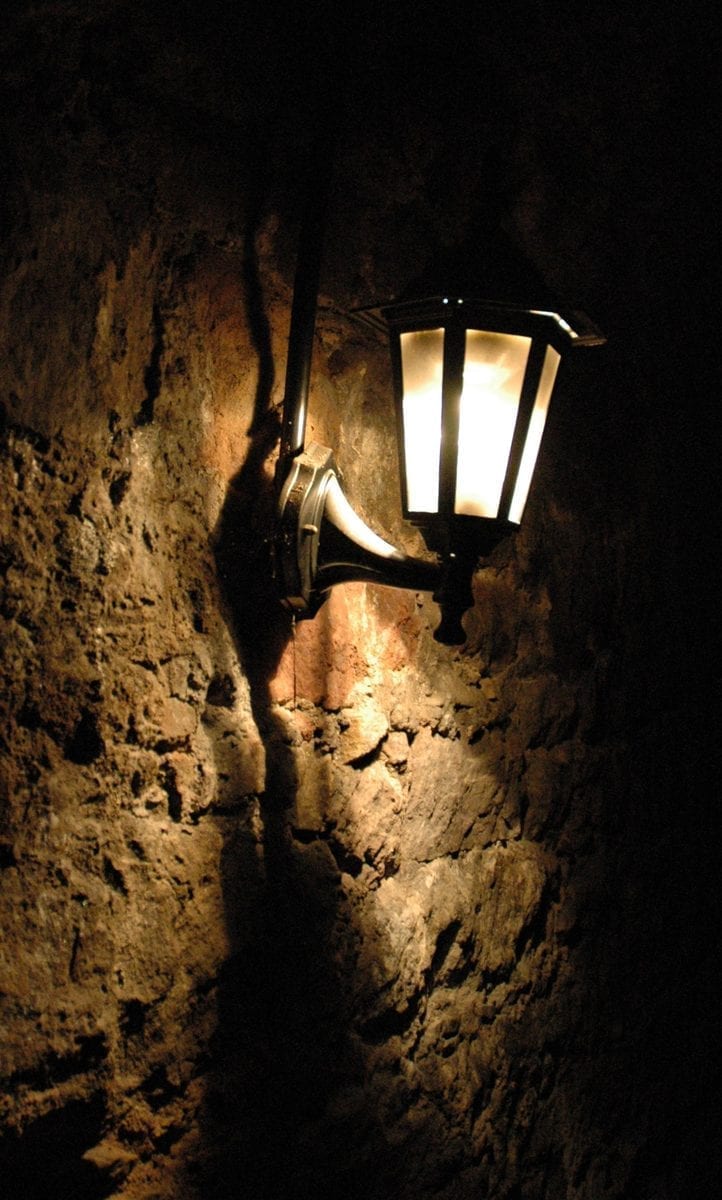
That the chambers beneath Edinburgh's South Bridge are genuinely haunted, and that the cold spots, disembodied footsteps, unexplained touches, and apparitions (among them figures nicknamed Mr Boots and the Watcher) reported by visitors and tour guides are manifestations of people who suffered or died in the vaults and the surrounding Old Town.
The Edinburgh (South Bridge) Vaults are entirely real: a network of stone chambers built into the arches of a 1780s viaduct, later occupied by the city's poorest residents and abandoned for more than a century before their rediscovery in the 1980s. The grim social history is documented. The claim we rate is narrower: that the vaults are haunted, and that the cold spots, footsteps, touches, and figures reported on tours are the presence of the dead. It rests on anecdotal experience gathered largely in the context of paid ghost tours, and the one large controlled study of the site found that reported sensations tracked measurable environmental features (air movement, temperature, lighting, chamber size) and the visitor's prior belief in ghosts, not any independently confirmed paranormal cause.
Believed by: Ghost-tour visitors, paranormal enthusiasts, and audiences of the television shows that filmed there; the site has been promoted as one of Britain's most haunted, a label repeated by tour operators and popular media
The full story
What is documented
Start with what is solid, because a great deal here is. Beneath the South Bridgein Edinburgh's Old Town runs a network of stone chambers, the enclosed spaces within the arches of a viaduct that was built under an act of 1785 and completed in 1788. The bridge carried a new street across the Cowgate valley; all but one of its nineteen arches were hidden behind the tenements raised along the street, and the vaults inside, on the order of a hundred and twenty rooms, were let out as cellars and workshops.
The commercial life of the vaults was short. The bridge had been put up quickly and never sealed against water, and the chambers began to flood and rot almost at once. Legitimate trade moved out; the poorest of the city moved in. Through the nineteenth century the vaults were cramped, unventilated, lightless dwellings, bound up with the hardship of the Old Town above, before they were sealed, filled with rubble, and forgotten. They stayed that way until 1985, when the publican Norrie Rowan broke through into them while chasing a leak.
None of that is in question. What this file weighs is the separate and larger claim that grew up once the vaults were reopened and put on the tour circuit: that the chambers are haunted, and that what visitors feel down there is the lingering presence of the dead.
The case people make
The believers' case is not built on nothing, and it deserves to be put fairly. Its foundation is the sheer volume and consistency of the reports. Over decades, large numbers of ordinary visitors, not only the credulous, have come up out of the vaults describing the same handful of things: abrupt cold spots, the sound of footsteps with no walker, the sense of being touched or watched, and now and then a figure. Two recur by name, a tall man in heavy boots called Mr Boots, or the Watcher, and other presences tied to particular chambers.
Layered onto that is the site's documented history of suffering. These were real slum dwellings where real people endured cold, damp, and destitution. If anywhere would hold an emotional residue, the argument runs, it would be a place like this. Some visitors report coming away with scratches or marks they cannot account for, which for them turns a spooky feeling into something physical.
A cold, buried labyrinth with a genuinely grim past, and thousands of people who swear they felt something there. The reports are real. The question is what they are reports of.
The strongest version of the case is not that any ghost has been proven, but that the experiences are widespread, patterned, and attached to a place whose history makes a haunting feel plausible, and that this is at least worth taking seriously rather than laughing off.
What happened when it was tested
The vaults are unusual among haunted sites in that they were subjected to a large, controlled study. In 2001, during the Edinburgh International Science Festival, the psychologist Richard Wiseman and colleagues ran one of the biggest organized investigations of alleged hauntings ever attempted, using the South Bridge vaults among other locations, with a large pool of participants and instruments to log temperature, air movement, and magnetic conditions.
The design was the important part. Participants were screened so that they did not know which chambers had a haunted reputation. And still, people reported more unusual experiences in precisely the reputedly haunted vaults. That sounds at first like a point for the ghosts, until you see what the reports tracked. The number of experiences in each chamber correlated with environmental features: air movement, lighting, temperature, and how large or enclosed the space was. And people who already believed in ghosts reported more than those who did not, in the same rooms.
The published conclusion, in the British Journal of Psychologyin 2003, was that the results fit ordinary explanations: subtle physical cues in a space that a place's reputation may itself track, filtered through what each visitor expected and believed. The same research programme, at other sites, traced reported cold spots and temperature drops to air currents moving through concealed openings. In other words, the very sensations offered as proof of a presence turned out to have measurable, non-spectral sources.
How the experience is built
It helps to notice how a visit to the vaults is actually structured, because the structure primes almost everything that follows. Most people arrive through a paid ghost tour. Before they descend, they are told the stories: the history, the names, the chambers where Mr Boots waits, the spots where people have felt cold or been touched. The expectation is set on the surface, in the light, before anyone is underground.
Then the environment takes over. The vaults are cold, dark, low, and close, bare stone with poor ventilation and shifting air. A body in that setting is already tense, heart rate up, senses straining, and a tense body reads its own signals as evidence that something is near. An unexpected draught becomes a cold spot; a distant scrape becomes a footstep; a brush against rough stone becomes a touch. Each ambiguous input is resolved in the direction the guide has already pointed.
Tell people a dark room is haunted, lead them into the dark room, and some of them will feel the haunting. That is not a trick. It is how expectation and a difficult environment work on the nervous system.
None of this requires anyone to be lying or foolish. The reports are sincere. But sincerity is not the same as an external cause, and a setting engineered, however unintentionally, to produce unease will reliably produce it.
Why the reputation persists
Given all that, why does the haunted label only grow? Partly because the reputation is self-reinforcing. A place known as one of Britain's most haunted draws people who want to have that experience, and who are therefore primed to have it; each account they bring back becomes another entry in the catalogue, which strengthens the reputation, which draws the next visitor.
Partly it is media. The vaults have been filmed for paranormal television and folded into countless lists and articles, and that coverage lends the stories an air of established fact. A claim repeated often enough, in enough places, stops feeling like a claim.
And partly it is that the haunting is a genuinely good story, rooted in a real and moving history. The people who suffered in these chambers were real, and the wish to feel that they left some trace is a very human one. A stone circle built in one vault in the 1990s by a Wiccan group, said to contain a malign presence, is itself part of the modern folklore the site has accumulated. The vaults are a place where a compelling narrative, a difficult environment, and a receptive audience meet, and that is a durable combination whether or not anyone is haunting anything.
Environment, not the dead
Hold the two things apart. The Edinburgh Vaults are a real place with a real and often grim history, and the experiences people report there are real experiences. Neither is in doubt. The claim we rate is narrower and different: that those experiences are the presence of the dead. On that claim the evidence is anecdotal, gathered mostly in the primed setting of a ghost tour, and the one serious controlled test pointed away from ghosts and toward environment and expectation.
A study does not have to close every individual case for the overall claim to lack support; equally, the failure to confirm a haunting is not the same as proving that nothing unexplained ever occurs in a hundred and twenty dark rooms. The honest position is that the paranormal explanation has not earned belief, because the ordinary explanations account for the pattern and the extraordinary one has produced no confirmed evidence.
So visit, and feel what the place makes you feel; the unease is part of an authentic encounter with a hard past. Just keep the two questions separate. That the vaults can move you is certain. What the study found underneath that feeling was air currents, poor light, and what each visitor carries down with them.
What's still unexplained
- Why did reported experiences cluster in the reputedly haunted chambers even among participants who did not know which those were? The study attributed this to subtle environmental cues that a place's reputation may itself track, but the mechanism connecting a room's feel to its folklore is not fully mapped.
- How much of the vaults' nineteenth-century use is documented fact and how much is later embellishment? The slum and tavern history is well attested, but some lurid details attached to the site on tours rest on rumour rather than record.
- Can any of the specific recurring reports be reproduced under blind, instrumented conditions, or do they depend on knowing the stories first? No controlled work has isolated a single reported phenomenon at the vaults that survives without prior expectation.
- What is the honest weight of the residue the study left unexplained? Environmental and psychological factors accounted for the pattern of reports, but not every individual experience was traced to a specific cause, and that remainder is where believers and skeptics part.
Point by point
The claim: So many visitors independently report the same things, cold spots, footsteps, touches, a watching presence, that something real must be happening.
What the record shows: That people reliably report sensations is not in dispute; what those reports establish is the question. In the 2001 controlled study, participants who had no idea which chambers carried a haunted reputation still reported more unusual experiences in exactly those chambers, and the pattern of reports tracked measurable features of each room: air currents, temperature, lighting, and how large or enclosed the space felt. Convergent testimony can reflect a shared environment and shared expectations rather than a shared encounter with the dead.
The claim: The vaults have a documented history of death and suffering, so it is natural that spirits would linger there.
What the record shows: The harsh social history is real, and this case file does not dispute it. But a place having been a site of poverty and hardship is a reason the ghost stories feel fitting, not evidence that hauntings occur. Many sites of great historical suffering report no paranormal activity, and many reputedly haunted places have mundane pasts. A grim history explains the appeal of the claim; it does not test it.
The claim: Named entities like Mr Boots and the Watcher are described in consistent detail, which points to real presences.
What the record shows: These figures are characters within a living oral tradition carried by tour guides and repeated by visitors, and consistency is what a well-told, frequently retold story produces. The descriptions are shared through the tours themselves, so a visitor primed to expect a tall, booted man in the back chamber is more likely to interpret an ambiguous sound or shadow that way. Named ghosts are a feature of the storytelling, not independent confirmation.
The claim: People come out with scratches and marks after visiting, physical proof of an attack.
What the record shows: Marks noticed after crawling through cold, rough, low-ceilinged stone chambers have many ordinary explanations, and marks noticed only later cannot be reliably tied to any moment underground. No study has documented such injuries appearing under controlled observation or shown them to exceed what the environment alone would produce. An unexplained scratch is an anomaly to log, not a demonstrated assault.
The claim: Sudden cold spots and temperature drops are the classic sign of a presence.
What the record shows: Underground stone chambers with uneven ventilation, concealed openings, and shifting air are prone to localized draughts and temperature variation, and controlled work at other reputedly haunted sites has traced reported cold spots to air movement through hidden gaps. Temperature and airflow were among the environmental variables that correlated with reported experiences in the vaults study. A cold spot is a measurable physical condition before it is anything else.
Timeline
- 1785Under the South Bridge Act, work begins on a nineteen-arch viaduct to carry a new street across the Cowgate valley and connect Edinburgh's High Street with the university district to the south.
- 1788The South Bridge is completed. All but one of its arches are hidden behind tenement buildings raised along the new street, and the spaces within the arches, roughly one hundred and twenty chambers, are let out as cellars, workshops, and storerooms.
- 1795The vaults begin to be abandoned. The bridge was built quickly and never properly sealed against water; the chambers flood and turn damp, and reputable merchants move their goods out.
- 1800sThrough the early and mid nineteenth century the vaults sink into slum use: cramped, unlit dwellings for the city's poorest families, alongside illicit drinking and, by later repute, other criminal activity. Living conditions are severe.
- 1875At some point between roughly 1835 and 1875 the vaults are closed and filled with rubble. They pass out of use and, in time, out of memory, buried beneath the busy street.
- 1985Norrie Rowan, a former rugby international turned publican, breaks into the sealed chambers while tracing a leak beneath his premises, rediscovering the long-forgotten network of rooms.
- 1996Guided tours of the underground begin in earnest. Over the following years the vaults become a staple of Edinburgh's ghost-walk industry, acquiring named resident spirits and a growing catalogue of visitor experiences.
- 2001During the Edinburgh International Science Festival, psychologist Richard Wiseman and colleagues run a large controlled study of alleged hauntings using the South Bridge vaults and other sites, screening participants who did not know which chambers were reputedly haunted.
- 2003The study is published in the British Journal of Psychology. It finds that reported experiences clustered in the reputedly haunted vaults but tracked environmental factors and prior belief, concluding that the results fit normal psychological and physical explanations rather than confirming ghosts.
The Edinburgh (South Bridge) Vaults are entirely real: a network of stone chambers built into the arches of a 1780s viaduct, later occupied by the city's poorest residents and abandoned for more than a century before their rediscovery in the 1980s. The grim social history is documented. The claim we rate is narrower: that the vaults are haunted, and that the cold spots, footsteps, touches, and figures reported on tours are the presence of the dead. It rests on anecdotal experience gathered largely in the context of paid ghost tours, and the one large controlled study of the site found that reported sensations tracked measurable environmental features (air movement, temperature, lighting, chamber size) and the visitor's prior belief in ghosts, not any independently confirmed paranormal cause.
Reviewed by Colin Peterson · Last reviewed July 8, 2026 · How we rate
Common questions
Is Edinburgh Vaults hauntings true?
The Edinburgh (South Bridge) Vaults are entirely real: a network of stone chambers built into the arches of a 1780s viaduct, later occupied by the city's poorest residents and abandoned for more than a century before their rediscovery in the 1980s. The grim social history is documented. The claim we rate is narrower: that the vaults are haunted, and that the cold spots, footsteps, touches, and figures reported on tours are the presence of the dead. It rests on anecdotal experience gathered largely in the context of paid ghost tours, and the one large controlled study of the site found that reported sensations tracked measurable environmental features (air movement, temperature, lighting, chamber size) and the visitor's prior belief in ghosts, not any independently confirmed paranormal cause.
What is Edinburgh Vaults hauntings?
Beneath Edinburgh's South Bridge lies a warren of roughly one hundred and twenty stone chambers, formed by the arches of a viaduct completed in 1788 and enclosed behind the tenements built along its sides. Meant for taverns, workshops, and storage, the vaults flooded almost from the start and were soon abandoned by legitimate trade, beco…
What does the evidence show?
That people reliably report sensations is not in dispute; what those reports establish is the question. In the 2001 controlled study, participants who had no idea which chambers carried a haunted reputation still reported more unusual experiences in exactly those chambers, and the pattern of reports tracked measurable features of each ro…
Why do people believe it?
The setting does the work. A cramped, lightless, cold labyrinth of bare stone beneath a busy city is intrinsically unsettling, and an unsettled body reads its own racing pulse, prickling skin, and heightened alertness as a sign that something is present.
What is still unresolved?
Why did reported experiences cluster in the reputedly haunted chambers even among participants who did not know which those were? The study attributed this to subtle environmental cues that a place's reputation may itself track, but the mechanism connecting a room's feel to its folklore is not fully mapped.
Sources
- 1.Edinburgh Vaults, Wikipedia (2026)
- 2.Edinburgh's South Bridge and Vaults, Historic UK (2023)
- 3.A History of the Vaults beneath Edinburgh's South Bridge, Retrospect Journal, University of Edinburgh (2024)
- 4.What are Edinburgh's Blair Street Underground Vaults?, Mercat Tours (2023)
- 5.An investigation into alleged 'hauntings', British Journal of Psychology (Wiseman et al.) (2003)
- 6.A spirited experiment: the science of ghosts, The Scotsman (2009)
- 7.Ghost hunting in Edinburgh's South Bridge vaults, The Scotsman (2010)
- 8.The Vaults Tour, VisitScotland (2025)
Embed this case file on your site
Paste this snippet to show this case file as a small card, with a link back to the full write-up. Free to use.
<iframe src="https://theconspiratory.com/embed/edinburgh-vaults" title="The Conspiratory verdict" width="520" height="190" style="border:0;max-width:100%" loading="lazy"></iframe>Help us investigate
This is a living case file. If you spot an error or know evidence we missed, tell us, and weigh in on where you land.
Where do you land?
Cast your read on this one.
Comments
Add your take. Comments are read and approved by a human before they appear, so keep it on topic and civil. Please do not accuse named, living people of crimes.