Elisa Lam's 2013 death at the Cecil Hotel was a murder or paranormal event covered up as an accident
By Colin PetersonJuly 12, 2026
Where the evidence lands: Contradicted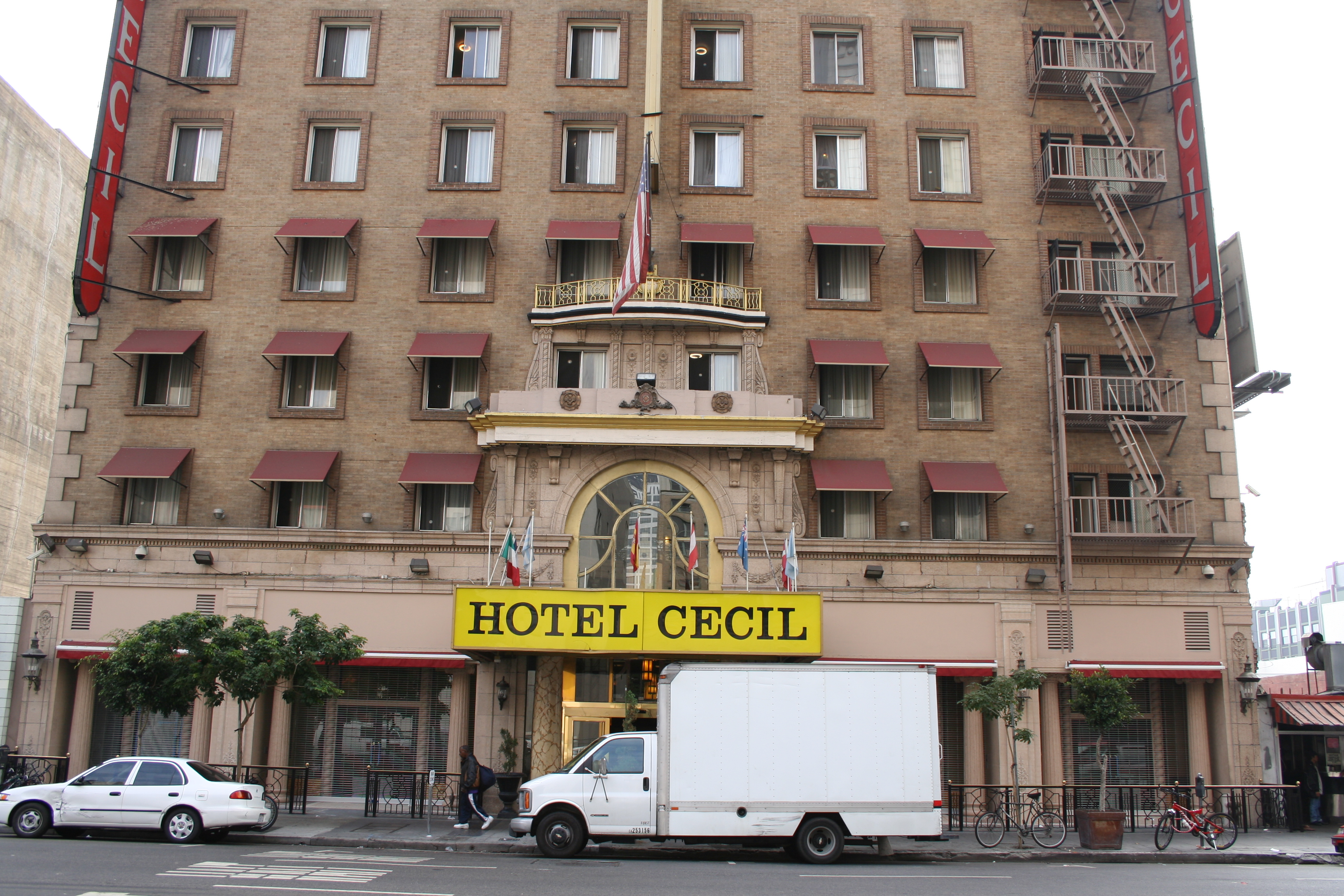
That Elisa Lam did not die by accident, but was murdered (or killed by a supernatural or occult force) at the Cecil Hotel, and that the police and coroner covered it up by ruling the death an accidental drowning. Sub-claims hold that the elevator video shows her interacting with an unseen person or presence, that her death was somehow linked to a tuberculosis-testing kit whose name resembled hers, and that a specific person seen in old hotel footage was responsible.
Contradicted. Elisa Lam was a 21-year-old Canadian student who died at the Cecil Hotel in Los Angeles in early 2013. The Los Angeles County coroner ruled her death an accidental drowning, with bipolar disorder listed as a significant contributing condition. The case became a viral mystery because of a genuinely unsettling elevator video and the hotel's grim history, and around it grew claims of murder, cover-up, and the supernatural. The evidence does not support any of them. A young woman in a mental-health crisis, an accessible rooftop, and an ordinary drowning explain what happened; the theories rest on coincidences and on filling documented gaps with the worst possible story. One real harm did come out of the speculation: online sleuths wrongly hounded an uninvolved musician, who was cleared by police.
Believed by: A large online true-crime and paranormal audience, spread through YouTube breakdowns, Reddit threads, and short-form video, and amplified again by the 2021 Netflix series
The full story
A death, and then a mystery built on top of it
The facts of Elisa Lam's death are sad and, in outline, not especially mysterious. She was 21, a student from Vancouver traveling alone down the West Coast, and in late January 2013 she was staying at the Cecil Hotel in downtown Los Angeles. She called her family every day. On 31 Januarythe calls stopped. After her parents reported her missing, the search led nowhere for days, until a maintenance worker checking on complaints about the water found her body in one of the hotel's rooftop tanks on 19 February.
What turned a private tragedy into a global mystery was a piece of evidence the police released in good faith. Unable to find her, the LAPD published about two and a half minutes of hotel elevator surveillance from her last known sighting, hoping someone would recognize her. In the footage she is alone: she presses many of the buttons, steps in and out, leans into the hallway looking both ways, and makes odd gestures with her hands. The clip is silent, brief, and without context, and it went viral almost immediately.
Months later, after a full autopsy and toxicology, the Los Angeles County coroner ruled the death an accidental drowning, with bipolar disorderlisted as a significant contributing condition. That ruling is the official finding. Almost everything else, the murder, the cover-up, the paranormal, grew up in the space between the eerie video and the plain finding, and Lam's death deserves to be treated with that seriousness rather than as a puzzle to be solved for entertainment.
Why the case felt like a mystery
It is only fair to say why so many people found this hard to accept as an accident, because the ingredients were unusually unsettling and none of them were invented. Start with the video. A silent clip of a young woman behaving strangely, released with no narration, is close to a perfect vessel for dread. Viewers watched her appear to react to something outside the frame and could not help asking what she was seeing. The footage answered nothing and implied everything.
Then there was the place. The Cecil had a genuinely dark reputation: decades of suicides and violent deaths, a location on the edge of Skid Row, and the historical fact that it had housed the serial killer Richard Ramirez in the 1980s and, separately, the Austrian killer Jack Unterweger in 1991. A death in a building with that history did not feel neutral. It felt like the latest entry in a pattern.
And the manner of death was hard to picture. How does a young woman end up dead in a large water tank on a roof that guests were not supposed to reach? The tanks sat well above head height and were not casually accessible. The plain answer is that no camera captured her final movements, and the gap between the elevator and the tank was never filled in on film.
A silent video, a hotel with a body count, and a death no one could quite picture: the case was built to feel like a mystery long before anyone weighed the evidence.
None of that is a theory. It is a fair account of why suspicion took hold so fast. The distance from “this is disturbing and unexplained on camera” to “this was murder, or worse, and it was hidden” felt short, precisely because the first part was real.
What the evidence actually shows
The gap between “unexplained on camera” and “supernatural or covered-up murder” is where the theories give out, and it deserves a careful walk-through without sensationalism, because a real person's illness and death are at the center of it.
Consider the video first. The behavior in it is consistent with a manic or psychotic episode, and that is not a guess reached to be tidy: Lam had a documented diagnosis of bipolar disorder, and her toxicology indicated she was under-medicated, having apparently not taken the medications that stabilized her condition. In that state, symptoms can include agitation, paranoia, and, in some cases, hallucinations. The much-discussed detail of the doors that will not close has a mundane cause too: pressing many elevator buttons at once can put a car into a hold that keeps the doors open. Nothing else appears in the frame. There is no second figure, no shadow, no reflection. The dread the video produces is real; a person off-camera causing it is not visible in it.
Consider the roof. It was reachable by fire escapes and an interior staircase, and while a roof-door alarm existed, the access points were not reliably secured. Investigators concluded Lam reached the tank on her own. The scenario the evidence supports is heartbreaking rather than sinister: a young woman in acute crisis, possibly convinced she was being followed, climbing to an isolated place and entering the tank. Crucially, the physical evidence contains none of the signatures of an attack. The autopsy found no trauma consistent with a struggle and no evidence of sexual assault.
The autopsy examined her for violence and found none. A months-long, litigated coroner's report is close to the opposite of a cover-up.
And consider the ruling itself. A cover-up is exactly what the coroner process was not. The office examined the body for trauma and assault, ran toxicology that ruled out intoxicating drugs and confirmed the under-medication, and took months before reaching an accidental-drowning finding, a finding detailed enough that Lam's own family could and did bring it into court in a wrongful-death suit. Bodies are hidden by cover-ups; careful public autopsy reports are not. No suspect, no motive, and no cause of death other than drowning has ever surfaced in more than a decade.
That leaves the odd coincidences the theories lean on, chief among them the LAM-ELISA tuberculosis test. Its resemblance to her name is striking, and that is all it is. LAM-ELISA is a standard laboratory acronym, lipoarabinomannan enzyme-linked immunosorbent assay, that has nothing to do with Elisa Lam. She was not a patient and not a test subject, and no illness of that kind appears in her cause of death. A coincidence of letters is not a hidden thread; it only feels like one because human minds are built to find patterns, especially frightening ones.
The real harm: an innocent man accused
One consequence of the online investigation was not speculative at all, and it deserves to be stated plainly as a caution. As amateur sleuths combed the internet for a culprit, they seized on a musician who had once posted a video filmed inside the Cecil Hotel. He performed dark, theatrical death-metal music, and to a crowd looking for a villain the aesthetic was treated as evidence. He was accused, across social media, of murdering Elisa Lam.
He had nothing to do with it. His stay at the hotel was roughly a year before Lam ever arrived, he was not even in the country when she died, and he was cleared by the LAPD. That did not stop the harassment. His online accounts were flooded and shut down, the accusations followed him, and by his own account the ordeal drove him to attempt to take his own life, after which he was hospitalized. When police confirmed his innocence, some online accusers simply folded that into the theory, recasting the exoneration as further proof of a cover-up.
The one crime the internet reliably produced in this case was against the man it wrongly accused.
This is the part of the story that should temper any appetite for treating a real death as a game. The presumption of innocenceis not a legal technicality to be waved away because a stranger's hobby looks unsettling on a screen. A pile of circumstantial “clues,” assembled by a motivated crowd, can ruin an uninvolved person's life, and in this case it very nearly ended one. That the mystery had an audience of millions did not make its conclusions careful; it made them fast, and wrong, and cruel.
It also helps explain why the theory persists. The case invited participation, and a puzzle everyone can play tends to outlive the evidence that solves it. A hallucinatory, under-medicated crisis ending in an accidental drowning is a genuinely tragic answer, but it is not a story with a villain, a secret, or a role for the viewer. Some of the reluctance to accept it is really a reluctance to let the mystery end.
A tragedy, not a mystery
On the core claim, that Elisa Lam was murdered or killed by some paranormal force and that the accidental-drowning ruling was a cover-up, the answer is debunked. The evidence points in one direction: a documented mental-health crisis, an under-medicated bipolar episode, an accessible rooftop, and an accidental drowning, reached after a thorough autopsy that found no trauma, no assault, and no sign of anyone else involved. The eerie video has ordinary explanations, the tuberculosis-test “link” is a coincidence of letters, and no suspect or cause of death other than drowning has ever been established.
What remains are gaps in the picture, not evidence of a hidden crime. No camera followed her from the elevator to the tank; accounts differed on whether the tank's lid was open or closed; the released footage ran slowly and had an imperfect clock. These are the loose threads a frightening story always leaves, and they are more honestly read as the untidy edges of a real event than as proof of a concealed one.
The discipline this case asks for is restraint. A young woman died alone, frightened, and unwell, far from home, and the kindest and most accurate thing that can be said is also the least dramatic: this was a tragedy, not a mystery, and treating it as anything else has already cost an innocent person dearly.
What's still unexplained
- The precise sequence of her final movements, how she left the elevator, reached the roof, and entered the tank, was never recorded and cannot be reconstructed step by step. The coroner's finding explains what happened without documenting every moment, and that missing footage is the space the theories keep returning to.
- Accounts differed over whether the tank's heavy lid was open or closed when she was found, a detail that fed the 'she could not have sealed it herself' argument. The dispute is real, but an open or unsecured lid, and the well-known unreliability of memory about such details, fits the accident finding without requiring another person.
- The released elevator video appeared to run slowly and showed an apparent gap in its timestamp, which fueled claims of tampering. The mundane reading is that the footage was slowed, and its clock imperfect, when police prepared it for public release; there is no established evidence the content itself was altered to hide anyone.
Point by point
The claim: The elevator video shows Elisa Lam reacting to, or hiding from, someone or something unseen, proof that she was being stalked or that a paranormal force was present.
What the record shows: The behavior in the video is consistent with a manic or psychotic episode, which her documented bipolar disorder and under-medication make the likeliest explanation. Pressing many buttons at once puts many elevators into a hold that keeps the doors open, which accounts for why the car simply sits there while she steps in and out. Nothing in the frame requires a second person: no one else appears, no shadow, no reflection. Reading fear of an invisible pursuer into the footage is interpretation laid over ambiguity, not evidence of one.
The claim: She could not have reached the roof or gotten inside a sealed water tank by herself, so someone must have put her there.
What the record shows: The roof was reachable. It could be accessed by fire escapes and by an interior staircase, and while a roof-door alarm existed, access points were not consistently secured. Investigators and the coroner concluded she reached the tank on her own. The scenario the evidence supports is a person in acute crisis, possibly believing she was being pursued, climbing to an isolated spot and entering the tank. It is disturbing, but it does not require a second person, and no physical evidence of one, such as trauma or signs of a struggle, was found.
The claim: Her death is linked to a tuberculosis outbreak because a TB test used in Los Angeles at the time was called the LAM-ELISA test, matching her name.
What the record shows: This is a genuine coincidence and nothing more. LAM-ELISA is a standard laboratory acronym (lipoarabinomannan enzyme-linked immunosorbent assay) that predates and has nothing to do with Elisa Lam. She was not a TB patient and not a test subject; her autopsy found no such illness as a cause. Skid Row did see tuberculosis cases around that period, but the shared letters are a quirk of naming, not a hidden connection. Coincidences like this feel meaningful precisely because the human mind is built to find patterns.
The claim: The coroner's accidental-drowning ruling was a cover-up to hide a murder.
What the record shows: The autopsy is the opposite of a cover-up. It examined the body for trauma and sexual assault and found none, ran toxicology that showed no intoxicating drugs and confirmed she was under-medicated for bipolar disorder, and it took months of careful review before ruling. A staged cover-up would not typically publish a detailed report that a family could and did litigate over. Nothing in the record, the physical evidence, the toxicology, or the investigation points to homicide, and no suspect, motive, or cause of death other than drowning has ever been established.
Timeline
- 2013-01-26Elisa Lam, traveling alone on a West Coast trip, checks into the Cecil Hotel in downtown Los Angeles, on the edge of Skid Row. Part of the building had been rebranded as a budget hostel called Stay on Main. She keeps in daily contact with her family in Vancouver.
- 2013-01-31Lam is last seen alive. Hotel surveillance captures her in an elevator, alone, pressing multiple buttons, stepping in and out, peering into the hallway, and gesturing. Her daily calls home stop.
- 2013-02-08After her contact ceases, Lam's parents report her missing. The LAPD opens a search, distributes flyers, and uses a police dog, which loses her scent at the hotel.
- 2013-02-13Unable to locate her, the LAPD releases the elevator video publicly to ask for help finding her. The unsettling footage spreads far beyond Los Angeles and becomes a viral phenomenon.
- 2013-02-19A maintenance worker, sent to investigate guest complaints of low water pressure and discolored water, climbs to the roof and finds Lam's body in one of the hotel's large rooftop water tanks. She had been dead for days.
- 2013-06-20After autopsy and toxicology, the Los Angeles County coroner issues its final ruling: accidental drowning, with bipolar disorder a significant contributing condition. No trauma, sexual assault, or intoxicating drugs are found; toxicology indicates she was under-medicated for her condition.
- 2015A wrongful-death suit brought by Lam's parents against the hotel is dismissed. The court finds the death was not foreseeable because it occurred in an area of the hotel where guests were not permitted.
- 2021-02-10Netflix releases Crime Scene: The Vanishing at the Cecil Hotel, a four-part docuseries directed by Joe Berlinger. It revives global interest, walks through the online theories, and documents the harm the amateur investigation did to an innocent man.
From the case file
The actual records: declassified, released, or leaked. We link straight to each document in its official archive, so you never have to take our word for it. Read the originals yourself.
Other case files that cite the same sources
Contradicted. Elisa Lam was a 21-year-old Canadian student who died at the Cecil Hotel in Los Angeles in early 2013. The Los Angeles County coroner ruled her death an accidental drowning, with bipolar disorder listed as a significant contributing condition. The case became a viral mystery because of a genuinely unsettling elevator video and the hotel's grim history, and around it grew claims of murder, cover-up, and the supernatural. The evidence does not support any of them. A young woman in a mental-health crisis, an accessible rooftop, and an ordinary drowning explain what happened; the theories rest on coincidences and on filling documented gaps with the worst possible story. One real harm did come out of the speculation: online sleuths wrongly hounded an uninvolved musician, who was cleared by police.
Reviewed by Colin Peterson · Last reviewed July 17, 2026 · How we rate
Common questions
Is Elisa Lam true?
Contradicted. Elisa Lam was a 21-year-old Canadian student who died at the Cecil Hotel in Los Angeles in early 2013. The Los Angeles County coroner ruled her death an accidental drowning, with bipolar disorder listed as a significant contributing condition. The case became a viral mystery because of a genuinely unsettling elevator video and the hotel's grim history, and around it grew claims of murder, cover-up, and the supernatural. The evidence does not support any of them. A young woman in a mental-health crisis, an accessible rooftop, and an ordinary drowning explain what happened; the theories rest on coincidences and on filling documented gaps with the worst possible story. One real harm did come out of the speculation: online sleuths wrongly hounded an uninvolved musician, who was cleared by police.
What is Elisa Lam?
In February 2013, the body of Elisa Lam, a 21-year-old student from Vancouver, was found in a rooftop water tank at the Cecil Hotel in downtown Los Angeles, weeks after she vanished. Days before she was found, police had released hotel elevator footage of her behaving strangely, hoping it would help locate her. The video went viral inste…
What does the evidence show?
The behavior in the video is consistent with a manic or psychotic episode, which her documented bipolar disorder and under-medication make the likeliest explanation. Pressing many buttons at once puts many elevators into a hold that keeps the doors open, which accounts for why the car simply sits there while she steps in and out. Nothing…
Why do people believe it?
The elevator video is genuinely eerie, and it reached the public before any explanation did. A short, silent clip of a young woman behaving in a way no one narrated invites the viewer to supply the missing story, and dread fills the vacuum faster than context does.
What is still unresolved?
The precise sequence of her final movements, how she left the elevator, reached the roof, and entered the tank, was never recorded and cannot be reconstructed step by step. The coroner's finding explains what happened without documenting every moment, and that missing footage is the space the theories keep returning to.
Sources
- 1.Death of Elisa Lam, Wikipedia
- 2.Elisa Lam: Coroner Says Bipolar Disorder Contributed To 'Accidental Drowning', LAist (2013)
- 3.Elisa Lam: The LA 'Mystery' That Wasn't, Snopes (2021)
- 4.Officials analyze water in tank where missing Canadian woman was found dead, CBS News (2013)
- 5.How Did Elisa Lam End Up Dead in a Hotel Water Tank?, HowStuffWorks (2021)
- 6.Morbid: Who Is the Death Metal Musician Falsely Accused of Killing Elisa Lam?, MovieMaker (2021)
- 7.How A Heavy Metal Musician Found Himself Wrongly Accused Of Killing Elisa Lam, Oxygen (2021)
- 8.Negligence Lawsuit Dismissed After Downtown LA Hotel Water Tank Death, NBC Los Angeles (2015)
- 9.Cecil Hotel (Los Angeles), Wikipedia
Embed this verdict on your site
Paste this snippet to show our sourced verdict as a small card, with a link back to the full case file. Free to use.
<iframe src="https://theconspiratory.com/embed/elisa-lam" title="The Conspiratory verdict" width="520" height="190" style="border:0;max-width:100%" loading="lazy"></iframe>Help us investigate
This is a living case file. If you spot an error or know evidence we missed, tell us, and weigh in on where you land.
Where do you land?
Cast your read on this one.
Comments
Add your take. Comments are read and approved by a human before they appear, so keep it on topic and civil. Please do not accuse named, living people of crimes.