The Fermi paradox: if the galaxy should be full of extraterrestrial civilizations, why do we see no trace of them
By Colin PetersonJuly 8, 2026
Where the evidence lands →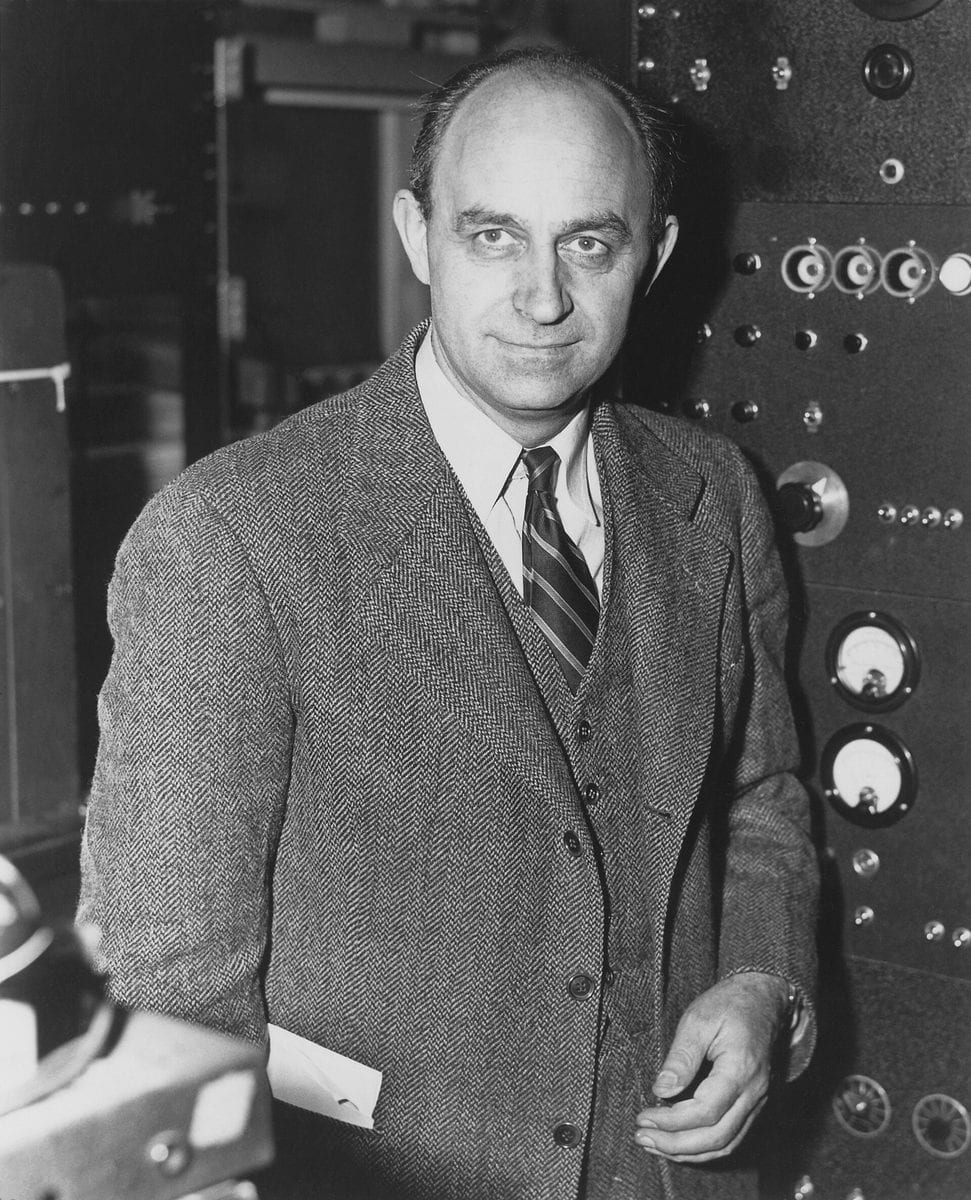
That standard reasoning predicts a galaxy rich in detectable extraterrestrial civilizations, that observation instead shows none, and that some specific resolution (for example a Great Filter that stops civilizations from arising or expanding, the rarity of complex life, deliberate concealment by others, or the conclusion that we are effectively alone) accounts for the discrepancy.
This is a real, open problem in astronomy and astrobiology, not a conspiracy theory. The tension is genuine and well documented: simple estimates suggest that intelligent, communicating civilizations should be common in a galaxy of hundreds of billions of stars, yet more than sixty years of searching has turned up no confirmed signal or artifact. Dozens of resolutions have been proposed, from the Great Filter and the Rare Earth hypothesis to the zoo and dark forest ideas to the argument that proper handling of uncertainty dissolves the puzzle altogether. None has been established. The claim we rate here is any single one of those explanations. The paradox itself is the state of a live scientific question, not settled knowledge and not evidence of a cover-up.
Believed by: Astronomers, physicists, and astrobiologists treat it as a serious unsolved problem rather than a belief; SETI researchers, the Planetary Society, and academic institutes engage it directly, and it has a large popular following through books, lectures, and science media
The full story
The real problem
Start with what is not in dispute, because the foundation here is solid science rather than rumor. The Milky Way contains on the order of a few hundred billion stars. NASA's Kepler mission established that planets are the rule, not the exception, and that the galaxy likely holds billions of roughly Earth-size worlds orbiting in the temperate zones where liquid water is possible. The chemistry of life uses common elements, and the universe has had many billions of years to work.
Against that abundance stands a stubborn fact: we have found no one. Since Frank Drake pointed a dish at two nearby stars in 1960, radio and optical searches have swept the skies without a single confirmed artificial signal. No probe, beacon, or piece of galaxy-scale engineering has been identified. The tension between the two, plenty of room for life, yet silence, is the Fermi paradox, named for the physicist who is remembered posing it at a 1950 Los Alamos lunch as the deceptively plain question, where is everybody.
It is worth being clear about the category. This is not a claim that aliens are being hidden from the public, and it is not a story about suppressed evidence. It is a recognized open question that astronomers, physicists, and astrobiologists work on in the open, in journals and at conferences. What follows lays out why serious people find the silence puzzling, why others think the puzzle may dissolve, and the main answers on the table, none of which has been shown to be the right one.
Why we might expect company
The strongest form of the paradox does not rely on hand-waving; it rides a short, forceful chain of reasoning. The galaxy is old, roughly thirteen billion years, and full of Sun-like stars far older than ours. If even a small fraction of habitable worlds produce life, and a small fraction of those produce intelligence, the sheer number of stars turns modest probabilities into large expected populations.
Then comes the sharpest point, made forcefully by Michael Hart in 1975. A single civilization that chose to expand, even slowly, using self-replicating probes or gradual settlement, could spread across the entire galaxy in a few million years, a blink against cosmic time. So it is not enough for most civilizations to stay home. For the galaxy to look empty, every civilization that ever arose must have failed to expand, failed to broadcast detectably, or never existed at all. That universality is what makes the silence feel like a genuine paradox rather than a mere gap in our searching.
One outward-bound civilization in the galaxy's long history could have reached every star by now. So the question is not just why we have not heard from most of them, but why we have heard from none.
The Drake equation, written by Frank Drake at Green Bank in 1961, is the standard way to organize the estimate. Plug in optimistic but defensible values for its terms and it returns thousands or millions of communicating civilizations in our galaxy alone. On that reading, the empty sky is the anomaly, and the honest response is to ask what is quietly removing everyone from view.
Why the silence may be no surprise
The counterargument is that the paradox may be an artifact of overconfidence. The Drake equation looks like a calculation, but several of its terms have never been measured. How often does life actually begin on a suitable world? How often does simple life become complex, then intelligent, then technological, then long-lived enough to matter? For these we have a sample size of exactly one, and that one is ourselves.
In 2018, Anders Sandberg, Eric Drexler, and Toby Ord made this precise. Rather than plugging single best-guess numbers into the equation, they treated each term as a range spanning the honest scientific uncertainty, sometimes many orders of magnitude, and drew from those ranges. Their result was striking: a substantial share of the probability lands on humanity being alone in the galaxy, or even in the observable universe. In their phrase, careful treatment of uncertainty dissolves the paradox. If being alone was fairly likely all along, then finding silence is exactly what we should expect, and there is nothing left to explain.
The searching, too, has been thinner than the drama suggests. SETI has examined a narrow band of frequencies, a limited patch of sky, and brief windows of time. A frequently cited comparison likens the total volume of the search so far to scooping a single hot tub's worth of water from the ocean and concluding it holds no fish. On that view the silence is not a wall of evidence; it is the predictable result of a young species that has barely begun to look.
The catalog of proposed answers
Between the two poles, roughly a certainty that they should be here and a suspicion that they are not, sits a large family of proposed resolutions. Stephen Webb's well-known survey catalogs seventy-five of them, sorted into three families: they are here or were here and we have missed it; they exist but we have not yet detected them; or they do not exist. A few recur most often.
The Great Filter, framed by Robin Hanson, proposes that some step on the road from lifeless chemistry to a galactic civilization is extraordinarily improbable. The unsettling twist is that we do not know whether that filter is behind us, which would mean we are rare survivors, or ahead of us, which would mean something reliably stops civilizations like ours before they spread.
The Rare Earth hypothesis of Peter Ward and Donald Brownlee argues that microbes may be common but that the long list of conditions for complex, intelligent life is not. The zoo hypothesis, from John Ball, holds that advanced observers deliberately leave us alone. The dark forest idea, popularized through science fiction, imagines a cosmos where the prudent strategy is to stay silent lest a hostile neighbor find you. Others point to simple limits: interstellar distances and physics may make contact rare, civilizations may be short-lived, or their signals may be there but beyond our current instruments. Each answer is coherent. None has been confirmed, and several, by design, could never be ruled out by more silence.
Why the question holds us
The Fermi paradox occupies a rare place: rigorous enough for observatories, yet gripping enough for a paperback and a midnight conversation. Part of its hold is scale. Contemplating billions of worlds and cosmic timescales produces a genuine vertigo, and the silence turns that awe into something closer to unease.
Part of it is that the answers are really about us. Ask where everyone is and you quickly arrive at whether intelligence tends to destroy itself, whether our species is a fluke, whether a wall waits in our own future. A puzzle nominally about aliens becomes a mirror for human hopes and fears, which is why every proposed resolution carries an emotional charge out of proportion to its evidence.
And part of it is respectability. Because working scientists take the problem seriously, curiosity about it never requires leaving the world of evidence behind. That is also where care is needed. The paradox invites us to fill an evidential vacuum with a favored story, and the same silence can be read as proof we are precious, proof we are doomed, or proof of nothing much at all. The honest posture is to hold the pull of the narrative and the thinness of the data in view at the same time.
A live question, not a cover-up
Keep two things separate. The paradox itself is real and documented: standard reasoning about a galaxy of hundreds of billions of stars, combined with more than sixty years of null results, produces a tension that scientists rightly find worth studying. Nothing in this file disputes that the question is legitimate. It is a live problem in astrobiology, not a conspiracy.
The claim we rate is narrower: that some specific resolution accounts for the silence, whether a Great Filter, the rarity of complex life, deliberate concealment, or the conclusion that we are effectively alone. Each candidate is coherent and some are elegant, but the decisive terms remain unmeasured, the search has covered only a sliver of the possibilities, and several of the more dramatic answers are constructed so that no amount of continued silence could confirm or refute them.
The intellectually honest stance is to treat the Fermi paradox as an excellent question with, so far, no established answer. It may be resolved by better constraints on how life begins, by biosignatures in an exoplanet atmosphere, by a confirmed signal, or by the slow accumulation of null results that makes solitude the leading explanation. Until then, the silence is data we do not yet know how to read, and any single confident solution is running ahead of the evidence.
Watch
What's still unexplained
- Where, if anywhere, is the improbable step? We do not know whether the hard transition lies in the origin of life, the jump to complex cells, the emergence of intelligence, the survival of technology, or nowhere at all, and that ignorance is the core of the problem.
- How much silence have we actually sampled? Current searches have covered only a tiny fraction of frequencies, directions, and signal types, so it remains open whether the null result is meaningful or merely the expected outcome of looking briefly through a narrow window.
- Do the Drake equation's biological terms have values that make companions likely or make us alone? Until origin-of-life science and exoplanet biosignature studies constrain those factors, the equation can be tuned to almost any answer.
- Would we even recognize a very old or very different intelligence? Assumptions about radio beacons and expansion may reflect our own moment, and a civilization far beyond ours might be undetectable to the methods we currently use.
Point by point
The claim: The galaxy should be teeming with detectable civilizations, so their total absence is a genuine paradox demanding a special explanation.
What the record shows: The setup is real but rests on assumptions. There are hundreds of billions of stars in the Milky Way, and Kepler data imply billions of roughly Earth-size planets in habitable zones, so the raw stage is vast. The weakness is that the biological and social terms of the Drake equation (how often life starts, becomes complex, turns intelligent, and builds lasting technology) are essentially unmeasured. Sandberg, Drexler, and Ord showed in 2018 that once those uncertainties span many orders of magnitude, a lone galaxy is not surprising. The paradox is a real tension, but it may be a tension between silence and an overconfident estimate.
The claim: A single Great Filter explains why we see no one.
What the record shows: The Great Filter, framed by Robin Hanson, is a way of organizing the problem, not a proven mechanism. It says some step from dead matter to interstellar civilization is very improbable, but it does not tell us which step, or whether that barrier lies safely in our past or ominously in our future. It is a compelling lens that reframes the silence as a question about improbability; it remains a hypothesis with no confirmed filter attached.
The claim: Rare Earth: complex, intelligent life is so unusual that we may effectively be alone.
What the record shows: Ward and Brownlee's argument is scientifically serious and consistent with the silence, but it is not established. It draws on real contingencies (a stabilizing large Moon, plate tectonics, a well-placed giant planet, a quiet galactic neighborhood) yet we have exactly one biosphere to reason from. With a sample size of one, rarity is plausible rather than demonstrated, and simpler life could still be widespread even if minds are not.
The claim: They are out there but hidden, either watching quietly (the zoo hypothesis) or staying silent out of fear (the dark forest).
What the record shows: These contact-avoidance ideas are internally coherent but effectively unfalsifiable, which limits their scientific weight. The zoo hypothesis, from John Ball in 1973, and the dark forest, popularized through science fiction, both predict exactly what we observe, namely nothing, and so cannot be tested by continued silence. They belong in the catalog of possibilities, not among confirmed answers, precisely because no observation could distinguish them from simple absence.
The claim: We have searched enough to conclude that no one is broadcasting.
What the record shows: We have not. SETI has examined only a small slice of the sky, across limited frequencies, sensitivities, and time windows; one comparison likens the total volume searched to a hot tub's worth of the ocean. Absence of evidence over such a narrow survey is weak evidence of absence, which is why researchers treat the silence as unresolved rather than as a proof that the galaxy is empty.
Timeline
- 1950Over lunch at Los Alamos with Edward Teller, Emil Konopinski, and Herbert York, Enrico Fermi turns from a conversation about flying-saucer reports and interstellar travel to a blunt question, recalled as, where is everybody. Fermi sketches rough estimates suggesting Earth should have been visited long ago. The recollections are gathered decades later by physicist Eric Jones in a 1985 Los Alamos account.
- 1959Cornell physicists Giuseppe Cocconi and Philip Morrison publish Searching for Interstellar Communications in Nature, arguing that radio is a plausible interstellar channel and proposing the 1420 MHz neutral-hydrogen line as a natural frequency to monitor. The paper gives the search a concrete scientific method.
- 1960Astronomer Frank Drake conducts Project Ozma, the first modern radio search for extraterrestrial signals, pointing an 85-foot dish at two nearby Sun-like stars. It detects nothing conclusive but establishes the observational program.
- 1961At the first SETI meeting, held at the National Radio Astronomy Observatory in Green Bank, West Virginia, Drake writes his now-famous equation on a chalkboard. It organizes the estimate of communicating civilizations into a chain of factors, from the rate of star formation to the lifetime of a technological society, and frames debate ever after.
- 1973Radio astronomer John Ball proposes the zoo hypothesis: advanced civilizations may know we are here but deliberately avoid contact, treating Earth as a kind of wildlife preserve. It is one of the earliest formal contact-avoidance answers to the silence.
- 1975Michael Hart argues in a widely cited paper that the absence of extraterrestrials on Earth is itself significant, since a single expansionist civilization could colonize the galaxy in a cosmically short time. The line of reasoning sharpens Fermi's lunchtime remark into the formal problem now bearing his name.
- 1996Economist Robin Hanson circulates The Great Filter, later revised in 1998, proposing that somewhere along the path from lifeless matter to a galaxy-spanning civilization lies at least one improbable step. If the filter is behind us, we may be rare; if ahead, our own future is in doubt.
- 2000Paleontologist Peter Ward and astronomer Donald Brownlee publish Rare Earth, arguing that microbial life may be common but that the specific conditions for complex, intelligent life are unusual, offering one naturalistic resolution to the silence.
- 2018Anders Sandberg, Eric Drexler, and Toby Ord release Dissolving the Fermi Paradox, showing that when the deep uncertainties in the Drake equation's terms are handled properly rather than as fixed numbers, there is a substantial prior probability that we are alone in the galaxy, so the silence need not be surprising at all.
This is a real, open problem in astronomy and astrobiology, not a conspiracy theory. The tension is genuine and well documented: simple estimates suggest that intelligent, communicating civilizations should be common in a galaxy of hundreds of billions of stars, yet more than sixty years of searching has turned up no confirmed signal or artifact. Dozens of resolutions have been proposed, from the Great Filter and the Rare Earth hypothesis to the zoo and dark forest ideas to the argument that proper handling of uncertainty dissolves the puzzle altogether. None has been established. The claim we rate here is any single one of those explanations. The paradox itself is the state of a live scientific question, not settled knowledge and not evidence of a cover-up.
Reviewed by Colin Peterson · Last reviewed July 8, 2026 · How we rate
Common questions
Is Fermi paradox true?
This is a real, open problem in astronomy and astrobiology, not a conspiracy theory. The tension is genuine and well documented: simple estimates suggest that intelligent, communicating civilizations should be common in a galaxy of hundreds of billions of stars, yet more than sixty years of searching has turned up no confirmed signal or artifact. Dozens of resolutions have been proposed, from the Great Filter and the Rare Earth hypothesis to the zoo and dark forest ideas to the argument that proper handling of uncertainty dissolves the puzzle altogether. None has been established. The claim we rate here is any single one of those explanations. The paradox itself is the state of a live scientific question, not settled knowledge and not evidence of a cover-up.
What is Fermi paradox?
The Fermi paradox is the gap between two things that are hard to reconcile. On one side, the numbers look generous: the Milky Way holds hundreds of billions of stars, NASA's Kepler mission implies billions of roughly Earth-size worlds in habitable orbits, and even modest probabilities at each step would seem to yield many technological c…
What does the evidence show?
The setup is real but rests on assumptions. There are hundreds of billions of stars in the Milky Way, and Kepler data imply billions of roughly Earth-size planets in habitable zones, so the raw stage is vast. The weakness is that the biological and social terms of the Drake equation (how often life starts, becomes complex, turns intellig…
Why do people believe it?
The numbers feel overwhelming. Hundreds of billions of stars and billions of habitable-zone planets make the intuition that someone else must be out there almost irresistible, so the silence lands as a genuine shock that seems to demand a dramatic answer.
What is still unresolved?
Where, if anywhere, is the improbable step? We do not know whether the hard transition lies in the origin of life, the jump to complex cells, the emergence of intelligence, the survival of technology, or nowhere at all, and that ignorance is the core of the problem.
Sources
- 1.Fermi paradox | Definition, Resolutions, SETI, & Facts, Encyclopaedia Britannica (2024)
- 2.Drake equation | Searching for ET, SETI, Habitable Planets, Encyclopaedia Britannica (2024)
- 3.The Drake Equation, SETI Institute (2020)
- 4.Searching for Interstellar Communications, Nature (Cocconi & Morrison) (1959)
- 5.The Fermi paradox and Drake equation: Where is everybody?, The Planetary Society (2020)
- 6.The Great Filter: Are We Almost Past It?, Robin Hanson, George Mason University (1998)
- 7.Dissolving the Fermi Paradox, Sandberg, Drexler & Ord (arXiv) (2018)
- 8.If the Universe Is Teeming with Aliens... Where Is Everybody? Seventy-Five Solutions to the Fermi Paradox, Stephen Webb, Springer (2015)
- 9.The Fermi Paradox: Where are all the aliens?, Space.com (2018)
Embed this case file on your site
Paste this snippet to show this case file as a small card, with a link back to the full write-up. Free to use.
<iframe src="https://theconspiratory.com/embed/fermi-paradox" title="The Conspiratory verdict" width="520" height="190" style="border:0;max-width:100%" loading="lazy"></iframe>Help us investigate
This is a living case file. If you spot an error or know evidence we missed, tell us, and weigh in on where you land.
Where do you land?
Cast your read on this one.
Comments
Add your take. Comments are read and approved by a human before they appear, so keep it on topic and civil. Please do not accuse named, living people of crimes.