The Gleiwitz incident was a Nazi false-flag attack staged to justify invading Poland
By Colin PetersonJuly 18, 2026
Where the evidence lands: Proven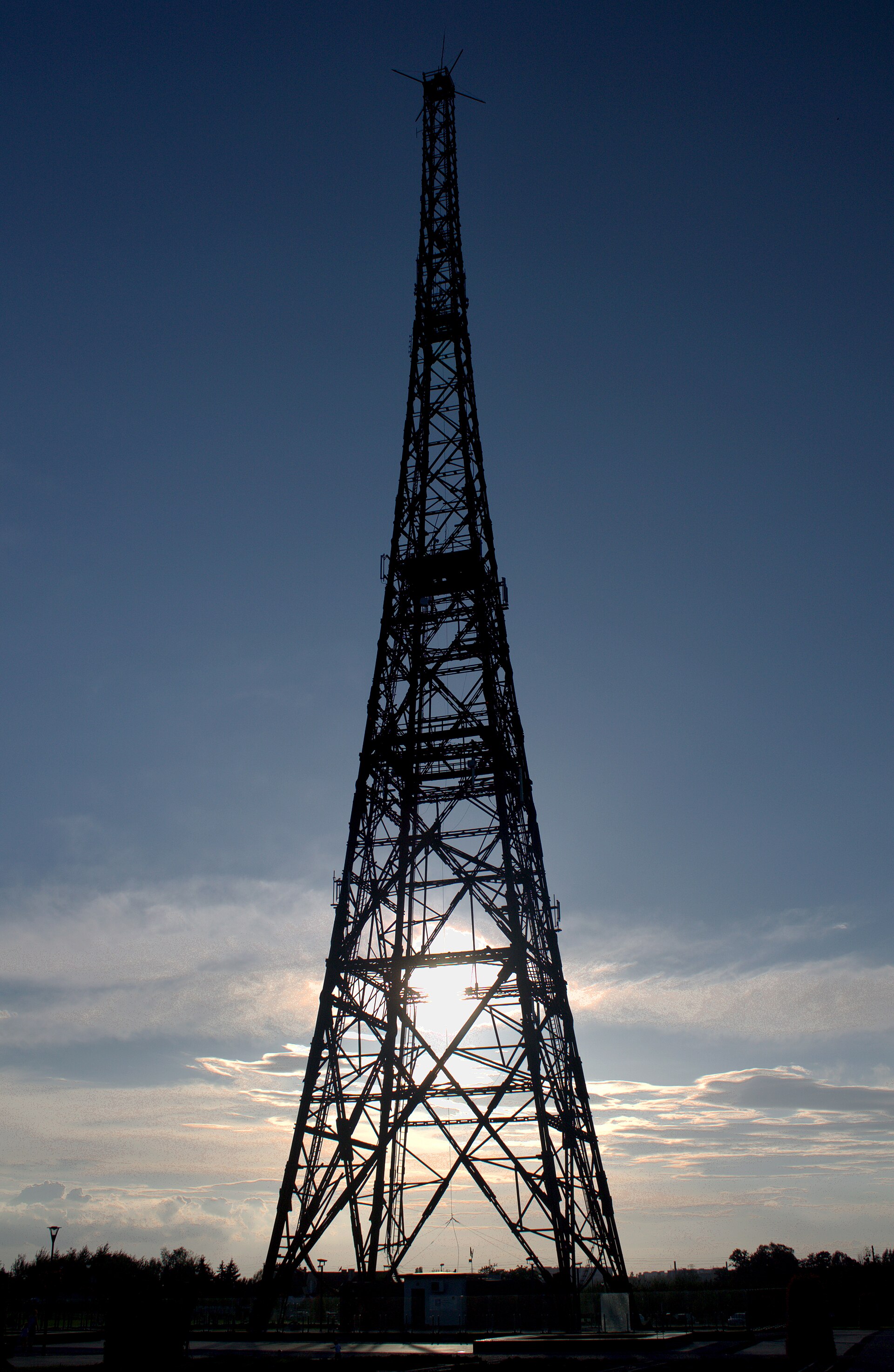
That the attack on the German radio station at Gleiwitz on 31 August 1939, presented at the time as an act of Polish aggression, was in fact staged by Germany's own SS and security service (SD) using operatives in Polish uniforms, complete with a murdered prisoner planted as a fake dead attacker, and that this manufactured provocation was used by Adolf Hitler as a pretext to invade Poland the following morning and begin the Second World War.
Proven. This is the archetypal proven false flag. On the night of 31 August 1939, SS men in Polish uniforms staged an attack on the German radio station at Gleiwitz and left a murdered prisoner dressed as a saboteur; Germany invaded Poland hours later on the strength of manufactured 'Polish attacks'. The operation was confirmed after the war by the sworn Nuremberg affidavit of the SS officer who led it, Alfred Naujocks, and it is the settled account in mainstream WWII history. What is firmly documented is that this was a German provocation; a handful of operational specifics rest heavily on Naujocks' single testimony and are noted below.
Believed by: The false-flag account is the mainstream historical consensus, taught in standard WWII histories and held by essentially all reputable historians; it is not a fringe theory but an established fact
The full story
The night at the station
On the evening of 31 August 1939, a small group of men in civilian clothes walked into the German radio transmitter at Gleiwitz, a town in Upper Silesia a few miles from the Polish border (today Gliwice, in Poland). They were not Polish saboteurs, though that is exactly what they were dressed and staged to appear to be. They were members of the SS and the security service, the SD, and they were led by an SS officer named Alfred Naujocks.
The team seized the station, and a Polish-speaking member of the group broadcast a brief anti-German message, the point being to make it sound as though Polish insurgents had captured a German transmitter and were calling for action against Germany. Before they left, they carried out the operation's coldest touch. A murdered man was laid at the scene, dressed to look like a Polish attacker shot dead in the raid. That man was Franciszek Honiok, a 43-year-old Silesian farmer with known Polish sympathies who had been arrested by the Gestapo the day before. He had been drugged, brought to the site, and shot. He is often named among the first people to die in the Second World War.
The whole thing lasted minutes. Its purpose was not military; it was to manufacture a headline and a corpse. By the next morning it had done its job.
One incident in a planned series
Gleiwitz was not improvised, and it was not alone. It was the best-known action in what became known as Operation Himmler, a set of staged “Polish” provocations planned by the SS under Reinhard Heydrich and authorized at the top of the regime. The plan called for a handful of fake attacks along the frontier on the same night, each designed to leave behind the appearance of Polish aggression against Germany.
Alongside Gleiwitz, SS teams staged incidents at a customs post at Hochlinden and a forestry station at Pitschen. The grimmest common thread was the use of murdered prisoners as props. Inside the operation these victims were referred to by the codeword “Konserve”, or “canned goods”: concentration-camp inmates who were killed, dressed in Polish uniforms, and left at the scenes as fake Polish dead. The language alone captures the character of the plan, human beings treated as stage dressing, prepared in advance and positioned to be found.
The victims were referred to inside the operation as “Konserve,” canned goods: people murdered to be planted as fake enemy dead.
The sources differ on precisely how many prisoners were murdered across the operation and which camps they were drawn from. What is not in dispute is the method: real killings, staged to look like the aftermath of Polish attacks that never happened.
The pretext and the invasion
The reason any of this mattered lies in what happened within hours. At 04:45 on 1 September 1939, German forces crossed into Poland. Later that day, Hitler addressed the Reichstag and cast the invasion not as an act of aggression but as a defensive reply to Polish provocation. “This night for the first time Polish regular soldiers fired on our own territory,” he said. “Since 5.45 a.m. we have been returning the fire.”
Hitler did not name Gleiwitz from the podium; he spoke of Polish aggression in general terms. But the staged border incidents were the manufactured reality that this narrative was built on, the concrete “attacks” the propaganda machine could point to. The tell had come earlier, on 22 August, when Hitler told his commanders he would provide a justification for the war and that its truth was beside the point: “the victor,” he said, “will not be asked afterward whether he told the truth or not.” The pretext was planned before the incident that supplied it.
Britain and France declared war on Germany on 3 September. The staged attack on a small radio station had served as one of the sparks for a conflict that would kill tens of millions.
How we know: the man who confessed
What makes Gleiwitz different from the endless list of alleged false flags is that this one was confessed to, under oath, by the officer who ran it. At the Nuremberg trials after the war, Alfred Naujocks gave a sworn affidavit dated 20 November 1945describing how he had organized and led the attack on Heydrich's orders: the seizure of the station, the Polish-language broadcast, and the prisoner left dead at the scene as fabricated proof of a Polish assault.
That testimony, corroborated by the wider documentary record of Operation Himmler and by the plainly manufactured “Polish aggression” narrative it fed, is why the incident is treated not as a theory but as established history. It is the reason a case that would otherwise depend on inference instead rests on a participant's own words.
The difference between Gleiwitz and every unproven “false flag” is a signed confession from the man who led the raid.
Honesty requires marking the edges of the record. A good deal of the fine detail (who stood where, the exact words of the broadcast, how much of it was even heard on a low-power emergency transmitter) comes down to Naujocks' own account and varies between retellings. Those specifics deserve the caution any single-source, self-interested testimony gets. But they sit inside a conclusion that is not in doubt: the attack was a German fabrication, staged to justify a war that Germany had already decided to start.
Why it endures
Gleiwitz has an outsized place in the public imagination because it is the rare case where the cynical story is the true one, and provably so. A state really did attack itself, murder an innocent man to dress the set, and use the result to launch an invasion. That combination (a documented false flag, a signed confession, and a war of historic scale hanging off it) is why the episode is invoked whenever anyone suspects a manufactured pretext for war.
The lesson people draw from it is double-edged. On one hand, it proves that governments can and do stage provocations, so the suspicion is not inherently irrational. On the other, the reason we knowabout Gleiwitz is a specific, hard evidentiary chain: a sworn confession, a named victim, a documented operation. That is exactly the standard of proof most later “false flag” claims cannot meet. Gleiwitz is not evidence that every attack is staged; it is the benchmark for how much evidence it actually takes to show that one was.
Held to that benchmark, the incident is settled. The verdict here is substantiated not as a provocative reading of a murky night, but as the plain reading of a confessed crime: the archetypal proven false flag, and the one against which all the unproven ones are measured.
What's still unexplained
- Much of the fine-grained operational detail comes from a single source: Alfred Naujocks' Nuremberg affidavit and later interviews. That the incident was a German false flag is beyond serious doubt, corroborated by the broader Operation Himmler record and the outcome. But specifics of exactly who did what inside the station rest heavily on the testimony of one self-interested participant, and historians read such single-source detail with appropriate caution.
- Accounts of the radio broadcast itself vary. The Gleiwitz transmitter was a relay station, and the operatives reportedly used a low-power emergency 'storm' microphone; sources differ on the exact wording of the Polish-language message and on how widely it was actually heard, with reports that only a short, garbled transmission got out. The staging is not in question; the precise content and reach of the broadcast are less certain.
- The exact number of prisoners murdered across Operation Himmler, and which camps they came from, is not settled in the sources. Gleiwitz itself is associated with the single body of Franciszek Honiok, but figures for the parallel incidents at Hochlinden and Pitschen, and the total pool of 'Konserve' victims, vary between accounts.
- Whether Franciszek Honiok can be called, precisely, 'the first victim of the Second World War' is a framing question rather than a factual dispute. He was among the first people murdered in the operation that opened the war; the tidy 'first victim' label is a memorial shorthand that the record supports in spirit more than it can pin to the minute.
Point by point
The claim: The Gleiwitz attack was a real act of Polish aggression, as Germany claimed at the time.
What the record shows: It was not. The attackers were German, not Polish. The operation was run by the SS and the SD security service; the men who seized the station wore Polish uniforms and civilian clothes precisely to impersonate Polish saboteurs. This is not a matter of interpretation: the officer who led the raid, Alfred Naujocks, swore to it under oath at Nuremberg, and no serious historian treats the 'Polish attack' framing as anything but Nazi propaganda.
The claim: There is direct, first-hand testimony that the attack was staged, not just later inference.
What the record shows: Yes. In his 20 November 1945 Nuremberg affidavit, Naujocks stated he seized the Gleiwitz station on Heydrich's orders, that a Polish-speaking member of the team broadcast a short message, and that a prisoner supplied by the Gestapo (referred to in the plan by the codeword 'Konserve') was left dead at the scene to simulate a Polish attacker. His account is corroborated by the wider documentary record of Operation Himmler and by the outcome the operation was designed to produce.
The claim: The 'dead Polish attacker' at the station was a genuine casualty of a firefight.
What the record shows: The body was that of Franciszek Honiok, a Silesian civilian arrested by the Gestapo the day before, not a soldier killed in combat. He was murdered specifically to be planted as evidence and dressed to look the part. He is widely described as among the first victims of the Second World War. The use of murdered prisoners as staged corpses, the 'Konserve' method, was a defining and grotesque feature of the whole operation.
The claim: Gleiwitz was a one-off, an isolated stunt rather than a coordinated plan.
What the record shows: It was one node in a coordinated series. Operation Himmler included multiple staged provocations on the same night, notably at the Hochlinden customs house and the Pitschen forestry station, each dressed up with Polish uniforms and, in several cases, murdered prisoners left as fake Polish dead. Gleiwitz is simply the best known because of its radio broadcast and Naujocks' later testimony.
The claim: The staged attack is what Hitler actually pointed to when he ordered the invasion.
What the record shows: In his 1 September Reichstag speech Hitler did not name Gleiwitz specifically, but he framed the invasion as a reply to Polish aggression, declaring that 'Polish regular soldiers fired on our own territory' the previous night and that Germany was returning fire. The staged border incidents, Gleiwitz among them, were the manufactured events that this 'Polish aggression' narrative rested on. The pretext and the fabrication were built for each other.
The claim: This is a fringe conspiracy theory about the origins of the war.
What the record shows: The opposite is true. The false-flag account is the mainstream, textbook history, accepted by essentially all reputable historians of the period and grounded in the Nuremberg record. On this site's scale it is 'substantiated' precisely because the establishment position and the documented evidence agree: the incident was staged by Germany. The only live scholarly questions concern operational details, not whether it was a German provocation.
Timeline
- 1939-08-22Speaking to his commanders at the Obersalzberg about the coming war, Hitler indicates he will supply a propaganda justification for attacking Poland, saying its credibility does not matter because 'the victor will not be asked afterward whether he told the truth or not.' Planning for staged border provocations is already underway.
- 1939-08 (Operation Himmler)The SS and SD, under Reinhard Heydrich and with Heinrich Himmler's authority, prepare a set of fake Polish attacks along the frontier, later known as Operation Himmler. Concentration-camp prisoners to be murdered and left as fake casualties are referred to internally by the codeword 'Konserve' (canned goods).
- 1939-08-30Franciszek Honiok, a 43-year-old Silesian farmer known for pro-Polish sympathies, is arrested by the Gestapo. He is selected to be the planted 'dead saboteur' at the Gleiwitz radio station.
- 1939-08-31 (evening)A small SS team led by SS-Sturmbannführer Alfred Naujocks seizes the Sender Gleiwitz radio transmitter. A Polish-speaking operative broadcasts a brief anti-German message. Honiok, drugged and semi-conscious, is shot and left at the scene dressed to appear as a Polish attacker killed in the raid.
- 1939-08-31 (same night)Parallel staged incidents under Operation Himmler are carried out at the customs post at Hochlinden and the forestry station at Pitschen, again using bodies dressed in Polish uniforms as fake proof of Polish incursions.
- 1939-09-01At 04:45 German forces invade Poland. Hitler addresses the Reichstag, casting the war as a response to Polish aggression: 'This night for the first time Polish regular soldiers fired on our own territory.' Germany invokes the manufactured attacks as its casus belli. Britain and France declare war on 3 September.
- 1945-11-20At the Nuremberg International Military Tribunal, Alfred Naujocks signs a sworn affidavit describing how he organized and led the Gleiwitz attack on Heydrich's orders. His account becomes the primary direct evidence that the incident was a German fabrication.
From the case file
The actual records: declassified, released, or leaked. We link straight to each document in its official archive, so you never have to take our word for it. Read the originals yourself.
Affidavit of Alfred Naujocks concerning the staging of the supposed Polish attack at Gleiwitz (document 2751-PS)
Sworn Nuremberg affidavit of SS officer Alfred Naujocks, who states he seized the Gleiwitz radio station on Heydrich's orders, staged a Polish-language broadcast, and left a supplied prisoner shot at the scene. The single most direct piece of evidence that the incident was a German false flag.
Read the document: Nuremberg Trials Project, Harvard Law School Library →Address by Adolf Hitler to the Reichstag, September 1, 1939
Hitler's speech announcing the invasion of Poland, framing it as a reply to Polish aggression: 'This night for the first time Polish regular soldiers fired on our own territory.' The public pretext the staged border incidents were manufactured to support.
Read the document: The Avalon Project, Yale Law School →Proven. This is the archetypal proven false flag. On the night of 31 August 1939, SS men in Polish uniforms staged an attack on the German radio station at Gleiwitz and left a murdered prisoner dressed as a saboteur; Germany invaded Poland hours later on the strength of manufactured 'Polish attacks'. The operation was confirmed after the war by the sworn Nuremberg affidavit of the SS officer who led it, Alfred Naujocks, and it is the settled account in mainstream WWII history. What is firmly documented is that this was a German provocation; a handful of operational specifics rest heavily on Naujocks' single testimony and are noted below.
Reviewed by Colin Peterson · Last reviewed July 18, 2026 · How we rate
Common questions
Is Gleiwitz incident true?
Proven. This is the archetypal proven false flag. On the night of 31 August 1939, SS men in Polish uniforms staged an attack on the German radio station at Gleiwitz and left a murdered prisoner dressed as a saboteur; Germany invaded Poland hours later on the strength of manufactured 'Polish attacks'. The operation was confirmed after the war by the sworn Nuremberg affidavit of the SS officer who led it, Alfred Naujocks, and it is the settled account in mainstream WWII history. What is firmly documented is that this was a German provocation; a handful of operational specifics rest heavily on Naujocks' single testimony and are noted below.
What is Gleiwitz incident?
The Gleiwitz incident is the clearest, best-documented false flag in modern history: not a suspected one, a proven one. On the evening of 31 August 1939, a small SS team in civilian clothes and Polish uniforms, led by Alfred Naujocks, seized the German radio transmitter at Gleiwitz (today Gliwice, Poland), broadcast a short anti-German m…
What does the evidence show?
It was not. The attackers were German, not Polish. The operation was run by the SS and the SD security service; the men who seized the station wore Polish uniforms and civilian clothes precisely to impersonate Polish saboteurs. This is not a matter of interpretation: the officer who led the raid, Alfred Naujocks, swore to it under oath a…
Why do people believe it?
Because it is true and provable, this is the case that gives every other 'false flag' claim its template. A government really did stage an attack on itself to start a war, and one of the perpetrators admitted it under oath, so the pattern is not paranoid fantasy but documented history.
What is still unresolved?
Much of the fine-grained operational detail comes from a single source: Alfred Naujocks' Nuremberg affidavit and later interviews. That the incident was a German false flag is beyond serious doubt, corroborated by the broader Operation Himmler record and the outcome. But specifics of exactly who did what inside the station rest heavily o…
Sources
- 1.Gleiwitz incident, Wikipedia
- 2.Operation Himmler, Wikipedia
- 3.Franciszek Honiok, Wikipedia
- 4.Affidavit concerning the staging of the supposed Polish attack on Germans at the beginning of the war, using members of the SD under Heydrich's orders, Harvard Law School Library, Nuremberg Trials Project (Naujocks affidavit) (1945)
- 5.Address by Adolf Hitler to the Reichstag, September 1, 1939, The Avalon Project, Yale Law School (1939)
- 6.Hitler's Declaration of War (September 1, 1939), German History in Documents and Images (GHDI) (1939)
- 7.1 September 1939 Reichstag speech, Wikipedia
- 8.How a False Flag Sparked World War Two: The Gleiwitz Incident Explained, History Hit
- 9.Address by Adolf Hitler - September 1, 1939, Florida Center for Instructional Technology, University of South Florida (1939)
Embed this verdict on your site
Paste this snippet to show our sourced verdict as a small card, with a link back to the full case file. Free to use.
<iframe src="https://theconspiratory.com/embed/gleiwitz-incident" title="The Conspiratory verdict" width="520" height="190" style="border:0;max-width:100%" loading="lazy"></iframe>Help us investigate
This is a living case file. If you spot an error or know evidence we missed, tell us, and weigh in on where you land.
Where do you land?
Cast your read on this one.
Comments
Add your take. Comments are read and approved by a human before they appear, so keep it on topic and civil. Please do not accuse named, living people of crimes.