Gobekli Tepe proves a lost advanced civilization existed and mainstream archaeology is suppressing it
By Colin PetersonJuly 12, 2026
Where the evidence lands →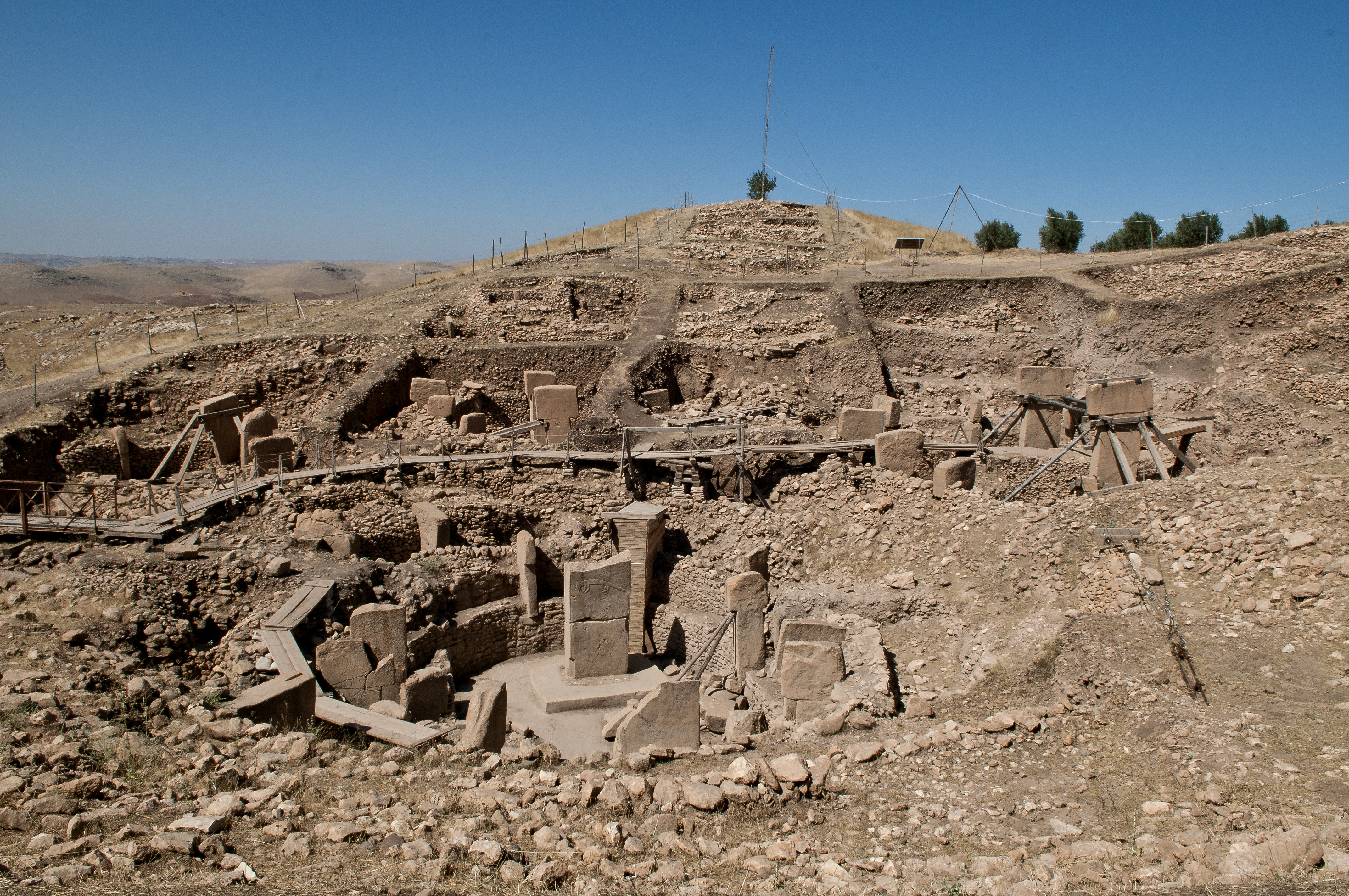
That Gobekli Tepe is evidence of a lost, technologically advanced global civilization that existed during or before the last Ice Age and was destroyed in a cataclysm (often tied to the Younger Dryas impact hypothesis), that survivors seeded the knowledge behind the site and later cultures, and that professional archaeologists are deliberately suppressing, ignoring, or covering up this history to protect an established timeline.
The site is real and genuinely astonishing: Gobekli Tepe in southeastern Turkey is a set of massive carved T-shaped limestone pillars in circular enclosures, radiocarbon-dated to roughly 9500–8000 BCE, thousands of years older than Stonehenge or the pyramids, and it really did force archaeologists to rethink what pre-agricultural societies could build. The claim we rate, popularized by Graham Hancock, is different: that the site is a relic of a lost, technologically advanced global civilization wiped out in a cataclysm, and that experts are suppressing this. That leap is unproven. Nothing excavated there points to advanced technology; the site fits a Neolithic hunter-gatherer world; and far from being buried, Gobekli Tepe is a UNESCO World Heritage site that is exhaustively excavated, published, and celebrated.
Believed by: A large popular audience reached through best-selling books, podcasts, and the Netflix series, drawn from people fascinated by deep prehistory and skeptical of academic authority
The full story
The real marvel underneath the claim
Some conspiracy theories attach themselves to something dull. This one attaches itself to something extraordinary. Gobekli Tepe, on a limestone ridge in southeastern Turkey, is one of the genuine wonders of world prehistory: rings of massive T-shaped stone pillars, some more than five meters tall and weighing many tons, carved in relief with foxes, boars, snakes, vultures, and abstract symbols, and arranged in circular enclosures. What makes it staggering is its age. Radiocarbon dating places construction at roughly 9500 to 8000 BCE, which is thousands of years before Stonehenge and the Egyptian pyramids, and before the people who built it had adopted farming, pottery, writing, or metal.
That is not fringe speculation; it is the mainstream finding, established by professional archaeologists. The German archaeologist Klaus Schmidtrecognized the site's importance and began systematic excavation in the mid-1990s, and his work, continued by the German Archaeological Institute and Turkish colleagues after his death in 2014, forced a real rethink. The old assumption was that monumental building required the surplus and settled life that farming brought. Gobekli Tepe suggested the arrow might point the other way: that the labor and ritual of building great communal monuments may have helped drive people toward settling down. In 2018 UNESCO added it to the World Heritage List.
All of that is real, remarkable, and celebrated. The claim we rate is a separate structure built on top of it: that Gobekli Tepe proves a lost, technologically advanced civilization once existed, was destroyed in a cataclysm, and is being hidden by the very experts who dug it up. Keeping the marvel and the claim apart is the whole task here.
The case that something big is being missed
Steelman it, because the starting intuition is not stupid. For most of the twentieth century, textbooks placed the first monumental architecture well after the invention of farming. Gobekli Tepe blew a hole in that timeline, and it did so in the hands of the experts themselves. If the established picture could be that wrong about when humans first built monuments, it is fair to ask what else it might be wrong about.
The site is also genuinely hard to fully explain. How did people without agriculture, metal tools, or writing quarry, carve, transport, and raise multi-ton pillars, and coordinate the labor to do it repeatedly? Why did they eventually bury the enclosures on purpose? These are real questions, and the fair answer in places is that we are still working it out. Into that space of genuine mystery, a bolder story arrives: that the knowledge came from somewhere, from an older and more advanced culture now lost.
Popular writers, above all Graham Hancock, have argued for decades that an advanced Ice Age civilization was destroyed in a cataclysm and seeded its knowledge into the cultures that followed. When Gobekli Tepe's extreme age became famous, it slotted neatly into that narrative, and the 2022 Netflix series Ancient Apocalypse carried the framing to a mass audience. The pitch is seductive precisely because its foundation, the astonishing real site, is solid.
The experts really were wrong about when humans first built monuments. The theory takes that true shock and stretches it into a much larger one.
None of this, on its own, is a conspiracy. It is a fair account of why the leap feels short. The distance from “older and more sophisticated than we thought” to “proof of a lost super-civilization the experts are hiding” looks small, right up until you ask what the ground actually contains.
What the ground actually holds
The claim needs two things the site does not provide: signs of advanced technology, and signs of suppression. Both fail on the evidence.
Start with the technology. Everything excavated at Gobekli Tepe fits a skilled Stone Age world. The tools are knapped flint; the stone was quarried from the bedrock right beside the enclosures, with an unfinished pillar still lying in the quarry; the animal bones are from wild species, the diet of hunter-gatherers. There is no metal, no writing, no machinery, no wheel, nothing that points beyond the Neolithic. The carvings are figurative art, not technical diagrams. What the site proves is that pre-agricultural people were far more capable of organized, monumental craft than anyone had assumed. That is a profound finding. It is not a trace of lost machines.
The cataclysm strand rests on a category error. The Younger Dryas impact hypothesis, the idea that a comet or airburst around 12,800 years ago helped trigger an abrupt cold snap, is a real scientific proposal, but it is contested and remains a minority view, argued over physical evidence about climate and geology. Even if some impact happened, it would say nothing about a vanished advanced society; the hypothesis is about the earth, not about lost technology. And the timeline runs the wrong way for the claim: Gobekli Tepe was built after the Younger Dryas began, then deliberately backfilled by the people who used it, not flattened by a comet.
Then the cover-up. Gobekli Tepe is one of the most published and most publicized sites in all of archaeology. Professionals found it, dated it, excavated it season after season, put it in journals and museums and documentaries, and successfully nominated it as a UNESCO World Heritage site. The experts accused of hiding its meaning are the same experts who established its world-changing age in the first place. When a specific lost-civilization reading of a carved pillar (the astronomical claim about Pillar 43) was published in 2017, the excavation team and others rebutted it in the open literature. Public rebuttal is the opposite of suppression.
In 2022 the Society for American Archaeology went further, writing an open letter objecting that the Netflix framing disparaged archaeologists and echoed a long, discredited tradition of crediting ancient non-European achievements to some lost outside culture rather than to the people who actually built them. That tradition is the real thing to be wary of here: explaining away the ingenuity of Neolithic hunter-gatherers by handing it to a phantom civilization takes agency from the very people whose achievement Gobekli Tepe records.
Why the story spreads
The lost-civilization reading travels because it starts from something true and answers a real feeling. The site is authentically awe-inspiring, and deep time is dizzying. To stand before stones carved eleven thousand years ago, older than farming, older than the written word, is to feel the pull of lost grandeur. A story about a vanished advanced civilization gives that feeling a shape and a name.
It spreads, too, because the truth was itself a shock, and shocks lower the guard. Gobekli Tepe really did overturn a textbook assumption, so “the experts were wrong before” feels like a warrant to believe they are wrong now, and wrong by a far larger margin. The step from a corrected date to a hidden super-civilization is huge, but the memory of the first correction makes it feel earned.
And it flatters. A suppression narrative recasts ordinary scientific debate as a priesthood defending its dogma, and casts the believer as the one brave enough to see past it. A secret erased history is simply a better story than a slow, collective, human achievement, and it comes with the pleasure of feeling let in on something the establishment supposedly denies. Add a polished television series with sweeping drone shots and a confident narrator reaching millions of people, and a framing that its own evidence cannot carry acquires the authority of production values.
The irony is that the real story is more impressive, not less. Human beings, with stone tools and no cities behind them, chose to raise something monumental together. Handing that to a lost race of technologists does not enlarge the mystery. It shrinks the people who actually did it.
A marvel, not a lost civilization
Of the specific claim, that Gobekli Tepe proves a lost, technologically advanced civilization and that archaeologists are suppressing it, the “suppression” half is affirmatively false. The site contains no advanced technology, sits at the wrong end of the cataclysm timeline for the story told about it, and is among the most celebrated and openly studied discoveries in the field, not a buried secret.
Hold the two things apart and both come into focus. Gobekli Tepe is real, dated, and genuinely reshaped how we understand the dawn of monumental building; the honest open questions, why it was raised, what the enclosures were for, how the labor was marshaled before farming, are fascinating and unsettled, and the Younger Dryas impact hypothesis is a legitimate if contested debate in earth science. None of that requires, or supports, a hidden super-civilization or a cover-up. The marvel is the work of Neolithic people, in the open, and that is astonishing enough without a lost race standing in for them.
What's still unexplained
- Why Gobekli Tepe was built, and how pre-agricultural people organized the labor and ritual behind it, is a real and active research question. The role of communal feasting, belief, and monument-building in the shift toward settled life is genuinely unsettled, and the site sits near the center of that debate.
- Whether the enclosures were purely ceremonial, partly domestic, or something else is still argued. Later work has complicated the early 'temple built before the village' picture, and interpretations continue to evolve as more of the surrounding landscape is excavated.
- The Younger Dryas impact hypothesis remains a live, contested question in earth science, argued on physical evidence about climate and geology. It is worth keeping open on its own terms, and it is entirely separate from any claim about a lost advanced civilization.
- How Gobekli Tepe relates to nearby sites such as Karahan Tepe across the wider 'Tas Tepeler' landscape is an unfolding story, and each season of excavation adds detail to a picture of Neolithic society that is still being drawn.
Point by point
The claim: Gobekli Tepe is impossibly old and sophisticated for hunter-gatherers, so it must be the work of a lost advanced civilization.
What the record shows: The age and sophistication are real; the conclusion does not follow. Radiocarbon dating does place the enclosures around 9500 to 8000 BCE, and the carving and engineering are genuinely impressive for the period. But everything found there is consistent with skilled Neolithic hunter-gatherers using stone tools: flint and other knapped tools, limestone quarried from the adjacent bedrock, and animal remains from wild species. Sophisticated craft by pre-agricultural people is exactly what the site documents. That is remarkable on its own terms and does not require an unknown super-civilization to explain it.
The claim: The site shows evidence of advanced technology beyond the Stone Age.
What the record shows: No such evidence has been reported. There is no metallurgy, no writing system, no machinery, no wheel, and no trace of an industrial toolkit anywhere at Gobekli Tepe. The pillars were carved and moved using techniques available to a large, organized group of people with stone tools, wooden levers, cordage, and labor, the same broad methods behind other ancient megaliths. The imagery is figurative art of animals and abstract symbols, not technical schematics. 'Advanced' in the claim smuggles in modern technology the record simply does not contain.
The claim: A comet or cataclysm at the end of the Ice Age destroyed this civilization, and the Younger Dryas impact hypothesis proves it.
What the record shows: This conflates two separate things. The Younger Dryas impact hypothesis is a genuine, if heavily contested, scientific proposal that a comet or airburst around 12,800 years ago contributed to an abrupt cold period. It is debated on its own physical evidence and remains a minority position among specialists. Crucially, even if some impact occurred, it would say nothing about a lost advanced civilization: the hypothesis is about climate and geology, not vanished technology. Gobekli Tepe was built after the Younger Dryas began, not destroyed by it; it was deliberately backfilled by the people who used it.
The claim: Mainstream archaeologists are suppressing or covering up what Gobekli Tepe really means.
What the record shows: This is close to the opposite of the truth. Gobekli Tepe is one of the most published, most excavated, and most publicized sites in modern archaeology. It was uncovered by professional archaeologists, dated by them, made a UNESCO World Heritage site in 2018, and features constantly in journals, museums, documentaries, and popular science coverage. The people who established its astonishing age are the very experts the theory accuses of hiding it. Archaeologists have also openly rebutted the lost-civilization framing, which is the reverse of a cover-up.
The claim: Symbols on the pillars, like the carvings on Pillar 43, encode a precise astronomical record of the cataclysm.
What the record shows: One published paper (Sweatman and Tsikritsis, 2017) argued that Pillar 43's animal carvings map onto star constellations and date a comet event. Specialists, including the excavation team, rejected the reading, noting it cherry-picks one pillar, assumes the carvings are a star map rather than the site's broader animal symbolism, and projects modern constellation boundaries onto people 11,000 years ago. A single contested interpretation of one carved stone is not proof of a global civilization; it is an unsettled argument about iconography.
Timeline
- 1963A survey by American and Turkish researchers records the mound at Gobekli Tepe but misreads the tops of the buried T-shaped pillars as ordinary grave markers, and the site is set aside as unremarkable for decades.
- 1994–1995German archaeologist Klaus Schmidt, of the German Archaeological Institute, recognizes the mound's significance and begins systematic excavation. He soon uncovers the great circular enclosures and their carved megalithic pillars, and argues the site is a Pre-Pottery Neolithic ritual center built before farming.
- 1998–2000sThe first radiocarbon dates are published and later refined, placing construction in the 10th and early 9th millennia BCE, roughly 9500 to 8000 BCE. The extreme age, older than Stonehenge and the pyramids, turns Gobekli Tepe into a landmark of world prehistory and a genuine puzzle about monument-building before agriculture.
- 1995 onwardGraham Hancock's popular books, beginning with 'Fingerprints of the Gods' (1995), argue that a lost advanced civilization from the last Ice Age seeded knowledge to later cultures. As Gobekli Tepe's age becomes famous, he and others fold it into that framework as supposed proof.
- 2014Klaus Schmidt dies. Excavation and study continue under the German Archaeological Institute and Turkish institutions, and work expands across a wider landscape of related sites in the region.
- 2018UNESCO inscribes Gobekli Tepe on the World Heritage List, describing it as one of the first manifestations of human-made monumental architecture. The listing formalizes what the field already held: the site is celebrated and protected, not hidden.
- 2021–2022Turkey promotes the wider 'Tas Tepeler' project spotlighting related sites such as Karahan Tepe. In November 2022 the Netflix series 'Ancient Apocalypse' brings the lost-civilization framing to a mass audience, and the Society for American Archaeology publishes an open letter objecting to it.
From the case file
The actual records: declassified, released, or leaked. We link straight to each document in its official archive, so you never have to take our word for it. Read the originals yourself.
Gobekli Tepe: World Heritage List inscription (No. 1572)
The official UNESCO World Heritage listing, inscribed in 2018, describing Gobekli Tepe as one of the first manifestations of human-made monumental architecture, built by Pre-Pottery Neolithic hunter-gatherers. It is direct evidence that the site is protected and internationally celebrated rather than suppressed.
Read the document: UNESCO World Heritage Centre →Open letter to Netflix concerning the docuseries Ancient Apocalypse
The professional body's public letter objecting to the Netflix series that popularized the lost-civilization framing. It shows archaeologists openly rebutting the claim, the opposite of the alleged cover-up, and warns that crediting the site to a lost outside culture strips agency from the Neolithic people who built it.
Read the document: Society for American Archaeology →Other case files that cite the same sources
The site is real and genuinely astonishing: Gobekli Tepe in southeastern Turkey is a set of massive carved T-shaped limestone pillars in circular enclosures, radiocarbon-dated to roughly 9500–8000 BCE, thousands of years older than Stonehenge or the pyramids, and it really did force archaeologists to rethink what pre-agricultural societies could build. The claim we rate, popularized by Graham Hancock, is different: that the site is a relic of a lost, technologically advanced global civilization wiped out in a cataclysm, and that experts are suppressing this. That leap is unproven. Nothing excavated there points to advanced technology; the site fits a Neolithic hunter-gatherer world; and far from being buried, Gobekli Tepe is a UNESCO World Heritage site that is exhaustively excavated, published, and celebrated.
Reviewed by Colin Peterson · Last reviewed July 12, 2026 · How we rate
Common questions
Is Gobekli Tepe lost civilization true?
The site is real and genuinely astonishing: Gobekli Tepe in southeastern Turkey is a set of massive carved T-shaped limestone pillars in circular enclosures, radiocarbon-dated to roughly 9500–8000 BCE, thousands of years older than Stonehenge or the pyramids, and it really did force archaeologists to rethink what pre-agricultural societies could build. The claim we rate, popularized by Graham Hancock, is different: that the site is a relic of a lost, technologically advanced global civilization wiped out in a cataclysm, and that experts are suppressing this. That leap is unproven. Nothing excavated there points to advanced technology; the site fits a Neolithic hunter-gatherer world; and far from being buried, Gobekli Tepe is a UNESCO World Heritage site that is exhaustively excavated, published, and celebrated.
What is Gobekli Tepe lost civilization?
Gobekli Tepe is one of the most important archaeological discoveries of the last century: enormous carved stone pillars, some over five meters tall, arranged in circular enclosures and built by people who had not yet adopted farming, pottery, or metal. Radiocarbon dates place it around 9500 to 8000 BCE, which makes it far older than Ston…
What does the evidence show?
The age and sophistication are real; the conclusion does not follow. Radiocarbon dating does place the enclosures around 9500 to 8000 BCE, and the carving and engineering are genuinely impressive for the period. But everything found there is consistent with skilled Neolithic hunter-gatherers using stone tools: flint and other knapped too…
Why do people believe it?
The real site is genuinely awe-inspiring, and deep time is vertiginous. Standing before stones carved 11,000 years ago, older than farming, older than writing, invites a sense of lost grandeur that a lost-civilization story names and satisfies.
What is still unresolved?
Why Gobekli Tepe was built, and how pre-agricultural people organized the labor and ritual behind it, is a real and active research question. The role of communal feasting, belief, and monument-building in the shift toward settled life is genuinely unsettled, and the site sits near the center of that debate.
Sources
- 1.Gobekli Tepe, UNESCO World Heritage Centre (2018)
- 2.Gobekli Tepe (research and excavation blog of the excavation team), The Tepe Telegrams, German Archaeological Institute (DAI)
- 3.Open letter to Netflix concerning the docuseries Ancient Apocalypse, Society for American Archaeology (2022)
- 4.The Dangers of Ancient Apocalypse's Pseudoscience, SAPIENS (2022)
- 5.Why Archaeologists Are Fuming Over Netflix's Ancient Apocalypse Series, Hyperallergic (2022)
- 6.The Younger Dryas Impact Hypothesis, Wikipedia
- 7.Premature rejection in science: The case of the Younger Dryas Impact Hypothesis, James Lawrence Powell, Science Progress (2022)
- 8.Gobekli Tepe, Wikipedia
Embed this case file on your site
Paste this snippet to show this case file as a small card, with a link back to the full write-up. Free to use.
<iframe src="https://theconspiratory.com/embed/gobekli-tepe-lost-civilization" title="The Conspiratory verdict" width="520" height="190" style="border:0;max-width:100%" loading="lazy"></iframe>Help us investigate
This is a living case file. If you spot an error or know evidence we missed, tell us, and weigh in on where you land.
Where do you land?
Cast your read on this one.
Comments
Add your take. Comments are read and approved by a human before they appear, so keep it on topic and civil. Please do not accuse named, living people of crimes.