Great Zimbabwe was too sophisticated to have been built by Africans
By Colin PetersonJuly 18, 2026
Where the evidence lands: Contradicted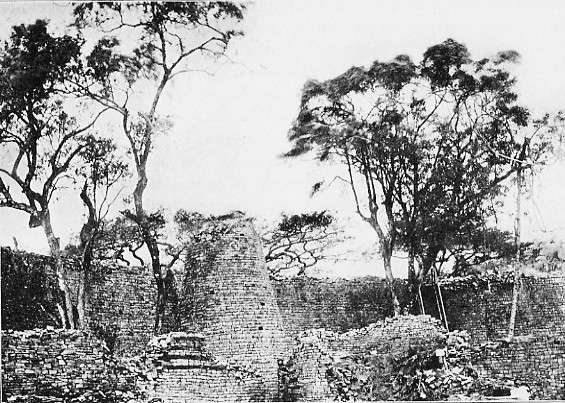
That Great Zimbabwe's dry-stone walls, towers, and enclosures are too large, too skilled, and too advanced to have been designed and built by Black Africans, and were therefore the work of an outside people (Phoenicians, Arabs, a lost tribe, or the biblical Queen of Sheba) whose presence supposedly predates the region's African inhabitants.
Contradicted. Great Zimbabwe is a medieval African city, built between roughly the 11th and 15th centuries CE by the ancestral Shona, capital of a wealthy gold-trading kingdom. The claim that it was really the work of Phoenicians, Arabs, the biblical Queen of Sheba, or some vanished white race is a colonial-era fabrication with no evidence behind it, invented and enforced because a racist ideology refused to credit Black Africans with a monumental stone city. It was debunked by professional archaeology more than a century ago (David Randall-MacIver in 1905, Gertrude Caton-Thompson in 1929) and confirmed many times since. This file rates that racist attribution, which the record does not support, and states plainly what it was and what it was used to justify.
Believed by: A colonial and settler establishment that treated it as near-official fact for decades; today it survives mainly in fringe 'lost white civilization' and ancient-mysteries circles, rejected by every mainstream archaeologist and historian.
The full story
A city of stone in the southern hills
In the granite hills of south-central Africa, near the modern town of Masvingo in Zimbabwe, stand the walls of a medieval city. Great Zimbabwe is the largest ancient stone complex in sub-Saharan Africa: curving, mortarless granite walls, some rising to about eleven meters and up to five meters thick, laid course on course without a drop of cement, enclosing a hill complex, a valley of dwellings, and the famous Great Enclosure with its solid conical tower. The name comes from the Shona dzimba dza mabwe, “houses of stone.”
It was built by the ancestors of the Shona people, and it was no isolated marvel. Great Zimbabwe was the capital of a wealthy kingdom that flourished from roughly the 11th to the 15th centuries CE, sitting astride the trade route between the interior goldfields and the Indian Ocean ports of the Swahili coast. Its rulers grew rich on gold, ivory, and cattle, and the ruins have yielded the proof of that reach: Chinese porcelain, Persian and Near Eastern glass and ceramics, and glass trade beads, imported luxuries bought by an African state plugged into a wider medieval world. It belongs, too, to a whole regional tradition of stone enclosures scattered across the Zimbabwe plateau, the work of one building culture developing over centuries, not a single inexplicable object dropped into the landscape.
A racist premise dressed up as a discovery
The trouble began with what the first European visitors decided before they looked. When the German geologist Carl Mauch reached the ruins in 1871, he approached them already certain that Africans could not have built anything so grand. He cut a sliver of wood from a lintel, found it fragrant, decided it must be Lebanese cedar, and from that single mistaken guess spun a conclusion: the wood had been carried by Phoenicians, and the whole complex was a replica of the Queen of Sheba's palace. The wood was local African sandalwood. The method was the pattern in miniature: fix the answer first, then hunt for anything that could be bent to support it.
This was not an innocent error, and naming what it was matters. The claim that Great Zimbabwe was built by Phoenicians, Arabs, a lost white tribe, or the Queen of Sheba is a colonial racist fabrication. Its engine was the assumption, treated as obvious in the Europe of the day, that Black Africans were incapable of monumental architecture or organized statehood, so any impressive ruin required a non-African author. That premise, not any feature of the stones, is where the theory comes from.
And it was quickly put to work. When Cecil Rhodes'sBritish South Africa Company occupied the region in the 1890s and named it Rhodesia, the Sheba story acquired a political job: if a “civilized” ancient people had once ruled here and vanished, then European settlers could cast themselves as restorers rather than conquerors. In 1902 the antiquarian Richard Nicklin Hall, brought in to work the site, dug out and threw away meters of archaeological deposit while searching for the foreign builders he was sure he would find. He found none, but he destroyed much of the evidence that would have refuted the myth outright, and then published the myth anyway.
The archaeology that settled it
The scientific answer arrived early and never wavered. In 1905 the Egyptologist David Randall-MacIver carried out the first controlled excavation at Great Zimbabwe. Digging carefully through undisturbed layers, he found no Phoenician masonry, no Near Eastern inscriptions, none of the material a Mediterranean colony would leave behind. The objects in the occupation deposits were African, and the site was medieval, not ancient. His conclusion was plain: it had been built by ancestors of the region's own people.
The question was closed for good in 1929, when the archaeologist Gertrude Caton-Thompson, invited by the British Association and leading a pioneering all-woman expedition, applied rigorous stratigraphy to the ruins. Her verdict matched Randall-MacIver's and put it beyond reasonable doubt: Great Zimbabwe was a medieval African creation, the work of the local population's ancestors. Her finding became, and has remained, the consensus of professional archaeology. Later radiocarbon dating confirmed the roughly 11th-to-15th-century range, and the leading later specialist, Peter Garlake, reinforced the same conclusion in the 1970s.
It is worth being precise about the standard of proof here. The African origin of Great Zimbabwe is not a cautious guess or a matter still hanging in the balance. It has been the settled reading of everyone who has excavated the site with modern methods for more than a hundred years. The “mystery” of who built it was manufactured, not discovered.
Why the lie was built, and why the state kept building it
If the science was settled by 1929, why did the foreign-builder story survive into living memory? Because it was never really about archaeology. It was about land and legitimacy. A fabricated ancient white presence let a settler regime tell itself, and the world, that it was reclaiming territory rather than seizing it, and that the Africans living there were latecomers with no deep claim to the country. The romance of the Queen of Sheba and the biblical gold-land of Ophir gave the fiction a scriptural glamour that carried easily through popular books, adventure novels, and newspapers, so that it felt like inherited common knowledge rather than a political invention.
When the evidence became inconvenient, the white-minority Rhodesian government simply suppressed it. From 1970, official publications, museum displays, and tour guides were forbidden to state as fact that Great Zimbabwe had been built by Africans. Archaeologists who said so plainly, Peter Garlake among them, were censored, removed from their posts, or driven out of the country. The apparent “debate” that outsiders saw was not scholars disagreeing; it was a state overruling its own scholars. This is the real-world harm the myth did: it was used to erase a people's history in the service of ruling over them.
None of this is unique to Great Zimbabwe. The same reflex, refusing to credit a non-European culture with its own monuments, has been applied to the pyramids, to the Nazca lines, and to other great works of the non-European past, and it is worth recognizing as a pattern rather than treating each instance as a fresh “puzzle.” What is distinctive here is how openly the fabrication was wielded as an instrument of colonial rule.
Africans built it
On the claim itself, that Great Zimbabwe was too sophisticated to be African work and must have been built by Phoenicians, Arabs, a lost white tribe, or the Queen of Sheba, the verdict is Contradicted. There is no Near Eastern masonry, no foreign inscription, no outside artifact of construction anywhere in the ruins; the wood, the pottery, the ironwork, and the building tradition are African; the dating is medieval; and the site is tied by material continuity, oral memory, and its own name to the ancestral Shona and their successor kingdoms. Professional archaeology reached that conclusion in 1905 and confirmed it in 1929, and it has held ever since.
Recognizing the myth for what it is does not diminish the site; it returns it to its builders. Great Zimbabwe is the monumental capital of a rich, gold-trading African kingdom, raised stone by mortarless stone by people whose descendants gave a nation its name and its emblem, the soapstone bird. Genuine questions remain about why the city declined, how its great enclosures were used, and what its carved birds meant. Who built it is not among them. The honest answer was always the one the colonial project could not afford to accept: Africans did.
What's still unexplained
- Why the city declined and was ultimately abandoned in the 15th to 16th centuries is still studied: shifting gold-trade routes, environmental strain on soil, water, and grazing from a large concentrated population, and political realignment toward successor states like Mutapa are all weighed, and their relative weight is not fully settled. This is a question about the site's economics and ecology, not about who built it, which is not in doubt.
- The precise function of the site's most striking features is still debated: whether the Great Enclosure was primarily a royal residence, a ritual space, or an initiation and ceremonial center, and what the conical tower within it symbolized. These are ordinary open questions of interpretation for a monument whose builders left no written records.
- The exact meaning and use of the eight carved soapstone birds, likely representing the bateleur eagle as a messenger or ancestral spirit in Shona cosmology, remains a subject of scholarly interpretation, as does how the different walled areas were governed and lived in at the city's height.
- Estimates of peak population have been revised over time, from older figures around 18,000-20,000 toward more recent work arguing the resident population was smaller, closer to 10,000; refining that number and understanding how the surrounding landscape supported it is ongoing archaeological work.
Point by point
The claim: The stonework is too advanced and monumental for a precolonial African society to have produced.
What the record shows: The walls are mortarless granite, a technique matched to the local geology and refined over generations, and the site sits within a dense regional tradition of related stone enclosures (madzimbabwe) across the Zimbabwe plateau, exactly what you expect from a homegrown building culture rather than a one-off foreign import. Excavated occupation layers contain African pottery, ironwork, and daga (earthen) architecture continuous with later Shona settlement. Nothing about the construction requires or shows an outside hand.
The claim: Ancient Phoenician or Israelite builders left the wood, artifacts, and design of a Near Eastern civilization.
What the record shows: No Phoenician, Israelite, or other Near Eastern building remains, inscriptions, or characteristic artifacts have ever been found at the site, in more than a century of excavation. Carl Mauch's 'Lebanese cedar' was local African sandalwood. The imported objects that are present (Chinese porcelain, Persian and Near Eastern glass and ceramics, coastal glass beads) are trade goods, the signature of a wealthy African polity buying luxuries through Indian Ocean commerce, not evidence that foreigners lived there or built the walls.
The claim: The site is far too old to be the work of the region's current African inhabitants.
What the record shows: Controlled excavation and, later, radiocarbon dating place the main construction and florescence between roughly the 11th and 15th centuries CE: medieval, not ancient, and squarely within the era of the ancestral Shona. Randall-MacIver reached the medieval-and-African conclusion in 1905; Caton-Thompson confirmed it stratigraphically in 1929; every subsequent professional study has agreed. The 'impossibly ancient' framing was asserted by colonial enthusiasts, never demonstrated.
The claim: The builders vanished, so there is no African community that can claim the site.
What the record shows: The city was abandoned, but the people were not lost. Great Zimbabwe belongs to a continuous cultural tradition linked to the later kingdoms of Mutapa and Torwa and to the modern Shona, whose very name for the ruins gives the country its name. Oral tradition, material continuity, and the surrounding network of related stone sites tie the builders directly to the region's living population.
The claim: Serious scholarship left the question of who built it genuinely open.
What the record shows: It was open only where politics forced it open. Professional archaeology settled the answer by 1929, and the scientific community treated it as settled thereafter. The appearance of ongoing 'debate' in Rhodesia was manufactured by a state that, from 1970, legally prevented its own institutions from affirming the African origin. That is suppression of a known answer, not a live scholarly controversy.
Timeline
- c. 1000-1450 CEAncestors of the Shona build and expand Great Zimbabwe, raising mortarless granite walls up to 11 meters high and 5 meters thick. The city becomes the capital of a kingdom that controls the gold trade between the interior goldfields and Swahili coast ports, importing Chinese porcelain, Persian ceramics, and glass beads found in the ruins.
- c. 1450-1600sThe city is gradually abandoned, likely as trade routes shift and local resources thin, and its rulers' successors move north. Shona communities retain oral memory of the site, and Portuguese traders on the coast record secondhand accounts of a great stone capital in the interior.
- 1871German geologist Carl Mauch reaches the ruins and declares that no African could have built them. Cutting a sliver from a wooden lintel and finding it fragrant, he decides it must be Lebanese cedar carried by Phoenicians and concludes the site was a copy of the Queen of Sheba's palace. The wood was in fact local African sandalwood.
- 1890sCecil Rhodes's British South Africa Company occupies the region and names the colony Rhodesia. The Sheba/Phoenician story becomes politically useful: a supposed ancient white presence is used to imply that European settlers are reclaiming, not seizing, the land.
- 1902Journalist and antiquarian Richard Nicklin Hall, engaged to 'develop' the site, digs out and discards meters of archaeological deposits in a search for evidence of foreign builders, destroying stratigraphy and artifacts that later scientists would have needed. He publishes claims of ancient non-African origin.
- 1905Egyptologist David Randall-MacIver conducts the first controlled excavation and finds no trace of Phoenician, Arab, or other foreign construction: the objects in the occupation layers are African, and the site is medieval, not ancient. He concludes it was built by ancestors of the local population.
- 1929Archaeologist Gertrude Caton-Thompson, leading an expedition invited by the British Association, uses careful stratigraphy to confirm the medieval date and indigenous African origin beyond reasonable doubt. Her verdict becomes the scholarly consensus and has never been overturned.
- 1965-1979The white-minority Rhodesian government, under Ian Smith, suppresses the established finding. From 1970 official publications and guides are barred from stating as fact that Africans built Great Zimbabwe; archaeologists including Peter Garlake are pressured, censored, or driven out for saying so.
- 1980At independence the country takes its name, Zimbabwe, from the site (dzimba dza mabwe, 'houses of stone', in Shona), and the soapstone Zimbabwe Bird becomes the national emblem. The medieval African city is restored to its own history.
Contradicted. Great Zimbabwe is a medieval African city, built between roughly the 11th and 15th centuries CE by the ancestral Shona, capital of a wealthy gold-trading kingdom. The claim that it was really the work of Phoenicians, Arabs, the biblical Queen of Sheba, or some vanished white race is a colonial-era fabrication with no evidence behind it, invented and enforced because a racist ideology refused to credit Black Africans with a monumental stone city. It was debunked by professional archaeology more than a century ago (David Randall-MacIver in 1905, Gertrude Caton-Thompson in 1929) and confirmed many times since. This file rates that racist attribution, which the record does not support, and states plainly what it was and what it was used to justify.
Reviewed by Colin Peterson · Last reviewed July 18, 2026 · How we rate
Common questions
Is Great Zimbabwe true?
Contradicted. Great Zimbabwe is a medieval African city, built between roughly the 11th and 15th centuries CE by the ancestral Shona, capital of a wealthy gold-trading kingdom. The claim that it was really the work of Phoenicians, Arabs, the biblical Queen of Sheba, or some vanished white race is a colonial-era fabrication with no evidence behind it, invented and enforced because a racist ideology refused to credit Black Africans with a monumental stone city. It was debunked by professional archaeology more than a century ago (David Randall-MacIver in 1905, Gertrude Caton-Thompson in 1929) and confirmed many times since. This file rates that racist attribution, which the record does not support, and states plainly what it was and what it was used to justify.
What is Great Zimbabwe?
Great Zimbabwe is the largest ancient stone complex in sub-Saharan Africa: a walled medieval city near modern Masvingo, Zimbabwe, built by the ancestors of the Shona people and serving as the capital of a rich kingdom that grew wealthy trading gold and cattle with the Indian Ocean coast. From the 1870s, European explorers and then the co…
What does the evidence show?
The walls are mortarless granite, a technique matched to the local geology and refined over generations, and the site sits within a dense regional tradition of related stone enclosures (madzimbabwe) across the Zimbabwe plateau, exactly what you expect from a homegrown building culture rather than a one-off foreign import. Excavated occup…
Why do people believe it?
The myth served a concrete political need: a supposed ancient white or Near Eastern presence let Cecil Rhodes's company and later the Rhodesian state frame colonial conquest as the recovery of land from Africans who had themselves displaced an earlier 'civilized' people. The history was shaped to fit the land grab.
What is still unresolved?
Why the city declined and was ultimately abandoned in the 15th to 16th centuries is still studied: shifting gold-trade routes, environmental strain on soil, water, and grazing from a large concentrated population, and political realignment toward successor states like Mutapa are all weighed, and their relative weight is not fully settled…
Sources
- 1.Great Zimbabwe, Wikipedia (2026)
- 2.Great Zimbabwe | History, Significance, Ruins, Culture, & Facts, Encyclopaedia Britannica
- 3.Great Zimbabwe National Monument, UNESCO World Heritage Centre
- 4.The Impact of Prejudice on the History of Great Zimbabwe, World History Encyclopedia (2019)
- 5.Mysteries of Great Zimbabwe, NOVA / PBS
- 6.Great Zimbabwe, Scientific American (2005)
- 7.Gertrude Caton-Thompson | Great Zimbabwe, Archaeologist, & Explorer, Encyclopaedia Britannica
- 8.David Randall-MacIver, Wikipedia (2026)
- 9.Peter Garlake, Wikipedia (2026)
Embed this verdict on your site
Paste this snippet to show our sourced verdict as a small card, with a link back to the full case file. Free to use.
<iframe src="https://theconspiratory.com/embed/great-zimbabwe" title="The Conspiratory verdict" width="520" height="190" style="border:0;max-width:100%" loading="lazy"></iframe>Help us investigate
This is a living case file. If you spot an error or know evidence we missed, tell us, and weigh in on where you land.
Where do you land?
Cast your read on this one.
Comments
Add your take. Comments are read and approved by a human before they appear, so keep it on topic and civil. Please do not accuse named, living people of crimes.