Australian PM Harold Holt faked his death and was collected by a Chinese submarine
By Colin PetersonJuly 18, 2026
Where the evidence lands: Contradicted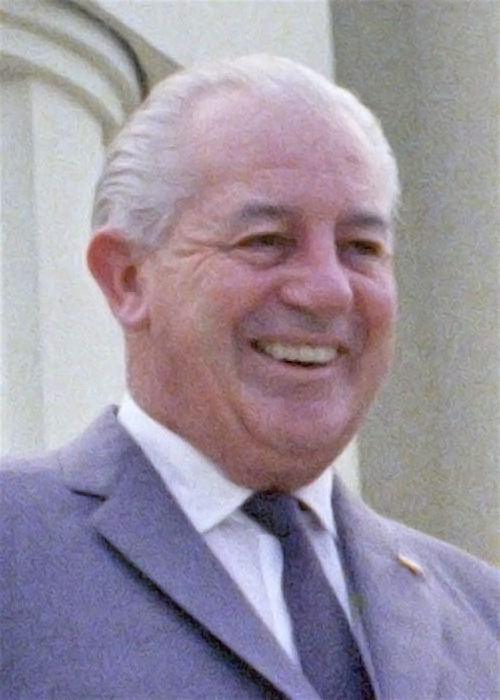
That Harold Holt did not accidentally drown on 17 December 1967 but instead met a hidden fate: most famously, that he was a lifelong agent for Chinese intelligence who faked his death and was collected offshore by a waiting Chinese submarine to live out his life in Beijing; alternatively, that he was assassinated by the CIA to stop him withdrawing Australian troops from Vietnam, or that he deliberately took his own life.
Contradicted. The espionage, submarine, defection, and CIA-assassination stories are unsupported and, in the submarine's case, physically impossible. A 2005 Victorian coronial inquest formally found that Holt drowned accidentally in dangerous surf.
Believed by: The subject of Australia's most enduring political conspiracy theory
The full story
The swim that ended a government
On the morning of Sunday, 17 December 1967, Harold Holt, the seventeenth prime minister of Australia, drove down to the coast below his holiday house at Portsea, on the Mornington Peninsula southeast of Melbourne. He took a small party to Cheviot Beach, an isolated cove on the military land of Point Nepean that Holt, a passionate diver and spearfisher, knew well and treated almost as his own. The sea that day was heavy. Witnesses described an unusually high tide, a large swell, and visible currents and eddies running off the rocks.
Holt did not hesitate. He waded in and struck out into deeper water while his companions watched from the shore, most of them judging the surf too rough to enter. He was a confident, experienced man in the water, but, by the accounts of those who knew him, not a strong surface swimmer: his gift was for diving and endurance underwater, not for fighting a swell on the surface. He was 59 years old, was recovering from a shoulder injury, and had been advised to take things easy. Within minutes he was a long way out, in water that was moving faster than he was.
Then he was simply gone. One of the party, Marjorie Gillespie, later described the moment in words that have followed the case ever since: it was “like a leaf being taken out ... so quick and final.” Holt did not thrash, call out, or raise an arm. The water around him “boiled” and he was under it. What followed was one of the largest search operations in Australian history: Navy divers, police, aircraft, and hundreds of volunteers combed the sea and the coastline for weeks. They found nothing. Two days later, unable to govern around an absence, the country swore in a caretaker prime minister. A memorial service soon after drew one of the largest gatherings of world leaders Australia had ever hosted, to mourn a man whose body no one could produce.
The spy, the submarine, and 'I can't guarantee that it is true'
Give the theory its strongest form. A national leader had vanished at the height of the Cold War, in a country fighting in Vietnam, and there was no body to prove how. Into that vacuum, in 1983, came a book with a real journalist's name on the cover: The Prime Minister Was a Spy, by the British writer Anthony Grey, a former Reuters correspondent who had himself been held captive in Mao's China. Grey's account, built on the claims of a former Australian naval officer who said he had Chinese informants, alleged that Holt had been an agent for Chinese intelligence since the 1930s, and that his death was staged: rather than drowning, he had swum out to a waiting Chinese submarine off Cheviot Beach and been carried away to live the rest of his life in Beijing.
On its surface the story had a certain grim symmetry. Holt disappeared cleanly, with no remains, in water he knew intimately; a covert extraction would leave exactly that kind of nothing. The Cold War genuinely was a period of defections, double agents, and submarines operating quietly off foreign coasts, and Australia in the 1960s was not immune to real espionage. If one wanted a frame in which a prime minister could step into the sea and simply cease to exist by design rather than by accident, the era supplied it.
And the story never depended only on Grey. A separate 1968 claim in the British press held that the CIA had assassinated Holt to stop him withdrawing Australian troops from Vietnam. Others suggested a Soviet or Chinese mission had taken him against his will, or that he had walked into the surf intending to die. Each of these filled the same hole in the same way: they gave a shocking, disproportionate event a cause large enough to seem to match it. That is the real engine of the case, and it is worth taking seriously before taking it apart.
Why the water, the politics, and the record all say drowning
Start with the submarine, because it is the claim that can be tested against physics rather than motive. The sea off Cheviot Beach is shallow, rocky, and violent. Holt's biographer Tom Frame pointed out the plainest problem: the water there was far too shallow for a submarine to submerge and manoeuvre, let alone to sit undetected while a man in a heavy swell somehow swam out and located it. There is no sonar contact, no naval log, no defector testimony, and no intelligence file placing any submarine anywhere near the Victorian coast that day. The rendezvous is not improbable; it is impossible in the space it is claimed to have happened.
The espionage premise fails just as completely on the man himself. Holt was a committed anti-communist and one of the United States' closest allies, remembered for his 1966 declaration that Australia would go “all the way with LBJ” and for deepening, not loosening, the country's role in Vietnam. He is a singularly poor candidate for a secret Chinese agent, and the CIA theory is self-refuting for the same reason: an ally does not assassinate a leader for pursuing a war that leader was in fact escalating. Frame dismissed Grey's book as a “complete fabrication” with “no corroborative evidence,” noting that none of the documents it invoked were ever produced. Grey had already conceded the point in his own pages: “I can't guarantee that it is true.”Zara Holt supplied the most quoted rebuttal of all, observing that her husband “didn't even like Chinese food.”
What is left, once the exotic readings are set aside, is a well-documented drowning. In 2005, made possible by a 1985 change in the law that allowed inquests where no body is recovered, Victorian State Coroner Graeme Johnstoneconducted the first formal inquest into Holt's death. Reviewing the original 1967 investigative material, he found that Holt had taken “an unnecessary risk” and drowned in rough water off Cheviot Beach, and that there was “nothing of significance in any of the material gathered that would indicate anything other than drowning occurred.” The missing body, he concluded, had been swept out to sea or taken by sharks: an outcome the surf and currents at that beach make entirely ordinary.
Johnstone also named the real reason the myths had grown so large. Because no inquiry was held in 1967, no authoritative account of the death existed for nearly four decades, and the silence bred exactly the stories that filled it. “It is sad,” he wrote, “that, over the years, all of these fanciful or unusual theories about Mr Holt's disappearance should receive public ventilation, overshadow his life and require an explanation. A simple reading of the original investigative material provides the real and credible explanation.”
Why an ordinary drowning became a national legend
The Holt theories persist for a reason that has little to do with evidence and everything to do with the shape of the loss. A death without a body denies the public the ritual that lets grief resolve. There was no coffin to carry, no grave to visit, only a stretch of ocean that gave nothing back. An open ending like that does not invite acceptance; it invites completion, and the human mind reaches for the most dramatic completion available.
The scale of the man magnified the effect. It felt intolerable, and somehow undignified, that a sitting prime minister of a nation at war could be erased by a wave like any other weekend swimmer. A hidden explanation (a submarine, a foreign service, an assassination) restores a sense of proportion between the size of the victim and the size of the cause, even though that proportion is an illusion. Random accident does not respect rank; the conspiracy theory pretends that it does.
The 1967 government made it worse by holding no formal inquiry, so for thirty-eight years there was no official story to anchor against, only a police report few had read and a growing library of speculation. Anthony Grey's book then gave the wildest version a respectable byline and a cinematic image that was easy to retell. And Australia sealed the whole thing with a joke it may not have intended: a Melbourne council named a public pool the Harold Holt Memorial Swimming Centre, a piece of black humour so perfect that it keeps the story permanently half-comic, and a half-comic story is very hard to lay to rest as a simple tragedy.
A drowning, not an abduction
On the central claims, that Harold Holt was a Chinese spy retrieved by submarine, that the CIA killed him, or that a foreign power spirited him away, the rating is Contradicted. The submarine is a physical impossibility in the shallow, broken water where it is placed; the espionage motive is contradicted by everything known about Holt's fiercely anti-communist politics; the book that popularised the story was disowned by its own author's caveat and dismantled by Holt's biographer; and no document, witness, or record has ever surfaced to support any of it in nearly sixty years.
The sourced explanation is the plain one. A 59-year-old man who was a keen diver but not a strong surface swimmer, recovering from an injury and advised to rest, entered a heavy swell with visible rips against the caution of his companions and drowned. The 2005 coronial inquest, the only formal legal examination the case has ever received, found precisely that, and blamed the decades of fantasy on the vacuum left by an inquiry that was never held. The missing body, so often treated as the mystery's proof, is simply what an ocean drowning at Cheviot Beach looks like. Harold Holt did not disappear into history. He drowned, and history, uncomfortable with so ordinary an end for so prominent a man, went looking for a better story than the true one.
What's still unexplained
- No body was ever recovered, and none ever will be. That is the one genuinely unresolved fact, and it is also the least mysterious: the surf at Cheviot Beach, the rips running off the point, and the open ocean beyond it make recovery of a drowning victim there unlikely under any circumstances. The coroner's finding that Holt was swept out to sea or taken by sharks is an inference, not a recovered certainty, but it is the only inference the physical evidence supports.
- The exact sequence of Holt's final moments rests on the accounts of the handful of companions present, chiefly Marjorie Gillespie, and on the reconstruction in the original police report. Their descriptions are consistent (a strong swimmer's confidence in a body that could not match it, a sudden silent submersion) but they are eyewitness memory of a distressing event, not footage. Nothing in them points away from drowning; they simply cannot be independently checked.
Point by point
The claim: A Chinese submarine surfaced off Cheviot Beach and collected Holt, a long-serving spy, to spirit him to Beijing.
What the record shows: The waters off Cheviot Beach are shallow, rock-strewn, and pounded by heavy surf: Holt's own biographer Tom Frame notes they were far too shallow for a submarine to submerge and operate. There is no naval, sonar, or intelligence record of any submarine in the area, and no route by which a swimmer in a violent swell could rendezvous with one. The logistics are not merely unlikely; they are physically impossible.
The claim: Holt was a secret agent for China, which explains why he would defect.
What the record shows: Holt was a staunch anti-communist and one of Washington's closest allies, famous for the 1966 election slogan 'All the way with LBJ' and for deepening Australia's commitment to the Vietnam War. Nothing in his politics, career, or personal life fits a Chinese agent. His widow Zara dryly observed that her husband 'didn't even like Chinese food,' and biographers have found no corroborating document behind the spy claim.
The claim: Anthony Grey's 1983 book proves the spy-and-submarine story with insider sourcing.
What the record shows: The book rests on the uncorroborated account of a former naval officer who claimed to have Chinese informants, and Grey himself wrote, 'I can't guarantee that it is true.' Tom Frame called the account a 'complete fabrication' with 'no corroborative evidence,' noting that none of the documents the book referred to were ever produced.
The claim: The CIA killed Holt to stop him withdrawing Australian troops from Vietnam.
What the record shows: The premise is backwards: Holt was among the war's most enthusiastic backers and had increased, not reduced, Australia's troop commitment. There was no motive for an ally to kill him, and no evidence of foul play. The 1968 newspaper claim produced no document, witness, or mechanism, and the theory has never advanced beyond assertion.
The claim: The absence of a body means the drowning was never really established.
What the record shows: Bodies are routinely lost at sea in strong currents, and Cheviot Beach's surf and rip conditions make recovery unlikely. The 2005 inquest, reviewing the original 1967 investigative material, found 'nothing of significance ... that would indicate anything other than drowning occurred,' and concluded the body was swept out to sea or taken by sharks. No trace of Holt anywhere, ever, is exactly what an ocean drowning predicts.
The claim: Holt, a keen diver and spearfisher, was too fit and experienced to simply drown.
What the record shows: Holt was a capable diver but, by his companions' own accounts, not a strong surface swimmer. He was 59, was recovering from a shoulder injury and had been advised to take it easy, and entered a large swell with visible rips against advice. Diving skill in calm water is not the same as swimming ability in a violent surf break: fit, experienced people drown in exactly these conditions.
Other readings
Angles that don't fit neatly into the claim or its rebuttal, laid out and weighed, not endorsed.
The suicide reading
Some writers proposed that Holt, worn down by a difficult period in his marriage and the strain of the office, walked into the surf intending not to come back. It is a less exotic theory than the submarine, but the 1968 police report considered and rejected it as highly unlikely, and it is not supported by his conduct that day: he arrived cheerful, planned to swim, and entered the water in the ordinary way. It belongs among the theories the case generated, not among its credible explanations.
The mundane-explanation read
Strip away the Cold War and what remains is a commonplace coastal tragedy: an older man, a recent injury, an overestimate of his own strength, and a stretch of water locals knew to respect. Drowning is the leading cause of this kind of disappearance the world over, and it requires no secret at all. The only thing unusual about Holt's death is the office he held, which is precisely why an ordinary explanation has always struggled to satisfy.
Timeline
- 1967-12-17Around midday, Holt and a small party arrive at Cheviot Beach, an isolated stretch on Point Nepean near Portsea, Victoria. Despite a large swell and visible currents, he wades into the surf to swim.
- 1967-12-17Holt swims out into deeper water and is dragged from sight. A companion, Marjorie Gillespie, later describes it as 'like a leaf being taken out ... so quick and final.' He does not call for help or raise his arms.
- 1967-12-17One of the largest search operations in Australian history begins: Navy divers, police, Air Force aircraft, and volunteers comb the water and coastline. No trace of Holt is ever recovered.
- 1967-12-19With no body and no realistic hope, the government swears in John McEwen as caretaker prime minister. A memorial service days later draws one of the largest gatherings of world leaders in Australian history.
- 1968A story in Britain's Sunday newspapers claims Holt was assassinated by the CIA, supposedly to prevent him pulling Australian troops out of Vietnam. No evidence is produced, and Holt was in fact a firm supporter of the war.
- 1983British journalist Anthony Grey publishes 'The Prime Minister Was a Spy,' alleging Holt had spied for China since the 1930s and was retrieved by a Chinese submarine off Cheviot Beach. Grey concedes in the book, 'I can't guarantee that it is true.'
- 2005-08Victorian State Coroner Graeme Johnstone opens the first formal inquest into Holt's death, made possible by a 1985 change in the law allowing inquests where no body is found.
- 2005-09Johnstone finds that Holt drowned accidentally, took 'an unnecessary risk' in rough water, and that his body was carried out to sea. He rebukes the failure to hold an inquiry in 1967 for letting 'unsubstantiated rumours and unusual theories' flourish.
Contradicted. The espionage, submarine, defection, and CIA-assassination stories are unsupported and, in the submarine's case, physically impossible. A 2005 Victorian coronial inquest formally found that Holt drowned accidentally in dangerous surf.
Reviewed by Colin Peterson · Last reviewed July 18, 2026 · How we rate
Common questions
Is Harold Holt true?
Contradicted. The espionage, submarine, defection, and CIA-assassination stories are unsupported and, in the submarine's case, physically impossible. A 2005 Victorian coronial inquest formally found that Holt drowned accidentally in dangerous surf.
What is Harold Holt?
On 17 December 1967, Australian Prime Minister Harold Holt waded into heavy surf at Cheviot Beach and vanished. His body was never found, and a country that could not bury its leader filled the silence with theories: that he was a lifelong Chinese spy taken away by submarine, that the CIA killed him, that he drowned himself. A 2005 coron…
What does the evidence show?
The waters off Cheviot Beach are shallow, rock-strewn, and pounded by heavy surf: Holt's own biographer Tom Frame notes they were far too shallow for a submarine to submerge and operate. There is no naval, sonar, or intelligence record of any submarine in the area, and no route by which a swimmer in a violent swell could rendezvous with…
Why do people believe it?
The missing body is the engine of the whole thing. A funeral gives grief a place to end; an empty stretch of ocean leaves the story permanently open, and an unfinished story invites an ending more satisfying than 'he drowned.'
What is still unresolved?
No body was ever recovered, and none ever will be. That is the one genuinely unresolved fact, and it is also the least mysterious: the surf at Cheviot Beach, the rips running off the point, and the open ocean beyond it make recovery of a drowning victim there unlikely under any circumstances. The coroner's finding that Holt was swept out…
Sources
- 1.Disappearance of Harold Holt, Wikipedia
- 2.The Prime Minister Was a Spy, Wikipedia
- 3.Fact sheet 144: Harold Holt's disappearance (Harold Edward Holt, 1908–67), National Archives of Australia
- 4.Allegations and conspiracy theories (Harold Holt), National Film and Sound Archive of Australia
- 5.Disappearance of a Prime Minister, Library of Congress (In Custodia Legis) (2017)
- 6.The Harold Holt mystery: How an Australian PM vanished forever, CNN (2017)
- 7.The Prime Minister who Disappeared, Smithsonian Magazine
- 8.Harold Holt Memorial Swimming Centre, Wikipedia
Embed this verdict on your site
Paste this snippet to show our sourced verdict as a small card, with a link back to the full case file. Free to use.
<iframe src="https://theconspiratory.com/embed/harold-holt-disappearance" title="The Conspiratory verdict" width="520" height="190" style="border:0;max-width:100%" loading="lazy"></iframe>Help us investigate
This is a living case file. If you spot an error or know evidence we missed, tell us, and weigh in on where you land.
Where do you land?
Cast your read on this one.
Comments
Add your take. Comments are read and approved by a human before they appear, so keep it on topic and civil. Please do not accuse named, living people of crimes.