A giant serpent, the Lagarfljót Worm, lives in the glacial lake of Lagarfljót in eastern Iceland
By Colin PetersonJuly 8, 2026
Where the evidence lands →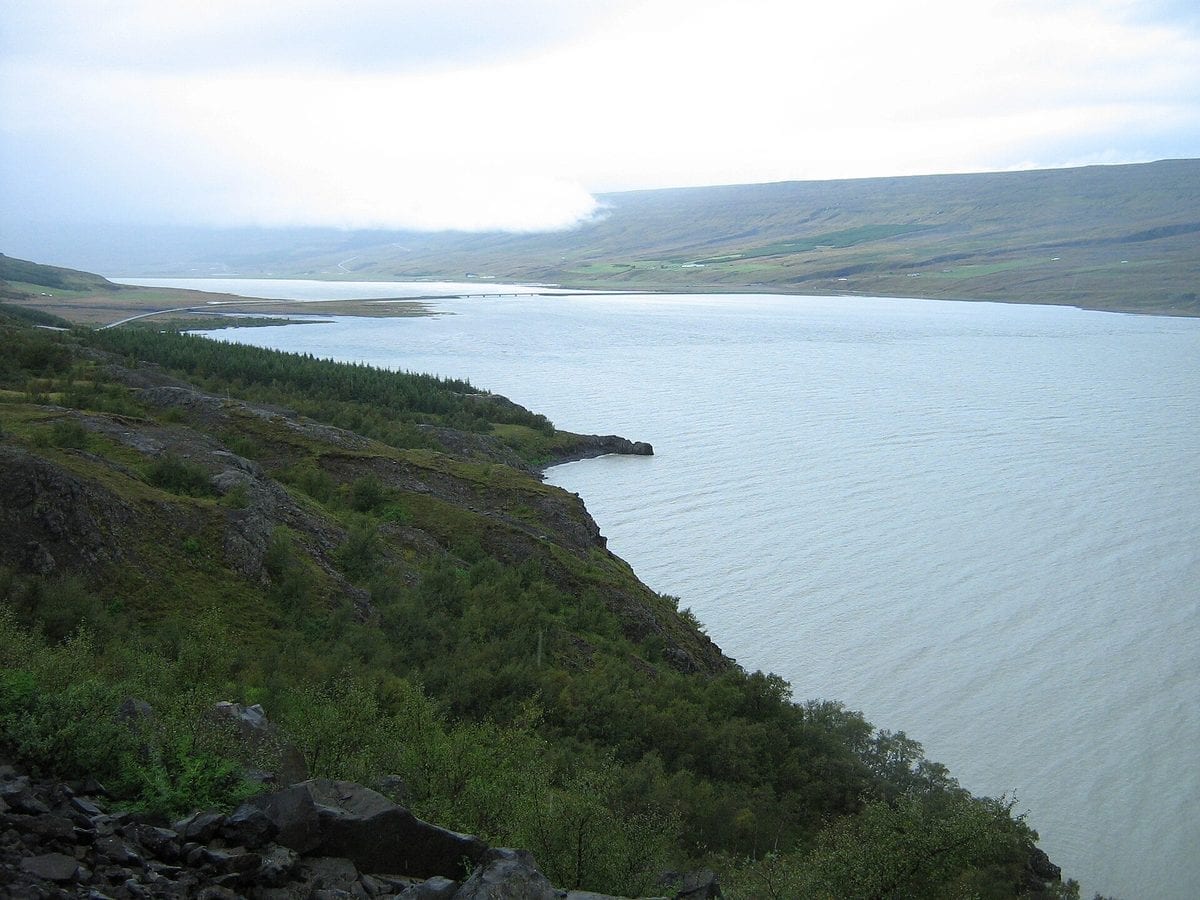
That a large, serpent-like animal unknown to science lives in the glacial lake Lagarfljót in eastern Iceland, that it is the same creature reported by residents across many centuries, and that footage such as the 2012 video captures it moving in the water.
The folklore is real and old: a serpentine creature in Lagarfljót has been reported in eastern Iceland since a medieval annal noted a marvel in the lake in 1345, and the story is a fixture of regional identity. The claim we rate is narrower: that a literal large, undiscovered animal lives in the lake today. No specimen, carcass, bone, or unambiguous image has ever been produced, and a widely shared 2012 video remains disputed rather than confirmed. Set against that, the lake is glacier-fed and so silt-clouded that logs, ice, netting, and gas-driven surface disturbance can all read as a moving creature. With centuries of testimony but no physical evidence, the literal-creature claim is neither proven nor fully ruled out.
Believed by: A living part of folk tradition in Fljótsdalshérað and greater eastern Iceland, kept alive by residents, storytellers, and a tourism industry around Egilsstaðir; taken as genuine by a segment of cryptozoology enthusiasts worldwide, while most treat it as folklore
The full story
What is documented
Start with what is solid, because a good deal here is. Beside the eastern Icelandic town of Egilsstaðir lies Lagarfljót, a long, narrow, glacier-fed lake. For centuries its waters have been said to hold an enormous serpent, the Lagarfljótsormur, or Lagarfljót Worm.
The tradition is genuinely old. A medieval Icelandic annal records, under the year 1345, a marvel in the lake: something that showed itself as humps or coils, hundreds of fathoms apart, with no head or tail that anyone could see. The serpent later turns up on 16th-century maps, in a 17th-century chronicle and poem, and in the great 19th-century folk-tale collection of Jón Árnason, which preserves its origin story: a girl lays a small heath-worm on a gold ring to make the gold multiply, the worm grows monstrous, and in fear she flings worm and gold into the lake, where it keeps growing.
The sightings did not stop with the old sources. The head of Iceland's national forest service reported one in 1963, and in February 2012 a farmer, Hjörtur E. Kjerúlf, filmed a serpentine shape moving in icy water and posted it online, where it became a worldwide sensation. All of that is documented. The question this file weighs is the separate one: whether behind the tradition and the footage there is a literal, undiscovered animal in the lake.
The case people make
The believing case is not flimsy, and it deserves its strongest form. It rests first on duration. This is not a story that appeared last year; it reaches back to a medieval annal and runs in an unbroken line through maps, chronicles, and folk tales into living memory. A legend that persists for the better part of seven centuries, the argument goes, is unlikely to be built on nothing at all.
It rests, second, on the lake itself. Lagarfljót is deep, cold, and so clouded with glacial silt that no one can see far below the surface. If a large animal could hide anywhere, a lake like this, opaque and little explored, is exactly the place. The absence of a captured specimen, in this reading, reflects the water rather than the creature.
And it rests on the 2012 video, which is the reason the modern story traveled. The shape in the current genuinely undulates like something alive, and it persuaded enough people that a local committee, after two years, narrowly voted that it did appear to show the creature, and the district paid out its long-standing reward.
A story this old, a lake this dark, and a video this strange: the honest believer is not inventing a monster from nothing. The question is whether any of it amounts to an animal.
Taken at its best, the case is not that the worm has been proven, but that a centuries-deep tradition, an unreadable lake, and an ambiguous piece of footage together leave the door genuinely open.
Where the claim thins out
An open door is not an animal. What the record never supplies, across all those centuries, is a single physical trace: no carcass, no bone, no scale, no unambiguous photograph. A breeding population of very large creatures in one defined lake would be expected, over hundreds of years, to leave something behind. The steady non-appearance of any such thing is not a neutral gap; it is itself evidence, and it points away from a literal creature.
The 2012 video, the modern pillar of the case, is disputed rather than confirmed. The most economical reading is that the shape is an inert object worked by the fast current, most likely a length of fishing net caught on ice, which undulates convincingly without anything being alive. The committee that examined it split 7 to 6, reached no agreement on any still photo, and issued a non-binding opinion, not a finding. Reported abroad as a government confirming a monster, it was in truth a close local vote on an ambiguous clip.
The lake that makes hiding plausible also makes illusion routine. Glacial silt keeps the water opaque, so size and depth cannot be judged; logs, weed, drifting ice, and netting warp in the murk, and gas from rotting matter on the bed can make the surface churn as if something were thrashing beneath it. These are not exotic conditions. They are the everyday physics of a silt-laden northern lake, and they reliably produce serpentine shapes for honest observers.
Even the oldest anchor, the 1345 marvel, describes headless, tailless humps in the water, language that fits ice, debris, or gas at least as well as a creature. The tradition is real and the reports are sincere. The leap from those to a living animal is the step the evidence does not take.
The lake that makes monsters
It is worth dwelling on the water, because Lagarfljót is close to a machine for producing exactly this kind of sighting, and understanding it dissolves much of the mystery without dismissing anyone.
The lake is fed by glacial rivers off Vatnajökull that carry fine rock flour into it, giving the water a brown, opaque cast. You cannot see into it. That single fact does a great deal of work: it removes the observer's ability to check scale, distance, or depth, so an object a few metres out and an animal a hundred metres out can look identical. Uncertainty is the default condition of looking at this lake.
Onto that surface the lake delivers a steady supply of candidates. Flotsam washes down from the mountains and glaciers and collects in tangles; ice forms, drifts, and breaks; nets and lines are worked by the current. And from the bed, gas released by decaying vegetation can open the ice, lift debris, and set the surface roiling. Any one of these, seen through murky water at an uncertain distance, can read as an undulating back or a moving coil.
You do not need a monster to explain the sightings. You need a silt-blind lake, some drifting debris, and a current, and Lagarfljót supplies all three.
Why the story endures
Lake monsters are among the most durable of folk traditions, and the Lagarfljót Worm shows why. It endures, first, because it is rooted in place and identity. In eastern Iceland the worm is not a curiosity imported from abroad; it is local heritage, carried in folk tales, printed on the region's self-image, and, now, central to its tourism. A story that belongs to a community is defended and retold in a way an outside claim never is.
It endures because the lake refuses to close the question. Opaque water cannot be searched by eye, so the creature can never quite be found and never quite be ruled out. That permanent uncertainty is fertile ground: every drifting log or churn of gas restocks the tradition with fresh, sincere reports.
And it endures because process gave it standing. A civic reward and a committee vote, however narrow and non-binding, handed the story a wrapper of officialdom, and international coverage that flattened “a local panel split 7 to 6 on a video” into “Iceland confirms its monster” did the rest. Add the ready comparison to Loch Ness, and the worm slots into a template audiences already love.
Centuries of tales, no specimen
Hold the two things apart. The tradition is real, old, and worth taking seriously as folklore: a genuine thread of Icelandic culture running from a medieval annal to a viral video. The claim we rate is narrower and different: that a literal, undiscovered animal lives in Lagarfljót today. On that claim, the record offers centuries of sincere testimony and one disputed piece of footage, and not a single physical specimen, bone, or unambiguous image. The lake's silt-blind water, meanwhile, reliably turns debris, ice, netting, and gas into serpentine shapes.
That is not enough to prove a creature, and it is not quite enough to slam the door either. No one has searched every fathom of an opaque glacial lake, and the honest skeptic admits the 2012 clip was never fully resolved. What can be said is that the literal-creature claim has produced none of the evidence such a creature would leave, while its best exhibits all have ordinary explanations at hand.
The fair posture is the one the lake itself enforces: enjoy the folklore, treat the sightings as the honest illusions they most likely are, and keep the small remaining space open without filling it with a monster. A dark lake and an old story are not the same as an animal, and the difference is the whole of this case.
What's still unexplained
- What exactly is in the 2012 footage remains unsettled. The netting-in-current explanation is the most economical, but no examination fully closed the question, which is part of why the clip still circulates.
- How old the tradition truly is, and what the 1345 annal writer actually saw, cannot now be recovered. The marvel of headless, tailless humps is consistent with several natural causes and with a genuine early legend, and the record does not decide between them.
- Why Lagarfljót in particular generates such convincing serpentine illusions, and how much its opaque glacial water and gas-driven surface activity shape the reports, is a fair scientific question about the lake distinct from whether any animal lives in it.
Point by point
The claim: The 2012 video shows a large living creature swimming in the lake.
What the record shows: The footage is genuinely striking but genuinely disputed. Skeptics identified the most likely subject as an inert object held in the fast current: a length of fishing net snagged on ice, undulating as water flowed past it, which mimics the motion of a swimming animal without anything alive being present. The shape never clearly resolves into a head, body, or tail. A narrow 7-to-6 vote by a local committee that it looked like the creature is an opinion about an ambiguous image, not a measurement of one.
The claim: Sightings span nearly seven centuries, which is too consistent to be imaginary.
What the record shows: Longevity shows the strength of the tradition, not the existence of an animal. The 1345 annal describes an unexplained marvel of humps in the water with no head or tail, language that fits ice, debris, or gas as easily as a creature. Across the centuries the reports are testimony and story, retold and written down, never a body. A durable legend and a living population are different things, and only the first is documented here.
The claim: An official Icelandic commission confirmed the creature is real.
What the record shows: This is the most overstated part of the record. The body was a local district committee, its vote was 7 to 6, it was non-binding, and it concerned only whether one video appeared to show the creature. It commissioned no biological study and could not agree that any photograph showed anything. Reporting that compressed this into a government confirming a monster inflated a close local opinion into a scientific finding.
The claim: Eyewitnesses describe a coherent serpent, so they must be seeing the same real thing.
What the record shows: Lagarfljót is one of the easiest lakes in the world to misread. It is glacier-fed, and fine silt from Vatnajökull keeps the water opaque and brown, so almost nothing below the surface can be judged for size or depth. Logs, mats of vegetation, drifting ice, and netting distort in murky water, and gas rising from rotting matter on the bed can make the surface roil like something thrashing. These conditions reliably manufacture serpentine shapes, which is why sober observers can report the same illusion in good faith.
The claim: No specimen has been found because the creature is elusive and the lake is deep.
What the record shows: Absence of a specimen is not proof of concealment. A breeding population of very large animals in a defined lake would, over centuries, be expected to leave something behind: a carcass, bones, a clear image, a physical trace. None exists. Elusiveness can always be asserted after the fact, but it cannot substitute for the evidence a literal animal would produce, and its repeated non-appearance is itself part of the record.
Timeline
- 1345The medieval Icelandic annals record a marvel seen in Lagarfljót: something that rose from the water in humps or coils, hundreds of fathoms apart, without a visible head or tail. The entry does not call it a worm, but it is generally treated as the earliest written trace of the tradition.
- 16th centuryA serpent in Lagarfljót begins to appear in cartography, marked on maps of Iceland alongside the era's other sea and lake beasts, a sign the local story had spread beyond the valley.
- 17th centuryThe creature features in a chronicle and a baroque poem of the period, fixing the serpent of Lagarfljót in written Icelandic tradition rather than oral report alone.
- 1862Jón Árnason publishes his landmark collection of Icelandic folk tales, which records the origin story: a girl lays a small lyngormur (heath-worm) on a gold ring to make the gold grow, the worm swells monstrously, and in fright she throws worm and gold into Lagarfljót, where it keeps growing.
- 1963The head of Iceland's national forest service reports a sighting at the lake, one of a series of modern accounts that keep the tradition current well into the 20th century.
- 1998The municipal council at Egilsstaðir establishes a standing reward, 500,000 Icelandic krónur, for anyone who can prove the creature exists, formalizing the local mix of civic pride and open question.
- 2012-02Farmer Hjörtur E. Kjerúlf films a serpentine, undulating shape moving through icy water at Hrafnkelsstaðir in Fljótsdalur, shot early one morning through his kitchen window. Posted online, the clip becomes an international sensation.
- 2014-08After deliberating for roughly two years, a local commission (a truth committee assembled by the district) votes 7 to 6 that the 2012 video does appear to show the creature. The vote is narrow, non-binding, and reached no agreement on any still photographs.
- 2015The district awards Kjerúlf the standing reward of 500,000 krónur in connection with the footage, an outcome widely reported abroad as an official confirmation that the monster is real, which overstates a narrow local vote.
The folklore is real and old: a serpentine creature in Lagarfljót has been reported in eastern Iceland since a medieval annal noted a marvel in the lake in 1345, and the story is a fixture of regional identity. The claim we rate is narrower: that a literal large, undiscovered animal lives in the lake today. No specimen, carcass, bone, or unambiguous image has ever been produced, and a widely shared 2012 video remains disputed rather than confirmed. Set against that, the lake is glacier-fed and so silt-clouded that logs, ice, netting, and gas-driven surface disturbance can all read as a moving creature. With centuries of testimony but no physical evidence, the literal-creature claim is neither proven nor fully ruled out.
Reviewed by Colin Peterson · Last reviewed July 8, 2026 · How we rate
Common questions
Is Lagarfljót Worm true?
The folklore is real and old: a serpentine creature in Lagarfljót has been reported in eastern Iceland since a medieval annal noted a marvel in the lake in 1345, and the story is a fixture of regional identity. The claim we rate is narrower: that a literal large, undiscovered animal lives in the lake today. No specimen, carcass, bone, or unambiguous image has ever been produced, and a widely shared 2012 video remains disputed rather than confirmed. Set against that, the lake is glacier-fed and so silt-clouded that logs, ice, netting, and gas-driven surface disturbance can all read as a moving creature. With centuries of testimony but no physical evidence, the literal-creature claim is neither proven nor fully ruled out.
What is Lagarfljót Worm?
Lagarfljót is a long, narrow, glacier-fed lake beside the town of Egilsstaðir in eastern Iceland. For centuries its waters have been said to hold an enormous serpent, the Lagarfljótsormur, or Lagarfljót Worm. The earliest hint is a line in a medieval annal noting a strange marvel in the lake in 1345, and the creature later appears on old…
What does the evidence show?
The footage is genuinely striking but genuinely disputed. Skeptics identified the most likely subject as an inert object held in the fast current: a length of fishing net snagged on ice, undulating as water flowed past it, which mimics the motion of a swimming animal without anything alive being present. The shape never clearly resolves…
Why do people believe it?
The tradition is old and deeply rooted. A story attested since a medieval annal, carried through maps, chronicles, and Jón Árnason's folk tales, carries the weight of centuries, and in eastern Iceland the worm is woven into local identity rather than imported from outside.
What is still unresolved?
What exactly is in the 2012 footage remains unsettled. The netting-in-current explanation is the most economical, but no examination fully closed the question, which is part of why the clip still circulates.
Sources
- 1.Lagarfljót Worm, Wikipedia (2026)
- 2.Does this video really show a monster in an Icelandic lake?, The Observers, France 24 (2014)
- 3.Truth Commission: Lake Monster Does Exist, Iceland Review (2014)
- 4.Truth Committee Confirms: Lagarfljót Worm Is Real, The Reykjavík Grapevine (2014)
- 5.Lagarfljót Worm Recorder To Be Paid Half A Million, The Reykjavík Grapevine (2015)
- 6.Something In The Water: The Lagarfljot Worm Mystery, Discovery UK
- 7.Lagarfljótsormurinn: Serpent in Lagarfljót Lake in East Iceland, Iceland's Loch Ness, Guide to Iceland
- 8.Lagarfljótsormurinn (Lagarfljót Wyrm), Visit Austurland
Embed this case file on your site
Paste this snippet to show this case file as a small card, with a link back to the full write-up. Free to use.
<iframe src="https://theconspiratory.com/embed/lagarfljot-worm" title="The Conspiratory verdict" width="520" height="190" style="border:0;max-width:100%" loading="lazy"></iframe>Help us investigate
This is a living case file. If you spot an error or know evidence we missed, tell us, and weigh in on where you land.
Where do you land?
Cast your read on this one.
Comments
Add your take. Comments are read and approved by a human before they appear, so keep it on topic and civil. Please do not accuse named, living people of crimes.