Lance Armstrong doped his way to seven Tour de France titles and ran a team-wide doping and cover-up program
By Colin PetersonJuly 16, 2026
Where the evidence lands: Proven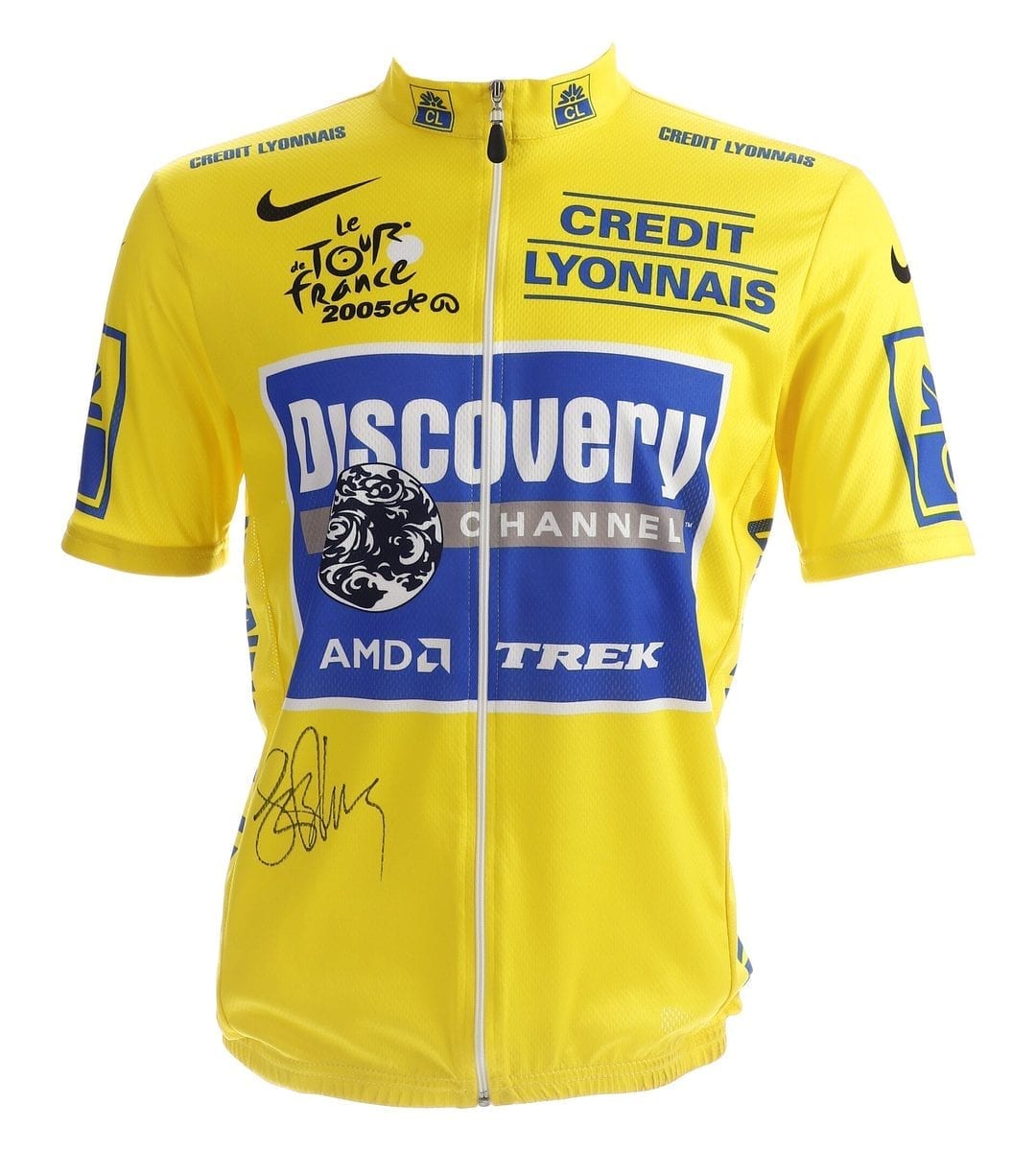
That Lance Armstrong's seven Tour de France victories were fraudulent, achieved through the systematic use of banned performance-enhancing drugs and blood transfusions; that he did not merely dope himself but helped organize and enforce a doping program across the U.S. Postal Service team; and that he then protected the scheme for over a decade by denying it under oath, submitting false affidavits, and pressuring teammates, staff and witnesses into silence or into recanting.
Proven. Armstrong doped through all seven of his Tour de France wins and helped run a systematic team doping program, then denied it for more than a decade. This is not a matter of inference: the U.S. Anti-Doping Agency documented it across more than a thousand pages of sworn testimony and evidence, the UCI stripped his titles and upheld a lifetime ban, and in 2013 Armstrong admitted it himself on television. As a claim that he cheated and orchestrated a cover-up, the verdict is substantiated. What remains genuinely contested is narrower: how far the intimidation of witnesses went, and whether the sport around him was any cleaner.
Believed by: Effectively universal now. Once a fringe accusation pushed by a handful of journalists and former insiders, it is today the settled finding of anti-doping authorities, cycling's governing body, the U.S. government and Armstrong himself; there is no serious dispute that he doped.
The full story
The confession that closed the argument
For more than a decade this was the most aggressively defended denial in sport. Armstrong sued accusers, denounced them publicly, and won seven consecutive Tours de France while insisting he had never doped.
USADA's 2012 Reasoned Decision documented use of EPO, testosterone, corticosteroids, human growth hormone and blood transfusions across his career. In January 2013 he told Oprah Winfrey he had doped during every one of the seven victories. The UCI accepted the findings, the titles were stripped, and the ban is for life.
That sequence is why this file rates the claim substantiated without qualification. It does not rest on inference from performance data or on the testimony of rivals. It rests on a governing-body finding and the athlete's own account of what he did.
A programme, not a habit
The claim rated here is not merely that Armstrong doped. It is that he was central to organising a system, and that part is documented too.
USADA described a team-wide programme on the US Postal Service squad, supported by sworn testimony from eleven former teammates. Its finding was that Armstrong used banned substances, supplied EPO to teammates, and was central to a scheme it called the most sophisticated and professionalised doping programme cycling had seen.
The distinction matters for how the story is understood. An individual cheating is a story about one athlete. A structured programme, with sworn accounts from most of a team, is a story about how a sport was run, and it is the reason the consequences reached far beyond one rider's palmares.
What was done to the people who told the truth
The part of this record that has aged worst is not the doping. It is the conduct around it.
USADA stated that Armstrong lied under oath in the SCA Promotions case and in a French investigation, and submitted affidavits it knew to be false, arguing that he should not benefit from any limitation period because of it. Its report set out a pattern it described as witness intimidation and retaliation.
The names in that section are the ones worth remembering: Emma O'Reilly, the team masseuse, and Betsy and Frankie Andreu, who described public attacks and sustained pressure after speaking. Armstrong later acknowledged treating some accusers badly. For years the people telling the truth were the ones who paid for it, which is the ordinary shape of these cases and is usually only visible afterwards.
A story too good to interrogate
It is easy now to ask how the denial held for so long. The answer is that it was protected by something stronger than evidence.
The narrative was close to perfect: advanced testicular cancer, recovery, seven consecutive wins, a foundation raising vast sums for cancer patients. Doubting the wins meant doubting a story people had used to get through their own diagnoses, and the accusers were asking them to give that up on the word of a masseuse and a handful of former teammates.
The litigation did the rest. Suing accusers converts a factual dispute into a question of who can afford to be wrong, and for years the answer was that Armstrong could and they could not. That is not a lesson about cycling. It is a lesson about what a well-funded denial can hold up, and for how long.
The case that came apart from the inside
Nothing about this was uncovered by better testing. Armstrong passed the tests of his era. It came apart because former teammates testified, because an anti-doping agency assembled the accounts into a single decision, and finally because the man himself stopped denying it.
The rated claim is proven at every level: that he doped, that he doped through all seven wins, and that he was central to organising it across a team. What the record adds, and what is worth carrying out of it, is how long a documented truth can be held under by money and reputation before any of that arrives.
Watch
What's still unexplained
- How far did the pressure on witnesses actually go? USADA documented intimidation and retaliation and many witnesses described threats and public attacks, but Armstrong was never criminally convicted of witness tampering, so the full scope rests on testimony and civil findings rather than a criminal verdict.
- How much did others in cycling's governance know or enable? Armstrong long alleged, and critics have argued, that the wider system tolerated doping in that era. What officials and sponsors understood at the time, and when, is still debated.
- Should the vacated Tour titles simply be blank? Because so many top finishers from 1999 to 2005 were themselves implicated in doping, the Tours he won have no reassigned champions, leaving an unresolved question about how cleanly that entire period can ever be judged.
Point by point
The claim: Armstrong's seven Tour de France wins were powered by banned drugs, not clean training.
What the record shows: USADA's 2012 Reasoned Decision documented use of EPO, testosterone, corticosteroids, human growth hormone and blood transfusions across Armstrong's career, and in his 2013 interview with Oprah Winfrey he admitted doping during every one of his seven Tour victories. The UCI accepted these findings and struck the titles from the record; there is no longer a governing body that recognizes him as champion for those years.
The claim: He did not just dope himself; he helped organize a doping system across the whole team.
What the record shows: USADA described a team-wide program on the U.S. Postal Service squad and gathered sworn testimony from 11 former teammates. Its finding was that Armstrong used banned substances, supplied EPO to teammates, and was central to a coordinated scheme USADA called the most sophisticated and successful in the sport's history. USADA characterized his role as that of a ringleader rather than a lone rider.
The claim: He lied under oath and used false paperwork to protect the scheme.
What the record shows: USADA stated that Armstrong lied under oath in the SCA Promotions case and in a French investigation and submitted affidavits it knew to be false, and it argued that he should not benefit from any statute of limitations because of that conduct. His own 2013 admission that the denials were a sustained lie corroborates that he had repeatedly given false accounts, including sworn ones.
The claim: He pressured teammates, staff and witnesses to keep quiet or recant.
What the record shows: USADA's report set out a pattern of what it described as witness intimidation and retaliation, and named figures including Emma O'Reilly and Betsy and Frankie Andreu who said they faced public attacks and pressure after speaking out. Armstrong himself later acknowledged treating some accusers badly. The precise extent of the pressure is documented through witness accounts rather than any criminal conviction for intimidation.
The claim: The U.S. government treated the fraud as real, not as sour grapes from rivals.
What the record shows: The Department of Justice joined the whistleblower suit brought by Floyd Landis, alleging that doping breached the terms of the U.S. Postal Service sponsorship and produced false claims for payment. In April 2018 Armstrong settled for $5 million. A settlement is not an admission of the suit's full allegations, but the government's decision to intervene and the size of the payment reflect how seriously the fraud claim was taken.
The claim: For years the accusations were dismissed as jealousy, so surely the case was thin.
What the record shows: The early dismissal reflected Armstrong's fame, his legal aggression and the difficulty of catching sophisticated doping, not weak evidence. When USADA finally compiled sworn testimony from 26 witnesses alongside documentary and scientific evidence, the case was overwhelming enough that Armstrong chose not to contest it in arbitration and confessed months later. The long delay is a story about power and process, not about doubt over the facts.
Timeline
- 1996Armstrong is diagnosed with stage 3 testicular cancer that has spread to his lungs and brain. He undergoes surgery and chemotherapy and is declared cancer-free in 1997, setting up a comeback story that will make his later wins internationally famous.
- 1999-07Riding for the U.S. Postal Service team, Armstrong wins his first Tour de France. He goes on to win the race seven consecutive times through 2005, becoming one of the most celebrated athletes in the world.
- 2004Journalists David Walsh and Pierre Ballester publish L.A. Confidentiel, gathering accounts from insiders including former masseuse Emma O'Reilly, who describes clandestine trips to move what she took to be doping products. Armstrong denies everything and pursues legal action against accusers and publishers.
- 2005-11In a deposition tied to a bonus dispute with the insurer SCA Promotions, Armstrong denies doping under oath. USADA would later cite these sworn denials, and affidavits it called false, as central to why his case could not be treated as time-barred.
- 2010-06Former teammate Floyd Landis, himself stripped of a Tour title for doping, files a whistleblower complaint under the False Claims Act and goes public with detailed accusations against Armstrong and the Postal Service program. The complaint later underpins a federal fraud case.
- 2012-08USADA announces sanctions: a lifetime ban and disqualification of Armstrong's competitive results dating back to August 1998, including all seven Tour de France titles. Armstrong declines to contest the charges through arbitration.
- 2012-10-10USADA publishes its Reasoned Decision: a roughly 200-page report backed by more than 1,000 pages of evidence, including sworn testimony from 26 people (among them 11 former teammates), financial records, emails and lab data. USADA calls it the most sophisticated, professionalized and successful doping program sport had ever seen.
- 2012-10-22The Union Cycliste Internationale (UCI), cycling's world governing body, accepts USADA's findings, erases Armstrong's name from the Tour de France record books and upholds his lifetime ban.
- 2013-01In a televised interview with Oprah Winfrey, Armstrong confesses that he used banned substances, including EPO, testosterone, human growth hormone and blood transfusions, across his career and during each of his seven Tour wins, describing the years of denial as one big lie he repeated many times.
- 2018-04Armstrong agrees to pay the U.S. government $5 million to settle the False Claims Act case arising from the Postal Service sponsorship. Landis, the whistleblower, receives $1.1 million of the settlement.
From the case file
The actual records: declassified, released, or leaked. We link straight to each document in its official archive, so you never have to take our word for it. Read the originals yourself.
Reasoned Decision of the United States Anti-Doping Agency on Disqualification and Ineligibility
USADA's roughly 200-page report, backed by over 1,000 pages of evidence and sworn testimony from 26 witnesses including 11 former teammates, laying out the U.S. Postal Service team doping program and Armstrong's central role. It is the foundational document behind his lifetime ban and the loss of his seven Tour titles.
Read the document: USADA →Lance Armstrong Agrees to Pay $5 Million to Settle False Claims Allegations (Sponsorship Agreement)
The Justice Department's announcement that Armstrong would pay the government $5 million to resolve the False Claims Act case, originally brought as a whistleblower complaint by former teammate Floyd Landis, alleging that doping violated the terms of the U.S. Postal Service sponsorship.
Read the document: U.S. Department of Justice →Other case files that cite the same sources
Proven. Armstrong doped through all seven of his Tour de France wins and helped run a systematic team doping program, then denied it for more than a decade. This is not a matter of inference: the U.S. Anti-Doping Agency documented it across more than a thousand pages of sworn testimony and evidence, the UCI stripped his titles and upheld a lifetime ban, and in 2013 Armstrong admitted it himself on television. As a claim that he cheated and orchestrated a cover-up, the verdict is substantiated. What remains genuinely contested is narrower: how far the intimidation of witnesses went, and whether the sport around him was any cleaner.
Reviewed by Colin Peterson · Last reviewed September 2, 2026 · How we rate
Common questions
Is Armstrong doping true?
Proven. Armstrong doped through all seven of his Tour de France wins and helped run a systematic team doping program, then denied it for more than a decade. This is not a matter of inference: the U.S. Anti-Doping Agency documented it across more than a thousand pages of sworn testimony and evidence, the UCI stripped his titles and upheld a lifetime ban, and in 2013 Armstrong admitted it himself on television. As a claim that he cheated and orchestrated a cover-up, the verdict is substantiated. What remains genuinely contested is narrower: how far the intimidation of witnesses went, and whether the sport around him was any cleaner.
What is Armstrong doping?
Lance Armstrong returned from advanced testicular cancer to win the Tour de France a record seven straight times from 1999 to 2005, a story sold worldwide as the ultimate triumph over adversity. For years, allegations that the wins were built on performance-enhancing drugs were dismissed, and Armstrong sued and denounced his accusers. Th…
What does the evidence show?
USADA's 2012 Reasoned Decision documented use of EPO, testosterone, corticosteroids, human growth hormone and blood transfusions across Armstrong's career, and in his 2013 interview with Oprah Winfrey he admitted doping during every one of his seven Tour victories. The UCI accepted these findings and struck the titles from the record; th…
Why do people believe it?
The evidence is unusually complete for a sports scandal: a detailed official report, corroborating testimony from many insiders, a governing-body sanction, a federal settlement and, rarest of all, a full on-camera confession from the accused. Belief here does not require any leap; it requires only reading the record.
What is still unresolved?
How far did the pressure on witnesses actually go? USADA documented intimidation and retaliation and many witnesses described threats and public attacks, but Armstrong was never criminally convicted of witness tampering, so the full scope rests on testimony and civil findings rather than a criminal verdict.
Sources
- 1.Report on Proceedings Under the World Anti-Doping Code and the USADA Protocol (Reasoned Decision), U.S. Anti-Doping Agency (2012)
- 2.Lance Armstrong Receives Lifetime Ban and Disqualification of Competitive Results for Doping Violations, U.S. Anti-Doping Agency (2012)
- 3.Lance Armstrong Agrees to Pay $5 Million to Settle False Claims Allegations Arising From Violation of Anti-Doping Provisions of U.S. Postal Service Sponsorship Agreement, U.S. Department of Justice (2018)
- 4.International Cycling Union Strips Armstrong of 7 Tour de France Titles, NPR (2012)
- 5.Lance Armstrong Admits Doping, Oprah Winfrey Confirms, NPR (2013)
- 6.Lance Armstrong confesses to Oprah Winfrey about his doping, The Washington Post (2013)
- 7.The wrath of Lance Armstrong: USADA outlines witness intimidation, Velo (2012)
- 8.Lance Armstrong to pay $5M to settle U.S. government fraud lawsuit, ESPN (2018)
- 9.Lance Armstrong, Encyclopaedia Britannica (2026)
Embed this verdict on your site
Paste this snippet to show our sourced verdict as a small card, with a link back to the full case file. Free to use.
<iframe src="https://theconspiratory.com/embed/lance-armstrong-doping" title="The Conspiratory verdict" width="520" height="190" style="border:0;max-width:100%" loading="lazy"></iframe>Help us investigate
This is a living case file. If you spot an error or know evidence we missed, tell us, and weigh in on where you land.
Where do you land?
Cast your read on this one.
Comments
Add your take. Comments are read and approved by a human before they appear, so keep it on topic and civil. Please do not accuse named, living people of crimes.