Linear A, the writing system of Minoan Crete, has been secretly or definitively deciphered, and the Minoan language is now known
By Colin PetersonJuly 8, 2026
Where the evidence lands →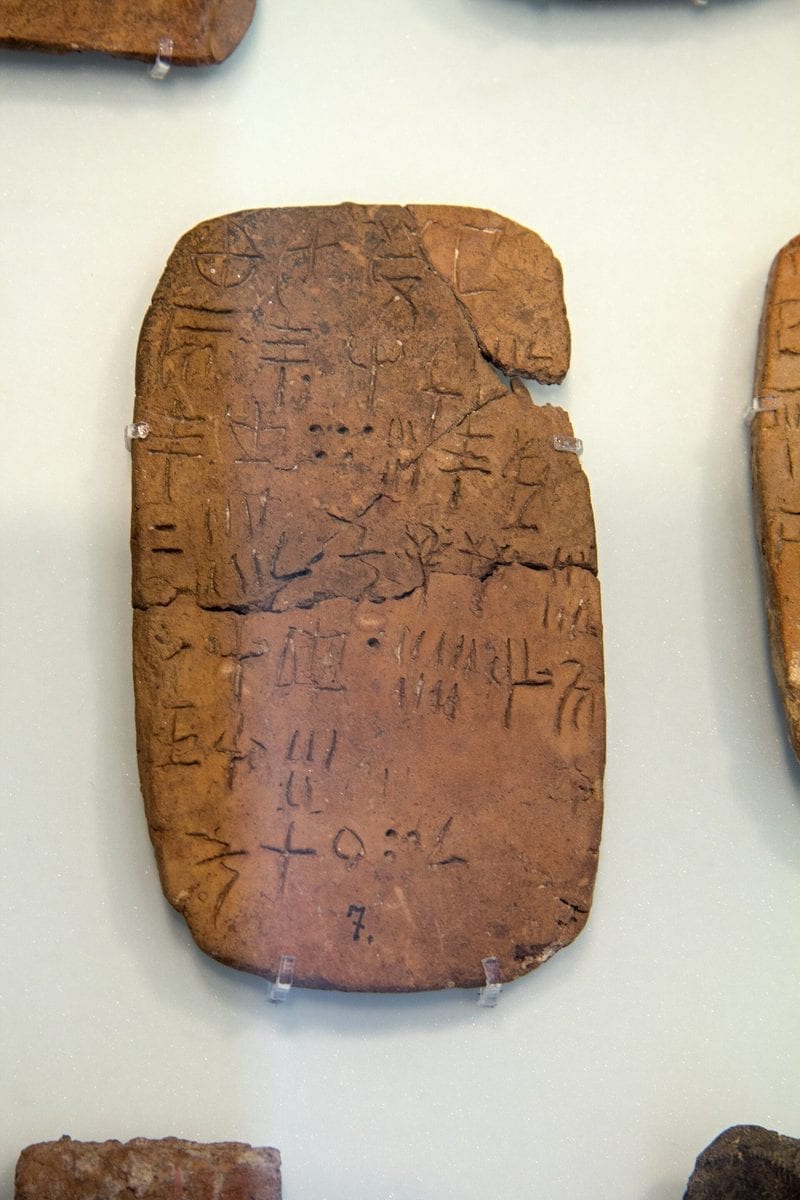
That the Minoan Linear A script has been genuinely deciphered, so that the underlying language is now known, whether the true solution has been suppressed or ignored by the academic establishment, or whether a single scholar, amateur, or algorithm has cracked what mainstream philology could not.
Linear A is a genuine, well-documented Bronze Age script used by the Minoan civilization of Crete from roughly 1800 to 1450 BCE. That much is settled fact, catalogued in thousands of signs across some 1,400 inscriptions. The claim we rate is narrower: that some particular decipherment has cracked the script and recovered the Minoan language, whether the Semitic reading of Cyrus Gordon, a hidden Greek layer, or a recent artificial-intelligence solution. No such decipherment has won scholarly acceptance. Provisional sound values borrowed from the related, deciphered Linear B let researchers pronounce many signs, but the words that result do not map cleanly onto any known language, and there is no bilingual key. On the evidence, every claimed full decipherment is unproven; the script itself remains real and open.
Believed by: A mix of serious scholars pursuing rival linguistic hypotheses (Semitic, Greek, Anatolian, and others) and a wider audience drawn to the romance of a lost language, with individual amateur and AI-based claims periodically going viral online
The full story
What is documented
Start with what is not in dispute. Linear A is a real writing system, used by the Minoan civilization of Crete during the Bronze Age, from roughly 1800 to 1450 BCE. It survives on clay tablets, on stone vessels used for offerings, and on other objects, in a corpus of about 1,400 inscriptions catalogued by scholars over more than a century.
The script was named by the British archaeologist Arthur Evans, who began excavating the palace at Knossos in 1900 and, in his 1909 volume Scripta Minoa, separated two related linear scripts. He called the earlier one Linear A and the later one Linear B. The two share most of their signs, which is the single most important fact for everything that follows.
In 1952, Linear B was deciphered. Michael Ventris, building on the painstaking analysis of Alice Kober and working afterward with John Chadwick, showed that Linear B recorded an early form of Greek. Because Linear A shares so many signs with Linear B, scholars can carry those sound values across and pronounce much of Linear A. And yet the language stays hidden. That gap, between reading the sounds and knowing the words, is the whole of this case.
The case for a solution
The belief that Linear A has been, or is about to be, cracked is not baseless. It grows from a genuinely tantalizing situation. We hold the key to the neighboring lock: Linear B is solved, and its signs are mostly Linear A's signs. Sound out a Minoan tablet and you get syllables, real, pronounceable syllables. It feels less like an unopened door than one standing ajar.
The precedent cuts the same way. Linear B was famously broken not by the professional establishment but by Michael Ventris, an architect working largely on his own. If an outsider could do that once, the reasoning goes, why not again, and why should the academy get the credit for saying it cannot be done?
Partial readings keep the hope alive. Scholars really can pull a few words from context: the recurring term ku-ro heads columns of figures and plainly means something like a total, and a set formula recurs on the stone libation vessels. From there it is a short emotional step to the conviction that the rest is only a matter of the right insight, or the right machine.
We can pronounce the words of a lost civilization and still not know what they mean. That single, strange fact is the engine of every claim that Linear A has finally been solved.
This is the honest core of the belief: not that any particular translation has been proven, but that the script sits so close to legibility that a solution feels overdue, and that each new tool, computers, statistics, artificial intelligence, might be the one to close the gap.
Why the script resists
The reason no decipherment has held is not stubbornness. It is a shortage of the very things that let Linear B fall.
First, pronunciation is not translation. Borrowing sound values from Linear B lets researchers transliterate Minoan words into syllables, but those syllables form words in no securely identified language. Linear B was crackable because, once sounded out, it turned out to be Greek, a language already known in detail. Linear A sounded out is just noise until a language is found to fit it, and none fits cleanly.
Second, the corpus is thin and dry. Only about 1,400 inscriptions survive, most of them short administrative lists of commodities and numbers. There is no literature, no long connected passage, and, crucially, no bilingual inscription: no Rosetta Stone pairing Minoan with a known tongue. Vocabulary and grammar visible in an accounting tablet are meager material from which to reconstruct a whole language.
Third, there is no living or attested descendant to anchor the words. The later Eteocretan inscriptions of Crete are themselves undeciphered and only conjecturally related. So the field is left to test each proposed language, Semitic, Greek, Anatolian, and more, against the corpus, and each explains a few words while failing to read the tablets as coherent text. The proposals do not fail because an establishment buries them; they fail the same public test that confirmed Linear B.
The turn to the machine
The newest form of the claim is that artificial intelligence has done what human philologists could not. It is worth being precise about what computation can and cannot deliver here, because the distinction is where these announcements usually founder.
Statistical and machine-learning methods are genuinely useful on an undeciphered script. They can measure sign frequencies, propose where words break, and surface recurring formulae. Databases such as SigLA have catalogued the sign forms with a rigor no earlier generation had. All of this is real progress in describing the script's structure.
But structure is not meaning. An algorithm that has no bilingual text and no confirmed related language faces exactly the missing key that a human does. Recent AI claims have tended either to rediscover patterns scholars already knew or to output readings that specialists cannot verify against the corpus. A model can generate a confident-looking translation of anything; the question is whether it is checkable, and so far these are not.
A machine can find the shape of a language it cannot read. Mistaking that shape for a translation is the oldest error in decipherment, wearing new clothes.
Why the belief persists
Undeciphered scripts hold a particular grip on the imagination, and Linear A holds it more tightly than most. Understanding why the it has been solved claim keeps returning says as much about us as about the tablets.
There is the romance of the lost. Linear A belongs to a vanished Bronze Age world, entangled in the popular mind with the labyrinth, the Minotaur, and occasionally with Atlantis. A silent script from such a place invites the feeling that it guards a secret, and that secrets are meant to be revealed.
There is the lone-genius template. Ventris's triumph over the professionals is one of the great stories in the humanities, and it teaches, wrongly as a general rule, that the expert consensus is an obstacle rather than a filter. Every fresh claimant can cast themselves as the next Ventris and the doubters as the doubters who were proven wrong before.
And there is impatience with an open question. A problem that has stood for over a century, so near to solved, is uncomfortable to leave open. Announcing that it is finished, whether by a clever amateur or a powerful machine, resolves the discomfort. The resolution is emotionally satisfying and, so far, evidentially empty.
Unread, not solved
Hold the two claims apart, as ever. The record is solid and not in question: Linear A is a genuine Minoan script of the Bronze Age, named by Evans, related to the deciphered Linear B, preserved in roughly 1,400 inscriptions, and still unread as a language. Studying it, sounding out its signs, and reconstructing individual words from context are all real scholarship.
The claim we rate is the specific assertion that some decipherment has cracked the underlying language, and that the answer is either being ignored by the academy or has finally been supplied by an outsider or an algorithm. No proposed reading, Semitic, Greek, Anatolian, computational, or otherwise, has met the standard that confirmed Linear B: a consistent, checkable account of the whole corpus. The obstacles are concrete, a thin administrative corpus, no bilingual key, no anchoring language, not a conspiracy of gatekeepers.
None of this forecloses a future solution. A longer inscription than the recently published ivory scepter, a bilingual find, or a genuinely verifiable method could yet break the script, and if one does, it will be welcomed and tested exactly as Ventris's was. Until then the honest statement is the modest one: we can read the sounds of Minoan Crete, we cannot yet read its words, and every announcement that we can remains, on the evidence, unproven.
Watch
What's still unexplained
- What language does Linear A record? The provisional sound values are broadly agreed, but the tongue behind them, whether pre-Greek, related to Anatolian languages, to something else, or to no known family, is genuinely unresolved.
- Is there any relationship between the Minoan language and the later Eteocretan inscriptions of the first millennium BCE, which use the Greek alphabet to write an apparently non-Greek language of Crete? A link is plausible but unproven, and Eteocretan is itself undeciphered.
- Could a decisive new find change the picture? A bilingual inscription, or a substantially longer text than the recently published ivory scepter, might supply the anchor the corpus now lacks; whether one survives to be found is unknown.
- How much can computational and statistical methods legitimately establish about an undeciphered script, and where is the honest line between detecting structure and claiming a translation?
Point by point
The claim: Because the sound values of most Linear A signs are known from Linear B, the script has effectively been read.
What the record shows: Knowing the sounds is not the same as knowing the language. Roughly seventy percent of Linear A signs resemble Linear B signs, so scholars can transliterate many words into plausible syllables. But when read aloud, those syllables do not form words in any securely identified language. Pronunciation is a tool for decipherment, not decipherment itself; without a language behind the sounds, the transliterations remain noises without meaning.
The claim: A specific solution, Semitic, Greek, Anatolian, or another, has cracked the underlying language.
What the record shows: Rival hypotheses exist precisely because none has prevailed. Cyrus Gordon's Semitic reading, various Greek and Anatolian proposals, and others each explain a handful of words while failing to give a consistent, corpus-wide account. Specialists judge that no candidate reads the tablets coherently as running text. Competing claims that cancel each other out are a sign of an open problem, not a suppressed answer.
The claim: The establishment is ignoring or hiding a real decipherment.
What the record shows: There is no hidden reading to suppress. Linear A is one of the most sought-after prizes in philology; a demonstrable decipherment would make a career, not end one, as Ventris's did for Linear B. Proposals are published, debated, and tested against the full corpus. They fall not because gatekeepers reject them but because they do not survive that testing, the same standard that confirmed Linear B.
The claim: The surviving texts are rich enough that the language should already be recoverable.
What the record shows: The corpus works against decipherment. Only about 1,400 inscriptions survive, most of them short accounting lists of goods and numbers, with limited vocabulary and syntax. There is no long narrative, no bilingual inscription, and no known descendant language to anchor the words. Linear B was cracked partly because it turned out to be Greek, a language already known; Linear A offers no such foothold.
The claim: Artificial intelligence has now solved what humans could not.
What the record shows: Computational methods can find statistical structure, likely word breaks, recurring formulae, sign frequencies, but structure is not translation. Recent AI claims have identified patterns already visible to scholars, or proposed readings that specialists have not been able to verify against the corpus. Without external evidence such as a bilingual text or a confirmed related language, an algorithm faces the same missing key that people do.
Timeline
- c. 1800 BCEThe Minoan civilization of Crete develops Linear A as an administrative and religious script, writing on clay tablets, sealings, and stone vessels. It is used across Crete and at sites on several Aegean islands during the palatial period.
- 1900Arthur Evans begins excavating the palace at Knossos and uncovers inscribed clay tablets. He recognizes at least two distinct linear scripts among the finds, alongside an earlier hieroglyphic system.
- 1909In his volume Scripta Minoa, Evans formally names and separates the two scripts, calling the earlier one Linear A and the later one Linear B, distinguishing both from Cretan hieroglyphic.
- 1952Michael Ventris, building on the statistical groundwork of Alice Kober, deciphers Linear B and shows it records an early form of Greek. John Chadwick joins him to consolidate the result. Linear A, though closely related in its signs, is not Greek and stays unread.
- 1957–1969Cyrus Gordon argues that Linear A records a Semitic language, reading the recurring word ku-ro as a Semitic term for 'total' and offering other Semitic parallels. The proposal draws serious attention but is ultimately not accepted by most specialists.
- 1976–1985Louis Godart and Jean-Pierre Olivier publish GORILA, the standard five-volume corpus of Linear A inscriptions, giving scholars a common, catalogued body of texts to work from. It remains the reference edition.
- 2010s–2020sDigital tools change the field: paleographical databases such as SigLA catalogue the sign forms, and computational and, later, artificial-intelligence approaches are applied to the corpus. Some produce statistical structure; none yields an accepted reading of the language.
- 2024–2025Archaeologists at Knossos publish an ivory scepter carrying roughly 119 signs, the longest known Linear A inscription, renewing hope of new patterns to analyze while underscoring how short and administrative most surviving texts are.
- 2025–2026An engineer publicizes an artificial-intelligence 'decipherment' of Linear A, drawing wide coverage and pointed scholarly skepticism, the latest in a long line of announced solutions that the field has not endorsed.
Linear A is a genuine, well-documented Bronze Age script used by the Minoan civilization of Crete from roughly 1800 to 1450 BCE. That much is settled fact, catalogued in thousands of signs across some 1,400 inscriptions. The claim we rate is narrower: that some particular decipherment has cracked the script and recovered the Minoan language, whether the Semitic reading of Cyrus Gordon, a hidden Greek layer, or a recent artificial-intelligence solution. No such decipherment has won scholarly acceptance. Provisional sound values borrowed from the related, deciphered Linear B let researchers pronounce many signs, but the words that result do not map cleanly onto any known language, and there is no bilingual key. On the evidence, every claimed full decipherment is unproven; the script itself remains real and open.
Reviewed by Colin Peterson · Last reviewed July 8, 2026 · How we rate
Common questions
Is Linear A decipherment true?
Linear A is a genuine, well-documented Bronze Age script used by the Minoan civilization of Crete from roughly 1800 to 1450 BCE. That much is settled fact, catalogued in thousands of signs across some 1,400 inscriptions. The claim we rate is narrower: that some particular decipherment has cracked the script and recovered the Minoan language, whether the Semitic reading of Cyrus Gordon, a hidden Greek layer, or a recent artificial-intelligence solution. No such decipherment has won scholarly acceptance. Provisional sound values borrowed from the related, deciphered Linear B let researchers pronounce many signs, but the words that result do not map cleanly onto any known language, and there is no bilingual key. On the evidence, every claimed full decipherment is unproven; the script itself remains real and open.
What is Linear A decipherment?
Linear A is the undeciphered writing system of Bronze Age Minoan Crete, in use from roughly 1800 to 1450 BCE and first classified by the British archaeologist Arthur Evans in 1909. It survives on clay tablets, stone libation vessels, and other objects, in a corpus of about 1,400 inscriptions. Its close relative, Linear B, was famously de…
What does the evidence show?
Knowing the sounds is not the same as knowing the language. Roughly seventy percent of Linear A signs resemble Linear B signs, so scholars can transliterate many words into plausible syllables. But when read aloud, those syllables do not form words in any securely identified language. Pronunciation is a tool for decipherment, not deciphe…
Why do people believe it?
The near-miss is maddening. We can read Linear A's cousin, Linear B, and can even sound out Linear A's signs, so it feels as if the answer is just out of reach; a puzzle this close to solved invites the conviction that someone must have finished it.
What is still unresolved?
What language does Linear A record? The provisional sound values are broadly agreed, but the tongue behind them, whether pre-Greek, related to Anatolian languages, to something else, or to no known family, is genuinely unresolved.
Sources
- 1.Linear A and Linear B, Encyclopaedia Britannica (2024)
- 2.Linear A, Wikipedia (2026)
- 3.Linear A Script, World History Encyclopedia (2021)
- 4.Without a Rosetta Stone, can linguists decipher Minoan script?, Aeon (2021)
- 5.The Minoan Ivory Scepter: The Longest Linear A Inscription, Greek Reporter (2025)
- 6.Longest Linear A Inscription Found in Knossos, Biblical Archaeology Society (2025)
- 7.Scholars Reconstruct Linear A Meanings Without Cracking the Language, Greek Reporter (2026)
- 8.SigLA: The Signs of Linear A, a Palaeographical Database, INSCRIBE Project, University of Cambridge (2020)
- 9.Linear A, Omniglot (2023)
Embed this case file on your site
Paste this snippet to show this case file as a small card, with a link back to the full write-up. Free to use.
<iframe src="https://theconspiratory.com/embed/linear-a" title="The Conspiratory verdict" width="520" height="190" style="border:0;max-width:100%" loading="lazy"></iframe>Help us investigate
This is a living case file. If you spot an error or know evidence we missed, tell us, and weigh in on where you land.
Where do you land?
Cast your read on this one.
Comments
Add your take. Comments are read and approved by a human before they appear, so keep it on topic and civil. Please do not accuse named, living people of crimes.