Machu Picchu was built with lost technology or extraterrestrial help, not by the Inca alone
By Colin PetersonJuly 8, 2026
Where the evidence lands: Contradicted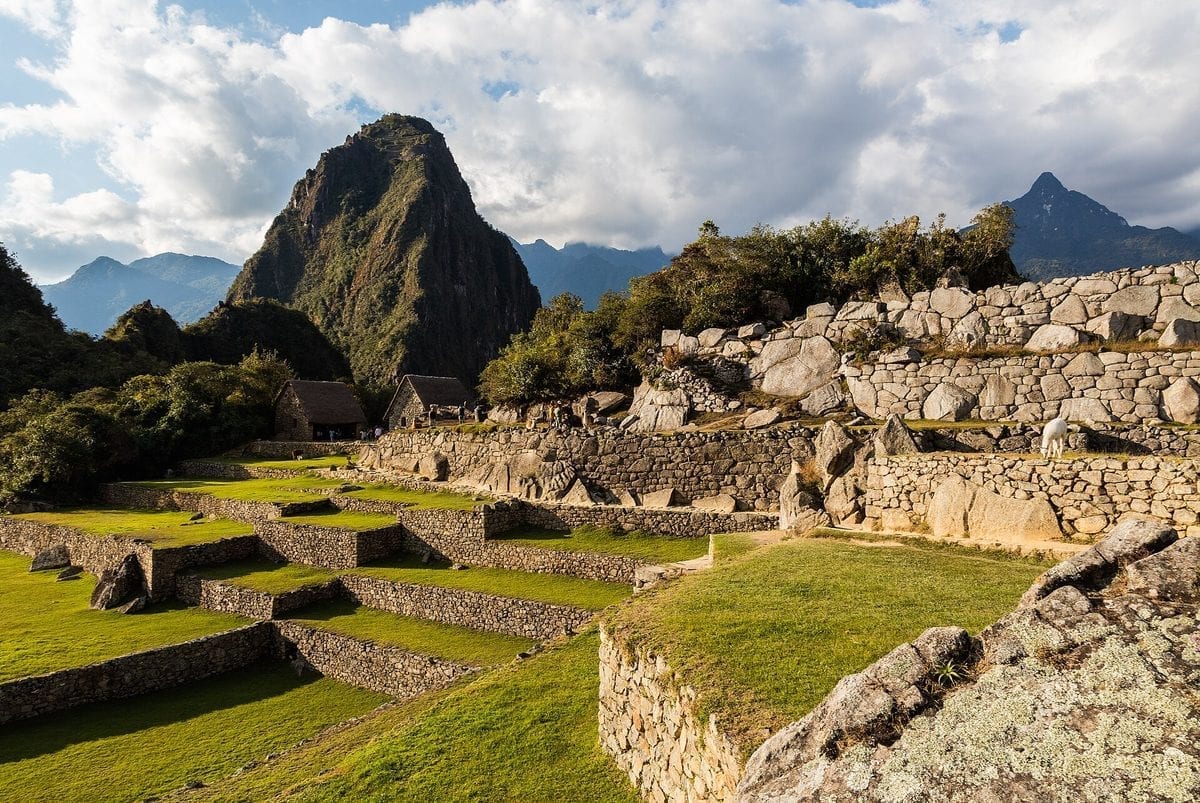
That the precision of Machu Picchu's stonework and the difficulty of its mountain location exceed what the Inca could have achieved with their known tools and knowledge, and that the site is therefore evidence of lost advanced technology or of extraterrestrial builders who either constructed it or guided its construction.
Contradicted. What is on the record is not in serious doubt: Machu Picchu is a 15th-century Inca royal estate, most likely built for the emperor Pachacuti, occupied from roughly 1420 to 1530 and raised with well-understood Inca stonecraft, engineering, and labor. The claim we rate is different: that its precise masonry and mountain setting are beyond Inca capability and required lost technology or extraterrestrial builders. That claim is debunked. It rests on underestimating the Inca and on a general ancient-astronaut argument that mainstream archaeology rejects. Real scholarly questions remain (the site's exact purpose, precise dating, and construction logistics), and those are treated as open, not as evidence for aliens.
Believed by: A broad popular audience reached through ancient-astronaut books, cable television, and social media; the claims are not held by professional archaeologists or historians of the Andes
The full story
What is documented
Start with what is not in dispute, because on Machu Picchu the record here is unusually rich. The site is an Inca settlement built on a ridge above the Urubamba river in the Peruvian Andes, at roughly 2,430 meters. Radiocarbon dating of human remains, published in the journal Antiquity in 2021, indicates it was occupied from about 1420 to 1530, ending near the time of the Spanish conquest. The best-supported interpretation is that it was a royal estate associated with the emperor Pachacuti, combining residence, ceremony, and administration.
The construction is well understood in outline. The Inca were a sophisticated state with organized labor, quarries, a vast road network, and a mature tradition of stonework. Their finest walls use ashlar masonry: blocks shaped and fitted so closely that no mortar is needed. Quarries, half-worked stones, and abandoned blocks survive on and around the site, and the terraces, drainage channels, and solar alignments all reflect deliberate engineering and religious purpose.
The place became globally famous after Hiram Bingham reached it in 1911, guided by local farmers who already knew it, and after National Geographic published his photographs in 1913. UNESCO inscribed it as a World Heritage Site in 1983. So the question this file weighs is not whether Machu Picchu is remarkable. It plainly is. The question is whether that remarkable quality is evidence that the Inca did not, or could not, build it.
The case people make
The fringe case is worth stating in its strongest form, because the feeling behind it is real. Stand before an Inca wall where multi-ton blocks meet in seams too fine to slip a blade into, and the first honest reaction is disbelief. How, without steel tools or modern machinery, on a remote mountain, did anyone cut and fit stone this precisely?
From that disbelief the argument builds. The stones are hard, harder than the bronze the Inca are usually credited with. The site sits on a ridge that is difficult to reach even today. Some walls include enormous polygonal blocks with many angled faces, each matched to its neighbors. Add the solar alignments, the sense of a city hidden and lost, and the absence of any Inca written plan, and a listener is invited to conclude that the conventional story leaves too much unexplained.
Popular books and television then supply the missing agent: a lost technology, or builders from elsewhere. The pitch is not that we have found alien tools, but that ordinary people could not have done this, so something extraordinary must have.
The awe is genuine and deserved. The error is the next step: treating “I cannot immediately picture how they did it” as if it were “they could not have done it.”
That is the case at its most sympathetic: a reasonable astonishment, pushed into an unreasonable conclusion.
Where the claim breaks down
The astonishment is fair; the conclusion does not survive contact with the evidence. Archaeologists do not merely assert that the Inca built Machu Picchu. They can show, in detail, how.
The masonry has a documented method. Inca workers shaped hard stone with harder hammerstones and abrasives such as sand and water, pounding and grinding faces and testing the fit by repeated trial placement until adjacent blocks matched. It is slow, deliberate, and hugely labor-intensive, which is precisely what a wealthy imperial state, able to conscript large workforces, could afford. The process leaves traces: tool marks, quarries, and blocks abandoned mid-shaping. A vanished machine leaves no such trail; a documented craft does.
The logistics are likewise explicable. The Inca quarried stone on site or nearby and moved it with ramps, levers, ropes, and crews, the same repertoire that raised monumental architecture across the premodern world. The astronomical alignments, so often cited as uncanny, reflect skilled naked-eye astronomy, a competence many ancient cultures developed independently to time planting, harvest, and ritual. None of this requires an import from the future or from space.
The ancient-astronaut framework itself fails as a source. Scholars classify it as pseudoarchaeology. Its founding book, von Daniken's Chariots of the Gods?, was shown by archaeologists and by Carl Sagan to be built on factual errors and misread evidence, and it leans repeatedly on the assumption that non-European peoples could not have built their own monuments. That assumption, not any physical clue at Machu Picchu, is the real engine of the theory, and it is the part that does not hold.
What is genuinely open
Rejecting the fringe claim does not mean Machu Picchu holds no questions. It holds several, and keeping them separate from the alien story is part of taking the site seriously.
Its precise purpose is still debated. The royal estate reading is well supported, but the balance among residence, religious center, and elite retreat is an active discussion. Its exact chronology keeps being refined: the 2021 radiocarbon work moved the founding earlier than colonial texts had suggested, and future dating may adjust it further, though within the 15th century, not out of the Inca era. The fine logistics of construction, how specific great blocks were quarried, hauled, and set on the ridge, are reconstructed from strong evidence but not recorded step by step, which is why experimental archaeology keeps testing them.
These are the questions of a living field, and they share a feature the extraterrestrial claim lacks: they are answerable with more digging, dating, and analysis. They point deeper into the human record, not out of it. The lure of the alien story is that it promises a single dramatic secret; the reality is a set of ordinary scholarly problems, which is both less thrilling and far more likely to be true.
Inca-built, no aliens needed
Hold the two claims apart. Machu Picchu is a genuine wonder, and marveling at it is the right response. But the specific claim we rate, that its stonework and setting are beyond Inca capability and require lost technology or extraterrestrial builders, is contradicted by the record. Archaeology has a detailed, testable account of who built the site, roughly when, and how, from quarries and tool marks to radiocarbon dates and colonial testimony. On that claim the rating is Contradicted.
The real open questions, the site's exact function, its precise dating, and the step-by-step logistics of raising it, remain unresolved in the ordinary way of any active field, and this file treats them as the live research they are rather than as cracks for a spacecraft to fit through.
The honest posture is to let the awe stand and refuse the insult hidden inside the alien story. Machu Picchu is astonishing precisely because human beings, with hard stone, patient hands, and an empire's organization, made it. Explaining that achievement away as the work of someone else is not a bigger mystery. It is a smaller estimate of the people who actually built it.
What's still unexplained
- The site's precise purpose is still debated. The leading view is a royal estate of Pachacuti that also served religious and administrative roles, but the balance among residence, ceremony, and elite retreat remains an active scholarly question.
- Exact chronology continues to be refined. The 2021 radiocarbon study pushed the founding earlier than colonial texts implied, and further dating may adjust the picture again; the debate is about decades within the 15th century, not about whether the Inca built it.
- The fine logistics of construction, how specific large blocks were quarried, transported, and lifted into place on the ridge, are reconstructed from strong evidence but not documented step by step, and remain a subject of experimental archaeology.
- Why the site was abandoned, and how completely, is not fully settled, though the disruption of the Spanish conquest is the widely accepted context.
Point by point
The claim: The tight, mortarless masonry is too precise for Inca tools, so advanced or alien technology must explain it.
What the record shows: The Inca technique, known as ashlar masonry, is well documented. Workers shaped hard stone by pounding and grinding it with harder hammerstones and abrasives such as sand and water, fitting blocks by repeated trial placement until faces matched. It is enormously labor-intensive, which is exactly what a wealthy imperial state could command, and it leaves tool marks and unfinished blocks that archaeologists can study. Precision achieved through skill, time, and organized labor is not evidence of a lost machine or an off-world engineer.
The claim: Ancient people could not have moved and placed such large stones on a remote mountain ridge.
What the record shows: The Inca were master engineers who quarried stone on site or nearby, moved blocks with ramps, levers, ropes, and large work crews, and built an empire-spanning road network to marshal labor and materials. Quarries, half-worked stones, and abandoned blocks are visible at and around Machu Picchu, showing construction in progress. Difficulty is not impossibility; it is a measure of the resources a state could mobilize.
The claim: The astronomical alignments prove knowledge the Inca could not have possessed unaided.
What the record shows: Features such as the Intihuatana stone and the Torreon (Temple of the Sun) align with solstice sunrises, and the Inca were sophisticated observational astronomers who organized ritual and agriculture around the solar year. Naked-eye astronomy of this kind is achieved by many premodern cultures worldwide. Alignment to the sun demonstrates careful observation and religious purpose, not imported technology.
The claim: The ancient-astronaut hypothesis, popularized for sites like Machu Picchu, is a legitimate alternative explanation.
What the record shows: It is not treated as legitimate in the field. Scholars classify the ancient-astronaut framework as pseudoarchaeology; its foundational text, von Daniken's Chariots of the Gods?, has been documented by archaeologists and by critics such as Carl Sagan to rest on factual errors, misread evidence, and the recurring assumption that non-European peoples could not build their own monuments. No peer-reviewed research supports an extraterrestrial origin for Machu Picchu.
The claim: Because no written Inca records survive to explain the site, its true origins are a genuine mystery open to any explanation.
What the record shows: The Inca kept records but not an alphabetic script, so no building plans survive; that is a normal limit, not a void. Archaeologists reconstruct the site from excavation, colonial-era testimony, radiocarbon dating, masonry analysis, and comparison with other Inca estates. The result is a coherent, evidence-based account. The absence of a written blueprint constrains detail; it does not open the door to explanations the physical evidence does not support.
Timeline
- c. 1420–1530Machu Picchu is built and occupied. Radiocarbon dating of human remains, published in 2021, indicates the site was in use from about 1420 to 1530, ending near the time of the Spanish conquest, and consistent with a royal estate associated with the emperor Pachacuti.
- c. 1530s–1570sThe site is abandoned in the turmoil of the Spanish conquest of the Inca. It is never found or recorded by the Spanish, which helps preserve it and later fuels the romance of a lost city.
- 1911-07-24Yale lecturer Hiram Bingham, guided by local farmers, reaches the overgrown ruins and brings them to international attention. Local people already knew the site; Bingham's photographs and publications make it globally famous.
- 1913National Geographic devotes most of an issue to Bingham's photographs of Machu Picchu, giving the site a mass audience abroad for the first time and cementing its image as a mysterious lost city.
- 1968Erich von Daniken publishes Chariots of the Gods?, arguing that many ancient monuments, from Egypt to the Andes, were beyond their makers and reflect contact with ancient astronauts. The book is a global bestseller and seeds the extraterrestrial framing later applied to Machu Picchu.
- 1983UNESCO inscribes Machu Picchu as a World Heritage Site, recognizing it as an outstanding achievement of Inca urban planning, architecture, and engineering, and a masterpiece of a documented human civilization.
- 2009–presentThe television series Ancient Aliens and a wave of internet content revive and amplify the idea that sites like Machu Picchu required non-human help, reaching audiences far larger than any of the archaeology that answers the claim.
- 2021A study in the journal Antiquity, led by Yale archaeologist Richard Burger, uses accelerator mass spectrometry radiocarbon dating to place the site's founding around 1420, roughly two decades earlier than colonial written accounts had implied. It is the first scientific estimate of Machu Picchu's age, and it further anchors the site firmly in the documented Inca past.
Contradicted. What is on the record is not in serious doubt: Machu Picchu is a 15th-century Inca royal estate, most likely built for the emperor Pachacuti, occupied from roughly 1420 to 1530 and raised with well-understood Inca stonecraft, engineering, and labor. The claim we rate is different: that its precise masonry and mountain setting are beyond Inca capability and required lost technology or extraterrestrial builders. That claim is debunked. It rests on underestimating the Inca and on a general ancient-astronaut argument that mainstream archaeology rejects. Real scholarly questions remain (the site's exact purpose, precise dating, and construction logistics), and those are treated as open, not as evidence for aliens.
Reviewed by Colin Peterson · Last reviewed July 8, 2026 · How we rate
Common questions
Is Machu Picchu mysteries true?
Contradicted. What is on the record is not in serious doubt: Machu Picchu is a 15th-century Inca royal estate, most likely built for the emperor Pachacuti, occupied from roughly 1420 to 1530 and raised with well-understood Inca stonecraft, engineering, and labor. The claim we rate is different: that its precise masonry and mountain setting are beyond Inca capability and required lost technology or extraterrestrial builders. That claim is debunked. It rests on underestimating the Inca and on a general ancient-astronaut argument that mainstream archaeology rejects. Real scholarly questions remain (the site's exact purpose, precise dating, and construction logistics), and those are treated as open, not as evidence for aliens.
What is Machu Picchu mysteries?
Machu Picchu, the Inca estate perched on a ridge about 2,430 meters above Peru's Urubamba valley, is one of the most studied and photographed archaeological sites on Earth. Its mortarless walls of tightly fitted stone, its terraces and drainage, and its dramatic setting have long fed a popular claim: that the Inca could not have built it…
What does the evidence show?
The Inca technique, known as ashlar masonry, is well documented. Workers shaped hard stone by pounding and grinding it with harder hammerstones and abrasives such as sand and water, fitting blocks by repeated trial placement until faces matched. It is enormously labor-intensive, which is exactly what a wealthy imperial state could comman…
Why do people believe it?
The craftsmanship is genuinely astonishing. Walls fitted so tightly that a knife blade will not pass between the stones provoke honest awe, and awe can slide into the assumption that ordinary people could not have done it.
What is still unresolved?
The site's precise purpose is still debated. The leading view is a royal estate of Pachacuti that also served religious and administrative roles, but the balance among residence, ceremony, and elite retreat remains an active scholarly question.
Sources
- 1.Machu Picchu older than expected, study reveals, Yale News (2021)
- 2.New AMS dates for Machu Picchu: results and implications, Antiquity (Cambridge University Press) (2021)
- 3.Radiocarbon Dating Reveals Machu Picchu Is Older Than Previously Thought, Smithsonian Magazine (2021)
- 4.In the wonderland of Peru: rediscovering Machu Picchu, National Geographic (2020)
- 5.Machu Picchu, UNESCO World Heritage Centre
- 6.Machu Picchu, American Society of Civil Engineers (Historic Landmarks)
- 7.Scholars Will Call It Nonsense: the ancient-astronaut argument, Expedition Magazine, Penn Museum
- 8.Ancient astronauts and Erich von Daniken, The Skeptic's Dictionary
- 9.Machu Picchu Older Than Previously Thought, Archaeology Magazine (2021)
Embed this verdict on your site
Paste this snippet to show our sourced verdict as a small card, with a link back to the full case file. Free to use.
<iframe src="https://theconspiratory.com/embed/machu-picchu-mysteries" title="The Conspiratory verdict" width="520" height="190" style="border:0;max-width:100%" loading="lazy"></iframe>Help us investigate
This is a living case file. If you spot an error or know evidence we missed, tell us, and weigh in on where you land.
Where do you land?
Cast your read on this one.
Comments
Add your take. Comments are read and approved by a human before they appear, so keep it on topic and civil. Please do not accuse named, living people of crimes.