Mail-in and absentee voting is riddled with fraud that swings elections
By Colin PetersonJuly 17, 2026
Where the evidence lands: Contradicted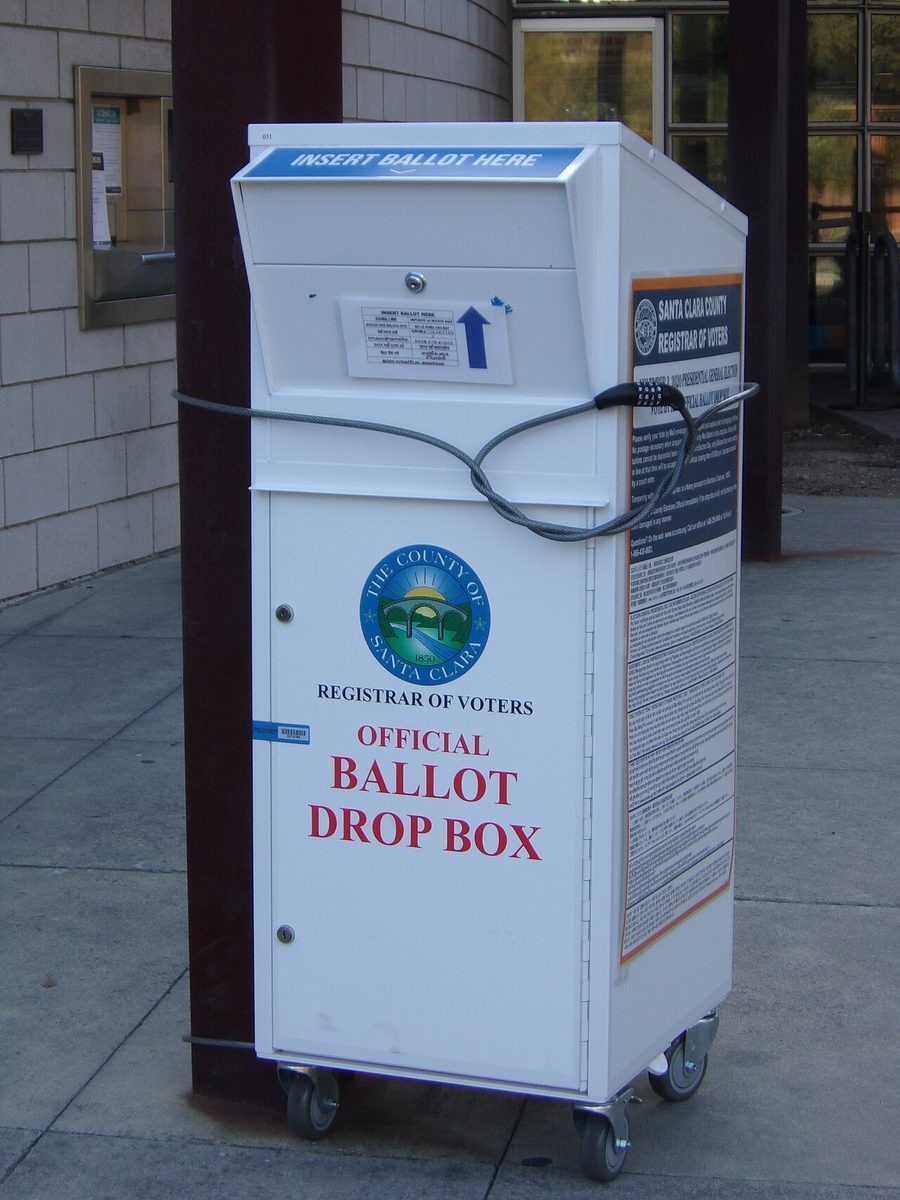
That mail-in and absentee ballots are a primary engine of election fraud: forged, harvested, cast in the names of dead or fictitious voters, and counted in numbers large enough to change the outcome of major elections, including the presidency.
Contradicted. The claim we rate is that voting by mail is so fraud-prone that it routinely alters who wins, up to and including the presidency. On the evidence, that claim is debunked. Studies of hundreds of millions of mailed ballots find fraud at rates measured in a few cases per million, states that have run all-mail elections for decades show no pattern of stolen outcomes, and the best catalogue of proven cases, kept by a group that favors stricter rules, lists only a molecular fraction of the ballots cast over the same period. What is true, and stated plainly here, is that mail-ballot fraud is not zero: it happens, it is a real crime, and in at least one modern case an absentee-ballot operation was large enough to void a US House result and force a new election. That case is also how we know the system's checks work, because it was caught, overturned, and prosecuted. The real distinction is between rare, catchable fraud that has never been shown to decide a presidential election and the far larger claim that mail voting is systematically rigged, which the record does not support.
Believed by: A broad segment of the electorate, concentrated among voters skeptical of the 2020 result and amplified by senior political figures who single out mail voting; polling has repeatedly found large shares doubting the security of mailed ballots even as they use them.
The full story
Two claims wearing the same coat
Almost every argument about mail voting collapses two very different statements into one. The first is that mail-ballot fraud exists: that people have forged signatures, collected ballots illegally, and voted in others' names. That statement is true. The second is that mail voting is systematically rigged, that fraud runs through it in numbers large enough to decide who becomes president. That statement is not supported by the record. Keeping them apart is the whole task, because the first is used, constantly, to smuggle in the second.
This file does not tell you mail fraud never happens. It does, it is a real crime, and the most honest way to weigh the claim is to look squarely at the strongest real case rather than pretend there isn't one.
The case that was real: North Carolina, 2018
In 2018, in North Carolina's 9th congressional district, a political operative named Leslie McCrae Dowless ran an illegal absentee-ballot operation in Bladen County. Workers collected voters' mail ballots, some blank or incomplete, and the operation involved forged signatures and ballots filled in by people other than the voter. The Republican candidate led by about 900 votes. It was, by any measure, exactly the kind of mail fraud the claim describes.
Anyone arguing that mail fraud is impossible has to reckon with this case, and this file will not pretend otherwise. It is the strongest single piece of evidence that absentee ballots can be abused to move a result, and it deserves to be stated at full strength before it is weighed.
What that case actually shows
Look at how the North Carolina story ends. The fraud did not quietly succeed. The state board of elections refused to certify the result, investigated, and unanimously ordered an entirely new election; criminal charges followed, and years later several participants pleaded guilty. The one clear modern case of mail fraud altering a US House outcome is also the clearest proof that the safeguards work: it was detected, the result was thrown out, and no fraudulent winner was seated.
It is also worth saying plainly, because it cuts against the partisan version of the claim, that this operation was run for the Republican candidate. Mail fraud, where it occurs, is not a tool of one party; it is a crime committed by individuals of both, and it is caught by a system that does not care who benefits.
The single clearest case of mail fraud changing a result is also the single clearest case of the system catching it, voiding it, and prosecuting it.
Now scale up from the exception to the rule. Analysts have combed the Heritage Foundation's own catalogue of proven fraud, assembled by an organization that argues for stricter voting rules, and found that mail-fraud cases amount to a few per million ballots. A 2020 American Statistical Association study found no evidence that mail voting raises fraud at all. And the natural experiment is decades old: Oregon has voted almost entirely by mail since 2000, followed by Washington, Colorado, and Utah, tens of millions of ballots with no stolen-election pattern to show for it. If mail voting were the open door the claim describes, these are the states where the break-ins would pile up. They have not.
Why it feels true anyway
The belief has real hooks, which is why it endures. A mailed ballot leaves the polling place and travels out of sight, so it is easy to picture a hundred ways it could be tampered with, even where verification, tracking, and audits close those gaps. Mail voting expanded suddenly in 2020, and a huge, fast change to how a nation votes invites suspicion on its own. And the slow count of mail ballots means results legitimately shift for days after election night, so a lead that melts away can look like ballots being slipped in rather than simply counted.
None of those intuitions is stupid. They are just answered, in each case, by how the system actually works and by what the counts, audits, and prosecutions have found. The feeling that something could go wrong is not the same as evidence that it systematically does.
Rare and catchable, not systemic
The verdict holds two things together. Mail-ballot fraud is real, it is a crime, and in 2018 it was serious enough in one district to void an election, so anyone who says it never happens is wrong. And the far larger claim, that mail voting is systematically rigged and routinely swings major elections, is contradicted by the measured fraud rate, by decades of all-mail elections, and by the absence of any case in which mail fraud has been shown to decide a presidential race.
What would change this file is specific: evidence of coordinated mail fraud at a scale the audits and recounts have never found, or a documented case of it flipping a statewide or national result and going undetected. Until then, the claim is debunked, while the real debates it borrows from, how tightly to regulate ballot harvesting, how to lower rejection rates, how to standardize verification, stay exactly that: real debates, not proof of a rigged system.
What's still unexplained
- Ballot harvesting, third parties collecting and returning others' ballots, is a genuine gray area: legal and routine in some states, restricted in others, and the mechanism at the heart of the 2018 North Carolina fraud. Reasonable people disagree about how tightly it should be regulated, which is a real policy debate separate from the false claim of systemic fraud.
- Mail-ballot rejection rates, ballots thrown out for signature mismatches or missed deadlines, are a live concern, but they cut toward legitimate votes being lost, not fraudulent ones being counted.
- Security practices vary by state (signature verification, drop-box rules, tracking), so the strength of the safeguards is not uniform, and improving the weakest is a fair goal that does not require accepting the systemic-fraud claim.
Point by point
The claim: Fraud by mail is so common that it routinely changes who wins.
What the record shows: The measured rate is a few cases per million ballots. One analysis drawing on the Heritage Foundation's own fraud database put mail-fraud cases at roughly 0.00004% of ballots mailed; a 2020 American Statistical Association study found no evidence that voting by mail increases fraud overall. Rare, catchable fraud is real, but 'it happens' and 'it decides elections' are different claims, and only the first is supported.
The claim: States that vote by mail must be swimming in fraud.
What the record shows: Oregon has run all-mail elections since 2000, joined by Washington, Colorado, and Utah, spanning tens of millions of ballots across many cycles. If mail voting were an easy path to systemic fraud, these long-running natural experiments are where it would show up in stolen outcomes and mass prosecutions. It has not.
The claim: The 2018 North Carolina case proves mail fraud swings elections.
What the record shows: It proves mail fraud is possible and that the system catches it. An operative in NC-09 illegally collected and tampered with absentee ballots, and the state's response was not to shrug but to void the result and order a new election, with criminal charges following. The case is real and important; it is also small-scale, local, and, notably, run on behalf of the Republican candidate, which cuts against the idea that mail fraud is a one-party weapon. It is the exception that was caught, not evidence of a hidden norm.
The claim: Dead voters and fake registrations are casting mail ballots in bulk.
What the record shows: Individual cases surface and are prosecuted, but audits repeatedly find the numbers tiny, not the thousands the claim requires. Signature verification, ballot tracking, cross-checks against death and change-of-address records, and post-election audits exist precisely to catch this, and when isolated attempts occur they are typically detected. Many prominent 'dead voter' viral claims have traced back to clerical matches of same-named living people.
Timeline
- Pre-2000Absentee voting, in use since the Civil War, draws periodic fraud concerns, and isolated cases are prosecuted over the decades. Both parties at various points raise alarms about absentee ballots in close local races.
- 2000-2019Oregon moves to all-mail elections in 2000, followed by Washington, Colorado, and Utah. Across many election cycles these states record no pattern of systemic fraud, and studies of their results find no measurable increase in fraud from mail voting.
- 2018In North Carolina's 9th congressional district, a political operative runs an illegal absentee-ballot harvesting operation. The state board of elections refuses to certify the result and unanimously orders a new election, the clearest modern example of mail-ballot fraud altering an outcome, and of it being caught.
- 2020With mail voting expanded during the pandemic, the claim that it is riddled with fraud moves to the center of national politics. It is asserted repeatedly and at scale before and after the November election, though courts and election officials find no evidence of fraud changing the result.
- 2021-2026Recounts, audits, and reviews continue to find mail fraud vanishingly rare. The claim persists regardless, resurfacing each cycle, and becomes a recurring theme in calls to restrict or eliminate mail voting ahead of the 2026 midterms.
From the case file
The actual records: declassified, released, or leaked. We link straight to each document in its official archive, so you never have to take our word for it. Read the originals yourself.
Election Fraud Database
The most-cited catalogue of proven US election-fraud cases, maintained by an organization that advocates stricter voting rules. It is offered here as the fraud-concern side's own evidence: it documents that fraud of all kinds does occur, and its totals (roughly 1,600 cases across decades and all 50 states) are also what let analysts show mail fraud is a molecular fraction of ballots cast.
Read the document: The Heritage Foundation →Debunking the Voter Fraud Myth
A survey of the empirical research on US voter fraud, including mail and absentee voting, assembling the studies and audits that put the measured fraud rate at a tiny fraction of a percent. It is the counterweight to the Heritage database: the same phenomenon, quantified.
Read the document: Brennan Center for Justice →Understanding the election scandal in North Carolina's 9th district
A detailed account of the 2018 NC-09 absentee-ballot harvesting operation that led the state to void the result and order a new election. It is the primary reference for the one modern case of mail fraud altering a US House outcome, and for how the safeguards caught it.
Read the document: Brookings Institution →Contradicted. The claim we rate is that voting by mail is so fraud-prone that it routinely alters who wins, up to and including the presidency. On the evidence, that claim is debunked. Studies of hundreds of millions of mailed ballots find fraud at rates measured in a few cases per million, states that have run all-mail elections for decades show no pattern of stolen outcomes, and the best catalogue of proven cases, kept by a group that favors stricter rules, lists only a molecular fraction of the ballots cast over the same period. What is true, and stated plainly here, is that mail-ballot fraud is not zero: it happens, it is a real crime, and in at least one modern case an absentee-ballot operation was large enough to void a US House result and force a new election. That case is also how we know the system's checks work, because it was caught, overturned, and prosecuted. The real distinction is between rare, catchable fraud that has never been shown to decide a presidential election and the far larger claim that mail voting is systematically rigged, which the record does not support.
Reviewed by Colin Peterson · Last reviewed July 17, 2026 · How we rate
Common questions
Is Mail-in ballot fraud true?
Contradicted. The claim we rate is that voting by mail is so fraud-prone that it routinely alters who wins, up to and including the presidency. On the evidence, that claim is debunked. Studies of hundreds of millions of mailed ballots find fraud at rates measured in a few cases per million, states that have run all-mail elections for decades show no pattern of stolen outcomes, and the best catalogue of proven cases, kept by a group that favors stricter rules, lists only a molecular fraction of the ballots cast over the same period. What is true, and stated plainly here, is that mail-ballot fraud is not zero: it happens, it is a real crime, and in at least one modern case an absentee-ballot operation was large enough to void a US House result and force a new election. That case is also how we know the system's checks work, because it was caught, overturned, and prosecuted. The real distinction is between rare, catchable fraud that has never been shown to decide a presidential election and the far larger claim that mail voting is systematically rigged, which the record does not support.
What is Mail-in ballot fraud?
As mail and absentee voting expanded, so did the claim that it is the soft underbelly of American elections: that mailed ballots are forged, harvested, and dumped by the thousands, and that this fraud is large enough to flip races. This case file separates two things that are usually blurred. Mail-ballot fraud is real and does occur, and…
What does the evidence show?
The measured rate is a few cases per million ballots. One analysis drawing on the Heritage Foundation's own fraud database put mail-fraud cases at roughly 0.00004% of ballots mailed; a 2020 American Statistical Association study found no evidence that voting by mail increases fraud overall. Rare, catchable fraud is real, but 'it happens'…
Why do people believe it?
Mailed ballots leave the controlled environment of a polling place, so a voter picturing an envelope traveling through the post and back can readily imagine points where it could be intercepted or forged. The physical intuition is understandable even where the safeguards hold.
What is still unresolved?
Ballot harvesting, third parties collecting and returning others' ballots, is a genuine gray area: legal and routine in some states, restricted in others, and the mechanism at the heart of the 2018 North Carolina fraud. Reasonable people disagree about how tightly it should be regulated, which is a real policy debate separate from the fa…
Sources
- 1.The Facts About Mail-In Voting and Absentee Voter Fraud, TIME (2026)
- 2.Debunking the Voter Fraud Myth, Brennan Center for Justice (2017)
- 3.Understanding the election scandal in North Carolina's 9th district, Brookings Institution (2019)
- 4.Four people plead guilty in North Carolina ballot probe of 2016 and 2018 elections, NBC News (2022)
- 5.Absentee/mail-in ballot vote fraud, Ballotpedia
- 6.Analysis: Heritage Foundation's Database Undermines Claims of Recent Voter Fraud, Brennan Center for Justice (2021)
Embed this verdict on your site
Paste this snippet to show our sourced verdict as a small card, with a link back to the full case file. Free to use.
<iframe src="https://theconspiratory.com/embed/mail-in-ballot-fraud" title="The Conspiratory verdict" width="520" height="190" style="border:0;max-width:100%" loading="lazy"></iframe>Help us investigate
This is a living case file. If you spot an error or know evidence we missed, tell us, and weigh in on where you land.
Where do you land?
Cast your read on this one.
Comments
Add your take. Comments are read and approved by a human before they appear, so keep it on topic and civil. Please do not accuse named, living people of crimes.