Captain Thomas Mantell died in 1948 chasing an extraterrestrial craft, and the real nature of the object was covered up
By Colin PetersonJuly 8, 2026
Where the evidence lands →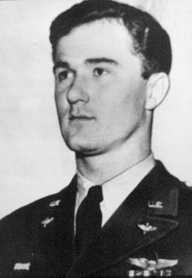
That Captain Thomas Mantell was killed in pursuit of an extraterrestrial or otherwise non-human spacecraft, that his Mustang may even have been damaged or disabled by the object, and that the U.S. military knew the true nature of what he chased and deliberately concealed it behind shifting cover stories about Venus and weather balloons.
The death is a matter of record: on 7 January 1948, Captain Thomas F. Mantell, 25, a decorated Kentucky Air National Guard pilot, was killed when his F-51D Mustang went down near Franklin, Kentucky, after he pursued an unidentified object in a high climb without oxygen equipment and lost consciousness. The rated claim is the fringe reading built on top of that tragedy: that the object was an alien spacecraft, and that the truth was hidden. That claim is unproven. The Air Force at first blamed the planet Venus, an explanation its own investigators later abandoned; by 1952 Project Blue Book concluded the most likely object was a classified U.S. Navy Skyhook high-altitude balloon, a program genuinely secret in 1948. That balloon account is the leading explanation and fits the facts well, but no surviving record positively identifies the object, so certainty is not available. Unidentified is not the same as extraterrestrial, and a shifting official story is not the same as a cover-up of alien contact.
Believed by: Mid-century flying-saucer writers and their readers first, then the broader UFO-interest public. Polls over the past decade have repeatedly found around two-thirds of US adults think the government knows more about UAP than it says, and Mantell endures as the movement's foundational martyr: the first person widely said to have died chasing a UFO.
The full story
What is documented
Begin with what is not in dispute, because the hardest facts of this case are also its saddest. On the afternoon of 7 January 1948, observers on the ground and in the control tower at Godman Field, Fort Knox, watched a bright, slow-moving object in the Kentucky sky that none of them could identify. A flight of four F-51D Mustangs of the 165th Fighter Squadron, Kentucky Air National Guard, was asked to take a look.
One of the pilots was Captain Thomas F. Mantell, 25 years old, born near Franklin, Kentucky. He was not a novice: in the war he had flown the C-47 that dropped paratroopers of the 101st Airborne into Normandy on D-Day, and he wore the Distinguished Flying Cross for it. Mantell led the pursuit and began a steep climb, reporting the object as metallic and very large. His wingmen, whose aircraft lacked sufficient oxygen for high altitude, leveled off and urged him to do the same.
He kept climbing. Somewhere above 20,000 feet, in a Mustang not equipped for sustained flight that high, Mantell lost consciousness from lack of oxygen. His aircraft, serial 44-63869, fell into a spiral and broke apart, crashing on a farm a few miles from the town where he was born. His wristwatch was found stopped at 3:18. He is remembered as the first pilot known to have died chasing an unidentified flying object. Those facts are settled. The question this file weighs is the far larger claim that grew up around them: that what he chased was an alien craft, and that the truth was hidden.
The case people make
The suspicion did not come from nowhere, and the honest version of it deserves stating plainly. Start with the fact that a real, capable pilot died. This was not a hoax or a fuzzy photograph; it was a decorated veteran killed while flying toward something no one could name. A death of that weight seems to demand a cause equal to it, and an ordinary balloon can feel far too small to have taken such a man.
Then consider that the first official explanation was wrong, and obviously so. The Air Force initially suggested Mantell had chased the planet Venus, a claim so ill fitted to a large object watched by trained observers in daylight that the project's own astronomer, J. Allen Hynek, backed away from it. When the authorities' first answer falls apart under the mildest scrutiny, it is reasonable to wonder what else they are getting wrong, or hiding.
And there really was a secret being kept. The eventual explanation, a classified Navy balloon, was genuinely withheld from the public for years because the program itself was classified. For a time, then, the government did know more than it would say. To a public already primed by the 1947 flying-saucer wave, an official that plainly knows and will not tell looks exactly like a cover-up.
A decorated pilot dies chasing something no one can identify; the government's first explanation collapses; and it turns out officials were sitting on a secret the whole time. The instinct to distrust the tidy answer is not paranoia. The leap is in what people filled the silence with.
That is the case at its strongest: not that a saucer was ever proven, but that a man died, the first story was false, and the truth was withheld, so the demand to know what really killed Thomas Mantell is a fair one rather than a foolish one.
Where the extraterrestrial claim breaks down
The demand for the truth is fair. The leap from the first story was wrong to therefore it was an alien craft and the truth is buried is where the evidence stops and the legend begins.
The pivot is the meaning of unidentified. That the witnesses could not name the object does not make it non-human; it makes it unrecognized. And in January 1948 there was a specific thing they could not have recognized: the U.S. Navy's Skyhook balloons. These were not the small weather balloons of the popular imagination but enormous polyethylene envelopes, hundreds of feet tall at altitude, that rose far above 60,000 feet, drifted slowly, and caught the sun as a bright, hard, metallic-looking mass. The program was so secret that Mantell and the Godman tower could not have known such objects existed. When Project Blue Book reinvestigated in 1952, it landed on a Skyhook as the most probable answer, and the fit is good: the size, the shine, the slow drift, and above all the unfamiliarity all point the same way.
The shifting official story, read honestly, argues against a cover-up rather than for one. The Venus explanation was a bad early guess that investigators themselves discarded, which is what inquiry looks like when it corrects a mistake. The replacement was not a bland decoy but a genuine classified program, precisely the kind of secret a government does hide. A conspiracy to conceal aliens would not swap in a real spy balloon as its cover; it would have no reason to point, even obliquely, at one of its own secret projects.
The cause of death, finally, needs nothing in the sky at all. Mantell died of hypoxia, oxygen starvation, in an aircraft without adequate oxygen equipment, after ignoring warnings to level off. Hypoxia is a well-documented killer of skilled pilots precisely because it clouds judgment before its victim notices, which is why his experience is part of the tragedy and not an argument against it. No damage from a mysterious craft is required, or evidenced, to explain why a man climbing too high without oxygen lost consciousness and fell.
The launch record nobody has produced
It would be easy to stamp this case closed, and dishonest to do so. The balloon explanation is the leading one and by some distance the most likely, but it is an inference rather than a sealed proof, and the difference matters.
What is missing is the last link in the chain. Blue Book reasoned from the object's described behavior to the class of thing that best matched it, and a Skyhook fits that description better than any alternative. What has not been cleanly produced is a specific launch record placing a particular balloon over that stretch of Kentucky at that hour. The secrecy of the program in 1948, and the muddle of the early investigation, mean the documentary trail is imperfect.
The balloon is the best answer we have, and a good one. It is not a sealed one. Honest uncertainty about the details is not a doorway to the extraordinary; it is just honest uncertainty.
That residual gap, though, does not put the alien reading on equal footing. One side offers a real, secret, well-matched object the witnesses could not have known; the other offers the object being unexplained plus the emotional pull of a pilot's death, and no physical evidence whatever. An open question about which balloon is not evidence of a spacecraft.
Why the legend endures
Of all the early UFO cases, Mantell is among the most durable, and it endures for reasons that have as much to do with the moment and the man as with the object.
It endures because it has a martyr. Most conspiracy stories ask you to weigh rumor against denial; this one has a named, decorated pilot and a grave. The death anchors the tale in something undeniable, and the human tragedy lends the alien explanation a seriousness that a light in the sky alone never earns. It is far more satisfying to believe a hero fell to something extraordinary than to an empty sky and his own oxygen gauge.
It endures because the authorities fumbled it. The Venus explanation was a real error, and real official secrecy really did surround the truth for years. That is fertile ground: when the first story is false and the real one is withheld, distrust fills the space, and the correction, when it finally comes, is easy to dismiss as just another cover story.
And it endures because of its timing. Mantell died at the very start of the flying-saucer age, months after the Arnold sighting of 1947, when the culture was hungry for exactly this story. Writers of the era wove his death straight into the new mythology, and a pilot killed by a UFO became a founding legend that later corrections could soften but never quite erase.
A real death, likely a balloon
Hold the two claims apart, because the discipline of this case lives in the gap between them. The death is real and documented: Captain Thomas Mantell, a decorated veteran, climbed after an object he could not identify, lost consciousness for lack of oxygen, and was killed when his Mustang came down near Franklin. Nothing here diminishes that, and he deserves to be remembered as the capable airman he was rather than as a prop in a saucer story. The extraterrestrial claim is not established: the best evidence points to a classified Navy Skyhook balloon, an object the witnesses could not have known existed, and there is no physical trace of anything non-human.
This is not a debunking dressed up as caution. The case has a genuine loose end: no clean record ties a specific balloon to that exact time and place, and the early investigation was a muddle the secrecy of the era never fully cleared. But an unresolved detail about which balloon is a long way from evidence of a spacecraft, and the leading explanation asks far less of us than the alternative.
What this file refuses is only the final leap: from the first story was wrong and a secret was kept to therefore an alien craft killed him. Suspicion of a fumbled, secretive official account is warranted. Turning that suspicion into a spaceship, over the plainer truth of a secret balloon and a fatal climb without oxygen, is the move the evidence will not support. The honest memorial to Thomas Mantell is the accurate one.
What's still unexplained
- No surviving document positively identifies the specific object as a particular Skyhook balloon launched that day. The identification is a strong, well-matched inference drawn by Blue Book, not a closed chain of custody.
- The early handling of the case, the quickly abandoned Venus explanation and the years of official vagueness forced by the balloon program's secrecy, left a genuine muddle in the record that has never been fully reconciled into a single clean account.
- How much the secondhand size and shape estimates from ground observers can be trusted is unresolved. If the object was smaller or nearer than reported, the balloon fits even more easily; if the descriptions were accurate, they still fit a Skyhook, but the margin for reconstructing the day precisely is thin.
Point by point
The claim: Mantell died chasing something no one could identify, so it must have been an alien craft.
What the record shows: That the object was unidentified at the time is true; that this makes it extraterrestrial does not follow. Trained observers in the Godman tower could not name what they saw, and Mantell described a large metallic shape. But unidentified means only that no one present recognized it, and in January 1948 there was a specific class of object they could not have recognized: the U.S. Navy's Skyhook balloons, then secret, which rose to great altitude, caught the sun as a bright metallic mass, and drifted slowly. An object that is strange to the witnesses is a mystery to be solved, not proof that the answer is a spaceship.
The claim: The Air Force kept changing its story, from Venus to a weather balloon, which proves it was hiding the truth about an alien object.
What the record shows: The story did change, and the first version was wrong. Venus was a hasty guess that investigators, including Hynek, soon rejected as inconsistent with a large daylight object. But a corrected explanation is what an honest inquiry looks like, not what a cover-up looks like. The revised answer, a classified Skyhook balloon, actually reveals a secret the government had every reason to keep quiet, which is the opposite of inventing a mundane cover for something exotic. Getting it wrong, then getting it closer to right, is ordinary investigation, not concealment of extraterrestrial contact.
The claim: The object was described as 250 to 300 feet wide and metallic, far too large and strange to be a balloon.
What the record shows: Size and distance estimates by eye, against open sky with no reference points, are notoriously unreliable, and the figures in this case came secondhand from ground reports before any pursuit. A Skyhook balloon at extreme altitude is genuinely huge, hundreds of feet of translucent film that flattens and gleams in sunlight, and can look metallic and saucer-like from far below. The very features cited as impossible for a balloon, great apparent size and a bright hard-edged shine, are consistent with exactly the kind of balloon Blue Book identified. The description narrows the field toward Skyhook, it does not rule it out.
The claim: Mantell was an experienced combat pilot; he would not have flown himself to death chasing an ordinary balloon.
What the record shows: His skill is not in doubt, and it is part of the tragedy rather than evidence against the balloon. Mantell was a decorated transport pilot, but his Mustang lacked adequate oxygen equipment and he was warned by his own wingmen to level off. Hypoxia, oxygen starvation at altitude, is insidious: it impairs judgment before its victim notices, which is precisely why it kills capable, confident pilots who press a climb too high. A skilled aviator chasing a fixed-seeming object upward, unaware that his own mind is failing, is the well-understood mechanism here, and it requires nothing exotic in the sky above him.
The claim: There is no proof it was a Skyhook balloon, so the alien explanation is just as valid.
What the record shows: It is fair to say the Skyhook identification is a strong inference rather than a documented certainty; specific launch records tying one balloon to that day and place have not been cleanly produced. But absence of a perfect paper trail does not level the two explanations. The balloon account rests on a real, secret program with matching characteristics that existed in 1948; the alien account rests on the object being unexplained and on the emotional weight of a pilot's death. One is an ordinary object the witnesses could not have known about; the other is an extraordinary claim with no physical evidence. Those are not equally weighted.
Timeline
- 1922-1944Thomas F. Mantell is born in 1922 near Franklin, Kentucky. In World War II he flies the C-47 Skytrain with the 440th Troop Carrier Group, dropping paratroopers of the 101st Airborne into Normandy on D-Day, and is awarded the Distinguished Flying Cross. After the war he joins the Kentucky Air National Guard as a fighter pilot.
- 1948-01-07In early afternoon, the Kentucky Highway Patrol and then Godman Field at Fort Knox receive reports of an unusual object in the sky. Observers describe it variously as round and bright, one account putting it at 250 to 300 feet across, moving slowly westward. Officers and airmen in the Godman tower watch it for some time without identifying it.
- 1948-01-07A flight of four F-51D Mustangs from the 165th Fighter Squadron, already aloft, is asked to investigate. Captain Mantell leads the pursuit and begins a steep climb toward the object, reporting it as metallic and of tremendous size.
- 1948-01-07Mantell's wingmen, lacking sufficient oxygen for high altitude, level off and break away, and try to warn him to do the same. Mantell continues climbing past roughly 22,000 feet in an aircraft not equipped for sustained flight at that height.
- 1948-01-07Without supplemental oxygen at altitude, Mantell loses consciousness. His Mustang, serial 44-63869, enters a descending spiral and breaks up, crashing on a farm a few miles southwest of Franklin. His wristwatch is later found stopped at 3:18. He is the first known pilot to die chasing a UFO.
- 1948Project Sign, the Air Force's first UFO study, investigates. J. Allen Hynek, an astronomer consulting for the project, initially suggests Mantell may have chased the planet Venus, low and bright in that part of the sky.
- 1948-1950sThe Venus explanation is widely mocked, and Hynek himself grows uneasy with it, noting Venus would have been a faint pinpoint in daytime haze, not the large object witnesses described. Flying-saucer authors, including Donald Keyhoe, seize on the death as evidence that Mantell had encountered, and perhaps been destroyed by, an alien craft.
- 1952Captain Edward Ruppelt, running the renamed Project Blue Book, reinvestigates with Hynek. They conclude the most probable object was a classified U.S. Navy Skyhook balloon: a huge polyethylene research and reconnaissance balloon that rose above 60,000 feet, would have appeared metallic and enormous, and was so secret in 1948 that Mantell could not have known such a thing existed.
- 1956-presentRuppelt's account and later Air Force summaries settle on the Skyhook balloon as the leading explanation. UFO writers continue to dispute it, and the incident remains a fixture of flying-saucer histories as the case of the pilot who died pursuing a UFO.
From the case file
The actual records: declassified, released, or leaked. We link straight to each document in its official archive, so you never have to take our word for it. Read the originals yourself.
The death is a matter of record: on 7 January 1948, Captain Thomas F. Mantell, 25, a decorated Kentucky Air National Guard pilot, was killed when his F-51D Mustang went down near Franklin, Kentucky, after he pursued an unidentified object in a high climb without oxygen equipment and lost consciousness. The rated claim is the fringe reading built on top of that tragedy: that the object was an alien spacecraft, and that the truth was hidden. That claim is unproven. The Air Force at first blamed the planet Venus, an explanation its own investigators later abandoned; by 1952 Project Blue Book concluded the most likely object was a classified U.S. Navy Skyhook high-altitude balloon, a program genuinely secret in 1948. That balloon account is the leading explanation and fits the facts well, but no surviving record positively identifies the object, so certainty is not available. Unidentified is not the same as extraterrestrial, and a shifting official story is not the same as a cover-up of alien contact.
Reviewed by Colin Peterson · Last reviewed July 8, 2026 · How we rate
Common questions
Is The Mantell incident true?
The death is a matter of record: on 7 January 1948, Captain Thomas F. Mantell, 25, a decorated Kentucky Air National Guard pilot, was killed when his F-51D Mustang went down near Franklin, Kentucky, after he pursued an unidentified object in a high climb without oxygen equipment and lost consciousness. The rated claim is the fringe reading built on top of that tragedy: that the object was an alien spacecraft, and that the truth was hidden. That claim is unproven. The Air Force at first blamed the planet Venus, an explanation its own investigators later abandoned; by 1952 Project Blue Book concluded the most likely object was a classified U.S. Navy Skyhook high-altitude balloon, a program genuinely secret in 1948. That balloon account is the leading explanation and fits the facts well, but no surviving record positively identifies the object, so certainty is not available. Unidentified is not the same as extraterrestrial, and a shifting official story is not the same as a cover-up of alien contact.
What is The Mantell incident?
On the afternoon of 7 January 1948, the control tower at Godman Field, Fort Knox, took reports of a large, bright object in the Kentucky sky. Four F-51D Mustangs of the 165th Fighter Squadron, Kentucky Air National Guard, were vectored toward it. One pilot, 25-year-old Captain Thomas F. Mantell, a C-47 pilot decorated for flying paratroo…
What does the evidence show?
That the object was unidentified at the time is true; that this makes it extraterrestrial does not follow. Trained observers in the Godman tower could not name what they saw, and Mantell described a large metallic shape. But unidentified means only that no one present recognized it, and in January 1948 there was a specific class of objec…
Why do people believe it?
A real pilot really died. Unlike a blurry photo or an anonymous sighting, the Mantell case has a body, a grave, and a decorated veteran at its center. The human cost gives the story a gravity that ordinary UFO reports lack, and makes the dramatic explanation feel proportionate to the loss in a way a stray balloon never could.
What is still unresolved?
No surviving document positively identifies the specific object as a particular Skyhook balloon launched that day. The identification is a strong, well-matched inference drawn by Blue Book, not a closed chain of custody.
Sources
- 1.Mantell UFO incident, Wikipedia
- 2.Questions remain 75 years after mysterious Fort Knox UFO incident, downed pilot, U.S. Army (2023)
- 3.The First Air Force Pilot to Die Chasing a UFO Was Actually Chasing a Secret Balloon, Military.com
- 4.7 January 1948 (the death of Captain Thomas F. Mantell Jr.), This Day in Aviation
- 5.Kentucky UFO: The story behind a 1948 sighting and the pilot who died investigating it, WJHL News
- 6.What Was Pilot Thomas Mantell Chasing When His Plane Crashed in 1948?, The Debrief
- 7.Skyhook balloon, Wikipedia
- 8.Project BLUE BOOK: Unidentified Flying Objects, U.S. National Archives
- 9.Remembering Mantell plane crash after 72 years, The Franklin Favorite (2020)
Embed this case file on your site
Paste this snippet to show this case file as a small card, with a link back to the full write-up. Free to use.
<iframe src="https://theconspiratory.com/embed/mantell-incident" title="The Conspiratory verdict" width="520" height="190" style="border:0;max-width:100%" loading="lazy"></iframe>Help us investigate
This is a living case file. If you spot an error or know evidence we missed, tell us, and weigh in on where you land.
Where do you land?
Cast your read on this one.
Comments
Add your take. Comments are read and approved by a human before they appear, so keep it on topic and civil. Please do not accuse named, living people of crimes.