Marilyn Monroe was murdered and her death covered up, not a probable suicide
By Colin PetersonJuly 12, 2026
Where the evidence lands →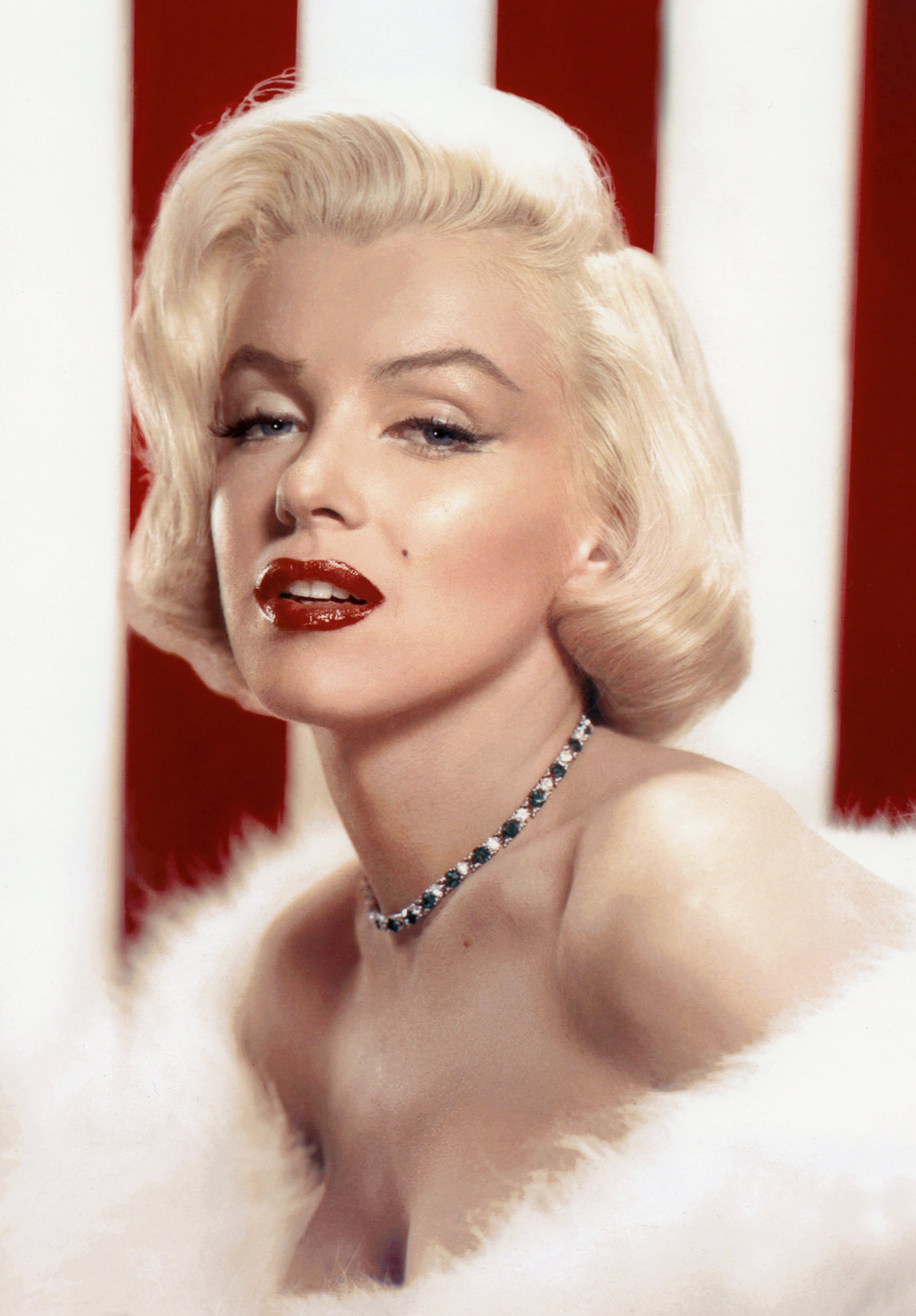
That Marilyn Monroe did not take her own life but was deliberately killed on 4 August 1962, that her death was staged or reworked to look like a barbiturate suicide, and that police, the coroner, and federal agencies concealed the truth to protect powerful people she was allegedly involved with, most often named as the Kennedy brothers.
Marilyn Monroe died of acute barbiturate poisoning and the Los Angeles County coroner ruled it a probable suicide. The scene was handled sloppily and real anomalies remain, which is why suspicion has never faded. But the specific claim rated here, that she was murdered and the truth concealed, has never been established: a 1982 Los Angeles County District Attorney review found no credible evidence of homicide and no basis to reopen the case, and no named person has been shown to have killed her.
The full story
The last night on Fifth Helena Drive
Marilyn Monroe died sometime in the night of 4 August 1962, at her home on Fifth Helena Drive in the Brentwood district of Los Angeles. She was 36. In the early hours of 5 August, her housekeeper, Eunice Murray, grew uneasy, and Monroe's psychiatrist, Dr. Ralph Greenson, was summoned; he entered the bedroom and found her dead. Police were called at about 4:25 a.m. The first officer on the scene, Sergeant Jack Clemmons, later described a setting that struck him as too composed, a first impression that would echo through decades of suspicion.
The autopsy was performed the same day by deputy medical examiner Dr. Thomas Noguchi. He found no anatomical cause of death and no evidence of physical trauma, and he sent tissue and fluids for toxicology. The laboratory reported fatal concentrations of two sedatives: pentobarbital, the barbiturate sold as Nembutal, and chloral hydrate. On that basis Noguchi and the coroner's office gave the cause of death as “acute barbiturate poisoning” due to an overdose.
The manner of death was the harder call. Coroner Theodore Curphey convened a panel of psychiatrists from the Los Angeles Suicide Prevention Center, who interviewed the people around Monroe and reviewed her history of instability and prior overdoses. On 17 August 1962, Curphey announced their conclusion: a “probable suicide.” The word probable was doing real work. It was a considered hedge, an acknowledgement that the evidence pointed toward suicide without foreclosing every other possibility. To many, that hedge has never read as caution so much as an opening.
Why the ruling never satisfied
The case for suspicion does not require inventing anything. It is built largely from failures the official record itself contains, and they are serious enough that the murder theory has outlived nearly everyone connected to the events.
Start with the forensics. Noguchi noted that he found no visible capsule residue in the stomach and none of the yellow dye that Nembutal leaves behind, which sits uneasily with a massive swallowed dose. The specimens that might have resolved how the drugs entered her body were, by the account that later emerged, discarded by the toxicology laboratory before any further testing could be done. For a death this consequential, destroying the evidence that could answer the central question is not a small lapse.
Then there is the night itself. The accounts given by those present do not line up. Eunice Murray changed her story across later interviews, the timing of when Monroe was discovered and when police were finally called was never pinned down, and the scene as first described did not read to the responding officer like an unstaged death. None of this is proof of anything, but all of it is the kind of disorder that makes a plain explanation hard to trust.
The evidence that could have answered how the drugs entered her body was thrown away before anyone could test it.
Finally there is the context that gives the theory its charge. Monroe is alleged to have been involved with President John F. Kennedy and his brother, Attorney General Robert F. Kennedy, and the murder narratives place RFK in California that weekend. In that telling, a woman who knew dangerous secrets died at the worst possible moment for powerful men, and agencies with the reach to tidy a scene had reason to do so. Put the missing samples, the contradictory timeline, and the political proximity together, and the suspicion assembles itself. What it does not do, on this evidence, is prove a killing.
What the 1982 review actually found
The uncomfortable feature of the official account is that it is not tidy. It concedes a badly run investigation. But a badly run investigation and a covered-up murder are different claims, and the one body that examined them at length came down firmly on the side of the first.
By 1982, the murder theory had migrated from Frank Capell's 1964 pamphlet into mass-market books, and the pressure to act became hard to ignore. The Los Angeles County District Attorney, John Van de Kamp, ordered what he called a threshold review: an inquiry to decide whether a full criminal investigation was warranted. Assistant District Attorney Ronald “Mike” Carroll and an investigator spent more than three months on it, reading the 1962 files, examining the conspiracy claims, and interviewing where they still could.
Their report concluded that there was no credible evidence that Monroe was murdered and no legal basis to open a criminal case. It did not paper over the problems; it acknowledged factual discrepancies and unanswered questions in the original handling. But it found those loose ends consistent with a rushed, poorly documented inquiry two decades earlier, not with a homicide being concealed. The toxicology, reviewed again, supported death by barbiturate overdose. The absence of a needle mark and of any physical sign of assault told against the injection and struggle scenarios.
The medical objections have answers as well. Barbiturates taken by mouth in a large dose are absorbed into the blood and liver over time, which can leave little intact residue in the stomach by the time of death, so the lack of visible capsules is suggestive rather than decisive. The discarded samples are a real and permanent gap, but a gap forecloses certainty in both directions: it cannot prove an oral overdose, and it equally cannot prove a hidden injection. As for the Kennedy allegations, the review did not find them substantiated by physical evidence, and the FBI records later posted to the Bureau's Vault document surveillance of Monroe's political associations, not any role in her death.
A carelessly investigated death and a concealed murder are not the same claim, and only the first is supported by the record.
Why the murder story endures
Some conspiracy theories fade when the evidence fails to arrive. This one has not, because it is anchored to a public life and a genuinely imperfect record, and because it offers something the plain account withholds.
The theory starts from real defects. A famous woman died, the investigation was thin, the timeline was contradictory, and the samples that could have settled the forensic question were destroyed. When the proven baseline is that unsatisfying, the extra step to “and so they killed her” feels smaller than it is. The mind fills a documented gap with the most dramatic thing that could fit it.
It also refuses an ending that feels beneath its subject. For an icon of the era to die alone of an overdose is arbitrary and bleak; a murder converts that into a story with structure, villains, and stakes. And because the alleged cast reaches the very top of American power, the theory can always gesture at names, even though contact and proximity are not the same as a hand in a death. Proximity is available; proof is not.
The era does the rest of the work. Over the years that followed 1962, the FBI and CIA were shown to have done real, documented, unlawful things, so the premise that agencies would lie about a delicate death no longer sounds outlandish. That earned distrust is the water the theory swims in, and every fresh release of an old file, answering some questions and reopening others, renews the sense that the whole truth is still being kept back.
A botched inquiry, not a proven murder
The fair reading holds two things at once, and keeping them apart is the whole discipline of the case. The original investigation was careless and left permanent gaps, and the specific claim that Monroe was murdered and the truth concealed is unproven. Those are not in tension. One is a documented failure; the other is an allegation the evidence has never carried.
What is established: Monroe died of acute barbiturate poisoning, the county coroner ruled it a probable suicide after a psychiatric review, the death scene and paperwork were handled loosely, and forensic samples that might have answered the open questions were discarded. What is not established, on the current record, is that anyone killed her. The 1982 District Attorney review, the most serious re-examination the case has received, found no credible evidence of homicide and no basis to reopen. No document, and no physical finding, has shown that any named person killed Marilyn Monroe or ordered it done, and this file does not assert that any did.
That leaves real open questions, and it would be dishonest to pretend otherwise: the destroyed samples, the contradictory timeline, the exact nature of the Kennedy contacts. Anomalies like these are a reason to keep asking, not a proof of murder. Until firm evidence of a killing actually surfaces, the accurate label for the claim is unproven, resting on top of a botched inquiry that needs no murderer to be a genuine failure.
What's still unexplained
- Why were the stomach and intestinal samples discarded before a full analysis could rule out how the barbiturates entered her body? The loss is documented and never satisfactorily explained, and it forecloses the one test that might have distinguished a swallowed overdose from another route.
- How should the conflicting accounts of that night be reconciled? Eunice Murray and Dr. Ralph Greenson gave versions that shifted over the years, and no single agreed timeline of when Monroe was found, when doctors arrived, and when police were called has ever been fixed.
- What exactly was the extent of Monroe's contact with the Kennedys in her final weeks, and does any of it bear on the death? The relationships are partly documented and partly asserted, and the line between them has never been drawn cleanly in the public record.
- Why was the 1962 investigation conducted so loosely for so prominent a death? Whether the shortcomings reflect ordinary period practice and haste, or something more, is a question the surviving records cannot now resolve.
Point by point
The claim: The death scene and the original investigation were a mess, which is exactly what a cover-up would look like.
What the record shows: The sloppiness is real, and it is the strongest fuel for doubt. Accounts of the timeline that night conflict, the housekeeper Eunice Murray gave shifting versions over the years, and the crime scene was not treated with the rigor a suspicious death would get today. But disorder is not the same as concealment. The 1982 District Attorney review examined these discrepancies and attributed them to a rushed, poorly documented 1962 investigation and the passage of time, not to a homicide being hidden. A bungled inquiry lowers confidence in the paperwork; it does not by itself show that anyone was killed.
The claim: There were no pills in her stomach, and the coroner disposed of the organ samples, so an oral overdose was never really proven and an injection was covered up.
What the record shows: Noguchi did note the absence of visible capsule residue and yellow dye in the stomach, and specimens that could have settled the question were discarded by the toxicology lab before further testing, which is a genuine failure. Yet the toxicology that was done found fatal barbiturate levels in the blood and liver, consistent with a swallowed overdose that had time to absorb. Noguchi, who looked for needle marks, reported finding no fresh injection site. The missing samples leave a real gap, but a gap is not proof of a hidden injection; it is an unanswered question the record cannot now close either way.
The claim: Monroe's alleged relationships with John and Robert Kennedy gave powerful people a motive to silence her, and agencies helped bury it.
What the record shows: That Monroe had contact with the Kennedys is documented in part, and the theory leans on Robert Kennedy's reported presence in California that weekend. But motive and proximity are not evidence of a killing, and the specific claims (that RFK was at the house, that a murder was staged, that the FBI or CIA sanitized the scene) rest on later, contested testimony rather than physical proof. The FBI file released through its Vault shows surveillance interest in Monroe's politics and associations, not any record of involvement in her death. No document has surfaced showing any named official ordered or concealed a homicide.
The claim: An official body actually re-examined the case, which shows the doubts were serious.
What the record shows: True, and the outcome cuts against the murder claim rather than for it. The 1982 review by the Los Angeles County District Attorney was a real, months-long inquiry that read the files, re-interviewed where it could, and weighed the conspiracy literature directly. Its conclusion was that the evidence was consistent with the coroner's probable-suicide finding, that the anomalies did not amount to proof of foul play, and that there was no legal basis to reopen. It acknowledged loose ends without treating them as a hidden crime, the same distinction this file draws.
Timeline
- 1962-08-05In the early hours, Monroe is found dead in the bedroom of her home on Fifth Helena Drive in Brentwood. Her housekeeper Eunice Murray and psychiatrist Dr. Ralph Greenson are present; police are called at about 4:25 a.m. Deputy medical examiner Dr. Thomas Noguchi performs the autopsy that day and finds no anatomical cause of death, sending tissue for toxicology.
- 1962-08-17Los Angeles County Coroner Theodore Curphey announces the findings after a psychiatric 'Suicide Prevention Team' review: the cause of death is acute barbiturate poisoning from an overdose, and the manner is a probable suicide. Toxicology reports fatal levels of pentobarbital and chloral hydrate.
- 1964Anti-communist writer Frank Capell publishes the pamphlet 'The Strange Death of Marilyn Monroe,' one of the first to allege she was murdered and to tie the death to Robert Kennedy. It seeds a theory that grows through the late 1960s and 1970s.
- 1973–1974Norman Mailer's bestselling biography raises the possibility of foul play, and Robert Slatzer, who claims to have been close to Monroe, publishes a book pressing the murder-and-cover-up case. The Kennedy connection moves from fringe pamphlets into mass-market print.
- 1982Prompted by renewed press claims, the Los Angeles County District Attorney, John Van de Kamp, orders a threshold review. Assistant DA Ronald 'Mike' Carroll and an investigator spend months on it and conclude there is no credible evidence of murder and no basis to open a criminal investigation, while conceding factual discrepancies remain.
- 1985Anthony Summers's biography 'Goddess' and a BBC documentary revisit the Kennedy allegations and the disorder of the original inquiry, keeping the murder theory in wide circulation and drawing sharp disputes over its sourcing.
- OngoingLater biographies, documentaries, and the 2012 reprocessing of Monroe's FBI file continue to feed the debate. No release has produced evidence of a killing, but none has fully dispelled the anomalies either, and the probable-suicide ruling still stands.
From the case file
The actual records: declassified, released, or leaked. We link straight to each document in its official archive, so you never have to take our word for it. Read the originals yourself.
Report on the Death of Marilyn Monroe (Los Angeles County District Attorney review)
The threshold review ordered by District Attorney John Van de Kamp and led by Assistant DA Ronald Carroll. It examined the conspiracy claims directly and concluded there was no credible evidence of murder and no basis to open a criminal case, while acknowledging that factual discrepancies from the 1962 investigation remained.
Read the document: The Marilyn Monroe Collection archive →Marilyn Monroe Autopsy Report (Coroner's Case No. 81128)
Dr. Thomas Noguchi's autopsy report, giving the cause of death as acute barbiturate poisoning by ingestion of an overdose. It is the primary forensic document behind the probable-suicide ruling and the source of the anomalies (no visible pill residue, no injection mark) that the murder theory turns on.
Read the document: Autopsyfiles.org →Marilyn Monroe FBI File
The Bureau's file on Monroe, posted to the FBI Vault. It documents surveillance interest in her political associations and contacts rather than any role in her death, and is frequently cited both for and against the Kennedy allegations.
Read the document: FBI Vault →Other case files that cite the same sources
Marilyn Monroe died of acute barbiturate poisoning and the Los Angeles County coroner ruled it a probable suicide. The scene was handled sloppily and real anomalies remain, which is why suspicion has never faded. But the specific claim rated here, that she was murdered and the truth concealed, has never been established: a 1982 Los Angeles County District Attorney review found no credible evidence of homicide and no basis to reopen the case, and no named person has been shown to have killed her.
Reviewed by Colin Peterson · Last reviewed July 12, 2026 · How we rate
Common questions
Is Marilyn Monroe's death true?
Marilyn Monroe died of acute barbiturate poisoning and the Los Angeles County coroner ruled it a probable suicide. The scene was handled sloppily and real anomalies remain, which is why suspicion has never faded. But the specific claim rated here, that she was murdered and the truth concealed, has never been established: a 1982 Los Angeles County District Attorney review found no credible evidence of homicide and no basis to reopen the case, and no named person has been shown to have killed her.
What is Marilyn Monroe's death?
On the night of 4 August 1962, the actress Marilyn Monroe died at her Los Angeles home at age 36. The county coroner ruled the cause acute barbiturate poisoning and the manner a probable suicide. Almost immediately, a counter-story took hold: that she was murdered, often tied to alleged affairs with President John F. Kennedy and Attorney…
What does the evidence show?
The sloppiness is real, and it is the strongest fuel for doubt. Accounts of the timeline that night conflict, the housekeeper Eunice Murray gave shifting versions over the years, and the crime scene was not treated with the rigor a suspicious death would get today. But disorder is not the same as concealment. The 1982 District Attorney r…
Why do people believe it?
The original investigation really was careless. When the paperwork on a famous death is thin, the timeline is contradictory, and key samples are thrown away, the gaps invite the darkest reading, and here the gaps are documented rather than imagined.
What is still unresolved?
Why were the stomach and intestinal samples discarded before a full analysis could rule out how the barbiturates entered her body? The loss is documented and never satisfactorily explained, and it forecloses the one test that might have distinguished a swallowed overdose from another route.
Sources
- 1.1982 Investigation Into the Death of Marilyn Monroe: District Attorney Files, The Marilyn Monroe Collection (archive of the Los Angeles County District Attorney review) (1982)
- 2.Marilyn Monroe Autopsy Report, Los Angeles County Chief Medical Examiner-Coroner (Case No. 81128), Autopsyfiles.org (1962)
- 3.FBI Records: The Vault, Marilyn Monroe, Federal Bureau of Investigation (2013)
- 4.No evidence Marilyn Monroe murdered, D.A. says, United Press International (UPI Archives) (1982)
- 5.Ronald Carroll, headed review of Monroe's death, dies, Portland Press Herald / Associated Press (2010)
- 6.The Marilyn Tapes, CBS News (2005)
- 7.Goddess: The Secret Lives of Marilyn Monroe, Anthony Summers, Macmillan (1985)
- 8.Coroner, Thomas T. Noguchi with Joseph DiMona, Simon & Schuster (1983)
Embed this case file on your site
Paste this snippet to show this case file as a small card, with a link back to the full write-up. Free to use.
<iframe src="https://theconspiratory.com/embed/marilyn-monroe-death" title="The Conspiratory verdict" width="520" height="190" style="border:0;max-width:100%" loading="lazy"></iframe>Help us investigate
This is a living case file. If you spot an error or know evidence we missed, tell us, and weigh in on where you land.
Where do you land?
Cast your read on this one.
Comments
Add your take. Comments are read and approved by a human before they appear, so keep it on topic and civil. Please do not accuse named, living people of crimes.