There are too many Mattress Firm stores for them to sell mattresses: it must be a front for money laundering
By Colin PetersonJuly 12, 2026
Where the evidence lands: Contradicted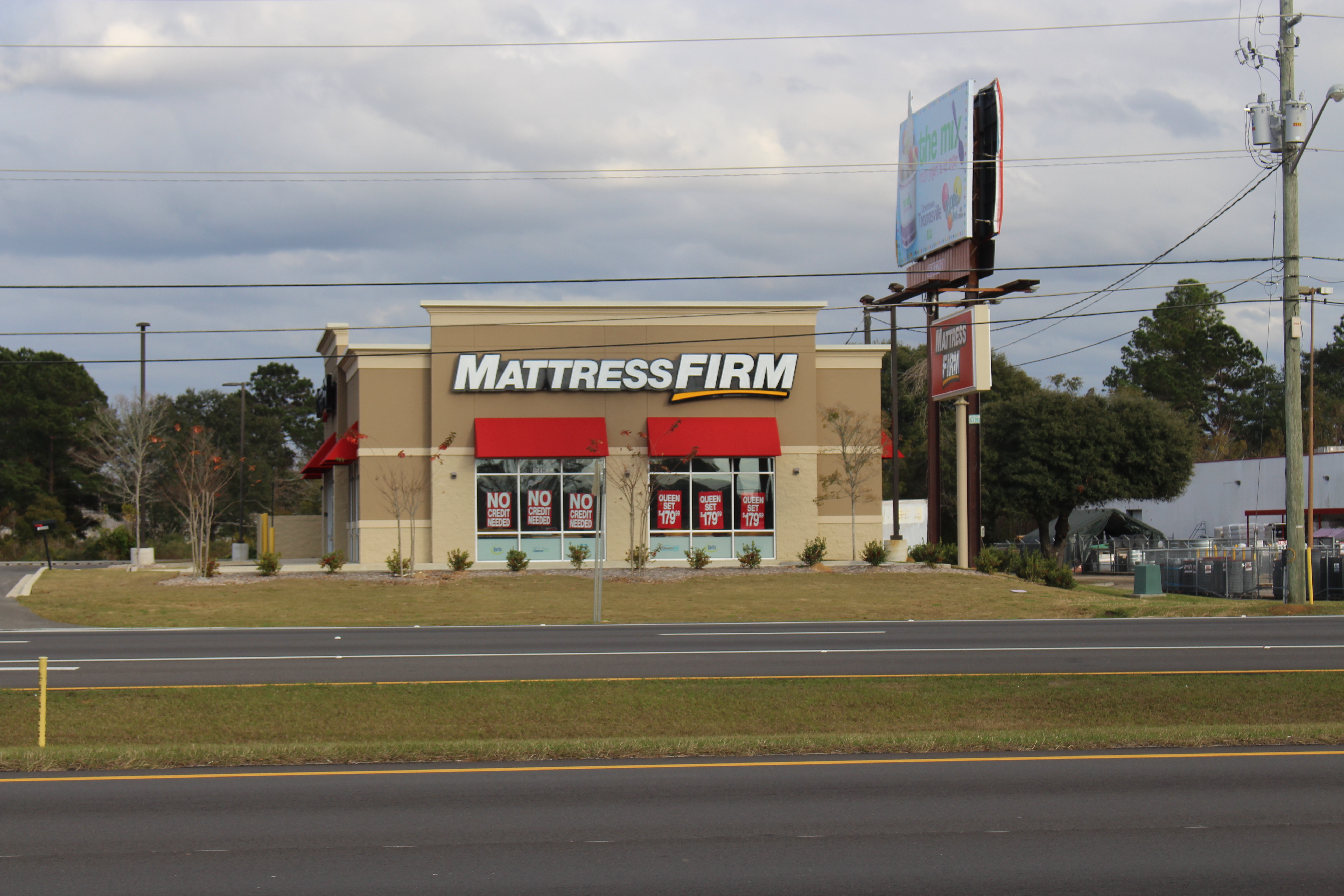
That the sheer number and density of Mattress Firm stores cannot be explained by mattress sales, which are infrequent and low-volume, and that the chain must therefore be a front used to launder money through a business that only pretends to sell mattresses.
Contradicted. The observation is real and the punchline is fun, but the money-laundering charge is not supported by anything. Mattress Firm stores really are strikingly numerous and often clustered, sometimes several within sight of one another. The mundane reasons are all documented: a decade of buying up rivals and keeping their locations, a high-margin infrequent purchase that rewards blanketing a metro, cheap leases, and a skeleton staff. The real corporate scandals point the opposite way from a thriving laundromat: parent company Steinhoff was caught in a multibillion-dollar accounting fraud about its own books, and Mattress Firm itself filed for Chapter 11 in 2018 and closed hundreds of stores. Laundering fronts do not usually go bankrupt.
Believed by: A broad, mostly tongue-in-cheek internet audience: the kind of half-joking pattern-spotting that spreads on Reddit, TikTok, and group chats more as a shareable curiosity than a sincere accusation
The full story
The thing you can actually see from the road
Most conspiracy theories ask you to accept a hidden world you cannot observe. This one starts with something you genuinely can. Drive through almost any American suburb and you will pass a Mattress Firm. Keep driving and you may pass another one, and then, disconcertingly, a third within sight of the first two. There is a well-worn genre of photo online: two Mattress Firms on opposite corners of the same intersection, staring at each other across the traffic.
So a very reasonable question forms. A mattress is something a person buys once every several years. The stores always look empty. How can there possibly be enough mattress-buying to keep this many showrooms alive? In early 2018 a Reddit poster gave the question its enduring shape, wondering aloud whether “Mattress Firm is some sort of giant money-laundering scheme” because the stores are “everywhere and always empty.” The post went viral, podcasts and YouTube channels ran with it, and the WBUR show Endless Thread built an episode around it. A beloved internet theory was born.
Here is the fun part, and the reason this case file exists: the pattern is completely real, and the true explanation is almost as strange as the joke. You do not need a laundromat to explain the mattress stores. You need the peculiar, legal, faintly absurd economics of modern retail consolidation.
The case for the joke
Steelman it, because the observation is not stupid. Money laundering does often work by running dirty cash through a legitimate-looking cash business, and the classic tells are a storefront that is always open but never busy, in a category where an outsider cannot easily judge how much money should be moving. A wall of quiet mattress showrooms fits that cartoon almost too well.
The atmosphere got a genuine assist from the corporate news. By the time the meme peaked, Mattress Firm was owned by Steinhoff International, a sprawling South African conglomerate most Americans had never heard of, which in December 2017 disclosed “accounting irregularities” and promptly collapsed into one of the biggest corporate-fraud scandals in South African history. If your local mattress chain turns out to be a subsidiary of a multinational that just got caught cooking its books, the leap to “the whole thing is a scam” feels short.
Two Mattress Firms staring at each other across one intersection is a real photograph, not a hallucination. The theory earns its audience honestly.
And the density really is extreme. At its height the chain ran on the order of 3,500 stores and controlled a huge slice of the mattress market. That is a lot of nearly empty rooms full of beds. Waving all of this away as obviously silly would miss why it caught on: the raw pattern is real, the parent company really was crooked about something, and the real answer requires knowing how retail roll-ups work. Most people, very reasonably, do not.
The boring, weirder, true answer
Start with why the stores cluster, because that is the observation doing all the work. The answer is acquisitions. Mattress Firm did not organically open all those shops; it grew for years by buying its competitors and keeping their storefronts. It absorbed Sleep Train in 2014, which brought the Mattress Discounters name along with it, and Sleepy's in 2015, which added more than a thousand stores across the Northeast. When you buy the rival across the street and rebrand its shop, you now own two Mattress Firms across the street from each other. The intersection photos are not evidence of a scheme; they are fossils of a decade of mergers.
Next, why the empty stores survive. A mattress is a high-margin, infrequently-bought “destination” purchase. Nobody wanders in on a whim, but the people who do walk in mean to buy, and a single sale can be worth a great deal. Crucially, the showrooms are cheap to operate: small, lightly staffed, without much owned inventory sitting on the floor. A room that looks empty most of the day can still cover a modest lease by selling a handful of expensive beds a week. Empty is the business model, not the anomaly.
Then, why blanket a city at all. Saturating an area with stores keeps the brand in front of people for a purchase they make rarely and with little loyalty, and it starves competitors of good locations. Industry coverage describes Mattress Firm as willing to let its own stores cannibalize each other in order to dominate a metro and box rivals out. It is aggressive and arguably wasteful. It is also entirely legal, and it is a recognized retail strategy rather than a criminal one.
As for the scandals: they are real, and they point the wrong way for the laundering story. The Steinhoff fraud was an accountingfraud, top executives inflating profits and asset values through fictitious transactions to flatter the parent company's own financial statements, later tallied in the billions. That is lying to investors about the books, not washing cash through showrooms. Separately, Mattress Firm's own litigation alleged a real-estate kickback scheme in which insiders were accused of steering the company into overpriced leases in exchange for gifts. That would help explain why there were too many stores in expensive, badly chosen spots. It is fraud against the company, the opposite of a business quietly minting laundered profit.
The clincher: in October 2018 Mattress Firm filed for bankruptcy and moved to close up to 700 stores. Laundering fronts do not file Chapter 11.
And that is the detail that closes the case. In October 2018, right as the meme was cresting, Mattress Firm filed for Chapter 11 bankruptcy and announced it would close as many as 700 stores, explicitly to unload the overlapping locations and pricey leases its buying spree had left it holding. It emerged from bankruptcy roughly 47 days later, leaner. A thriving money-laundering operation does not go bankrupt shedding hundreds of the very storefronts it supposedly needs to wash its cash.
Why we love believing it anyway
The theory endures not because people are gullible but because it scratches a real itch. It is a clean example of apophenia, the mind's eagerness to find intention behind a striking pattern. An over-saturated retail category looks designed, and once it looks designed you go hunting for the designer's hidden motive. “They're laundering money” supplies one that is far more satisfying than “quirks of merger accounting and lease strategy.”
It also feeds on a genuine information gap. Corporate finance and retail economics are opaque to almost everyone; you cannot see a showroom's books from the sidewalk, and into that darkness a tidy villainous story slides easily. Distrust of large, faceless, obviously-not-thriving businesses is not irrational, and when the parent company genuinely turns out to be a fraud, that distrust feels vindicated even though the specific accusation is wrong.
Most of all, this one is fun, and it is meant to be. It accuses no real person, harms no community, and demands nothing of you but the small pleasure of a shareable “wait, why ARE there so many?” That is a very different animal from the conspiracy theories that ruin lives. It travels precisely because it is light: a group-chat curiosity, a road-trip observation, a joke with a real question buried inside it.
Ordinary retail, not laundering
On the actual charge, that Mattress Firm stores are a front for laundering money, the rating is debunked. Nothing supports it, and the record cuts against it: the stores are numerous because the chain spent a decade buying rivals and keeping their addresses; they survive empty because mattresses are cheap to display and lucrative to sell; and the company was struggling badly enough to file for bankruptcy and close hundreds of locations, which is not how a successful laundromat behaves.
But the observation that launched it deserves its due. There really are too many Mattress Firm stores, they really do cluster in ways that look uncanny, and the true explanation, aggressive roll-up growth, saturation strategy, cheap leases, plus a side order of real accounting fraud and alleged lease kickbacks, is honestly almost as strange as the meme. That is the whole charm of this one. The pattern is real, the answer is legal, and reality turned out to be weird enough that you did not need a conspiracy to explain it.
What's still unexplained
- Why the chain tolerated quite so much self-cannibalization, stores competing directly with their own siblings, is a real business question that critics and even former insiders have debated, though the answer lands on strategy and mismanagement rather than crime.
- How much the alleged real-estate kickback scheme distorted where stores were placed is only partly public, since it played out through litigation, but it points to bad incentives and fraud against the company, not laundering through it.
Point by point
The claim: There are absurdly many Mattress Firm stores, often clustered within sight of each other, which no legitimate mattress demand could support.
What the record shows: The density is real, and it has a boring cause: acquisitions. Mattress Firm grew by buying up regional chains, Sleep Train, Sleepy's, Mattress Discounters, and others, and then keeping most of the storefronts rather than closing them. When you buy your competitor and rebrand their shop, the Mattress Firm that used to be a Sleepy's can end up across the street from the Mattress Firm that was always there. The clustering is the visible fossil record of a decade of roll-up growth, not evidence of a scheme.
The claim: The stores are always empty, so they clearly are not making money selling mattresses.
What the record shows: Empty-looking is a feature of the business, not a red flag. A mattress is a high-margin, infrequent 'destination' purchase: people buy one every several years, walk in on purpose, and one sale can be worth a lot. Showrooms are deliberately cheap to run, small footprints, minimal staff, little owned inventory sitting on the floor, so a store can quietly cover its rent on low foot traffic. An empty showroom that sells a handful of high-ticket beds a week can be perfectly viable.
The claim: Blanketing a city with stores makes no sense unless the point is something other than selling mattresses.
What the record shows: Saturation is a recognized retail strategy, not a tell. Putting stores everywhere keeps the brand 'top of mind' for a purchase people make rarely and without much loyalty, and it denies rivals the good locations. Mattress Firm executives have described choosing high-traffic sites precisely to dominate a metro, and industry coverage notes the chain was willing to tolerate its own stores cannibalizing each other in order to crowd competitors out. It is aggressive, arguably wasteful, and completely legal.
The claim: The parent company was caught in a massive fraud, which proves the whole operation is dirty.
What the record shows: There was a huge, real fraud, but it is the wrong fraud. Steinhoff, which bought Mattress Firm in 2016, imploded in a multibillion-dollar accounting scandal that involved inflating profits and asset values through fictitious transactions on Steinhoff's books. That is corporate accounting fraud, established and enormous, not money laundered through American mattress showrooms. Separately, Mattress Firm's own lawsuits alleged a real-estate kickback scheme in which executives were accused of steering the company into overpriced leases in exchange for gifts. Damning for the company, but again the opposite of laundering: it explains why there were too many stores in bad, expensive locations, and why the chain then went bankrupt.
Timeline
- 1986-07-04Mattress Firm is founded in Houston, Texas. Over the following decades it grows from a regional specialty retailer into the largest mattress chain in the United States, mostly by buying competitors.
- 2014Mattress Firm acquires the West Coast chain Sleep Train for roughly $425 million, adding hundreds of stores and, with them, the Mattress Discounters and Sleep Country names. Consolidation of the mattress-store business accelerates.
- 2015–2016Mattress Firm buys the Sleepy's chain for about $780 million, gaining more than 1,000 additional stores across the Northeast. Rebranding the acquired shops leaves many former rivals now flying the same flag a short walk apart, and the total store count swells toward roughly 3,500.
- 2016-08The South African conglomerate Steinhoff International agrees to acquire Mattress Firm for about $3.8 billion, paying $64 a share, a premium of well over 100 percent. Mattress Firm becomes a subsidiary of a sprawling, opaque multinational, which later gives the conspiracy some of its atmosphere.
- 2017-12Steinhoff discloses 'accounting irregularities.' The share price collapses and the company is engulfed in one of the largest corporate-fraud scandals in South African history, eventually tallied in the billions. The fraud concerns Steinhoff's own books, not laundering through mattress stores.
- 2018A Reddit post asking whether Mattress Firm is a front for money laundering goes viral, citing empty-looking stores and clusters of them on the same intersection. Podcasts, YouTube channels, and news outlets pick it up, and the WBUR podcast Endless Thread devotes an episode to it in September. The meme is born.
- 2018-10Mattress Firm files for Chapter 11 bankruptcy and announces plans to close up to 700 stores, explicitly to shed overlapping locations and expensive leases inherited from its acquisitions. It emerges from bankruptcy about 47 days later. A booming laundering front does not usually need to do this.
Contradicted. The observation is real and the punchline is fun, but the money-laundering charge is not supported by anything. Mattress Firm stores really are strikingly numerous and often clustered, sometimes several within sight of one another. The mundane reasons are all documented: a decade of buying up rivals and keeping their locations, a high-margin infrequent purchase that rewards blanketing a metro, cheap leases, and a skeleton staff. The real corporate scandals point the opposite way from a thriving laundromat: parent company Steinhoff was caught in a multibillion-dollar accounting fraud about its own books, and Mattress Firm itself filed for Chapter 11 in 2018 and closed hundreds of stores. Laundering fronts do not usually go bankrupt.
Reviewed by Colin Peterson · Last reviewed July 12, 2026 · How we rate
Common questions
Is The Mattress Firm conspiracy true?
Contradicted. The observation is real and the punchline is fun, but the money-laundering charge is not supported by anything. Mattress Firm stores really are strikingly numerous and often clustered, sometimes several within sight of one another. The mundane reasons are all documented: a decade of buying up rivals and keeping their locations, a high-margin infrequent purchase that rewards blanketing a metro, cheap leases, and a skeleton staff. The real corporate scandals point the opposite way from a thriving laundromat: parent company Steinhoff was caught in a multibillion-dollar accounting fraud about its own books, and Mattress Firm itself filed for Chapter 11 in 2018 and closed hundreds of stores. Laundering fronts do not usually go bankrupt.
What is The Mattress Firm conspiracy?
It is one of the internet's favorite low-stakes conspiracy theories. Mattress Firm stores are everywhere, they always look empty, and sometimes there are two of them on the same block or all four corners of one intersection. So the joke goes: nobody buys that many mattresses, therefore the stores must be a front for laundering money. The…
What does the evidence show?
The density is real, and it has a boring cause: acquisitions. Mattress Firm grew by buying up regional chains, Sleep Train, Sleepy's, Mattress Discounters, and others, and then keeping most of the storefronts rather than closing them. When you buy your competitor and rebrand their shop, the Mattress Firm that used to be a Sleepy's can en…
Why do people believe it?
The premise is verifiably true before you add the conspiracy. The stores really are unusually numerous and often clustered, so the setup passes the eye test, and a theory that starts from something you can see out the car window is far more persuasive than one that starts from nothing.
What is still unresolved?
Why the chain tolerated quite so much self-cannibalization, stores competing directly with their own siblings, is a real business question that critics and even former insiders have debated, though the answer lands on strategy and mismanagement rather than crime.
Sources
- 1.The Great Mattress Conspiracy: Why Are There So Many Mattress Firm Stores?, WBUR, Endless Thread (2018)
- 2.The Mattress Firm Money Laundering Conspiracy Theory, Snopes (2021)
- 3.Mattress Firm Conspiracy, Know Your Meme (2018)
- 4.Mattress Firm, largest US mattress retailer, files for Chapter 11 bankruptcy protection, CNBC (2018)
- 5.Steinhoff buys Mattress Firm in cash, stock deal worth nearly $4 billion, CNBC (2016)
- 6.Sleepy's Owner Steinhoff Flags Accounting Fraud, Ditches CEO, Fortune (2017)
- 7.Steinhoff Committed $7.4 Billion in Fraud (at least). Here's How, Wolf Street (2019)
- 8.Nation's largest mattress retailer files for bankruptcy, closing up to 700 stores, The Seattle Times / Associated Press (2018)
- 9.Mattress Firm to Buy Sleepy's for About $780 Million, TIME (2015)
Embed this verdict on your site
Paste this snippet to show our sourced verdict as a small card, with a link back to the full case file. Free to use.
<iframe src="https://theconspiratory.com/embed/mattress-firm-conspiracy" title="The Conspiratory verdict" width="520" height="190" style="border:0;max-width:100%" loading="lazy"></iframe>Help us investigate
This is a living case file. If you spot an error or know evidence we missed, tell us, and weigh in on where you land.
Where do you land?
Cast your read on this one.
Comments
Add your take. Comments are read and approved by a human before they appear, so keep it on topic and civil. Please do not accuse named, living people of crimes.