The 1947 Maury Island incident was a genuine encounter with anomalous flying craft that shed debris and was covered up
By Colin PetersonJuly 8, 2026
Where the evidence lands: Contradicted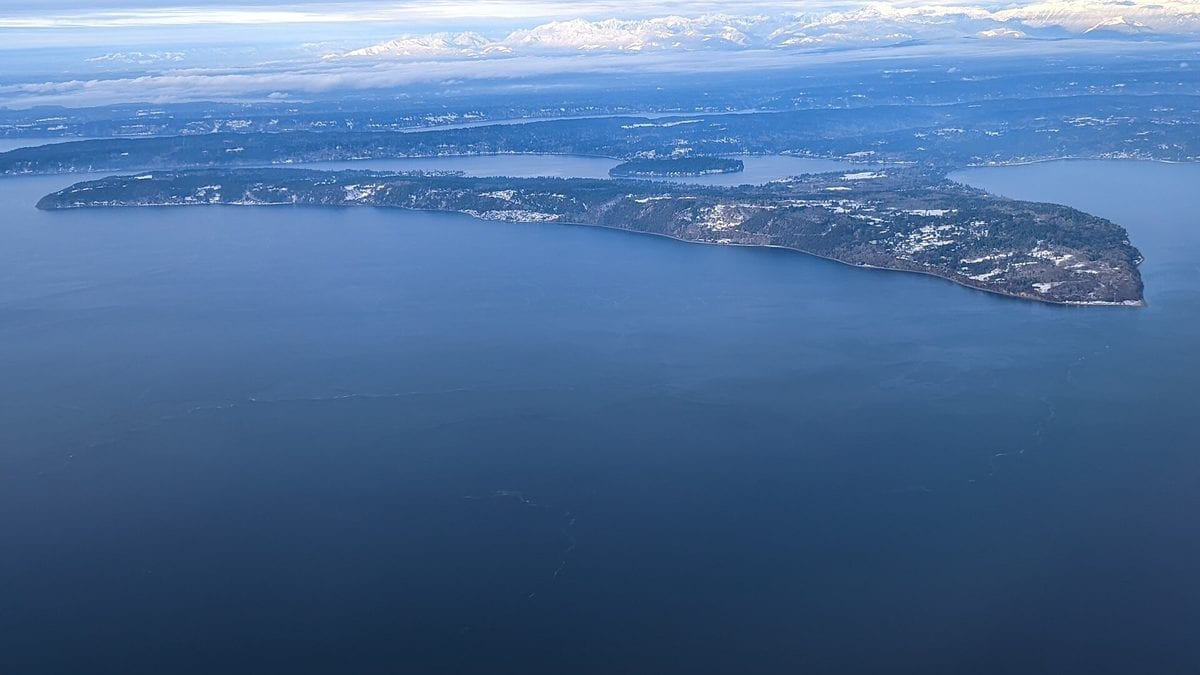
That Harold Dahl and Fred Crisman genuinely encountered six unidentified, doughnut-shaped flying craft over Maury Island in June 1947, that one craft ejected real physical debris of unusual origin onto Dahl's boat, that a mysterious man in black tried to silence him, and that the subsequent fatal crash of an Army B-25 carrying fragments, together with the FBI's involvement, points to an official cover-up of a true unexplained event.
Contradicted. Some things about Maury Island are real and documented: two Army Air Forces intelligence officers, Capt. William Davidson and 1st Lt. Frank Brown, did die when their B-25 crashed near Kelso, Washington, on 1 August 1947, and the FBI really did open an investigation. The claim we rate is different: that the harbor boatman Harold Dahl and his supervisor Fred Crisman actually witnessed six doughnut-shaped craft over Puget Sound on 21 June 1947, that one rained real extraterrestrial or anomalous debris onto Dahl's boat, and that the truth was suppressed. That claim is debunked. The recovered fragments matched ordinary smelter slag, Dahl told an FBI agent he would call it a hoax if pressed, the promised photographs never materialized, and Project Blue Book's own chief later named it the dirtiest hoax in UFO history. The deaths were real; the flying saucer that supposedly caused the whole affair was not.
Believed by: A small early-UFO and paranormal audience, plus enthusiasts of Men in Black lore, for which Maury Island is often cited as the first case. Notably, even many committed ufologists have long regarded it as a hoax, which makes it unusual among founding UFO stories.
The full story
What is documented
Strip the case to what can actually be established, and a surprising amount survives, though not the part believers most want. On 1 August 1947, a B-25 bomber went down near Kelso, Washington, killing two Army Air Forces intelligence officers, Capt. William Davidson and 1st Lt. Frank Brown. Two other men aboard parachuted to safety. That much is real, and it is a real loss.
It is also documented that the two officers had come to Tacoma to look into a story told by a Puget Sound harbor boatman named Harold Dahl and his supervisor Fred Crisman: that on 21 June 1947, near Maury Island, six large doughnut-shaped craft had appeared, and one had rained metal and hot slag onto Dahl's boat. It is documented that the pulp editor Ray Palmer paid Kenneth Arnold, the pilot whose own sighting had just given the world the phrase flying saucer, to investigate. And it is documented that the FBI opened an inquiry.
So the question this file weighs is not whether people met, traveled, investigated, and died. They did. It is whether the event at the center of it all, an encounter with genuine anomalous craft shedding real debris, later covered up, ever happened, or whether the deaths and the federal interest gathered around a story that was invented from the start.
The case people make
The believer's version deserves a fair hearing, because it is built from real fragments rather than pure fantasy. Start with the timing. Dahl placed his sighting on 21 June 1947, just ahead of Arnold's celebrated 24 June encounter near Mount Rainier. To someone convinced the skies of the Pacific Northwest were genuinely busy that summer, Maury Island is not a lone tall tale but an early data point in a wave.
Then there are the deaths. Two intelligence officers flew in, examined the material, and died hours later when their aircraft caught fire. For anyone inclined to see a hidden hand, the sequence, sensitive fragments collected, then a fatal crash, has an almost scripted shape. Add an anonymous caller who seemed to know what was said behind closed hotel-room doors, and a man in a dark suit who allegedly warned Dahl to stay quiet, and the raw materials of a cover-up appear to be present.
Believers also point to Crisman's strange later life. Years afterward he surfaced on the edge of Jim Garrison's New Orleans investigation into the Kennedy assassination, subpoenaed as a person of interest. To a certain cast of mind, a man tangled in both the first great UFO story and a famous assassination probe cannot be a mere prankster.
Two officers really died. A caller really seemed to know too much. One of the men really did reappear in the Garrison inquiry. The impulse to ask what happened is not the error. The error is the answer people supplied.
That is the case at its strongest: not that a saucer has been proven, but that real deaths, real federal attention, and a scatter of genuinely odd details cluster around the story in a way that feels like more than an accident.
Where the claim breaks down
The trouble is that every load-bearing piece of the physical case gives way, and the collapse starts with the one thing that could have been tested. The debris that supposedly fell from the craft was examined and found to resemble ordinary smelter slag, the dark, glassy waste left over from refining metal, produced in bulk along the Tacoma waterfront. A sample that matches industrial byproduct is not evidence of a spacecraft; it is evidence of a smelter.
The photographs Dahl claimed to have taken were never produced in any verifiable form. A picture that is always described and never shown does no evidentiary work at all. And the decisive blow comes from the narrator himself: an FBI record has Dahl saying that if questioned, he would call the whole thing a hoax because he wanted no more trouble. When the central witness signals that his own story is invented, the burden on everyone else to disprove it largely lifts.
The supporting details fall the same way. The crash was an aircraft fire from which two men bailed out and lived, treated by investigators as an accident, with nothing to connect the mundane fragments to the flames. The anonymous caller looked, to Arnold himself, less like a government listening device than like Crisman feeding a reporter to keep the story hot. The man in black rests entirely on the uncorroborated word of the same witness who told the FBI he would disown the account under questioning.
Even the Crisman-Garrison thread, the most atmospheric item in the file, proves nothing about 1947. That a colorful figure later drew a subpoena in an unrelated investigation makes him a colorful figure, not a man whose saucer story was therefore true. Removed one by one, the pillars leave a familiar shape: a fabrication that gathered real consequences.
The deaths, and how a legend fed on them
It is worth pausing on the crash, because it is where the case turns genuinely sad, and where the temptation to mythologize is strongest. Two officers doing their jobs died, and it is human to want their deaths to mean something proportionate to the loss. A UFO cover-up supplies exactly that outsized meaning, which is part of why the story clung to the tragedy so quickly.
But the meaning has to be earned by evidence, and here it is not. The aircraft caught fire; two men aboard parachuted and survived; the event was handled as an accident. Nothing about a burning engine requires anomalous cargo, and the fragments the officers carried had already been pegged as slag. The rumor that the material downed the plane is the story reaching for significance, not a finding drawn from the wreckage.
The grief is real and the officers deserve better than to be props in a saucer story. Honoring them means telling the truth about how they died, not draping an ordinary tragedy in an invented one.
The same dynamic drives the Men in Black afterlife of the case. A single unverifiable anecdote about a menacing stranger, told by a witness who flagged his own account as a hoax, hardened over decades into the founding image of a whole mythology. The retelling gave the detail an authority the original never had. That is how a hoax outlives its confession: the atmosphere survives even after the facts have been withdrawn.
Why it took hold and stayed
Maury Island endured for reasons that have little to do with whether a saucer was ever there, and everything to do with when and how the story arrived.
It rode a wave. Landing on the leading edge of the 1947 flying-saucer frenzy, it was carried along by a national mood suddenly hungry for exactly this kind of report. A public watching the skies is a public inclined to believe the person who says he saw something in them.
It was anchored by real events. The deaths, the federal investigation, the pulp-magazine payments, and the traveling officers were all genuine, and a fabrication braided through enough true facts becomes very hard to fully unpick. Each real detail lent credibility to the unreal core it surrounded.
And it founded a genre. As the reputed first Men in Black case, and later through Crisman's cameo in the Garrison inquiry, Maury Island got knitted into larger and more thrilling narratives. Stories that become load-bearing beams in a mythology are rarely dismantled by their own creators' confessions. “They tried to silence him” is a far more durable line than “he told the FBI he would call it a hoax.”
Real deaths, a hoaxed saucer
Keep the two claims apart. What is on the record is real and, in its human cost, serious: two Army officers died in a B-25 crash near Kelso, the FBI investigated, and a pulp editor and a famous pilot were drawn in. None of that is in dispute. The The claim we rate is the far larger one, that Dahl and Crisman truly met anomalous craft, that real extraterrestrial debris fell, and that the truth was buried. On that claim the rating is Contradicted. The fragments matched smelter slag, the photographs were never produced, the central witness told the FBI he would call it a hoax, and the man who ran the Air Force's own UFO project named it the dirtiest hoax in the field's history.
This is not a dismissal of the loss. The deaths were real, and the people who grieved them were owed a truthful account, which is exactly why draping the crash in an invented cover-up does them a disservice. A hoax that spiraled into tragedy is a sadder and more human thing than a suppressed saucer, and it has the added merit of being what the evidence supports.
What remains are ordinary loose ends, a leaking caller, the fine detail of an aircraft fire, a decision not to prosecute, none of which needs a real spacecraft to explain. Maury Island is best understood as a summer's fabrication that outran its inventors, gathered real consequences on the way, and then, having been confessed and catalogued as a hoax, lived on anyway as the seed of a myth. The right label for the central claim is debunked, and the honest posture is to hold that verdict while still treating the two dead officers with the dignity the legend never did.
What's still unexplained
- Exactly who tipped the reporter about the private hotel-room meetings, and how the caller knew the names of the dead officers so quickly, has never been settled beyond Arnold's suspicion that Crisman was behind it. It is a genuine loose end, though it points to a publicity stunt rather than to surveillance.
- The precise cause of the B-25 fire and crash is not exhaustively documented in public sources, which leaves room for speculation even though contemporaries treated it as an aircraft accident and two survivors bailed out safely.
- Why the government investigated so heavily and then declined to prosecute is a fair question. The usual answer, that officials judged a harmless hoax had spiraled tragically and that the deaths could not be pinned on the two men, is plausible but leaves the decision-making only partly on the record.
Point by point
The claim: Real physical debris fell from the craft onto Dahl's boat, proving something genuinely unexplained happened.
What the record shows: The material was the most testable part of the story, and it did not hold up. Investigators found the fragments closely resembled slag, the ordinary industrial waste left over from smelting metal, of the kind produced in quantity around Tacoma's waterfront. Slag is heavy, dark, and glassy, exactly what a witness might describe as fallen from the sky, and it is emphatically terrestrial. A sample that matches smelter waste is evidence against an exotic origin, not for one.
The claim: Dahl photographed the craft, so there is documentary proof of the sighting.
What the record shows: The photographs were always described and never produced. Dahl claimed to have taken pictures, but no clear, verifiable images of the six craft ever surfaced for examination, and accounts have them variously lost, fogged, or spirited away. A photograph that no one can produce cannot corroborate a sighting; it functions instead as a promise of evidence that the story never has to keep.
The claim: The fatal crash of the B-25 carrying fragments shows the material was dangerous and the incident was being covered up.
What the record shows: A tragic crash is not a cover-up. The B-25 caught fire in flight and went down near Kelso, and two crewmen aboard parachuted out and survived, which is not the signature of sabotage or an unearthly cargo. Investigators treated it as an aircraft accident. Reading a hostile or supernatural cause into an ordinary, if terrible, mechanical failure is the pattern-seeking that runs through the whole affair, and there is no evidence the mundane fragments had anything to do with the fire.
The claim: An anonymous caller knew details from inside Arnold's hotel room, proving the men were under secret official surveillance.
What the record shows: Arnold himself came to a simpler conclusion. The caller who fed a local reporter details of the private meetings looked less like a government listening post than like one of the hoaxers keeping the story alive. Arnold suspected Crisman had leaked the details to promote the case, and there was no need to posit a bug or a shadow agency to explain how a man who was in the room, or talking to men who were, knew what had been said in it.
The claim: The man in black who warned Dahl to stay silent shows the encounter was real and someone wanted it suppressed.
What the record shows: The visitor rests entirely on Dahl's uncorroborated word, from the same man who told the FBI he would call the affair a hoax if pressed. A single, unverifiable claim of a menacing stranger, made by a narrator whose account collapsed on the physical evidence, is a colorful detail rather than proof of suppression. It is telling that the Men in Black motif grew from a story whose own central witness signaled it was invented.
Timeline
- 1947-06-21Harold Dahl, working a harbor patrol boat salvaging drifting logs in Puget Sound, later says that near Maury Island (a peninsula of Vashon Island, across the water from Tacoma) six large doughnut-shaped craft appeared overhead. He claims one seemed in distress and dropped a shower of thin white metal and hot, dark slag onto his boat, damaging it, burning his teenage son's arm, and killing the family dog.
- 1947-06-22Dahl says that the following morning a man in a dark suit approached him, described the sighting in detail, and warned him not to talk about what he had seen. Recounted later, the episode becomes one of the earliest stories cited in Men in Black folklore.
- 1947-06Dahl reports the event to his supervisor, Fred Crisman. Crisman says he visited the site himself, saw a similar craft, and gathered fragments of the fallen material. The two men begin circulating the account and the samples.
- 1947-07Ray Palmer, editor of the pulp magazine Amazing Stories and soon of Fate, pays Kenneth Arnold to look into the report. Arnold, whose own 24 June sighting near Mount Rainier had just made national news, travels to Tacoma and takes a room at the Winthrop Hotel.
- 1947-07-31Arnold brings in two Army Air Forces intelligence officers from Hamilton Field, California, Capt. William Davidson and 1st Lt. Frank Brown, who interview Dahl and Crisman and take away sample fragments. A reporter, tipped by an anonymous caller who seems to know everything said in Arnold's room, begins tracking the meetings.
- 1947-08-01In the early hours, the B-25 flying Davidson and Brown back to California catches fire and crashes near Kelso, Washington. Both officers are killed; two other men aboard parachute to safety. Rumors immediately attach the crash to the fragments the officers were carrying.
- 1947-08The FBI investigates. Agents find the recovered material resembles ordinary slag from a smelter, and record that Dahl said if questioned he would call the whole thing a hoax because he wanted no more trouble. The Bureau concludes the two men had pushed the story to sell it to Palmer's magazine. Authorities weigh prosecution but decline.
- 1948-01Palmer launches the first issue of Fate magazine with a flying-disc cover and Arnold's account inside, cementing Maury Island and Arnold's Rainier sighting as founding stories of the postwar UFO era, hoax verdict notwithstanding.
- 1956Edward Ruppelt, former head of the Air Force's Project Blue Book, writes that the whole Maury Island mystery was a hoax, and calls it the dirtiest hoax in UFO history. The case nonetheless keeps circulating, later boosted when Crisman resurfaces on the fringe of the Jim Garrison JFK investigation.
From the case file
The actual records: declassified, released, or leaked. We link straight to each document in its official archive, so you never have to take our word for it. Read the originals yourself.
Other case files that cite the same sources
Contradicted. Some things about Maury Island are real and documented: two Army Air Forces intelligence officers, Capt. William Davidson and 1st Lt. Frank Brown, did die when their B-25 crashed near Kelso, Washington, on 1 August 1947, and the FBI really did open an investigation. The claim we rate is different: that the harbor boatman Harold Dahl and his supervisor Fred Crisman actually witnessed six doughnut-shaped craft over Puget Sound on 21 June 1947, that one rained real extraterrestrial or anomalous debris onto Dahl's boat, and that the truth was suppressed. That claim is debunked. The recovered fragments matched ordinary smelter slag, Dahl told an FBI agent he would call it a hoax if pressed, the promised photographs never materialized, and Project Blue Book's own chief later named it the dirtiest hoax in UFO history. The deaths were real; the flying saucer that supposedly caused the whole affair was not.
Reviewed by Colin Peterson · Last reviewed July 8, 2026 · How we rate
Common questions
Is The Maury Island incident true?
Contradicted. Some things about Maury Island are real and documented: two Army Air Forces intelligence officers, Capt. William Davidson and 1st Lt. Frank Brown, did die when their B-25 crashed near Kelso, Washington, on 1 August 1947, and the FBI really did open an investigation. The claim we rate is different: that the harbor boatman Harold Dahl and his supervisor Fred Crisman actually witnessed six doughnut-shaped craft over Puget Sound on 21 June 1947, that one rained real extraterrestrial or anomalous debris onto Dahl's boat, and that the truth was suppressed. That claim is debunked. The recovered fragments matched ordinary smelter slag, Dahl told an FBI agent he would call it a hoax if pressed, the promised photographs never materialized, and Project Blue Book's own chief later named it the dirtiest hoax in UFO history. The deaths were real; the flying saucer that supposedly caused the whole affair was not.
What is The Maury Island incident?
On 21 June 1947, three days before Kenneth Arnold's famous sighting gave the world the term flying saucer, a Puget Sound boatman named Harold Dahl reported that six large, doughnut-shaped craft had appeared over Maury Island near Tacoma, Washington, and that one of them showered his boat with white metal and hot, dark slag, damaging the…
What does the evidence show?
The material was the most testable part of the story, and it did not hold up. Investigators found the fragments closely resembled slag, the ordinary industrial waste left over from smelting metal, of the kind produced in quantity around Tacoma's waterfront. Slag is heavy, dark, and glassy, exactly what a witness might describe as fallen…
Why do people believe it?
It arrived at the perfect moment. Dahl's claimed date sits days before Kenneth Arnold's Mount Rainier sighting, which coined the phrase flying saucer and lit the fuse of the entire postwar UFO craze. A public suddenly primed to see discs in the sky was ready to take a Puget Sound boatman's story seriously.
What is still unresolved?
Exactly who tipped the reporter about the private hotel-room meetings, and how the caller knew the names of the dead officers so quickly, has never been settled beyond Arnold's suspicion that Crisman was behind it. It is a genuine loose end, though it points to a publicity stunt rather than to surveillance.
Sources
- 1.Maury Island incident, Wikipedia
- 2.Dahl and Crisman report a June 21, 1947, explosion of a flying saucer over Maury Island on or after June 26, 1947, HistoryLink.org (2000)
- 3.Time & Again: 75th Anniversary of The Maury Island Incident, Vashon-Maury Island Beachcomber (2022)
- 4.Maury Island Incident and 'Men in Black' stories become a cause for celebration, GeekWire (2023)
- 5.FBI's real-life 'X-Files' documents strange connection between UFOs and the JFK assassination, MuckRock (2016)
- 6.Senate Resolution 8648 recognizing the Maury Island Incident, Washington State Legislature (2018)
- 7.Kenneth Arnold, Wikipedia
Embed this verdict on your site
Paste this snippet to show our sourced verdict as a small card, with a link back to the full case file. Free to use.
<iframe src="https://theconspiratory.com/embed/maury-island" title="The Conspiratory verdict" width="520" height="190" style="border:0;max-width:100%" loading="lazy"></iframe>Help us investigate
This is a living case file. If you spot an error or know evidence we missed, tell us, and weigh in on where you land.
Where do you land?
Cast your read on this one.
Comments
Add your take. Comments are read and approved by a human before they appear, so keep it on topic and civil. Please do not accuse named, living people of crimes.