A living dinosaur, Mokele-mbembe, survives in the Congo swamps and expeditions keep just missing it
By Colin PetersonJuly 12, 2026
Where the evidence lands →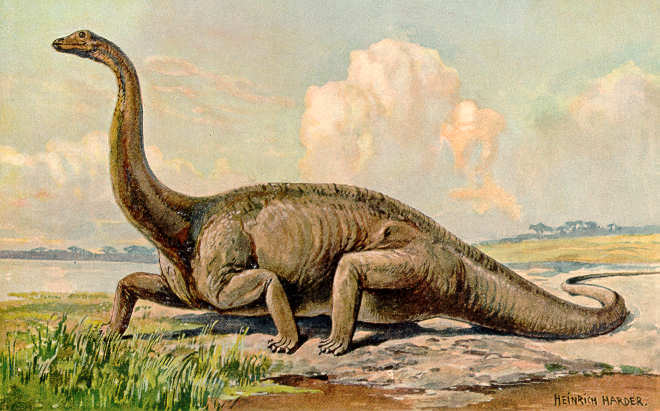
That a large sauropod-like dinosaur, known locally as Mokele-mbembe, has survived extinction and lives today in the rivers, lakes, and swamps of the Congo River basin, especially the Likouala region and Lake Tele in the Republic of the Congo, and that expeditions have repeatedly come close to documenting it but always narrowly failed to bring back proof.
Mokele-mbembe is a genuine piece of Congo-basin lore, and the search for it is real history: European accounts run back to 1909, and credentialed expeditions in the 1980s gathered local testimony, alleged tracks, and recorded sounds. What none of them produced, in more than a century, is a specimen, a bone, a clear photograph, or a scrap of DNA. The claim that a breeding population of sauropod dinosaurs survives undetected in the Likouala swamps is unproven and, on the biology, deeply unlikely: an ecosystem cannot hide a herd of elephant-sized animals without leaving physical traces. The stories deserve respect as folklore; the literal living-dinosaur reading is the part the evidence cannot carry.
Believed by: Cryptozoology enthusiasts and monster-hunting media audiences, and a distinct strand of young-earth creationist groups who hope a surviving dinosaur would undercut evolution
The full story
The animal that stops the rivers
In the swamp forests of the northern Republic of the Congo, along the slow brown rivers of the Likouala region and around the remote, shallow expanse of Lake Tele, local accounts tell of Mokele-mbembe. The Lingala name is often glossed as “one who stops the flow of rivers,” though it has been translated other ways too. The creature is usually described as large, roughly the bulk of an elephant or a hippopotamus, with a long flexible neck, a long tail, smooth brownish-grey skin, and an entirely vegetarian diet.
To central-African tradition that is one thing: a dangerous water animal, and in some tellings closer to a spirit-being than to any ordinary beast. To the Western enthusiasts who have chased it for a century, it is something more specific and more electrifying. A large body, a long neck, a long tail, a plant diet: to an eye raised on museum skeletons, that reads as a sauropod dinosaur, one of the long-necked giants that supposedly vanished with the rest of the non-avian dinosaurs some sixty-six million years ago. From that reading grows the whole legend of a living dinosaur hiding in the Congo.
The task here is to keep those two things apart: the genuine folklore and the genuine mystery of an under-explored jungle on one side, and on the other the very particular claim that a herd of surviving dinosaurs is out there, always just beyond the next bend in the river.
A century of expeditions
The Western search has a real and traceable history. In 1909 the German animal dealer Carl Hagenbeck wrote in his memoir, Beasts and Men, that separate informants had told him of a huge creature, half elephant and half dragon, in the swamps of central Africa. Written just as sauropod fossils were capturing the public imagination, the passage did much to plant the living-dinosaur idea.
The most influential early account came in 1913, when Captain Freiherr von Stein zu Lausnitz, surveying the German colony of Kamerun, recorded a careful local description of an animal called Mokele-mbembe: the size of an elephant, brownish-grey and smooth-skinned, with a long flexible neck, a long muscular tail, a single long tooth or horn, and a diet of a particular swamp plant. The First World War cut the expedition short, and von Stein's zoological notes were never formally published, which only deepened their later mystique.
The modern hunt took shape in the early 1980s. In 1980 and 1981 the University of Chicago biologist Roy P. Mackal and the herpetologist James Powell pushed into the Likouala swamps, gathering eyewitness testimony and reporting that people shown a picture of a sauropod identified it as the animal they knew. In 1981 the aerospace engineer Herman Regusters and his wife reached Lake Tele and claimed to see a long-necked creature cross the water, coming back with footprint casts, alleged droppings, and audio of a low roar; their film, they said, was ruined by the heat. In 1983 the Congolese biologist Marcellin Agnagna led a national expedition and reported a twenty-minute sighting, but failed to capture it on film. In each case the pattern is the same: a vivid report, and no specimen.
The case that something is out there
Steelman it fairly, because the impulse is not foolish. The world really does still surprise zoologists. The coelacanth, a fish thought extinct for some seventy million years, was hauled up alive off South Africa in 1938. The okapi was a Congo-forest rumor until Europeans finally caught up with it in 1901. The giant squid was long half-legend. Large animals can and do stay hidden from science for a surprisingly long time, and the Likouala swamps are genuinely remote, waterlogged, and thinly surveyed.
The testimony, too, is not nothing. Accounts of a long-necked water animal recur across many separate communities and languages of central Africa, gathered by different investigators over more than a hundred years, and often given in evident good faith by people describing their own rivers. A credentialed biologist thought it worth two expeditions. When descriptions line up that consistently, dismissing every last witness as mistaken or lying feels glib.
The coelacanth was “extinct” for seventy million years until someone pulled one out of the sea. Once you know that, an unexplored swamp starts to look like a place where anything might still be waiting.
And the region is not fully catalogued. Scientists still describe new species from the Congo basin, and the honest skeptic concedes that the map has blank spaces. If you already believe that nature keeps a few secrets, Mokele-mbembe is a seductive candidate for the biggest secret of all.
Why the biology says no
The trouble is that every one of those points survives contact with the evidence only until you ask for the animal itself. In more than a century of searching, no expedition has produced a bone, a tooth, a piece of skin, a droppings sample fit for DNA, or a single unambiguous photograph. The footprint casts are not diagnostic; the audio could be many things; the films fail, with almost comic reliability, at the exact moment they are needed. “Eyewitnesses, and nothing else” is the defining signature of a cryptid, and it is what Mokele-mbembe has always been.
The ecology makes the silence damning rather than merely disappointing. A sauropod the size of an elephant is not a shy salamander; a breeding population of them, which is what survival to the present would require, could not slip through an ecosystem without a trace. Animals that large eat enormous amounts, leave dung and feeding damage, and die and leave carcasses and bones. The forest elephants and hippos of the same swamps are known to science through exactly that kind of physical evidence. A herd of giant reptiles that leaves none, ever, is not hiding; on the balance of evidence, it is not there.
The coelacanth comparison also cuts the other way. A coelacanth is a metre-and-a-half fish in the deep sea, and even so it left a fossil record and eventually a body. There is no equivalent for sauropods: the rock record shows not one of them anywhere in the world after the end-Cretaceous extinction, a clean gap of some sixty-six million years that no living-dinosaur claim has ever filled.
Then there is how the reports were made. As the paleontologist Donald Prothero and others have detailed, several of the famous expeditions relied on leading interviews, in some cases showing witnesses a picture of a sauropod and asking whether that was the creature. That method can manufacture consistency out of thin air. The neat convergence on a dinosaur shape, so often cited as proof, may be less a fact about the swamp than an artifact of arriving there already certain what you would find.
The lost world, and the stories it borrows
Mokele-mbembe endures because it satisfies a deep wish: that the age of monsters is not quite over, that somewhere off the edge of the surveyed world a piece of the deep past is still breathing. The real precedents, the coelacanth, the okapi, give that wish a borrowed respectability, and the remote-jungle setting makes it permanently safe, because a failed expedition never disproves the animal, it only proves the jungle is big. The search can run forever without ever being wrong.
One strand of the modern hunt has a further motive that has to be named, because it shapes the record. Several expeditions have been funded or joined by young-earth creationist groups, for whom a living dinosaur is not just a zoological prize but a weapon: proof, as they see it, that dinosaurs and humans coexisted and that the standard timeline of an ancient Earth is wrong. That hope is scientifically mistaken (a surviving lineage would no more refute evolution than the coelacanth did), but it supplies a motivated persistence that keeps the search alive long after the evidence has run dry.
It is worth being careful and respectful about the other end of the story: the people whose lore this is. Central-African communities have their own rich traditions of powerful water creatures, and in many of them Mokele-mbembe is understood as a spirit or a category of dangerous being, not as a specimen to be caught and stuffed. Treating those accounts as failed attempts at Western zoology, to be graded on whether they correctly identified a dinosaur, gets the relationship backwards. The honest move is to take the folklore seriously as folklore, and to recognize that the “living dinosaur” frame is something outsiders brought with them.
No dinosaur in the Congo
On the core claim, that a population of sauropod dinosaurs survives in the Congo swamps and has repeatedly been glimpsed but never documented, the biology pushes hard against it. There is a real tradition, a real and well-documented history of searching, and a real, if modest, mystery in how little of the Likouala region has been formally surveyed. There is also, after more than a hundred years, not one specimen, bone, clear photograph, or usable sample, and a sound ecological reason to expect that a herd of giant animals could never have stayed that invisible.
The disciplined position holds a few things at once. The folklore is genuine and deserves to be understood on its own terms rather than mocked or mined. The jungle really is under-catalogued, and honest people can wonder what small surprises it still holds. And the specific living-dinosaur claim, however romantic, rests on eyewitness testimony alone, some of it shaped by leading questions and by searchers who knew in advance what they wanted to see. Keep the wonder; keep the respect for the people whose stories these are. The dinosaur is the part the evidence has not earned.
What's still unexplained
- What are witnesses actually describing? The question of how much of Mokele-mbembe is misidentified real megafauna, how much is spirit-being folklore, and how much is a genuinely uncatalogued animal has been studied more by cryptozoologists than by ethnographers, and a careful anthropological account of the tradition on its own terms is still largely missing.
- The Likouala region is genuinely under-surveyed biologically, and scientists do still describe new species from the Congo basin, mostly fish, insects, and small vertebrates. Nothing on the scale of a dinosaur is plausibly hiding there, but the honest point stands that the area is not fully catalogued.
- Why does the image of a large, long-necked water animal recur across so many separate central-African cultures and languages? That patterning is a real folklore question worth study in its own right, and it is a different question from whether any literal dinosaur exists.
Point by point
The claim: For over a century, people across the Congo basin have consistently described the same long-necked animal, and expeditions have collected tracks and recorded its sounds, so a real unknown creature must be out there.
What the record shows: Consistency of testimony is not the same as physical evidence, and testimony is all there is. In more than a hundred years of searching, no expedition has produced a carcass, a bone, a tooth, a scale, a fecal sample fit for DNA, or a single unambiguous photograph. The footprint casts and audio are not diagnostic of any dinosaur, and the films famously fail at the decisive moment. Worse, some of the interviews were leading: witnesses were shown pictures of sauropods and asked whether that was the animal, which can manufacture the very consistency later cited as proof.
The claim: The Congo swamps are vast, remote, and barely explored, so a relict dinosaur could plausibly survive there undetected.
What the record shows: Remoteness cannot hide a large animal from all physical trace. A breeding population of elephant-sized sauropods would need enormous quantities of food, would leave dung, bones, feeding damage, and carcasses, and would be seen far more clearly than a handful of disputed glimpses over a century. Large animals in remote places (forest elephants, okapi, hippos) are documented by exactly such physical evidence. And no sauropod fossil appears anywhere in the rock record after the end-Cretaceous extinction roughly 66 million years ago, leaving a gap no living-dinosaur claim has bridged.
The claim: The detailed description, long neck, long tail, elephantine body, vegetarian diet, matches a sauropod dinosaur too closely to be coincidence.
What the record shows: The match is at least partly an artifact of how the accounts were gathered and read. The same descriptions can fit a composite of known animals and river lore, and central-African traditions frequently describe Mokele-mbembe as a spirit-being or a category of dangerous water creature rather than a literal zoological specimen. When Western interviewers arrive already primed to find a dinosaur, and hand witnesses a sauropod picture, a sauropod is what tends to come back. The folklore is genuine; the taxonomic identification is imposed on it from outside.
The claim: Serious scientists, including a University of Chicago biologist, took the search seriously and gathered real field data, so it cannot be dismissed.
What the record shows: Roy Mackal was a credentialed biologist and his fieldwork was real, but credentials do not substitute for evidence, and he came home with testimony rather than proof. Skeptics including Donald Prothero have detailed the methodological problems: reliance on leading questions, over-reading of ambiguous tracks and sounds, and a starting assumption that the animal existed. A scientist can chase a hypothesis honestly and still be wrong when the physical evidence never arrives, which is precisely what happened here.
The claim: Finding a living dinosaur would overturn evolution, which is why the establishment resists looking seriously.
What the record shows: This is a motivation, not an argument, and it is mistaken about the science. Evolution does not forbid ancient lineages from persisting; the coelacanth and the horseshoe crab are living examples of very old groups. A surviving dinosaur would be a spectacular zoological discovery, but it would not contradict common descent or an old Earth. The hope that it would is what draws some young-earth creationist groups to fund these expeditions, and it colors the search, but it has no bearing on whether the animal is actually there.
Timeline
- 1909The German big-game dealer Carl Hagenbeck writes in his autobiography, Beasts and Men, that separate informants had described to him a huge, part-elephant, part-dragon creature said to live in the swamps of central Africa. The passage, framed around the then-recent discovery of sauropod fossils, plants the idea in the Western imagination that a living dinosaur might still walk the Congo.
- 1913Captain Ludwig Freiherr von Stein zu Lausnitz, leading a German survey of the colony of Kamerun (part of which is now northern Congo), records a detailed local account of an animal called Mokele-mbembe near the Ubangi, Sangha, and Likelemba rivers: brownish-grey, smooth-skinned, roughly the size of an elephant, with a long flexible neck, a long tail, a single long tooth or horn, and an entirely vegetarian diet. The First World War interrupts the expedition and his zoological notes are never formally published.
- 1980–1981Roy P. Mackal, a University of Chicago biologist, and the herpetologist James Powell mount two expeditions into the Likouala swamps. They collect extensive eyewitness testimony, and Mackal reports that informants shown pictures of a sauropod pointed to it as Mokele-mbembe. They bring back no specimen, no photograph, and no physical proof.
- 1981Separately, the American aerospace engineer Herman Regusters and his wife Kia reach Lake Tele and claim to have seen a long-necked animal cross the water. They return with footprint casts, alleged droppings, and audio recordings of a low roaring sound; their film is said to have been ruined by heat and humidity, leaving only a single indistinct image.
- 1983Marcellin Agnagna, a Congolese biologist with the Ministry of Water and Forests, leads a national expedition to Lake Tele and reports watching a Mokele-mbembe for roughly twenty minutes. He fails to film it, giving accounts that variously blame a lens cap left on and a camera set to the wrong mode, and the sighting yields no usable footage.
- 1985–2000sThe Scottish explorer William Gibbons and others mount repeated expeditions, several of them funded or joined by young-earth creationist groups who hope a living dinosaur would challenge evolution. Mackal's 1987 book, A Living Dinosaur? In Search of Mokele-Mbembe, becomes the standard cryptozoological account. Still no specimen, bone, or clear photograph emerges.
- 2011–2013The paleontologist Donald Prothero and colleagues publish detailed skeptical analyses, arguing that the expeditions relied on leading interviews, that the swamp could not hide a breeding population of giant sauropods, and that Mokele-mbembe is best understood as folklore rather than a surviving dinosaur.
Mokele-mbembe is a genuine piece of Congo-basin lore, and the search for it is real history: European accounts run back to 1909, and credentialed expeditions in the 1980s gathered local testimony, alleged tracks, and recorded sounds. What none of them produced, in more than a century, is a specimen, a bone, a clear photograph, or a scrap of DNA. The claim that a breeding population of sauropod dinosaurs survives undetected in the Likouala swamps is unproven and, on the biology, deeply unlikely: an ecosystem cannot hide a herd of elephant-sized animals without leaving physical traces. The stories deserve respect as folklore; the literal living-dinosaur reading is the part the evidence cannot carry.
Reviewed by Colin Peterson · Last reviewed July 12, 2026 · How we rate
Common questions
Is Mokele-mbembe true?
Mokele-mbembe is a genuine piece of Congo-basin lore, and the search for it is real history: European accounts run back to 1909, and credentialed expeditions in the 1980s gathered local testimony, alleged tracks, and recorded sounds. What none of them produced, in more than a century, is a specimen, a bone, a clear photograph, or a scrap of DNA. The claim that a breeding population of sauropod dinosaurs survives undetected in the Likouala swamps is unproven and, on the biology, deeply unlikely: an ecosystem cannot hide a herd of elephant-sized animals without leaving physical traces. The stories deserve respect as folklore; the literal living-dinosaur reading is the part the evidence cannot carry.
What is Mokele-mbembe?
Deep in the swamp forests of the northern Republic of the Congo, local accounts describe Mokele-mbembe, a large, long-necked animal that lives in the rivers and lakes of the Likouala region and around remote Lake Tele. Western enthusiasts read those descriptions as a surviving sauropod dinosaur and have mounted expedition after expeditio…
What does the evidence show?
Consistency of testimony is not the same as physical evidence, and testimony is all there is. In more than a hundred years of searching, no expedition has produced a carcass, a bone, a tooth, a scale, a fecal sample fit for DNA, or a single unambiguous photograph. The footprint casts and audio are not diagnostic of any dinosaur, and the…
Why do people believe it?
The romance of a lost world is powerful, and it has real precedents. The coelacanth, thought extinct for millions of years, turned up alive in 1938; the okapi and the giant squid were once dismissed as native tales. Those genuine surprises make it feel reasonable that one more prehistoric holdout could still be waiting in an unexplored s…
What is still unresolved?
What are witnesses actually describing? The question of how much of Mokele-mbembe is misidentified real megafauna, how much is spirit-being folklore, and how much is a genuinely uncatalogued animal has been studied more by cryptozoologists than by ethnographers, and a careful anthropological account of the tradition on its own terms is s…
Sources
- 1.A Living Dinosaur? In Search of Mokele-Mbembe, Roy P. Mackal, E. J. Brill (1987)
- 2.Roy Mackal's wild speculation, The University of Chicago Magazine
- 3.Abominable Science! Origins of the Yeti, Nessie, and Other Famous Cryptids, Daniel Loxton and Donald R. Prothero, Columbia University Press (2013)
- 4.The Congo's Dinosaur of Discord, New Lines Magazine
- 5.The Tracks of the Mokele-mbembe, Damn Interesting
- 6.In Search of the Congo Dinosaur, Institute for Creation Research
- 7.Mokele-mbembe, Wikipedia
Embed this case file on your site
Paste this snippet to show this case file as a small card, with a link back to the full write-up. Free to use.
<iframe src="https://theconspiratory.com/embed/mokele-mbembe" title="The Conspiratory verdict" width="520" height="190" style="border:0;max-width:100%" loading="lazy"></iframe>Help us investigate
This is a living case file. If you spot an error or know evidence we missed, tell us, and weigh in on where you land.
Where do you land?
Cast your read on this one.
Comments
Add your take. Comments are read and approved by a human before they appear, so keep it on topic and civil. Please do not accuse named, living people of crimes.