Neuralink and brain-computer implants are a covert program to read minds and control the population
By Colin PetersonJuly 12, 2026
Where the evidence lands →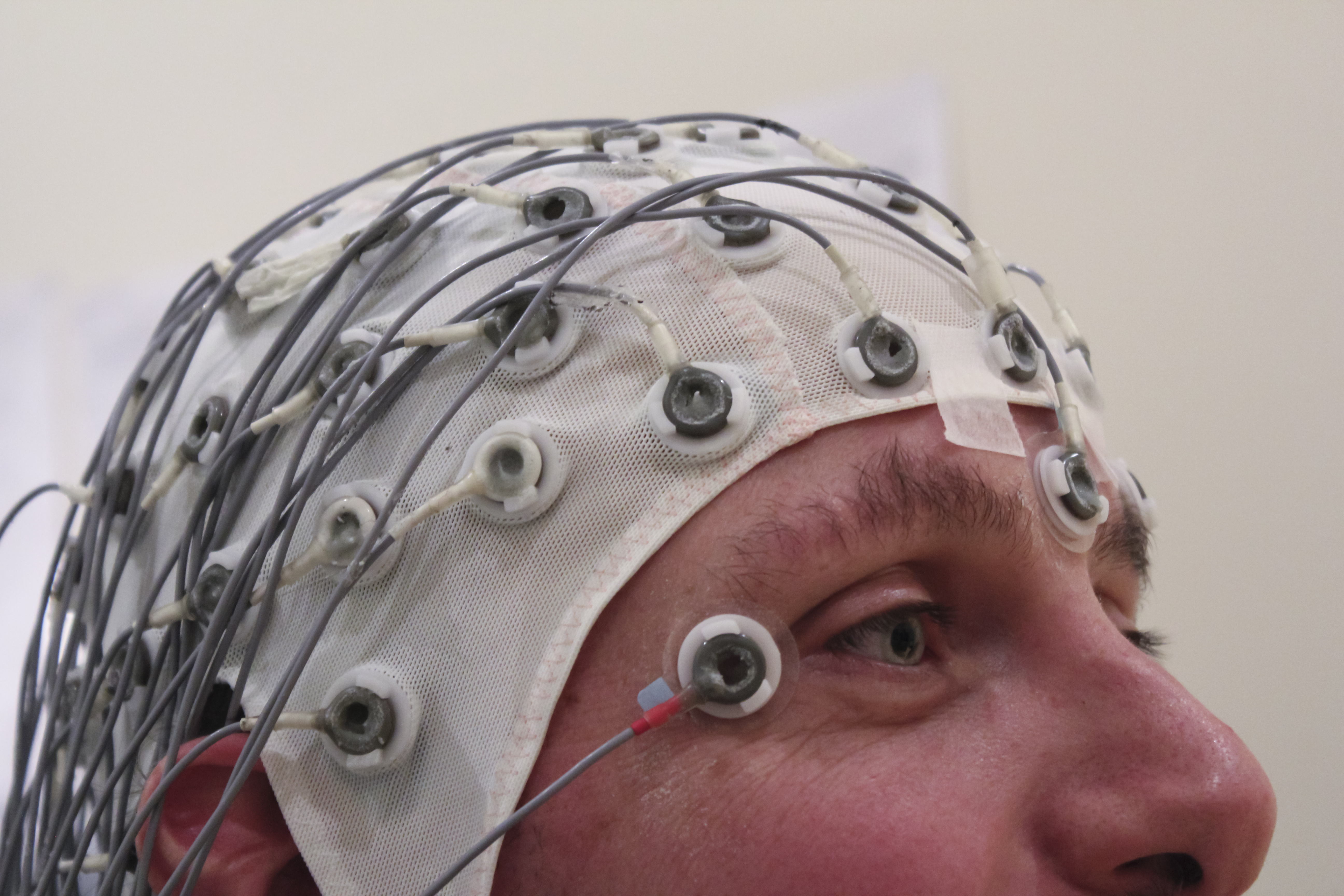
That Neuralink and brain-computer interfaces generally are not what they appear to be, a medical effort to restore function to people with paralysis, but the visible edge of a covert program: that the implants are secretly designed to read people's private thoughts, to remotely control or reprogram their behavior, to feed a mass-surveillance apparatus, and ultimately to microchip the population against its will, with the medical framing serving as deliberate cover.
The technology is real and the concerns worth taking seriously are real, but the specific claim rated here is not established. Neuralink is a genuine neurotechnology company that won FDA clearance for a human trial and, in January 2024, implanted a device that let a paralyzed man move a cursor with his thoughts. Brain-computer interfaces are a decades-old medical field. What the evidence does not support is the leap to a covert agenda: that the medical story is a cover for a secret plan to read arbitrary thoughts, remotely puppet behavior, or forcibly chip the public. Today's implants decode a narrow band of movement intention, not the contents of the mind; they require invasive brain surgery and consent, which is the opposite of something done secretly at scale. Legitimate questions about animal welfare, device safety, neural-data privacy, and overheated hype deserve scrutiny on their own terms, and they are not the same thing as a mind-control conspiracy.
Believed by: A broad online audience spanning anti-vaccine and anti-'microchip' communities, transhumanism skeptics, religious end-times readings of the 'mark of the beast', and general distrust of Elon Musk and Big Tech, amplified by short-form video
The full story
A real chip, and the story wrapped around it
The starting fact is genuinely startling: there is a company, founded by one of the most famous people alive, whose product is a computer chip surgically placed inside a living human brain. Neuralink is real. In January 2024 a man named Noland Arbaugh, paralyzed below the shoulders, received one of its implants and was soon shown moving a cursor, playing chess, and browsing the web using nothing but his intention to move. That is not a rumor. It happened, under an FDA-cleared clinical trial, and it was reported everywhere.
Around that documented core has grown a much larger and darker story: that the medical framing is a cover, and that the true purpose of Neuralink, and of brain-computer interfaces generally, is to read people's private thoughts, to control their behavior from the outside, to feed a mass-surveillance machine, and eventually to “chip” the whole population against its will. When Arbaugh's implant made headlines, many read it not as a medical milestone but as confirmation that the program had begun.
The task here is to hold the two apart. The technology is real and worth understanding accurately. Some criticisms of Neuralink are real too. But the specific claim, a covert mind-control agenda hidden behind a medical story, is the part that has to be tested against what these devices can actually do, and it does not survive the test.
What a brain-computer interface actually is
Brain-computer interfaces are not new, and they did not begin with Elon Musk. For roughly two decades, academic teams have implanted electrode arrays in the brains of volunteers with paralysis and used them to restore a measure of independence. The BrainGate consortium, running clinical trials since around 2004, showed people with spinal-cord injuries and ALS moving robotic arms, typing, and controlling cursors by imagining movement. This is a legitimate, peer-reviewed field of medicine with a long track record.
The mechanism is important, because it is where the conspiracy claim goes wrong. A motor BCI places tiny sensors near the motor cortex, the strip of brain that plans and commands movement. When a person imagines moving, those neurons fire in patterns, and a decoder, trained on that specific person, learns to map the patterns onto an action: cursor left, cursor up, click. Neuralink's N1 device does this at higher resolution than earlier systems, with many fine threads carrying more than a thousand electrode contacts, but the principle is the same one BrainGate established.
Two things follow. First, the device is mostly reading out a narrow, trained signal, the intention to make a movement, not scanning the mind. Second, it is the user who is in control: the whole point is to let a paralyzed person drive a computer. Grasp that, and most of the dramatic claims start to look like what they are, extrapolations from fiction rather than descriptions of the hardware.
The case for taking it seriously
Steelman the unease honestly, because not all of it is foolish. A private company is putting chips in human brains, its founder speaks openly about someday merging human minds with artificial intelligence, and the whole enterprise has an unmistakably futuristic, boundary-dissolving quality. If you already worry that technology is outrunning the rules meant to govern it, Neuralink is not a reassuring sight, and dismissing every concern as paranoia would itself be a failure of nerve.
The specific worries have real substance when kept in their proper form. Neuralink drew credible criticism over the welfare of its research animals, with federal scrutiny and records describing the deaths of monkeys, sheep, and pigs. Any device implanted in the brain carries genuine risks: surgery, infection, hardware failure, unknown long-term effects. And the data these devices generate is intimate enough that Colorado, California, and other states have started passing laws to protect neural data specifically, with U.S. senators urging federal regulators to act.
A chip in a human brain is startling enough that unease about it is not, by itself, irrational. The question is which unease the evidence actually supports.
None of that is a mind-control conspiracy. It is the ordinary, necessary friction of a powerful new technology meeting the law and public ethics. But it explains why the darker story finds such ready soil. When some of the criticisms are legitimate, the illegitimate ones are easy to wave through on the same tide of concern.
Where the mind-control claim breaks down
The conspiracy rests on three capabilities the technology does not have, and a fourth assumption that gets the facts backward.
It cannot read your thoughts.Decoding a trained movement-intention signal is not the same as extracting memories, inner monologue, or beliefs. A motor BCI learns, for one specific user, that a certain pattern means “move the cursor up.” There is no published system, at Neuralink or anywhere else, that pulls arbitrary private thoughts out of a brain, and the physics of sampling a small patch of motor cortex does not give you that.
It cannot remotely control you.In today's motor implants the information mostly flows out of the brain to a computer, letting the person act; the computer is not installing intentions or overriding behavior. Limited “write” signals exist in research, such as experimental sensory feedback, but nothing demonstrated turns a person into a remotely steered puppet, and Neuralink has shown no such thing.
It cannot secretly chip a population. Getting the device in requires invasive brain surgery: a robot threading electrodes through an opening in the skull, in a hospital, with informed consent and regulatory approval. You cannot do that covertly, at scale, to people who do not know it is happening. The cost, risk, and difficulty are exactly why the trials involve a small number of consenting volunteers with severe paralysis.
And the assumption that secrecy proves the plot gets it backward. A genuinely covert mass-control program would not livestream a pig's brain activity on stage, publish its results, register a public trial the FDA oversees, and put its first patient on camera. The overselling of the long-term vision is real, and worth criticizing. But visibility and hype are the opposite of the concealment the theory requires.
Why the story sticks
The theory endures because it starts from a real and unsettling object, a chip in a human brain, and because the company's own language points toward the horizon it fears. When Musk talks about eventually linking minds to machines, the distance from that far-future rhetoric to a present-day plot feels short, even though the working device does something far narrower.
It also lands in ground already prepared. Pandemic-era rumors about secret microchips, decades of fear about government tracking, and religious readings of an implanted “mark” foretold in prophecy were all in circulation before Neuralink arrived. The company became a vivid, concrete vessel for anxieties that predated it, which is part of why the first human implant was read by some not as medicine but as fulfillment.
And it feeds on justified distrust. Skepticism of Big Tech, of concentrated power, and of a founder whose claims often outrun his products is reasonable, and the animal-welfare findings gave that skepticism a real grievance to hold. The move the theory makes is to take that warranted suspicion and stretch it past the evidence, from “this company should be watched closely” to “this is a secret program to control our minds.” The first is prudence. The second is a claim the record does not carry.
Real implants, no mind control
The specific claim, that Neuralink and brain-computer interfaces are a covert program to read minds and control the population behind a medical cover, is not established. That is not because nothing here deserves scrutiny, but because the mechanism the theory needs does not exist in the technology as it actually works. Current implants decode a narrow band of movement intention; they do not read arbitrary thoughts or override behavior, and implantation is consensual brain surgery that cannot be done secretly at scale.
The honest position keeps two things in view at once. The real, mainstream concerns are worth pressing hard: the welfare of research animals, the safety and longevity of implanted devices, and above all the privacy of neural data, which lawmakers have only just started to protect. Those are the questions that deserve energy. Spending it instead on a mind-control plot the evidence cannot support does the genuine issues a disservice, and hands the companies an easy way to wave off criticism as paranoia. Watch this technology closely, regulate it seriously, and keep that real work separate from a story the record does not bear out.
What's still unexplained
- How should sensitive neural data be governed? Even limited motor-intent data is personal, and a handful of states have only just begun to regulate it. What rules should apply to the collection, storage, sale, and security of brain data is a genuine, unresolved policy question, entirely separate from any conspiracy.
- What are the long-term safety and reliability profiles of implanted BCIs? The human trials are young. How the devices, and the fine electrode threads, hold up over years, how often they fail or degrade, and what the risks of the surgery are over a lifetime are real medical unknowns still being studied.
- Where is the line between therapy and enhancement, and who decides? BCIs today aim to restore lost function, but the same tools raise longer-term ethical questions about augmentation, consent, and access that ethicists and regulators have not settled.
- Did Neuralink's animal testing meet the standards it should have? The welfare criticisms and federal scrutiny are documented; how fully they were resolved, and whether oversight of such research is adequate, remains a fair subject of debate on its own merits.
Point by point
The claim: Neuralink is fake medicine: the real purpose of the implant is to read your private thoughts and beam them out for surveillance.
What the record shows: Current brain-computer interfaces do not read thoughts in that sense. Neuralink's device, like the academic BrainGate system before it, records electrical activity from a small patch of the motor cortex, the region that plans movement, and a decoder learns to map those signals onto an intended action, such as moving a cursor left. That is a narrow, trained, movement-intention channel. It cannot pull arbitrary memories, inner speech, or the general contents of a mind, and nothing in the published results demonstrates such a capability. Decoding 'I am trying to move the cursor up' is a world away from reading a person's thoughts.
The claim: The implants let operators remotely control people, overriding their behavior like a puppet.
What the record shows: The information in today's motor BCIs flows the other way. The implant mainly reads signals out of the brain so the user can drive a device; it is the person controlling the computer, not the computer controlling the person. Some research systems do write limited signals in, for example experimental sensory feedback, but there is no demonstrated technology that installs new intentions or hijacks a person's actions, and no evidence Neuralink has one. The 'remote control' image comes from science fiction, not from the trial record.
The claim: This is how they will secretly microchip the whole population.
What the record shows: Implantation is major, invasive neurosurgery. A robot threads fine electrodes into the brain through an opening in the skull, in a hospital, with the participant's informed consent and regulatory oversight. That is not something that can be done covertly, en masse, or without a person's knowledge; you cannot secretly perform brain surgery on a population. The procedure's difficulty, cost, and risk are precisely why trials so far involve a small number of volunteers with serious paralysis, not a rollout to the public.
The claim: Because Elon Musk and a powerful company are behind it and it sounds dystopian, the sinister agenda must be real.
What the record shows: A charismatic, controversial founder and grand rhetoric are not evidence of a hidden plot. Musk's public statements have often outrun the technology, and skepticism about the hype is warranted. But that cuts against the conspiracy as much as for it: an operation genuinely built for covert mass control would not stage live pig demonstrations, publish results, register a public FDA-overseen trial, and give interviews. The visibility and the overselling are real. A concealed mind-control program is a different claim, and it is not what the record shows.
The claim: There is nothing here to worry about, so the concerns are all paranoia.
What the record shows: This overcorrects in the other direction, and it is also wrong. There are serious, legitimate concerns, they are simply not the mind-control story. Neuralink faced credible criticism over the welfare of its test animals. Any implanted device raises real questions of surgical risk, infection, long-term safety, and hardware failure. And neural data, even limited motor data, is sensitive enough that Colorado, California and other states have begun writing privacy protections for it. 'We should regulate neural-data privacy and hold device makers to a high safety and ethics bar' is a reasonable position. 'It is a secret program to read minds and control the population' is a separate, unproven one.
Timeline
- 2016–2017Neuralink is founded in 2016 by Elon Musk and a group of scientists and engineers, and is first reported publicly in early 2017. Musk frames it in sweeping terms, restoring function to the disabled in the near term, and, further out, a 'high-bandwidth' link between the human brain and computers to keep pace with artificial intelligence. The grand, futuristic pitch is present from the very start.
- 2019–2020Neuralink holds public demonstrations, showing implanted rats and, in 2020, a pig named Gertrude whose neural activity was streamed live on stage. The showmanship draws huge attention and, alongside pandemic-era rumors about secret 'microchips', helps fuse Neuralink in the public imagination with older fears about being tracked or controlled through an implant.
- 2022Reports surface that Neuralink is under a federal animal-welfare inquiry, and animal-rights groups obtain records describing the deaths of large numbers of test animals, including monkeys, sheep and pigs. The company defends its practices, but the episode becomes a lasting and legitimate source of criticism, separate from any mind-control claim.
- 2023-05The U.S. Food and Drug Administration grants Neuralink clearance to begin its first in-human clinical study, after having previously declined an earlier application over safety questions. Regulatory oversight, not secrecy, governs the path to a human trial.
- 2024-01-28Neuralink implants its first human participant, Noland Arbaugh, a man paralyzed below the shoulders after a diving accident. Within weeks he is shown using the implant to move a computer cursor, play chess and video games, and browse the web by intention alone. It is a real milestone, and it is immediately absorbed into the conspiracy narrative as 'proof' the chipping has begun.
- 2024–2026Neuralink enrolls additional participants and expands its PRIME study to sites in the United States, Canada, the United Kingdom and the United Arab Emirates. In parallel, U.S. states begin passing neural-data privacy laws (Colorado and California first, in 2024), reflecting genuine, mainstream concern about how brain data should be protected, a debate that runs alongside, and is distinct from, the mind-control theory.
From the case file
The actual records: declassified, released, or leaked. We link straight to each document in its official archive, so you never have to take our word for it. Read the originals yourself.
Implanted Brain-Computer Interface Devices for Patients With Paralysis or Amputation: Non-Clinical Testing and Clinical Considerations; Guidance for Industry and FDA Staff; Availability
The official Federal Register announcement of the FDA's BCI guidance. It documents the public, on-the-record process by which the government sets expectations for these devices, the antithesis of a secret program.
Read the document: Federal Register →PRIME Study: Precise Robotically Implanted Brain-Computer Interface (N1 Implant and R1 Robot) in Quadriplegia
The public clinical-trial registry entry (NCT06429735) for Neuralink's first-in-human study. It lays out the device, the eligibility criteria (adults with quadriplegia from spinal-cord injury or ALS), and the safety-and-function aims, showing the human trial is publicly documented and consent-based, not hidden.
Read the document: ClinicalTrials.gov (NIH) →The technology is real and the concerns worth taking seriously are real, but the specific claim rated here is not established. Neuralink is a genuine neurotechnology company that won FDA clearance for a human trial and, in January 2024, implanted a device that let a paralyzed man move a cursor with his thoughts. Brain-computer interfaces are a decades-old medical field. What the evidence does not support is the leap to a covert agenda: that the medical story is a cover for a secret plan to read arbitrary thoughts, remotely puppet behavior, or forcibly chip the public. Today's implants decode a narrow band of movement intention, not the contents of the mind; they require invasive brain surgery and consent, which is the opposite of something done secretly at scale. Legitimate questions about animal welfare, device safety, neural-data privacy, and overheated hype deserve scrutiny on their own terms, and they are not the same thing as a mind-control conspiracy.
Reviewed by Colin Peterson · Last reviewed July 12, 2026 · How we rate
Common questions
Is Neuralink mind control true?
The technology is real and the concerns worth taking seriously are real, but the specific claim rated here is not established. Neuralink is a genuine neurotechnology company that won FDA clearance for a human trial and, in January 2024, implanted a device that let a paralyzed man move a cursor with his thoughts. Brain-computer interfaces are a decades-old medical field. What the evidence does not support is the leap to a covert agenda: that the medical story is a cover for a secret plan to read arbitrary thoughts, remotely puppet behavior, or forcibly chip the public. Today's implants decode a narrow band of movement intention, not the contents of the mind; they require invasive brain surgery and consent, which is the opposite of something done secretly at scale. Legitimate questions about animal welfare, device safety, neural-data privacy, and overheated hype deserve scrutiny on their own terms, and they are not the same thing as a mind-control conspiracy.
What is Neuralink mind control?
Neuralink, the brain-implant company founded by Elon Musk, is real, and so is the science behind it: brain-computer interfaces have helped paralyzed people operate computers for two decades. In January 2024 Neuralink implanted its first human participant, who used the device to move a cursor by intention alone. A popular claim takes that…
What does the evidence show?
Current brain-computer interfaces do not read thoughts in that sense. Neuralink's device, like the academic BrainGate system before it, records electrical activity from a small patch of the motor cortex, the region that plans movement, and a decoder learns to map those signals onto an intended action, such as moving a cursor left. That i…
Why do people believe it?
The technology really does put a computer chip inside a human brain, which sounds exactly like the premise of a hundred dystopian films. When reality resembles science fiction this closely, the fictional endings feel like plausible predictions rather than stories.
What is still unresolved?
How should sensitive neural data be governed? Even limited motor-intent data is personal, and a handful of states have only just begun to regulate it. What rules should apply to the collection, storage, sale, and security of brain data is a genuine, unresolved policy question, entirely separate from any conspiracy.
Sources
- 1.Neuralink, Wikipedia
- 2.Noland Arbaugh, Wikipedia
- 3.Implanted Brain-Computer Interface (BCI) Devices for Patients with Paralysis or Amputation: Non-clinical Testing and Clinical Considerations, U.S. Food and Drug Administration (2021)
- 4.Interim Safety Profile From the Feasibility Study of the BrainGate Neural Interface System, Neurology (via PubMed Central) (2023)
- 5.Clinical trials show encouraging safety profile for brain-computer interface turning thoughts into action, Brown University (2023)
- 6.Musk's Neuralink Under Federal Investigation Over Alleged Animal Welfare Abuses, Report Says, Forbes (2022)
- 7.Investigation Uncovers Disturbing Details of Neuralink Monkey Study, Animal Welfare Institute (2023)
- 8.States Pass Privacy Laws To Protect Brain Data Collected by Devices, KFF Health News (2025)
- 9.18 months after becoming the first human implanted with Elon Musk's brain chip, Neuralink 'Participant 1' Noland Arbaugh says his whole life has changed, Fortune (2025)
Embed this case file on your site
Paste this snippet to show this case file as a small card, with a link back to the full write-up. Free to use.
<iframe src="https://theconspiratory.com/embed/neuralink-mind-control" title="The Conspiratory verdict" width="520" height="190" style="border:0;max-width:100%" loading="lazy"></iframe>Help us investigate
This is a living case file. If you spot an error or know evidence we missed, tell us, and weigh in on where you land.
Where do you land?
Cast your read on this one.
Comments
Add your take. Comments are read and approved by a human before they appear, so keep it on topic and civil. Please do not accuse named, living people of crimes.