Life on Earth did not begin here but arrived from space, seeded by microorganisms or the chemical building blocks of life carried on comets, meteorites, and interstellar dust
By Colin PetersonJuly 8, 2026
Where the evidence lands →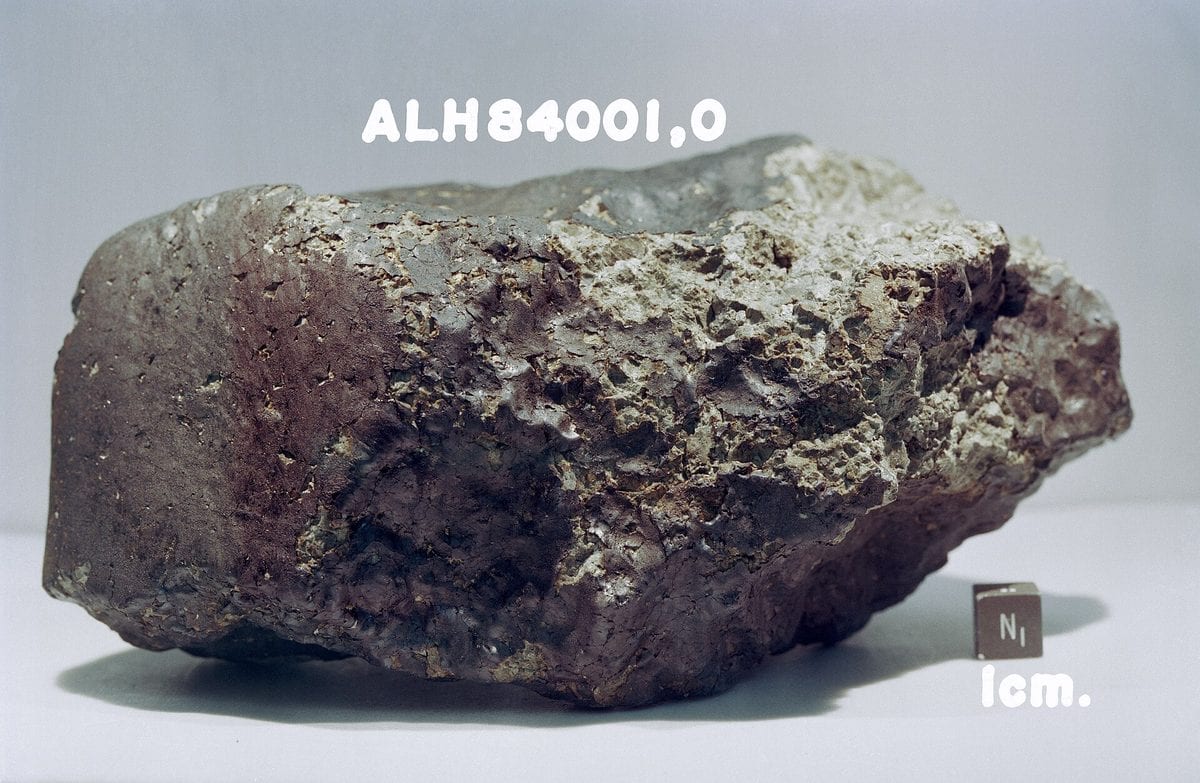
That life on Earth originated somewhere else in the cosmos and was delivered here, either as viable microorganisms riding inside comets, meteorites, or dust grains (lithopanspermia and radiopanspermia), or, in the directed version, sent deliberately by an extraterrestrial intelligence, so that terrestrial biology is a transplant rather than a native development, and abiogenesis on Earth is not how life here began.
Panspermia is a serious scientific hypothesis, not a conspiracy theory, and part of it is well supported. What is documented is that the chemical precursors of life, amino acids, nucleobases, and other organic molecules, form in space and are demonstrably delivered to Earth aboard meteorites and returned asteroid samples (Murchison in 1969, Bennu in 2025); this “pseudo-panspermia” of the ingredients is mainstream. The claim we rate is larger: that living organisms, or life itself, originated off Earth and were transported here, so that biology did not begin on this planet. No verified evidence shows that a living cell ever made the interplanetary crossing and took root here, and even if one had, panspermia would relocate the origin of life rather than explain it. The building blocks came from space; whether the life did is an open question, not a settled one.
Believed by: A spectrum rather than a single camp. The weak version, that life's chemical building blocks arrive from space, is broadly accepted by astrobiologists and NASA. The strong version, that whole organisms seeded Earth, is a minority scientific position held by a handful of researchers, most prominently the late Fred Hoyle and Chandra Wickramasinghe, and is not the mainstream view of how life began.
The full story
What is documented
It helps to split panspermia into two claims of very different strength, because one is close to settled and the other is not.
The weak claim, sometimes called pseudo-panspermia, is that the chemical building blocks of life form in space and are delivered to Earth. This is now well established. The Murchison meteorite, which fell in Australia in 1969, was found to carry amino acids, and decades of work have identified dozens of them along with nucleobases, the components of DNA and RNA, with isotope signatures pointing away from earthly contamination. In 2025, NASA reported that pristine samples returned from the asteroid Bennu contained thousands of organic compounds, 14 of the 20 amino acids that terrestrial proteins use, and all of the DNA and RNA nucleobases. A young Earth was, on this evidence, showered with the raw chemistry of life from above.
The strong claim is the one this file actually rates: that life itself, living organisms rather than mere molecules, originated somewhere off Earth and was carried here, so that terrestrial biology is a transplant. That is a different order of assertion, and the evidence for it is not of the same quality. Proving that amino acids ride meteorites is not the same as proving that a living cell ever did, survived the trip, and took root. The first is documented. The second is the open question.
The serious case for it
This is not a story to wave away, and it does not belong in the same bin as staged moon landings or hidden assassinations. Panspermia is a legitimate scientific hypothesis with a distinguished lineage and a genuine evidentiary core.
Consider who has taken it seriously. It was named by Anaxagoras in antiquity, given a physical mechanism by the Nobel laureate Svante Arrhenius in 1903, and argued in its directed form by Francis Crick, co-discoverer of the structure of DNA, together with Leslie Orgel in 1973. When people of that stature put an idea on the table, it earns a hearing that a message-board theory never could.
Consider, too, the two pillars that hold real weight. First, life's building blocks demonstrably arrive from space, confirmed in meteorites and now in contamination-controlled asteroid samples. Second, laboratory and orbital experiments show that hardy microbes can survive the space environment: radiation-resistant Deinococcus bacteria endured years on the exterior of the International Space Station, and shielded spores lasted years inside simulated meteorite material. Put those together, the ingredients come from above, and a protected microbe could in principle survive the journey, and the hypothesis stops looking outlandish.
Life's building blocks really do fall from the sky, and hardy microbes really can survive in space. The honest question is not whether panspermia is crazy; it is how far that established chemistry actually carries the larger claim.
That is the case at full strength: not that life has been shown to be an import, but that the delivery of its chemistry is proven, the survival of its organisms is plausible, and the origin of life on Earth is itself unsolved, leaving real room for the idea.
Where the strong claim falls short
The gap is between possible and demonstrated, and it is wide. Every genuinely supportive fact establishes that living organisms could travel between worlds, not that any ever did.
The building-block evidence, decisive as it is, stops short of life. Amino acids and nucleobases are not organisms.A meteorite full of the alphabet of biology is not a meteorite carrying a sentence, still less a living author. The leap from “the ingredients came from space” to “the life came from space” is precisely the leap the evidence does not make.
The survival experiments have the same limit read from the other direction. That a shielded microbe can endure orbit for a few years shows the crossing is not impossible; it does not show it happened. No sample, no mission, and no observation has ever documented a viable organism completing the full sequence of ejection, transit, entry, and colonization. A demonstration of endurance is not a record of a voyage.
And there is a deeper problem that even complete success would not fix. Panspermia relocates the origin of life; it does not explain it. If the first cell formed on Mars, or on a comet, or around another star, the question of how non-living chemistry first became living chemistry is simply asked about that place instead. As an answer to the ultimate origin, it moves the mystery rather than dissolving it, which is why mainstream science treats abiogenesis, not panspermia, as the central question.
The lesson of the Mars rock
The clearest illustration of how high the bar sits is the one time a serious team believed it had cleared it. In 1996, a NASA-led group announced possible fossilized microbes in ALH84001, a meteorite blasted off Mars and recovered in Antarctica. The claim drew a presidential statement and worldwide headlines, and for a moment it looked as though life's travel between planets had been caught in the act.
Then the scrutiny arrived. The tiny tube-shaped structures were far smaller than known cells; the magnetite crystals held up as biological could be produced without life; the organic molecules could have prosaic origins or reflect terrestrial contamination. One by one, the biosignatures were shown to be explainable without invoking biology, and most scientists no longer treat ALH84001 as evidence of Martian life.
The Mars rock is not a story of fraud but of a real claim that did not survive testing. It is the standard any panspermia evidence has to meet, and so far nothing has met it.
The episode is worth remembering for both its halves. It confirmed that rocks genuinely are traded between planets, the transport channel panspermia needs. And it showed how demanding a real biosignature has to be, and how readily features that look like life turn out not to be. Panspermia's strong claim has never produced evidence that clears that bar.
Why the idea endures
Panspermia keeps a hold on the imagination for reasons that are partly evidentiary and partly emotional, and it is worth being honest about both.
It endures because half of it is true. The steady confirmation that life's chemistry falls from the sky gives the whole idea a current of legitimacy, and each new headline about organics on a comet or an asteroid reads, to many, as one more step toward vindicating the larger claim, even when only the chemistry advances.
It endures because the real gap is real. Science has not yet reconstructed the full path from chemistry to the first living cell. Where there is an honest unknown, alternatives grow, and panspermia offers a way to picture the hardest step occurring somewhere else, conveniently out of sight.
And it endures because it answers something the heart wants answered. The notion that we are literally of the cosmos, that the material of life drifted down from the stars, is a genuinely moving one, and panspermia dresses that feeling in the language of mechanism. The pull of the idea outruns the evidence for its strong form, which is exactly why the distinction between the two versions has to be kept in view.
The line between chemistry and life
Hold the two claims apart, because the whole discipline of this case is in the space between them. The weak claim is established: the chemical building blocks of life form in space and are delivered to Earth, proven in the Murchison meteorite and in the returned samples of asteroid Bennu. On that, there is no serious dispute, and this file does not manufacture one.
The strong claim is not established: that living organisms, or the origin of life itself, came from elsewhere and seeded this planet. No verified evidence shows a viable organism ever making the interplanetary crossing and taking root, the one apparent instance (ALH84001) did not survive scrutiny, and even a successful transfer would relocate the origin of life rather than explain it.
This is not a debunking, and it should not be read as one. Panspermia is real science with a distinguished pedigree and a confirmed core, and it may yet earn a stronger verdict if a future mission finds life with a separate origin, or documents a genuine interplanetary transfer. Until then the ingredients of life demonstrably came from space, and whether the life did remains an open question.
Watch
What's still unexplained
- Could a viable microorganism actually survive ejection from a planet, years or millennia in space, and atmospheric entry, and then establish itself on arrival? Survival experiments show the pieces are individually plausible, but the complete journey has never been observed and its real-world probability is unknown.
- How and where did life first arise, on Earth or elsewhere? Because panspermia relocates rather than resolves the origin question, the fundamental problem of abiogenesis remains open regardless of where the first cell formed, and no current theory fully explains that first step.
- How far does the delivered chemistry go? It is established that amino acids and nucleobases arrive from space, but how much of the specific chemistry that led to terrestrial life was supplied from above versus synthesized on Earth is not settled.
- If life is ever found on Mars or another body, would it be independent or genetically related to Earth life? Because rocks are exchanged between planets, distinguishing a second origin from a shared one, and thereby testing panspermia directly, is a live challenge for future missions.
Point by point
The claim: Meteorites and asteroid samples contain amino acids and the components of DNA, so life's building blocks came from space.
What the record shows: This part is essentially confirmed, and it is the strongest thing panspermia has going for it. The Murchison meteorite carries dozens of amino acids and nucleobases, and isotope measurements point to a non-terrestrial origin rather than earthly contamination. Pristine samples returned from asteroid Bennu, handled to avoid contamination, contain thousands of organic molecules, most of the protein-building amino acids, and all five DNA and RNA nucleobases. Early Earth was demonstrably seeded with the chemistry of life from above. What this does not show is that life itself, an organized, replicating cell, ever arrived assembled. Ingredients are not a meal.
The claim: Microbes can survive the vacuum, cold, and radiation of space, so living organisms could have made the trip between worlds.
What the record shows: Survival experiments are real and impressive, but they establish possibility, not occurrence. On the International Space Station, radiation-resistant Deinococcus bacteria endured years of exposure, and bacterial spores shielded inside simulated meteorite material survived for years more. That shows a hardy, protected microbe could plausibly outlast an interplanetary journey. It does not show that any microbe ever did travel between planets, seed a world, and start life there. A demonstration that something is not impossible is a long way from evidence that it happened, and the transfer of a viable organism across space remains undocumented.
The claim: Panspermia explains the origin of life, offering an alternative to abiogenesis on Earth.
What the record shows: Even taken at its strongest, it does not. If life arrived from elsewhere, the question of how life first arose is not answered but merely moved to another address, wherever that first cell supposedly formed. Panspermia can address how life reached Earth; it cannot by itself explain how life began anywhere. Mainstream origin-of-life research therefore treats abiogenesis, life emerging from chemistry, as the primary question, with space delivery of ingredients as a contributing supply line rather than a replacement. As an account of ultimate origins, panspermia relocates the mystery instead of solving it.
The claim: The universality of the genetic code and other biological features point to a single, possibly extraterrestrial, seeding of life.
What the record shows: This was the core of Crick and Orgel's 1973 directed-panspermia argument, and it is suggestive rather than probative. A shared genetic code is equally well explained by a single common ancestor that arose on Earth: all known life descending from one origin would share one code regardless of where that origin sat. The observation constrains life to a common root; it does not locate that root in space, and it certainly does not require a deliberate extraterrestrial sender. Crick himself later treated directed panspermia as a speculative possibility, not a demonstrated conclusion.
The claim: Reported microfossils in Martian meteorite ALH84001 show that life has already traveled between planets.
What the record shows: The 1996 announcement was a genuine scientific claim, seriously argued and seriously tested, and it did not survive that testing. The microscopic structures, magnetite crystals, and organic traces put forward as biosignatures were, on later analysis, each explainable by non-biological processes, and the structures were far smaller than known cells. Most scientists no longer regard ALH84001 as evidence of Martian life. It remains an important case because it shows both that rocks are exchanged between planets and how demanding the bar for a real biosignature is, a bar this claim did not clear.
Timeline
- c. 450 BCEThe Greek philosopher Anaxagoras is credited with the earliest expression of the idea, holding that the seeds of life are dispersed throughout the universe. The term panspermia, from the Greek for “all” and “seed,” is traced to this ancient conception of life as ubiquitous cosmic seed.
- 1903The Swedish chemist and Nobel laureate Svante Arrhenius gives the idea a physical mechanism, proposing radiopanspermia: microscopic spores small enough to be pushed by the radiation pressure of starlight could drift between planetary systems and seed new worlds. He popularizes the concept in his 1908 book Worlds in the Making.
- 1969–1971The Murchison meteorite falls in Victoria, Australia, in September 1969. Analysis published in 1971 confirms it carries amino acids of apparently extraterrestrial origin. Over decades it yields dozens of amino acids plus nucleobases, becoming the flagship evidence that life's chemistry forms in space.
- 1973Francis Crick, co-discoverer of DNA's structure, and Leslie Orgel publish “Directed Panspermia” in the journal Icarus, arguing that life may have been deliberately dispatched to Earth by an advanced extraterrestrial civilization. They present it as a possibility the evidence could not then rule out, not as an established fact.
- 1970s–1980sAstronomers Fred Hoyle and Chandra Wickramasinghe become the best known modern advocates, arguing that interstellar dust and comets are rich in organic and even microbial material and that life on Earth was seeded, and is continually reseeded, from space. Their strong claims are widely rejected by mainstream biology and astrophysics.
- 1996A NASA-led team announces possible microfossils and biosignatures in the Martian meteorite ALH84001, prompting a presidential statement and global headlines. The claim is contested for years and most scientists come to explain the features without invoking life, though it energizes astrobiology and the study of rock-borne interplanetary transfer.
- 2015–2020The Japanese Tanpopo experiment and the European EXPOSE program test survival on the exterior of the International Space Station. Radiation-resistant Deinococcus bacteria and shielded bacterial spores survive prolonged exposure to the space environment, showing that microbes could in principle endure an interplanetary journey if protected inside rock.
- 2025NASA reports that samples returned from asteroid Bennu by the OSIRIS-REx mission contain thousands of organic compounds, 14 of the 20 amino acids used by terrestrial proteins, and all the nucleobases of DNA and RNA. It is the cleanest confirmation yet that a young Earth was bathed in life's building blocks arriving from space.
Panspermia is a serious scientific hypothesis, not a conspiracy theory, and part of it is well supported. What is documented is that the chemical precursors of life, amino acids, nucleobases, and other organic molecules, form in space and are demonstrably delivered to Earth aboard meteorites and returned asteroid samples (Murchison in 1969, Bennu in 2025); this “pseudo-panspermia” of the ingredients is mainstream. The claim we rate is larger: that living organisms, or life itself, originated off Earth and were transported here, so that biology did not begin on this planet. No verified evidence shows that a living cell ever made the interplanetary crossing and took root here, and even if one had, panspermia would relocate the origin of life rather than explain it. The building blocks came from space; whether the life did is an open question, not a settled one.
Reviewed by Colin Peterson · Last reviewed July 8, 2026 · How we rate
Common questions
Is Panspermia true?
Panspermia is a serious scientific hypothesis, not a conspiracy theory, and part of it is well supported. What is documented is that the chemical precursors of life, amino acids, nucleobases, and other organic molecules, form in space and are demonstrably delivered to Earth aboard meteorites and returned asteroid samples (Murchison in 1969, Bennu in 2025); this “pseudo-panspermia” of the ingredients is mainstream. The claim we rate is larger: that living organisms, or life itself, originated off Earth and were transported here, so that biology did not begin on this planet. No verified evidence shows that a living cell ever made the interplanetary crossing and took root here, and even if one had, panspermia would relocate the origin of life rather than explain it. The building blocks came from space; whether the life did is an open question, not a settled one.
What is Panspermia?
Panspermia is the hypothesis that life on Earth did not arise here from scratch but came from space, either as the raw chemistry of life delivered by comets and meteorites or, in its bolder form, as living microorganisms carried across the void and deposited on a young planet. The word means “seeds everywhere.” It has a long pedigree: na…
What does the evidence show?
This part is essentially confirmed, and it is the strongest thing panspermia has going for it. The Murchison meteorite carries dozens of amino acids and nucleobases, and isotope measurements point to a non-terrestrial origin rather than earthly contamination. Pristine samples returned from asteroid Bennu, handled to avoid contamination,…
Why do people believe it?
One half of it is genuinely true. Because the delivery of life's chemical building blocks from space is now well documented, the whole hypothesis borrows credibility from the part that is confirmed, and the leap from “the ingredients came from space” to “the life came from space” feels smaller than it is.
What is still unresolved?
Could a viable microorganism actually survive ejection from a planet, years or millennia in space, and atmospheric entry, and then establish itself on arrival? Survival experiments show the pieces are individually plausible, but the complete journey has never been observed and its real-world probability is unknown.
Sources
- 1.Panspermia, Wikipedia
- 2.NASA's Asteroid Bennu Sample Reveals Mix of Life's Ingredients, NASA (2025)
- 3.Extraterrestrial Nucleobases in the Murchison Meteorite, NASA Astrobiology (2008)
- 4.50 years ago, scientists found amino acids in a meteorite, Science News (2021)
- 5.The Origins of Directed Panspermia, Scientific American (2016)
- 6.Molecular repertoire of Deinococcus radiodurans after 1 year of exposure outside the International Space Station within the Tanpopo mission, Microbiome (PMC / National Library of Medicine) (2020)
- 7.Mars Life? 20 Years Later, Debate Over Meteorite Continues, Space.com (2016)
- 8.ALH84001, Encyclopaedia Britannica
- 9.Prebiotic organic compounds in samples of asteroid Bennu indicate heterogeneous aqueous alteration, Proceedings of the National Academy of Sciences (PNAS) (2025)
Embed this case file on your site
Paste this snippet to show this case file as a small card, with a link back to the full write-up. Free to use.
<iframe src="https://theconspiratory.com/embed/panspermia" title="The Conspiratory verdict" width="520" height="190" style="border:0;max-width:100%" loading="lazy"></iframe>Help us investigate
This is a living case file. If you spot an error or know evidence we missed, tell us, and weigh in on where you land.
Where do you land?
Cast your read on this one.
Comments
Add your take. Comments are read and approved by a human before they appear, so keep it on topic and civil. Please do not accuse named, living people of crimes.