Raw milk's health benefits are being suppressed, and pasteurization is a scam to protect industry
By Colin PetersonJuly 12, 2026
Where the evidence lands →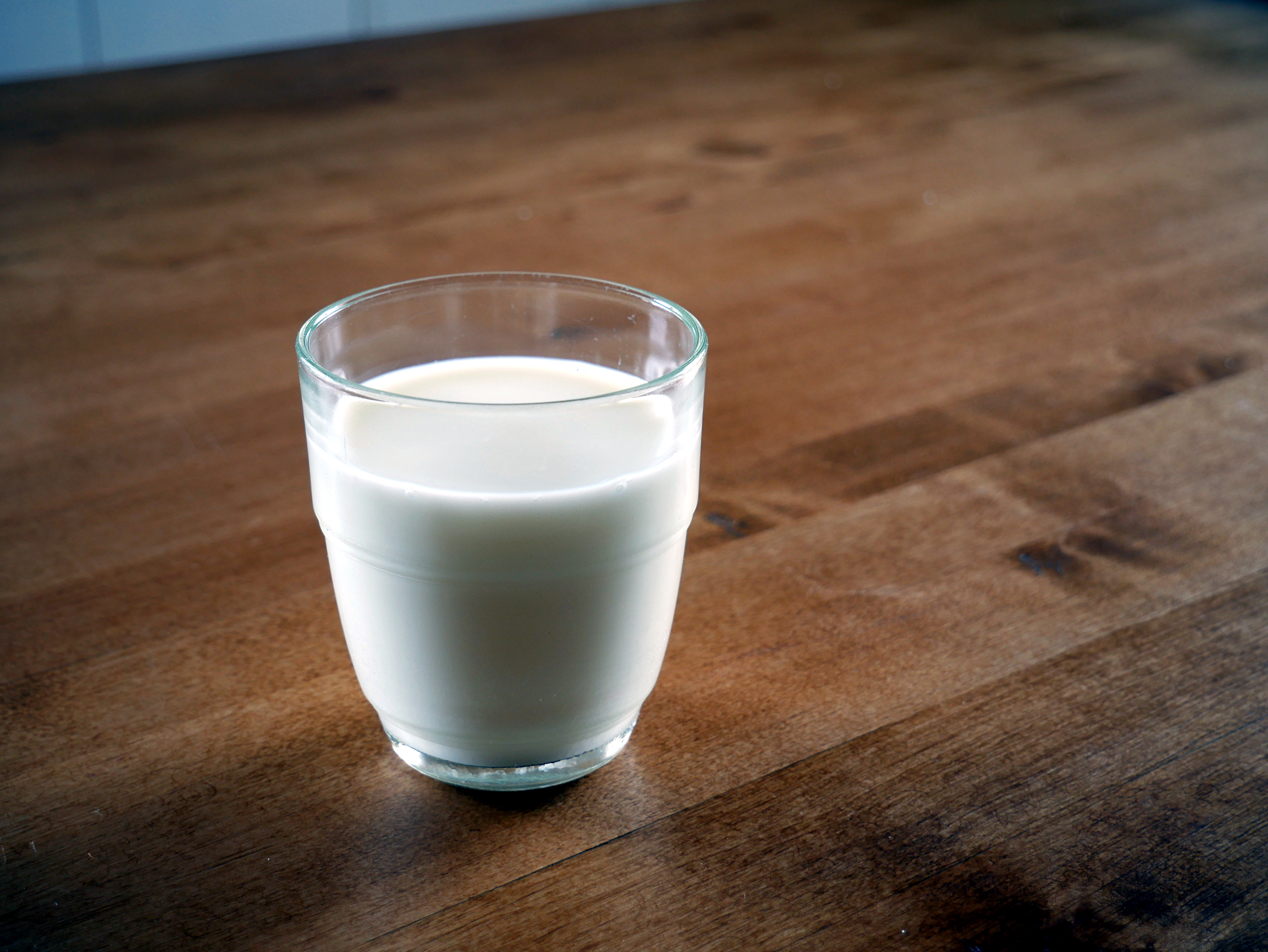
That unpasteurized ('raw') milk carries significant health benefits, stronger immunity, protection against allergies and asthma, beneficial bacteria, and active enzymes, that pasteurization destroys those benefits and is largely an industry-and-government scam rather than a genuine safety measure, and that regulators knowingly hide the truth to protect big dairy and suppress a natural food.
Two very different claims get spoken as one. The narrow, contested research thread is real: several European cohort studies found that children who drank farm milk had fewer allergies and less asthma, a finding scientists take seriously and keep studying. But the researchers behind that work explicitly do not recommend drinking raw milk, because the broad claim wrapped around it does not hold. Pasteurization was adopted in the early 1900s to kill pathogens that once made milk a major killer, its effect on nutrition is minor, and health agencies document real risks from raw milk, from Listeria and E. coli to H5N1 detected in 2024. The 'suppression scam' framing overreaches the evidence; the allergy question is genuinely open. Hence disputed, not debunked.
Believed by: Wellness and natural-living communities, parts of the libertarian and 'medical freedom' world, some small-farm advocates, and, from 2024, figures around the Make America Healthy Again movement; a minority practice amplified far beyond its numbers by short-form video and influencers
The full story
Two very different claims wearing one label
The raw-milk debate is loud partly because two unlike things travel under the same banner. One is a narrow scientific question that serious researchers are still working on: why did children in certain European farm studies who drank farm milk end up with fewer allergies and less asthma? The other is a sweeping claim that pasteurization is essentially a scam, that heating milk destroys benefits the public is never told about, and that regulators hide the truth to protect industrial dairy. The first is a real, open line of inquiry. The second is a conspiracy frame wrapped around it.
Keeping them apart is the whole discipline of this case. When the two are fused, the genuine research gets used to prove a claim it does not support, and the overreach gets used to dismiss research that deserves a hearing. This file does neither. It sets out what pasteurization actually did and does, what the farm studies actually found and how their own authors read them, and where the “suppression” story runs past the evidence.
One thing this file does not do is tell anyone what to eat or drink. It weighs claims against the record. Decisions about diet belong to readers and, where relevant, the people who advise them.
The case advocates make
Steelman it fairly, because the strongest version is not built from nothing. The anchor is a body of real research. In 2011 the GABRIELA study, published in a leading allergy journal, reported that among more than eight thousand European children, those who drank farm milk had measurably less asthma and allergy, and that the effect appeared partly independent of other aspects of farm life. Earlier work, including the PARSIFAL study, pointed the same way. Scientists have even proposed a mechanism: heat-sensitive whey proteins that heating denatures. This is not folklore; it is peer-reviewed and repeatedly cited.
Advocates also start from a distrust that many people share for good reasons. The modern food system is heavily processed and heavily consolidated, and skepticism of it is not, in general, irrational. Against that backdrop, milk that comes straight from a known local farm reads as the honest, unaltered version, and a rule that stands between a customer and that farmer can feel like protecting industry rather than the public.
The farm-milk studies are real and repeatedly cited. The question is what they actually show, and what their own authors say they do not.
And there is a genuine liberty argument. Adults make riskier dietary choices than this every day, legally and without controversy, so why single out raw milk? The patchwork of state laws, permissive in some places and prohibitionist in others, makes the regulation look less like settled science and more like a value judgment imposed unevenly. None of that is a conspiracy theory on its own. It is a fair account of why the stronger, darker version finds such willing listeners.
What pasteurization actually did, and what heating actually costs
The scam framing collides with the timeline. Pasteurization was not invented by modern agribusiness to crush small farmers; it was mandated in the early 1900s, long before that industry existed in its current form, because raw milk was then one of the deadliest foods in the house. Milk carried tuberculosis, typhoid, diphtheria, and brucellosis, and it killed children in large numbers. Chicago required pasteurization in 1908 and New York City in 1910, and deaths of children from contaminated milk fell sharply after cities acted. That is the origin of the practice, on the record.
The claim that heating strips away vital nutrition does not hold up either. Nutrition research and health agencies find that pasteurization's effect is minor: protein, fat, calcium, and most vitamins are essentially unchanged, with small losses confined to a few heat-sensitive vitamins such as vitamin C, which milk barely supplies to begin with. The “living enzymes” argument fares no better, because human digestion does not depend on milk's own enzymes, which the body breaks down in any case. Raw milk is also not a dependable source of beneficial bacteria. The nutritional chasm the claim describes is not there.
Raw milk was mandated out of the daily diet because it was killing children, not to protect a modern industry that did not yet exist.
Nor did the danger end a century ago. The CDC counted 202 outbreaks tied to raw milk between 1998 and 2018, with 2,645 illnesses and 228 hospitalizations, and the pathogens involved, Listeria, E. coli O157:H7, Salmonella, Campylobacter, Brucella, can cause severe and sometimes lasting harm. In 2024 a new hazard appeared when H5N1 avian influenza was found in US dairy cattle and turned up widely in milk. Pasteurization inactivated the virus in the retail supply, but the concern about live virus in raw milk was real enough that a California dairy recalled its product after H5N1 was detected. These are documented events, not regulatory theater.
The one real thread, and how its own scientists read it
That leaves the allergy question, the single strand where the advocates are pointing at something real. It deserves to be handled precisely rather than waved away, because the temptation is to dismiss the whole subject once the weaker claims fall. The farm-milk studies did find an association, and it has not been explained away.
But read what the researchers themselves say. First, the finding is an association, not proof that raw milk causes the benefit, and children who drink farm milk differ in many other ways from children who do not. Second, some studies could not confirm whether the farm milk was genuinely raw or had been boiled at home, and the protective pattern may reflect farm life broadly rather than raw milk specifically. Third, and most important, the authors of this work do not recommend drinking raw milk, precisely because the pathogen risk is real and the mechanism they suspect might one day be captured some safer way. Some researchers are studying exactly that: whether a carefully heated farm milk could keep any benefit while killing what makes raw milk dangerous.
None of this is hidden. It sits in the open literature, in journals anyone can look up, discussed by the scientists who produced it. A finding that its own discoverers publish, caveat, and decline to turn into a drinking recommendation is the opposite of a suppressed secret. The kernel is genuine and worth pursuing. The cover-up wrapped around it is not what the science says.
Why the suppression story spreads
The theory travels because it fuses a real research kernel with a broad and emotionally resonant distrust. “Natural, unprocessed, straight from the farm” is an easy and appealing heuristic, and it is not always wrong about the food system. Grafting a genuine allergy finding onto that instinct produces something that feels evidence-based even when the specific claim, that pasteurization is a scam hiding vital benefits, has left the evidence behind.
It also answers a suspicion many people already hold: that official guidance is shaped by industry and that ordinary choices are being managed for someone else's benefit. Recast that way, a public-health measure becomes a conspiracy, and a regulator's warning becomes proof of the very cover-up it supposedly conceals, an unfalsifiable loop where caution is read as guilt.
From 2024 the cause gained a national stage. The Make America Healthy Again movement, which took shape around Robert F. Kennedy Jr.'s endorsement of Donald Trump that August, elevated raw milk as a symbol and framed federal restrictions on it as part of a war on healthy food. That platform did not create the belief, but it amplified a minority practice far beyond its numbers and fused it with a wider medical-freedom politics, where the argument is less about milk than about who gets to decide.
The distinction worth protecting is the same one the science insists on. There is a legitimate question about allergies and farm exposure, and a legitimate debate about personal choice and how to regulate small farms. Neither of those is the claim that pasteurization is a scam and its benefits a hidden plot. Dressing the open questions up as proof of a cover-up does the real inquiry no favors.
One narrow truth, one broad overreach
The rating is disputed, and it has to hold two findings at once. There is a real, narrow, unresolved scientific thread, the farm-milk association with fewer allergies, that honest people are still investigating and that its own researchers refuse to turn into a drinking recommendation. And there is a broad claim, that pasteurization is a scam and its benefits a suppressed secret, that the record does not support.
What the evidence establishes: pasteurization was adopted to stop milk from spreading deadly disease, its effect on nutrition is minor, and raw milk carries documented risks, from long-known bacterial pathogens to H5N1 detected in 2024. What the evidence does not establish: that heating strips away meaningful health benefits, that the safety case is a marketing invention, or that regulators are hiding a superfood to protect industry. The allergy research is not a cover-up; it is published science with cautious authors.
The discipline here is to refuse both bad trades. Do not let the weak claims about enzymes and suppression discredit a genuine research question, and do not let that genuine question launder the conspiracy frame built on top of it. Keep the open science open, keep the personal-choice debate honest, and keep both separate from a “scam” story the evidence cannot carry. This file draws that line; it does not tell anyone what to pour in a glass.
What's still unexplained
- What actually drives the farm-milk association with fewer allergies is not settled. Researchers are studying whether specific heat-sensitive components are responsible and whether a way could be engineered to preserve any benefit while eliminating pathogens, for example carefully heated farm milk, which would sidestep the raw-versus-safe dilemma entirely. The mechanism, and whether the effect is causal at all, remain genuinely open.
- How to regulate small-scale and on-farm sales, and how much weight to give individual choice, is a legitimate and unresolved policy debate that stands apart from any conspiracy. States have landed in very different places, and reasonable people disagree about where the line should sit.
- How to frame raw milk's risk is itself contested: advocates stress that the absolute number of illnesses is small, while public-health researchers stress that the risk per serving is high. Both figures are real, and they answer different questions, which keeps the argument alive.
Point by point
The claim: Pasteurization destroys vital nutrients, enzymes, and beneficial bacteria, so raw milk is meaningfully more nutritious and heating strips that away.
What the record shows: This is the weakest part of the claim. Public-health agencies and nutrition research find that pasteurization's effect on nutrition is minor: proteins, fats, calcium, and most vitamins are essentially unchanged, with small losses in a few heat-sensitive vitamins such as vitamin C, of which milk is not a meaningful source in the first place. The 'living enzymes' argument does not survive scrutiny either, because human digestion does not rely on milk's own enzymes, which the stomach breaks down regardless. Raw milk is also not a reliable or recommended source of probiotic bacteria. The nutritional gap the claim describes is not one the evidence supports.
The claim: Pasteurization is largely a scam, adopted to protect industrial dairy rather than to keep people safe.
What the record shows: The timeline contradicts this. Pasteurization was mandated in the early 1900s, decades before modern agribusiness consolidation, specifically because raw milk was then a major vehicle for deadly disease, and childhood deaths from milk fell after cities required it. Milk-borne outbreaks did not vanish afterward: the US Centers for Disease Control and Prevention counted 202 outbreaks tied to raw milk from 1998 through 2018, causing 2,645 illnesses and 228 hospitalizations, and a 2017 study estimated that unpasteurized dairy caused far more illness per unit consumed than pasteurized. A measure with that track record is a public-health intervention, not a marketing trick.
The claim: Raw milk boosts immunity and protects children from allergies and asthma, and this benefit is being hidden.
What the record shows: Here sits the real, narrow research thread, and it should be kept separate from the cover-up frame. European cohort studies, notably GABRIELA and PARSIFAL, found that children who drank farm milk had fewer allergies and less asthma, and researchers have identified heat-sensitive whey proteins as a plausible mechanism. But three cautions come from the scientists themselves: the finding is an association, not proof that raw milk causes the benefit; some studies could not confirm whether the farm milk was truly raw or boiled, and the effect may reflect farm life generally; and the authors explicitly do not recommend drinking raw milk because of its pathogen risk. Far from hidden, this work is published in leading journals. The kernel is genuine; the suppression story around it is not.
The claim: The dangers of raw milk are exaggerated by regulators to frighten people away from a natural food.
What the record shows: The specific hazards are documented, not invented. Raw milk can carry Listeria, E. coli O157:H7, Salmonella, Campylobacter, and Brucella, pathogens that can cause severe illness, and outbreaks are recorded year after year. In 2024 a new concern was added when H5N1 avian influenza was found in dairy cattle and in raw milk, prompting a recall; pasteurization inactivated the virus in the retail supply. It is fair to note that the absolute number of illnesses is limited partly because few people drink raw milk, and reasonable people can debate personal choice and small-farm rules. But that is a policy argument, not evidence that the risks are fabricated.
Timeline
- 1860sThe French scientist Louis Pasteur shows that gently heating wine and beer prevents spoilage by killing microorganisms. The technique, later called pasteurization, is soon proposed for milk: in 1886 the German chemist Franz von Soxhlet argues that milk sold to the public should be heat-treated.
- 1908–1920sChicago passes the first US law requiring milk pasteurization in 1908; New York City follows with a mandate in 1910. As pasteurization spreads, deaths of children from contaminated milk fall sharply, and the practice becomes standard in much of the industrialized world, credited with helping curb tuberculosis, typhoid, diphtheria, and brucellosis carried in raw milk.
- 1987The US Food and Drug Administration bars the interstate sale of raw milk packaged for human consumption. Rules for sale within a state are left to the states, producing a patchwork that ranges from outright bans to farm-gate and retail sales, and setting up the personal-choice and small-farm arguments that continue today.
- 2011The GABRIELA study, published in the Journal of Allergy and Clinical Immunology, reports that among more than 8,000 European children, drinking farm milk is associated with less asthma and allergy, an effect the authors say is partly independent of other farm exposures. It becomes the most cited scientific anchor for raw-milk advocacy, even as its authors caution against drinking raw milk.
- 2010sA raw-milk revival gathers force online, blending natural-foods enthusiasm, distrust of processed food and agribusiness, and a libertarian objection to regulation. The message shifts from 'we prefer it' toward a sharper claim: that pasteurization is a scam and its lost benefits are being hidden.
- 2024Highly pathogenic avian influenza (H5N1) is confirmed in US dairy cattle for the first time in March, and viral genetic material turns up widely in the retail milk supply. Pasteurization is found to inactivate it, but live virus is a concern in raw milk; a California dairy recalls raw milk in December after H5N1 is detected. In the same period the Make America Healthy Again movement, launched around Robert F. Kennedy Jr.'s August endorsement of Donald Trump, elevates raw milk as a cause and casts federal regulation of it as a war on healthy food.
From the case file
The actual records: declassified, released, or leaked. We link straight to each document in its official archive, so you never have to take our word for it. Read the originals yourself.
Other case files that cite the same sources
Two very different claims get spoken as one. The narrow, contested research thread is real: several European cohort studies found that children who drank farm milk had fewer allergies and less asthma, a finding scientists take seriously and keep studying. But the researchers behind that work explicitly do not recommend drinking raw milk, because the broad claim wrapped around it does not hold. Pasteurization was adopted in the early 1900s to kill pathogens that once made milk a major killer, its effect on nutrition is minor, and health agencies document real risks from raw milk, from Listeria and E. coli to H5N1 detected in 2024. The 'suppression scam' framing overreaches the evidence; the allergy question is genuinely open. Hence disputed, not debunked.
Reviewed by Colin Peterson · Last reviewed July 12, 2026 · How we rate
Common questions
Is Raw milk cover-up true?
Two very different claims get spoken as one. The narrow, contested research thread is real: several European cohort studies found that children who drank farm milk had fewer allergies and less asthma, a finding scientists take seriously and keep studying. But the researchers behind that work explicitly do not recommend drinking raw milk, because the broad claim wrapped around it does not hold. Pasteurization was adopted in the early 1900s to kill pathogens that once made milk a major killer, its effect on nutrition is minor, and health agencies document real risks from raw milk, from Listeria and E. coli to H5N1 detected in 2024. The 'suppression scam' framing overreaches the evidence; the allergy question is genuinely open. Hence disputed, not debunked.
What is Raw milk cover-up?
Raw, unpasteurized milk has become a wellness cause and a political symbol, sold as a suppressed superfood whose immunity, allergy protection, enzymes, and 'good bacteria' the establishment destroys by heating and hides from the public. Underneath the slogan sit two separate things. One is a narrow, legitimate research thread: European f…
What does the evidence show?
This is the weakest part of the claim. Public-health agencies and nutrition research find that pasteurization's effect on nutrition is minor: proteins, fats, calcium, and most vitamins are essentially unchanged, with small losses in a few heat-sensitive vitamins such as vitamin C, of which milk is not a meaningful source in the first pla…
Why do people believe it?
Distrust of ultra-processed food and consolidated agribusiness is well founded in many areas, and raw milk fits a simple, emotionally satisfying heuristic: natural and unaltered is good, industrial and processed is suspect. Milk that comes straight from a known farm slots neatly into that frame.
What is still unresolved?
What actually drives the farm-milk association with fewer allergies is not settled. Researchers are studying whether specific heat-sensitive components are responsible and whether a way could be engineered to preserve any benefit while eliminating pathogens, for example carefully heated farm milk, which would sidestep the raw-versus-safe…
Sources
- 1.Raw Milk, Centers for Disease Control and Prevention (Food Safety)
- 2.The Dangers of Raw Milk: Unpasteurized Milk Can Pose a Serious Health Risk, U.S. Food and Drug Administration
- 3.Investigation of Avian Influenza A (H5N1) Virus in Dairy Cattle, U.S. Food and Drug Administration (2024)
- 4.The protective effect of farm milk consumption on childhood asthma and atopy: The GABRIELA study, Loss et al., Journal of Allergy and Clinical Immunology (2011)
- 5.Raw Cow's Milk and Its Protective Effect on Allergies and Asthma, Brick, Ege et al., Nutrients (peer-reviewed review) (2019)
- 6.Raw Milk Misconceptions and the Danger of Raw Milk Consumption, U.S. Food and Drug Administration
- 7.The Lingering Heat over Pasteurized Milk, Science History Institute (2024)
- 8.Raw milk: Questions patients may have and how to answer, American Medical Association (2024)
- 9.Raw milk advocates wonder: Where is Kennedy?, NBC News (2025)
Embed this case file on your site
Paste this snippet to show this case file as a small card, with a link back to the full write-up. Free to use.
<iframe src="https://theconspiratory.com/embed/raw-milk-cover-up" title="The Conspiratory verdict" width="520" height="190" style="border:0;max-width:100%" loading="lazy"></iframe>Help us investigate
This is a living case file. If you spot an error or know evidence we missed, tell us, and weigh in on where you land.
Where do you land?
Cast your read on this one.
Comments
Add your take. Comments are read and approved by a human before they appear, so keep it on topic and civil. Please do not accuse named, living people of crimes.