The Stuxnet worm was a joint US-Israeli cyberweapon secretly built to sabotage Iran's nuclear program
By Colin PetersonJuly 12, 2026
Where the evidence lands: Proven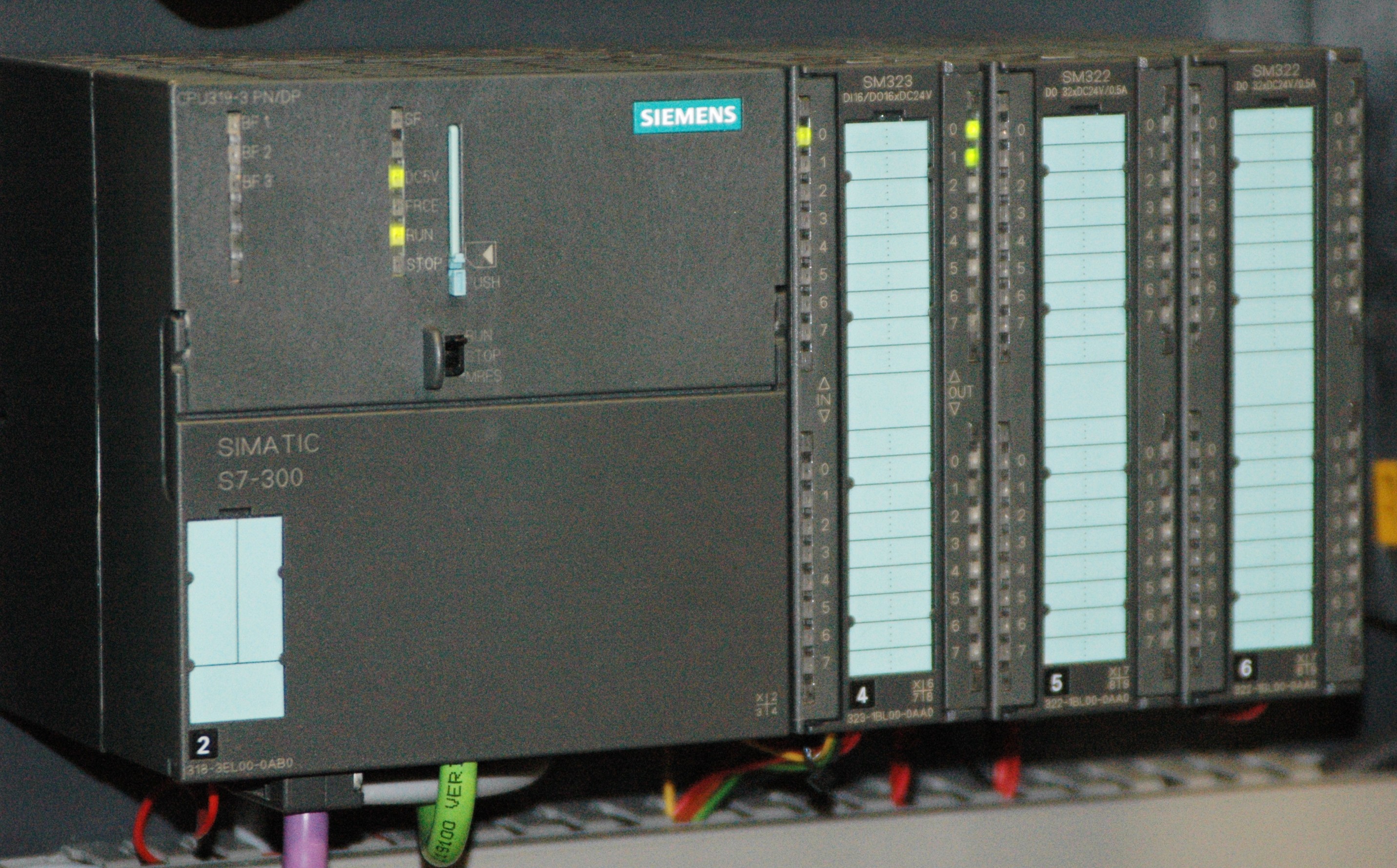
That Stuxnet was not ordinary malware but a purpose-built cyberweapon, secretly developed by the United States and Israel, that infiltrated the air-gapped control systems at Iran's Natanz uranium-enrichment facility and sabotaged its centrifuges by covertly manipulating them while feeding operators falsified readings, as part of a covert campaign to slow Iran's nuclear program.
Proven. The technical record is definitive: Stuxnet was a precision cyberweapon engineered to attack the exact Siemens controllers and centrifuge drives at Iran's Natanz enrichment plant, and it physically damaged roughly a thousand centrifuges. The state authorship rests on a slightly different footing. Extensive investigative reporting, notably David Sanger's, tied it to a joint US-Israeli operation reportedly codenamed Olympic Games, begun under George W. Bush and expanded under Barack Obama, and Edward Snowden later said the NSA and Israel co-wrote it. Neither government has ever officially confirmed authorship. The verdict is substantiated on the strength of the forensic analysis plus corroborating reporting; formal attribution remains officially unacknowledged rather than denied.
Believed by: Security researchers, national-security journalists, and cyberwar scholars treat the core facts as established; the specific government attribution is near-universal in expert reporting despite the absence of any official confirmation
The full story
The worm that broke things
Most malware wants your data, your money, or your machine. When a small antivirus firm in Belarus isolated a strange sample in June 2010, it slowly became clear that this one wanted none of those. It ignored almost every computer it landed on. It only woke up when it found a very particular target: the Siemens Step7 software used to program the industrial controllers that run heavy machinery, and beyond that, a specific arrangement of the high-speed drives that spin uranium-enrichment centrifuges.
The security world named it Stuxnet, and the more researchers pulled it apart, the stranger it looked. It carried four separate zero-day exploits, previously unknown Windows flaws, when a single one is a valuable find. Its drivers were signed with digital certificates stolen from real hardware companies so the operating system would trust them. It could hop across an air gap, the physical separation meant to isolate sensitive systems from the internet, by riding on USB drives. And its final payload did something no widely known malware had done before: it reached into a physical process and sabotaged it, while feeding the operators readings that said everything was fine.
The claim that grew from this, that a government had built a digital weapon to physically wreck equipment inside another country's most sensitive nuclear facility, sounds like the premise of a thriller. It is also, in its essentials, what the evidence shows. This case is filed as substantiated because the hardest part, that Stuxnet was a targeted cyber-physical weapon aimed at Natanz, is established by the weapon's own code.
Reading the weapon in its own code
What makes Stuxnet unusual among the stories in this archive is that the primary evidence is not a leaked memo or a whistleblower's word: it is the software itself, dissected in public. Two analyses did most of the work. Symantec's W32.Stuxnet Dossier, by Nicolas Falliere, Liam O Murchu, and Eric Chien, mapped the worm's architecture in forensic detail. Independent researcher Ralph Langner then focused on the payload and argued that it was aimed at one specific installation.
The findings were hard to explain any other way. Stuxnet checked, before doing anything destructive, whether it was attached to programmable logic controllers driving frequency converters within the narrow band of operating frequencies used by enrichment centrifuges. If it found them, it would periodically alter their speed to stress the fast-spinning rotors, then restore normal operation, all while recording legitimate sensor data and replaying it so that monitoring screens showed nothing wrong. That is not the logic of a virus built to spread and profit. It is the logic of a device built to damage one kind of machine and hide the damage.
The exhibit is the weapon itself. Its code checks for the exact hardware at Natanz, sabotages it, and replays normal readings so the operators see nothing.
The circumstantial fit sealed it. The great majority of early infections were in Iran. The targeted hardware matched the IR-1 centrifuge. And in the same period, the Institute for Science and International Security estimated that roughly a thousand of about five thousand centrifuges at Natanz had been taken out of service, an unexplained loss that lined up with exactly what the payload was written to do. Geography, hardware fingerprint, and physical outcome all pointed to one place.
Who built it, and the line the evidence does not quite cross
It is worth being precise about which parts of this story are proven and which rest on reporting, because they are not the same. That Stuxnet was a targeted weapon aimed at Natanz is established by technical analysis. That the United States and Israel built it is established by journalism and leaks, and never by an official admission.
The sophistication itself was the first clue. Burning four zero-day exploits at once, stealing code-signing certificates from two Taiwanese firms, Realtek and JMicron, and embedding accurate knowledge of a specific industrial control system implied resources and expertise beyond ordinary criminals or activists. That narrowed the field to a nation-state, but sophistication alone does not name the state.
The names came from reporting. In June 2012, David Sanger of The New York Times, drawing on officials, described a joint US-Israeli program reportedly codenamed Olympic Games, begun under President George W. Bush and expanded under President Barack Obama, with Stuxnet as one of its products. His book Confront and Conceal laid out the account at length. The following year, Edward Snowden said plainly that the NSA and Israel had co-written it. A senior White House arms-control official, Gary Samore, offered what listeners took as a winking non-denial rather than a rebuttal.
And yet the formal record is a blank. Neither Washington nor Jerusalem has ever officially confirmed authorship of Stuxnet. That is why this file rates the overall claim substantiated rather than treating it as an on-the-record fact: the attribution is credible, corroborated, and widely accepted by experts, but it lives in investigative journalism and leaks. The honest formulation is that the operation is understood, not that it has been admitted.
Why this one convinces where others do not
Plenty of claims about secret government weapons never earn belief. This one did, and it is worth understanding why, because the reasons are mostly good ones rather than the usual pull of a satisfying story.
First, the evidence is public and checkable. You do not have to trust an anonymous source to accept that Stuxnet targeted centrifuge drives; you can read the teardown. When the core of a claim can be verified by independent researchers publishing their methods, it stands on a different footing from a rumor.
Second, it fit the world as it already was. The United States and Israel openly wanted to slow Iran's enrichment program without a shooting war, sabotage of that program was already suspected, and a cyber tool to accomplish it was a logical extension rather than a departure. A claim that matches known motives and known capabilities does not need to strain.
Third, and most powerfully, it produced wreckage in the physical world. Real centrifuges spun themselves apart. That gave the story a concreteness that abstract conspiracy narratives lack, and it announced something genuinely new: that lines of code could cross an air gap and destroy hardware. The reason Stuxnet persuaded is not that it flattered anyone's suspicions; it is that the machine it broke was real, and the tool that broke it was there to be examined.
The legacy: the first weapon of its kind
Stuxnet is usually described as the first widely recognized cyber-physical weapon, the first piece of code built to cause physical destruction rather than to steal, deface, or disrupt data. That description has held up. Whatever its precise effect on Iran's timetable, and estimates of the delay vary, it demonstrated that a digital attack could reach through supposedly isolated networks and damage equipment in the real world.
The demonstration cut both ways. It showed what a well-resourced state could do to an adversary's infrastructure, and it showed every other state, and the operators of power grids, pipelines, water systems, and factories, that their own control systems were exposed to the same class of attack. Related tools that surfaced in the following years, such as Duqu and Flame, were read as part of the same lineage of intelligence and sabotage code. Stuxnet became the reference point for a new field.
It also opened a debate that is still unresolved: what the norms of cyberwar should be. A weapon that a government will neither claim nor disown, that can spread beyond its target, and that blurs the line between espionage and an act of war does not fit neatly into existing laws of armed conflict. Stuxnet did not settle those questions. It forced them into the open. That is the durable legacy of a conspiracy that turned out to be real: not just that it happened, but that it changed what everyone afterward understood to be possible.
What's still unexplained
- Exactly how much Stuxnet set back Iran's program is debated. Estimates of the damage vary, Iran replaced centrifuges and kept enriching, and analysts disagree over whether the delay was months or longer.
- How the worm crossed into the air-gapped Natanz systems in the first place, whether through an insider, a contractor, or infected removable media, has never been settled publicly.
- Why the malware ultimately escaped onto the public internet is usually blamed on a code change that made it spread too aggressively, but the precise failure that led to its discovery is not fully documented.
- The full scope of Olympic Games, including which specific agencies and personnel on each side did what, remains officially unacknowledged and known only through unofficial reporting.
Point by point
The claim: Stuxnet was a deliberately built weapon aimed at industrial machinery, not ordinary criminal malware.
What the record shows: Proven by forensic analysis. Stuxnet did nothing to monetize infected PCs; on the vast majority of computers it reached it stayed dormant. It only activated when it found a very specific configuration: Siemens Step7 software controlling programmable logic controllers wired to particular frequency-converter drives running at the high frequencies used to spin enrichment centrifuges. Symantec's dossier and Langner's analysis both concluded it was engineered to sabotage that one kind of system while concealing the attack, which is the behavior of a targeted weapon rather than of a virus built to spread and profit.
The claim: The target was Iran's Natanz enrichment facility and its centrifuges.
What the record shows: Strongly supported. The overwhelming majority of early infections were inside Iran, the payload matched the frequency ranges of the IR-1 centrifuge, and the Institute for Science and International Security estimated that roughly a thousand of about five thousand centrifuges at Natanz were taken offline in the relevant window. Langner's work reconstructed how the code was meant to over-speed or otherwise stress the rotors while replaying normal readings to operators so the damage would look like ordinary mechanical failure. The convergence of the geography, the hardware fingerprint, and the physical outcome points to Natanz.
The claim: The worm was too sophisticated to be the work of hobbyists or ordinary criminals; it took state-level resources.
What the record shows: Well supported by the technical evidence. Stuxnet chained together four previously unknown Windows zero-day exploits, an extraordinary number to burn in a single operation, and its drivers were signed with digital certificates stolen from two legitimate Taiwanese hardware companies, Realtek and JMicron, so they would appear trusted. It could cross air-gapped networks via USB drives and carried detailed, accurate knowledge of a specific industrial control layout. Assembling that combination of exploits, stolen credentials, and control-system expertise implied a well-funded, organized effort of the kind associated with a nation-state.
The claim: The United States and Israel built and deployed it.
What the record shows: This is the attribution that reporting establishes but that no government has confirmed. David Sanger's sourcing, corroborated by other outlets and later by Edward Snowden's statements, identifies a joint US-Israeli program, Olympic Games, run through the NSA and Israeli intelligence. A White House arms-control official, Gary Samore, gave what observers called a winking non-denial. Set against that, neither Washington nor Jerusalem has ever officially acknowledged authorship. The attribution is credible and widely accepted, but it rests on investigative journalism and leaks rather than on an official admission.
Timeline
- 2006–2008According to later reporting, the United States and Israel begin a covert cyber-sabotage program against Iran's enrichment effort, reportedly codenamed Olympic Games and started under President George W. Bush. Early versions of the code are developed and, per Sanger's account, tested against centrifuges of the type used at Natanz.
- 2009–2010Newer variants of the worm spread into the systems at Natanz. Analysts, including the Institute for Science and International Security, later conclude that around a thousand of roughly five thousand IR-1 centrifuges were taken out of service during this period, consistent with the worm's sabotage routine.
- 2010-06-17VirusBlokAda, a small antivirus company in Belarus, flags the malware after an Iranian client's computers keep crashing and rebooting. It is initially named Rootkit.Tmphider; Symantec soon renames it W32.Stuxnet. The wider security industry begins to pull it apart.
- 2010-09German researcher Ralph Langner publishes analysis arguing the worm is a directed weapon aimed at a single high-value target, and specifically at Siemens controllers driving centrifuges, pointing to Natanz. The idea that a nation-state built physical-sabotage malware moves from speculation toward consensus.
- 2011-02Symantec releases the definitive technical study, the W32.Stuxnet Dossier by Nicolas Falliere, Liam O Murchu, and Eric Chien. It documents the four Windows zero-day exploits, the stolen code-signing certificates, and a payload that targets specific frequency-converter drives and hides its own activity from operators.
- 2012-06-01David Sanger of The New York Times reports, citing officials, that Stuxnet was part of Operation Olympic Games, a joint US-Israeli effort begun under Bush and accelerated by Obama. His book Confront and Conceal appears the same month. Neither government confirms the account on the record.
- 2013-07Edward Snowden, in interviews tied to his leaks, states that the NSA and Israel co-wrote Stuxnet. Later that year Langner publishes To Kill a Centrifuge, a deeper technical analysis of exactly how the payload was meant to damage the rotors.
From the case file
The actual records: declassified, released, or leaked. We link straight to each document in its official archive, so you never have to take our word for it. Read the originals yourself.
W32.Stuxnet Dossier (Version 1.4)
The definitive technical teardown of the worm. It documents the four Windows zero-day exploits, the code-signing certificates stolen from Realtek and JMicron, the USB and network propagation, and the payload that targets specific frequency-converter drives and hides its sabotage from operators. It is the primary forensic exhibit behind the case that Stuxnet was a targeted cyber-physical weapon.
Read the document: Internet Archive →To Kill a Centrifuge: A Technical Analysis of What Stuxnet's Creators Tried to Achieve
Ralph Langner's deep analysis of the payload, reconstructing how the code was meant to damage the IR-1 centrifuge rotors while replaying normal readings to operators. It lays out the reasoning that identified Natanz as the target and explains the shift between the worm's earlier and later attack strategies.
Read the document: Internet Archive →Proven. The technical record is definitive: Stuxnet was a precision cyberweapon engineered to attack the exact Siemens controllers and centrifuge drives at Iran's Natanz enrichment plant, and it physically damaged roughly a thousand centrifuges. The state authorship rests on a slightly different footing. Extensive investigative reporting, notably David Sanger's, tied it to a joint US-Israeli operation reportedly codenamed Olympic Games, begun under George W. Bush and expanded under Barack Obama, and Edward Snowden later said the NSA and Israel co-wrote it. Neither government has ever officially confirmed authorship. The verdict is substantiated on the strength of the forensic analysis plus corroborating reporting; formal attribution remains officially unacknowledged rather than denied.
Reviewed by Colin Peterson · Last reviewed July 12, 2026 · How we rate
Common questions
Is Stuxnet true?
Proven. The technical record is definitive: Stuxnet was a precision cyberweapon engineered to attack the exact Siemens controllers and centrifuge drives at Iran's Natanz enrichment plant, and it physically damaged roughly a thousand centrifuges. The state authorship rests on a slightly different footing. Extensive investigative reporting, notably David Sanger's, tied it to a joint US-Israeli operation reportedly codenamed Olympic Games, begun under George W. Bush and expanded under Barack Obama, and Edward Snowden later said the NSA and Israel co-wrote it. Neither government has ever officially confirmed authorship. The verdict is substantiated on the strength of the forensic analysis plus corroborating reporting; formal attribution remains officially unacknowledged rather than denied.
What is Stuxnet?
In June 2010 a Belarusian antivirus firm isolated a strange piece of malware that turned out to be unlike anything seen before. Stuxnet was not built to steal data or extort money: it was engineered to reach into a specific industrial control system and physically wreck the fast-spinning centrifuges enriching uranium at Iran's Natanz pla…
What does the evidence show?
Proven by forensic analysis. Stuxnet did nothing to monetize infected PCs; on the vast majority of computers it reached it stayed dormant. It only activated when it found a very specific configuration: Siemens Step7 software controlling programmable logic controllers wired to particular frequency-converter drives running at the high freq…
Why do people believe it?
The forensic evidence is unusually strong and public. Anyone can read Symantec's dossier and Langner's analysis, so the claim is not asking for faith in a hidden document: the weapon's own code is the exhibit.
What is still unresolved?
Exactly how much Stuxnet set back Iran's program is debated. Estimates of the damage vary, Iran replaced centrifuges and kept enriching, and analysts disagree over whether the delay was months or longer.
Sources
- 1.W32.Stuxnet Dossier (Version 1.4), Nicolas Falliere, Liam O Murchu and Eric Chien, Symantec Security Response (2011)
- 2.To Kill a Centrifuge: A Technical Analysis of What Stuxnet's Creators Tried to Achieve, Ralph Langner, The Langner Group (2013)
- 3.Stuxnet, Wikipedia
- 4.Obama Order Sped Up Wave of Cyberattacks Against Iran, David E. Sanger, The New York Times (2012)
- 5.Stuxnet was work of U.S. and Israeli experts, officials say, The Washington Post (2012)
- 6.NSA leaker Snowden claimed U.S. and Israel co-wrote Stuxnet virus, CBS News (2013)
- 7.Stuxnet Malware and Natanz: Update of ISIS December 22, 2010 Report, Institute for Science and International Security (ISIS) (2011)
- 8.The Stuxnet Computer Worm: Harbinger of an Emerging Warfare Capability (CRS Report R41524), Congressional Research Service (2010)
- 9.Stuxnet and stolen certificates, Kaspersky, Securelist (2010)
Embed this verdict on your site
Paste this snippet to show our sourced verdict as a small card, with a link back to the full case file. Free to use.
<iframe src="https://theconspiratory.com/embed/stuxnet" title="The Conspiratory verdict" width="520" height="190" style="border:0;max-width:100%" loading="lazy"></iframe>Help us investigate
This is a living case file. If you spot an error or know evidence we missed, tell us, and weigh in on where you land.
Where do you land?
Cast your read on this one.
Comments
Add your take. Comments are read and approved by a human before they appear, so keep it on topic and civil. Please do not accuse named, living people of crimes.