The Tower of London is haunted by the ghosts of Anne Boleyn, the White Lady, and others executed or imprisoned there
By Colin PetersonJuly 8, 2026
Where the evidence lands →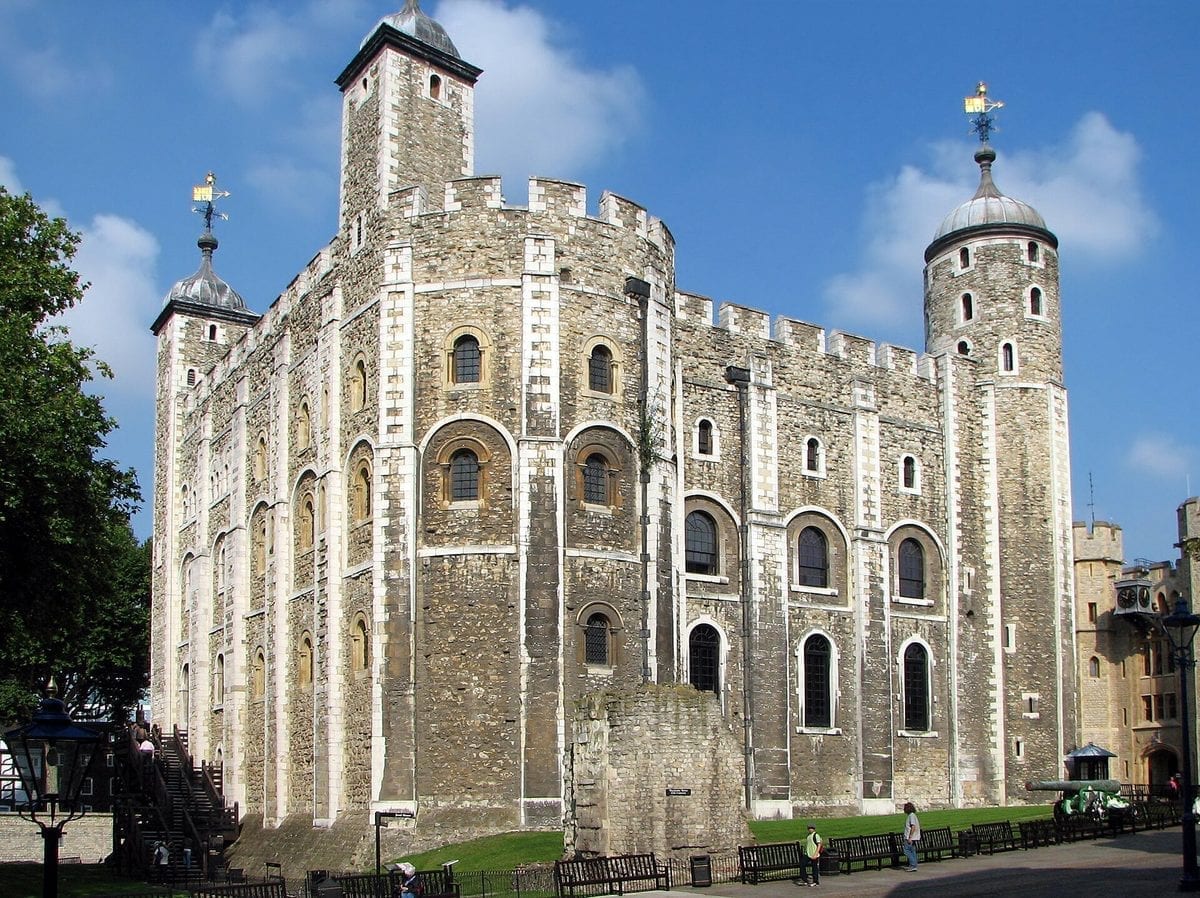
That the spirits of people executed, murdered, or imprisoned at the Tower of London, most famously Anne Boleyn and a “White Lady” of the White Tower, continue to haunt the site and have been genuinely perceived by witnesses across the centuries.
The Tower of London is a real fortress with roughly a thousand years of documented history, and much of the human tragedy behind its ghost lore is genuine: Anne Boleyn was executed there in 1536, and two royal children vanished from it in 1483. The claim we rate is separate and narrower: that the spirits of the dead persist at the site and have been genuinely encountered. That claim rests on anecdote, retold and embellished across centuries, with no verifiable physical evidence and with ordinary explanations (suggestion, misperception, and even infrasound) available for the sensations reported.
Believed by: A broad general audience of tourists, ghost-tour patrons, and readers of popular history, rather than any organized movement; the Tower's official custodian treats the stories as folklore worth telling, not as verified fact
The full story
What is documented
Start with what is solid, because at the Tower of London a great deal is. Founded by the Normans in the 11th century, the Tower has served across its history as a royal fortress, a palace, an arsenal, a menagerie, a treasury, and, most relevant here, a prison and a place of execution. The people at the center of its ghost stories were real, and their ends were real.
Anne Boleyn, the second queen of Henry VIII, was convicted of treason and adultery and beheaded within the Tower on 19 May 1536. She was buried a short distance away in the Chapel of St Peter ad Vincula, where her remains still lie. Half a century earlier, in 1483, the boy king Edward V and his younger brother Richard, the princes in the Tower, were lodged in the fortress and then vanished from the historical record. In 1674 workmen uncovered the bones of two children near the White Tower, later reburied as their presumed remains.
None of that is in dispute, and it is the reason the legends carry such weight. The question this file weighs is the separate one: not whether terrible things happened here, but whether the dead have stayed, and whether the sightings reported for centuries are genuine encounters or something more ordinary wearing the costume of the Tower's history.
The stories, as they are told
The lore has a settled cast. The most famous figure is Anne Boleyn, said to walk the Tower grounds, at times leading a silent procession toward the chapel, at times seen as a white or headless woman near the Queen's House. The best-known single anecdote is usually dated to 1864: a sentry challenges a white female figure, thrusts his bayonet, and feels it pass through empty air; in the popular version he is court-martialed for sleeping on duty and then acquitted after others testify to seeing the same shape.
A second thread is the White Ladyof the White Tower, reported to stand at a window or drift through its rooms, her presence announced by a strong, cloying perfume and a sudden chill near St John's Chapel. A third is the pair of small figures on the stairs of the Bloody Tower, hand in hand in white nightshirts, folded into the tragedy of the vanished princes. And there is the odd, specific report of 1817, when Edmund Lenthal Swifte, Keeper of the Crown Jewels, described a glass cylinder of bluish-white fluid floating around his family's table in the Martin Tower before it drifted off and vanished.
These are good stories, and they are told well. But it is worth noticing how neatly each attaches to the most emotionally charged history the Tower has to offer, and how much the drama has been polished in the retelling.
The case believers make
The strongest version of belief does not rest on any single ghost photograph or gadget reading. It rests on accumulation and character. Over centuries, the argument goes, a great many people, including sober officials, trained soldiers, and long-serving Yeoman Warders, have reported strikingly similar experiences at the same spots: a woman near the chapel, a chill and a perfume in the White Tower, a presence on the stairs.
Some of the accounts come from witnesses with reputations to protect. The 1817 report was written by the man responsible for the Crown Jewels, hardly a figure with an interest in inventing a ghost. The 1864 story, in its usual telling, has multiple soldiers backing one another before a military court. To the believer, the pattern looks less like a chain of tall tales and more like many independent people brushing up against the same real thing at the same haunted place.
A queen was beheaded here; children vanished here. If any place on earth held an imprint of the dead, believers say, it would be this one.
And the physical sensations are real, they add. Visitors genuinely do feel cold, genuinely do smell something, genuinely do sense a presence. That the experiences are felt in the body, not merely imagined, is offered as the ground-level evidence that something at the Tower is acting on people.
Where the claim breaks down
Every strand of that case has an ordinary counterpart that fits the facts at least as well, and usually better.
Begin with the reports being independent. They are not. Almost everyone who enters the Tower already knows it is supposed to be haunted and already knows the roster of who haunts it. That prior knowledge is not neutral: it supplies a ready label for any ambiguous chill, shadow, or figure glimpsed in poor light. When the expected apparition is a beheaded queen, a white shape near the chapel gets read as Anne Boleyn rather than as a trick of mist. Shared expectation, not a shared spirit, is enough to produce clustered, similar accounts.
The volume of stories does not rescue the claim, because anecdotes do not compound into proof. A thousand vivid, uncorroborated impressions collected over centuries, each shaped by the same famous legend, remain a thousand anecdotes. Not one comes with a physical trace, a controlled observation, or anything an outsider could check. The set-piece tales, meanwhile, show the fingerprints of retelling: the celebrated 1864 court-martial is hard to pin to a clean contemporary record, and its details drift from version to version, exactly as a story does that is being improved rather than reported.
Even the bodily sensations, the believer's best card, point away from ghosts on inspection. Cold spots, drafts, and damp, musty odors are the ordinary physics of very old stone buildings. And a documented mechanism exists for the vaguer feelings: engineer Vic Tandy tied a sense of presence and fleeting peripheral apparitions to infrasound near 18–19 Hz, low-frequency vibration that the body registers as dread and that can even blur vision without any conscious sound. Feeling something real is fully compatible with a mundane cause. It is not the same as detecting the dead.
Why the Tower stays haunted
If the evidence is this thin, why is the Tower of London perhaps the most confidently haunted building in the English-speaking world? The answer has more to do with story and setting than with spirits.
The legends sit on real horror. Because Anne Boleyn truly died here and the princes truly vanished, the ghost stories borrow the emotional force of authentic history. That is a powerful advantage over invented hauntings: the grief is not manufactured, so the tale feels earned. The architecture then does the atmospheric work, cold stone, tight stairs, thick walls, and centuries of dark association priming a visitor to read the uncanny into anything ambiguous.
The stories also arrive first. A visitor knows the Tower is haunted before setting foot inside, so perception has its script in hand. And the canon is selected for drama: across guidebooks, tours, and popular writing, the most cinematic versions survive and spread while the flat ones die, so the lore sharpens over generations toward its most vivid form. A commercial ecosystem of ghost tours keeps it all in steady circulation.
Notably, the Tower's own custodian understands this. Historic Royal Palaces tells the ghost stories as folklore and heritage, a way of conveying a thousand years of dark history to the public, and stops carefully short of asserting that the dead literally walk.
Real tragedy, lasting folklore
Hold the two claims apart, as always. The Tower of London is a real place with a real and often brutal history, and the suffering behind its legends deserves to be treated with weight rather than shrugged off. Anne Boleyn was executed here; two children disappeared here; the stones have seen genuine tragedy. None of that is in question.
The claim we rate is the narrower one: that these spirits persist and have been truly encountered. On that question the record is anecdote all the way down, retold and embellished across centuries, shaped by expectation, unsupported by any physical evidence, and shadowed at every point by ordinary explanations, from suggestion and misperception to the cold drafts and infrasound of very old buildings. That is not enough to establish a haunting, and it is not the kind of hard disproof that would rule one out either.
The genuine open question here is not spectral but historical: what actually became of the princes in the Tower in 1483 remains a real mystery for historians working from the documents. The ghosts are best understood as what they plainly are, some of the most durable and atmospheric folklore in Britain, wrapped around a fortress that earned its darkness the ordinary way.
What's still unexplained
- The fate of the princes in the Tower remains a genuine and unresolved historical mystery, distinct from the ghost claim; who was responsible for their disappearance in 1483 is still debated by historians on the documentary record alone.
- The provenance of specific set-piece anecdotes, especially the 1864 sentry court-martial, is murky, and it is an open historical question how much of the canonical version reflects a real incident versus later dramatization.
- How much of the reported bodily experience at the site (chills, sense of presence, odors) could be accounted for by measurable physical factors such as drafts, damp, and infrasound has not been systematically studied at the Tower itself, only inferred from work done elsewhere.
Point by point
The claim: Anne Boleyn's ghost has been repeatedly seen near the chapel where she is buried, including a documented 1864 sentry encounter.
What the record shows: The sightings are anecdotes, not documentation. The 1864 story survives mainly through later retellings that disagree on names, dates, and details, and no clean contemporary record confirms the court-martial as usually described. A place where a famous execution occurred is exactly where suggestion primes people to interpret a shadow, a mist, or a figure as the victim. A dramatic story matching a known history is evidence of a good story, not of a returning spirit.
The claim: The 1817 Martin Tower apparition was a sober firsthand account by a respectable official, so it cannot be dismissed.
What the record shows: Edmund Swifte's honesty is not the issue. The account was written down and published years after the event, describing a single odd nocturnal experience with no independent instrument or corroborating physical trace. Firsthand sincerity does not establish the cause; misperception in low light, a reflection, or a fatigue-related effect can all produce a vivid impression that an honest witness records faithfully and still gets wrong.
The claim: So many independent witnesses over centuries cannot all be mistaken; the sheer volume of reports points to something real.
What the record shows: Volume of anecdote does not compound into proof. Reports at a famous haunted site are not independent: each witness typically arrives already knowing the legend, which shapes what an ambiguous sensation gets labeled. The stories also cluster around the most emotionally charged history (an executed queen, murdered children), the hallmark of a narrative spreading by expectation rather than of evidence accumulating.
The claim: The strong perfume, sudden chills, and sense of presence people report in the White Tower are physical effects that prove a haunting.
What the record shows: They are physical sensations with physical causes that do not require ghosts. Old stone buildings produce cold spots, drafts, damp odors, and unexplained air movement, and research by Vic Tandy and others has tied a sense of presence and peripheral apparitions to infrasound near 19 Hz. A real bodily sensation is compatible with an entirely mundane source; feeling something is not the same as detecting a spirit.
The claim: The Tower's official custodians tell these ghost stories, which lends them authority.
What the record shows: Historic Royal Palaces presents the tales as folklore and heritage, part of interpreting a thousand-year-old site, not as a claim that the dead literally walk. Telling a ghost story to visitors is a curatorial and commercial choice about how to convey a place's dark history. It is not an evidentiary endorsement, and the custodian stops well short of asserting the hauntings are real.
Timeline
- 1483Edward V, aged 12, and his younger brother Richard, Duke of York, are lodged in the Tower and then disappear from view. They are never seen again in public. Their fate remains one of England's most debated historical mysteries, and their story later becomes the seed of the Bloody Tower ghost legend.
- 1536Anne Boleyn, second queen of Henry VIII, is convicted of treason and adultery and beheaded within the Tower on 19 May. She is buried nearby in the Chapel of St Peter ad Vincula. Her execution is the historical anchor for the Tower's most famous ghost story.
- 1674Workmen demolishing a staircase near the White Tower uncover the bones of two children, later reburied at Westminster Abbey as the presumed remains of the princes. The discovery revives interest in the 1483 disappearance and, over time, feeds the associated haunting lore.
- 1817Edmund Lenthal Swifte, Keeper of the Crown Jewels, reports that a glass tube filled with a bluish-white fluid appeared and floated around his family's table in the Martin Tower one October evening before vanishing. His written account, published decades later, becomes one of the Tower's most cited firsthand ghost reports.
- 1864A widely retold story places a sentry on guard near the Queen's House confronting a white female figure that his bayonet passes through; in the popular telling he is court-martialed and then acquitted after others testify to seeing the same apparition. Details vary between versions, and the story is difficult to verify against contemporary records.
- 19th centuryVictorian popular writing, cheap print, and a growing appetite for gothic history spread and elaborate the Tower's ghost tales, blending genuine historical tragedy with dramatic embellishment and knitting the separate stories into a single reputation for hauntedness.
- 20th centuryAs the Tower becomes a major visitor attraction, its Yeoman Warders (Beefeaters) and guidebooks routinely recount the ghost stories, and the tales of Anne Boleyn, the princes, and the White Lady settle into a fixed canon repeated to millions of tourists.
- 1998Engineer Vic Tandy publishes work linking a sense of presence and fleeting apparitions to low-frequency infrasound around 19 Hz, offering a physical mechanism that skeptics later cite as one ordinary explanation for sensations reported at old sites, though Tandy studied Coventry, not the Tower.
- 21st centuryHistoric Royal Palaces, the charity that runs the Tower, presents the ghost stories publicly as folklore and heritage, and commercial ghost tours build on them, keeping the legends in wide circulation without asserting them as established fact.
The Tower of London is a real fortress with roughly a thousand years of documented history, and much of the human tragedy behind its ghost lore is genuine: Anne Boleyn was executed there in 1536, and two royal children vanished from it in 1483. The claim we rate is separate and narrower: that the spirits of the dead persist at the site and have been genuinely encountered. That claim rests on anecdote, retold and embellished across centuries, with no verifiable physical evidence and with ordinary explanations (suggestion, misperception, and even infrasound) available for the sensations reported.
Reviewed by Colin Peterson · Last reviewed July 8, 2026 · How we rate
Common questions
Is Tower of London ghosts true?
The Tower of London is a real fortress with roughly a thousand years of documented history, and much of the human tragedy behind its ghost lore is genuine: Anne Boleyn was executed there in 1536, and two royal children vanished from it in 1483. The claim we rate is separate and narrower: that the spirits of the dead persist at the site and have been genuinely encountered. That claim rests on anecdote, retold and embellished across centuries, with no verifiable physical evidence and with ordinary explanations (suggestion, misperception, and even infrasound) available for the sensations reported.
What is Tower of London ghosts?
The Tower of London has been a royal fortress, palace, prison, and place of execution since the 11th century, and few English buildings carry a heavier history. Some of the people who suffered or died within its walls, above all Anne Boleyn, beheaded in 1536, and the two young princes who disappeared in 1483, have become the central figu…
What does the evidence show?
The sightings are anecdotes, not documentation. The 1864 story survives mainly through later retellings that disagree on names, dates, and details, and no clean contemporary record confirms the court-martial as usually described. A place where a famous execution occurred is exactly where suggestion primes people to interpret a shadow, a…
Why do people believe it?
The underlying history is real and genuinely harrowing. Anne Boleyn truly was executed there and two children truly did vanish, so the ghost stories attach to authentic tragedy, which makes them feel weightier than invented tales and lends the legends an emotional plausibility.
What is still unresolved?
The fate of the princes in the Tower remains a genuine and unresolved historical mystery, distinct from the ghost claim; who was responsible for their disappearance in 1483 is still debated by historians on the documentary record alone.
Sources
- 1.Famous ghost stories of the Tower of London, Historic Royal Palaces (2023)
- 2.Anne Boleyn, Historic Royal Palaces (2024)
- 3.The Princes in the Tower: murdered or survived?, Historic Royal Palaces (2024)
- 4.Anne Boleyn, Wikipedia (2026)
- 5.Halloween: The Ghosts Of The Tower Of London, Ranked, Londonist (2022)
- 6.The Tower of London Ghosts: Headless Haunts, Suffocating Sensations and Wandering White Women, Exploring Castles (2021)
- 7.Vic Tandy, Wikipedia (2026)
- 8.Something in the Cellar, Vic Tandy (via Richard Wiseman) (2000)
- 9.The Haunted Frequency, Higgs Centre for Theoretical Physics, University of Edinburgh (2021)
Embed this case file on your site
Paste this snippet to show this case file as a small card, with a link back to the full write-up. Free to use.
<iframe src="https://theconspiratory.com/embed/tower-of-london-ghosts" title="The Conspiratory verdict" width="520" height="190" style="border:0;max-width:100%" loading="lazy"></iframe>Help us investigate
This is a living case file. If you spot an error or know evidence we missed, tell us, and weigh in on where you land.
Where do you land?
Cast your read on this one.
Comments
Add your take. Comments are read and approved by a human before they appear, so keep it on topic and civil. Please do not accuse named, living people of crimes.