Imperial Japan's Unit 731 ran a lethal human-experimentation and biological-warfare program, and after the war the United States gave its leaders immunity in exchange for the data
By Colin PetersonJuly 8, 2026
Where the evidence lands: Proven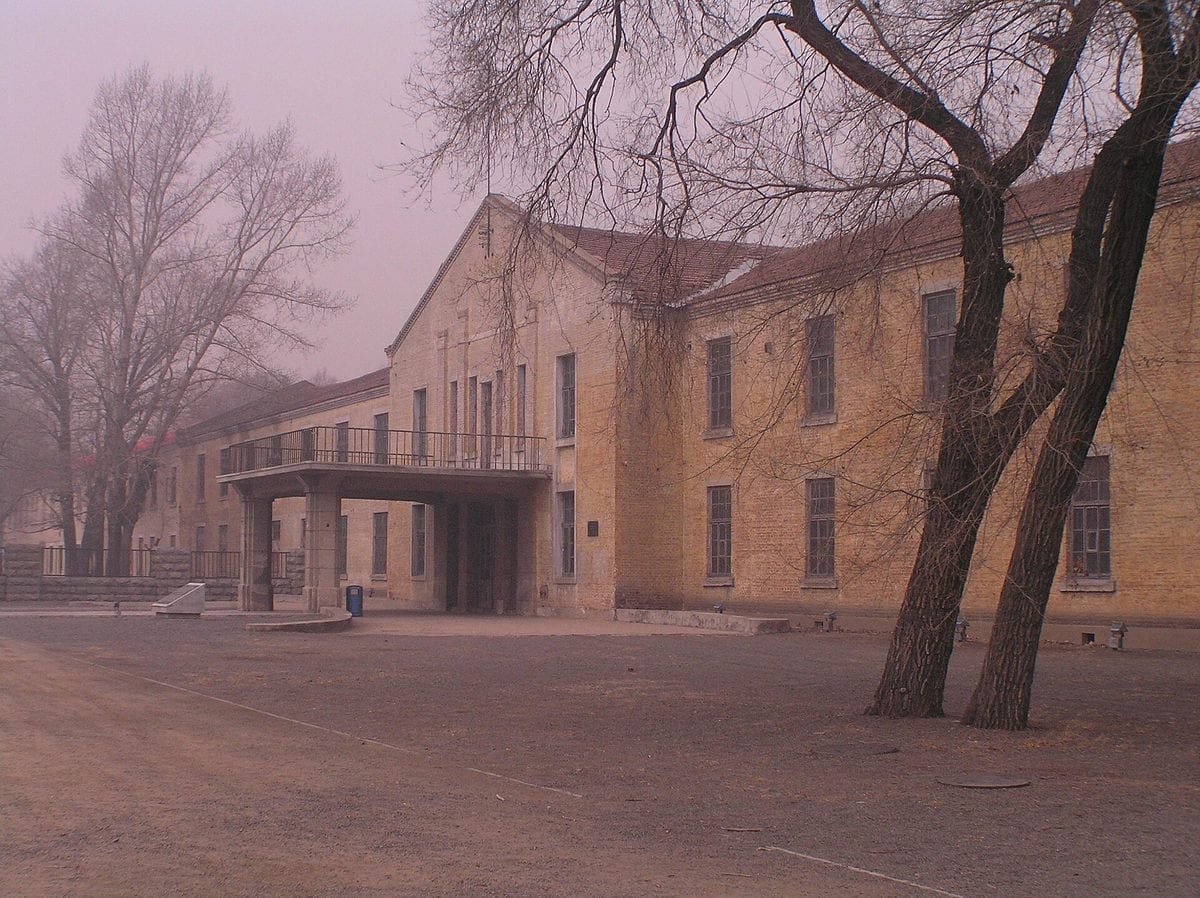
That Imperial Japan's Unit 731 systematically conducted deadly human experimentation and biological warfare during the Second World War, and that after the war the United States deliberately granted its leaders immunity from prosecution in exchange for their research findings, concealing the program's crimes so the data could be used by the American military.
Proven. This is one of the rare cases where the disturbing version is the documented one. That the Imperial Japanese Army's Unit 731 conducted lethal experiments on captives and deployed biological weapons against Chinese cities is established by postwar investigations, the 1949 Soviet Khabarovsk trial, decades of scholarship, and records declassified by the US National Archives. That the United States then granted Unit 731's leaders, including its founder Shiro Ishii, immunity from war-crimes prosecution in exchange for their research is likewise documented in declassified American cables and reports. The claim is therefore substantiated. What remains genuinely contested is narrower: the exact death toll, how scientifically useful the data actually was, and how much senior leadership knew. Those uncertainties do not unsettle the core, which the paper trail supports.
Believed by: A settled matter among historians of the Pacific War and, since the declassifications, a documented part of the public record. It is memorialized at museums in China and Japan, taught in histories of the war, and cited in bioethics literature. It is not a fringe belief; it is history that was suppressed and later opened.
The full story
What is documented
This case sits apart from most on this site, because the dark version is the one the evidence supports. The task here is not to talk a reader down from a rumor but to state carefully what the record establishes, and to treat the people who suffered with the dignity they were denied.
The Imperial Japanese Army operated a biological-warfare program in occupied China from the 1930s until 1945. Its central body, Unit 731, was built at Pingfang, near Harbin, in the puppet state of Manchukuo, behind the innocuous cover name of an epidemic-prevention and water-purification department. Under the army physician Shiro Ishii, its personnel conducted lethal experiments on prisoners, held as what unit slang chillingly called logs, and field-tested plague, cholera, anthrax, and typhus against Chinese towns, among them Ningbo in 1940 and Changde in 1941. As Japan surrendered, the unit demolished its complex, burned its records, and killed the captives who remained, an attempt to erase what it had done.
The second half of the claim is equally documented. In the American occupation that followed, US investigators judged the program's research worth having, and their government chose data over prosecution. Ishii and other leaders were granted immunity from war-crimes charges, the subject was kept out of the Tokyo war-crimes tribunal, and the material passed into American hands. The question this file weighs is therefore not whether these things happened, but how firmly the record shows them, and where honest uncertainty still lies.
The weight of the evidence
State the case at full strength, because it is strong. What makes this history secure is that it rests on several independent lines of evidence that point the same way, and that the most damning of them come from official sources.
Begin with the confessions. In December 1949 the Soviet Union tried twelve captured Japanese servicemen at Khabarovsk for making and using biological weapons and for human experimentation. All were convicted, and the published proceedings gave an early, detailed account of the program. For years these were waved away in the West as Cold War propaganda; later scholarship, working from other sources, found the core of them accurate.
Then the American paper trail, which is what turns the immunity story from suspicion into record. Investigators' reports described the human-experiment data as of great value and noted, revealingly, that it could not have been obtained in the United States because of the scruples attached to experiments on people. A May 1947 cablefrom General MacArthur's headquarters advised Washington that more could be gotten by assuring the Japanese scientists their information would stay in intelligence channels and not be used as war-crimes evidence. Ishii was never charged.
The documents that prove the bargain were written by the government that made it, and later released by that same government. That is about as strong as a cover-up claim ever gets.
Add to this the decades of academic work, the physical site at Pingfang that survives as a museum, the named towns with recorded outbreaks, and finally the mass declassification carried out by the US National Archives under postwar disclosure laws. Independent witnesses, official cables, a war-crimes trial, and archival files all converge. This is not a theory held together by a single leaked page.
What is genuinely contested, and what is not
Because the core is so well established, intellectual honesty means being precise about the parts that are not. The uncertainties are real, but they are narrower than the claim, and none of them rescues the program from what it plainly was.
The death toll is an estimate, not a count. The historian Sheldon Harris put the dead from the biological-warfare campaigns at over 200,000; a 2002 symposium in Changde offered a much larger figure; at Pingfang itself, at least 3,000 captives are commonly cited. These numbers differ because the unit destroyed its records, so any total is a reconstruction. That the killing was large-scale is not in doubt; the exact figure is.
The scientific worth of the data is likewise debated. American investigators called it invaluable at the time, which is central to why immunity was granted. Yet several later analysts judged much of the research methodologically crude and of limited practical use. This complicates the tidy narrative that the United States bought a decisive advantage, without touching the fact that it made the bargain.
And the full chain of authorization inside the wartime Japanese state is only partly known, again because incriminating files were burned in 1945. Historians can document the program and its leadership; the precise extent of high-level political knowledge is harder to fix from the surviving paper.
What is not contested by serious historians is whether the experiments and attacks occurred, or whether the United States extended immunity. Some nationalist writing in Japan has sought to minimize or deny the program, and some accounts on all sides inflate figures for effect. Neither the denial nor the exaggeration survives the documentary record, which is why the verdict here is substantiated rather than disputed.
The cover-up as it appears in the record
It is worth tracing how the concealment actually worked, because the mechanics are documented and they explain why the truth stayed buried so long.
The first move was investigative. American teams, starting with Lt. Col. Murray Sanders and continuing through investigators including Norbert Fell and Edwin Hill, debriefed Ishii and his colleagues and reported upward that the data was worth acquiring. The second move was legal insulation: the assurance, captured in the 1947 cable, that the scientists' disclosures would be treated as intelligence and kept out of any prosecution. The third was the silence of the Tokyo tribunal, where the biological-warfare program simply was not charged.
The result was a decades-long gap between what one government knew and what the public was told. The Soviet Khabarovsk proceedings, which did air the program, were dismissed in the West. It fell to journalists and historians from the 1970s and 1980s onward to reconstruct the arrangement, and then to the National Archives declassifications of 1999 to 2007 to place the underlying files in the open. The Interagency Working Group that carried out that release reported to Congress in 2007 and made large collections on Unit 731 and biological warfare available to any researcher.
In other words, the conspiracy was real, was official, and was eventually confessed to by the archives of the state that maintained it. The interesting historical question is no longer whether it happened but how a democracy came to make that choice, and what it says about the price it was willing to pay for a Cold War advantage.
Why this history endures
Unit 731 holds a grip on public memory that many larger wartime horrors do not, and the reasons say something about why certain true stories keep returning.
It endures because it joins two shocks in one: an atrocity, and then a betrayal of justice by a victor who is usually cast as the moral party. A crime alone can be mourned and filed away. A crime followed by an official decision to shield its authors resists closure, because it implicates not only the perpetrators but the court that declined to try them.
It endures because it was hidden and then revealed. Stories that were denied and later confirmed carry a special charge; they seem to prove that the instinct to distrust official silence was right. Here that instinct was vindicated by the releasing government's own files, which is why the case is so often invoked when people argue that uncomfortable truths get buried.
And it endures because it asks a question that never resolves: whether knowledge obtained through atrocity should ever be used, and what it costs a society to use it. That question runs straight into the ethics of medicine and of war, which is why Unit 731 appears not only in histories of the Pacific but in the literature of bioethics. The pull of the story is not conspiratorial thrill. It is moral discomfort that refuses to settle.
A documented atrocity
Keep the two halves of the claim in view, because both are supported. The first, that Unit 731 conducted lethal human experimentation and biological warfare, is established by confessions, scholarship, physical sites, and declassified files. The second, that the United States granted its leaders immunity in exchange for the data, is established by the occupying power's own cables and reports. On the central claim the verdict is Proven.
The uncertainties that remain are real but bounded: the exact death toll, the true scientific value of the research, and the full extent of high-level knowledge. Reporting those honestly is not hedging on the core; it is refusing to overstate beyond what the destroyed and partial record can bear. Precision about the unknowns is what keeps the known from being dismissed as exaggeration.
Above all, the victims should not be lost inside the archival dispute. Thousands of people, most of them Chinese, along with others held in occupied China, were killed in these experiments and attacks, and many of their names were deliberately erased. The documented history is not a curiosity or a debating point. It is a record of real suffering, and of a postwar choice to let those responsible go free, that the surviving evidence now lets us see clearly.
What's still unexplained
- The total number of people killed by Unit 731 and its affiliated units, through experiments and through the biological-warfare attacks, is not precisely known. Estimates range from the low hundreds of thousands upward, and the destruction of records at the war's end means an exact figure may never be recoverable.
- How scientifically valuable the captured data actually was remains debated. Investigators at the time called it invaluable, but several later analysts concluded much of it was methodologically crude, which complicates the simple story that the United States gained a decisive military advantage.
- The full chain of authorization inside the wartime Japanese state, including how much senior political and military leadership knew and approved, is only partly documented, in part because incriminating records were deliberately destroyed in 1945.
- Because Unit 731 killed its remaining captives and burned its files, the identities of many victims were erased. Reconstructing who they were, from fragmentary local and archival sources, is ongoing work that the surviving record can only partly support.
Point by point
The claim: Unit 731 conducted lethal human experiments and deliberately spread disease among Chinese civilians.
What the record shows: This is documented rather than alleged. Confessions recorded at the 1949 Khabarovsk trial, the testimony and admissions of former members surfacing from the 1980s, decades of peer-reviewed scholarship, and files released by the US National Archives all describe experiments on captives and biological attacks on Chinese towns such as Ningbo and Changde. The physical complex at Pingfang existed and was destroyed by the unit itself at the war's end. The record is consistent across independent lines of evidence.
The claim: The United States gave Ishii and other Unit 731 leaders immunity in exchange for their research.
What the record shows: Declassified American documents support this directly. A May 1947 cable from MacArthur's command recommended assuring the Japanese scientists that their information would be kept in intelligence channels and not used as war-crimes evidence, and investigators' reports called the data invaluable and obtained cheaply. Ishii was never prosecuted. Historians of the American cover-up, drawing on these files, treat the immunity bargain as an established fact, not a supposition.
The claim: The program's crimes were deliberately excluded from the postwar Tokyo war-crimes tribunal.
What the record shows: The biological-warfare program was not charged at the International Military Tribunal for the Far East, even as the Soviets pressed the issue and ran their own Khabarovsk trial in 1949. The omission is documented in the tribunal's record and in the declassified correspondence, and it is the reason the subject stayed obscure in the West for decades. This is a matter of what the official proceedings did and did not include.
The claim: The captured research was funneled to the US biological-weapons establishment.
What the record shows: American investigators' reports show the data was gathered and evaluated by US military scientists, and accounts place Ishii and colleagues in contact with the army's biological-research program. That the material was collected and assessed for military use is on the record. How much of it was scientifically useful, however, is a separate and contested question: several later analysts judged much of the data crude or of limited value.
The claim: The program killed on the order of hundreds of thousands of people.
What the record shows: Mass casualties are documented, but the totals are estimates that vary widely and should be reported as such. The historian Sheldon Harris estimated that over 200,000 died from the biological-warfare campaigns; a 2002 symposium in Changde put the figure far higher. At Pingfang itself, at least 3,000 captives are commonly cited as killed in experiments. The scale was large and lethal; the precise number is not settled.
Timeline
- 1932The army physician Shiro Ishii, an advocate of biological weapons, begins organized research under the Imperial Japanese Army, setting up early laboratory and detention work that would grow into a network of biological-warfare units in occupied China.
- 1936Unit 731 is formally established as the Kwantung Army's Epidemic Prevention and Water Purification Department, with a large complex built at Pingfang, near Harbin, in the Japanese puppet state of Manchukuo. Behind the sanitary cover name, it becomes the center of the army's biological-weapons program.
- 1940-10Aircraft linked to the program spread plague-infected material over the coastal city of Ningbo, one of several biological attacks on Chinese population centers. Outbreaks follow, and civilians die.
- 1941An attack associated with the program strikes Changde in Hunan Province, again seeding disease among civilians. Field trials of plague, cholera, anthrax, and typhus against Chinese towns continue through the war.
- 1945-08As Japan surrenders and Soviet forces advance into Manchuria, Unit 731 personnel demolish the Pingfang facility, burn records, and kill the remaining prisoners in an effort to erase the evidence. Ishii and much of the staff escape back to Japan.
- 1946-1947During the US occupation, American teams, beginning with Lt. Col. Murray Sanders and continuing with investigators including Norbert Fell and Edwin Hill, interview Ishii and his colleagues. Their reports describe the human-experiment data as of great value and note it could not have been obtained in the United States.
- 1947-05-06General Douglas MacArthur's headquarters cables Washington advising that further data could be secured by assuring the Japanese scientists their information would stay in intelligence channels and not be used as war-crimes evidence.
- 1948The immunity arrangement is settled. Unit 731's biological-warfare activities are kept out of the International Military Tribunal for the Far East in Tokyo, and Ishii and other leaders are never prosecuted by the Western Allies.
- 1949-12The Soviet Union tries twelve captured Japanese servicemen at Khabarovsk for manufacturing and using biological weapons and for human experimentation. All are convicted; their confessions become an early public documentary record of the program, long dismissed in the West as propaganda.
- 1999-2007Under US disclosure laws, the Nazi War Crimes and Japanese Imperial Government Records Interagency Working Group locates and declassifies large volumes of files, releasing document collections on Unit 731 and biological warfare and issuing a final report to Congress in 2007.
From the case file
The actual records: declassified, released, or leaked. We link straight to each document in its official archive, so you never have to take our word for it. Read the originals yourself.
Select Documents on Japanese War Crimes and Japanese Biological Warfare, 1934–2006
A curated collection of roughly 1,400 records assembled by the Nazi War Crimes and Japanese Imperial Government Records Interagency Working Group, covering Unit 731 and Japan's wartime biological-warfare experiments and attacks. It is the standard starting point for researchers reading the underlying American files on the program and the postwar handling of its data.
Read the document: U.S. National Archives (IWG) →Nazi War Crimes and Japanese Imperial Government Records Interagency Working Group: Final Report to the United States Congress
The IWG's concluding report to Congress on its multi-year effort to locate and declassify federal records on Nazi and Japanese Imperial Government war crimes, including the millions of pages opened to the public and the collections relating to Unit 731 and biological warfare.
Read the document: U.S. National Archives (IWG) →Other case files that cite the same sources
Proven. This is one of the rare cases where the disturbing version is the documented one. That the Imperial Japanese Army's Unit 731 conducted lethal experiments on captives and deployed biological weapons against Chinese cities is established by postwar investigations, the 1949 Soviet Khabarovsk trial, decades of scholarship, and records declassified by the US National Archives. That the United States then granted Unit 731's leaders, including its founder Shiro Ishii, immunity from war-crimes prosecution in exchange for their research is likewise documented in declassified American cables and reports. The claim is therefore substantiated. What remains genuinely contested is narrower: the exact death toll, how scientifically useful the data actually was, and how much senior leadership knew. Those uncertainties do not unsettle the core, which the paper trail supports.
Reviewed by Colin Peterson · Last reviewed July 8, 2026 · How we rate
Common questions
Is Unit 731 and the immunity deal true?
Proven. This is one of the rare cases where the disturbing version is the documented one. That the Imperial Japanese Army's Unit 731 conducted lethal experiments on captives and deployed biological weapons against Chinese cities is established by postwar investigations, the 1949 Soviet Khabarovsk trial, decades of scholarship, and records declassified by the US National Archives. That the United States then granted Unit 731's leaders, including its founder Shiro Ishii, immunity from war-crimes prosecution in exchange for their research is likewise documented in declassified American cables and reports. The claim is therefore substantiated. What remains genuinely contested is narrower: the exact death toll, how scientifically useful the data actually was, and how much senior leadership knew. Those uncertainties do not unsettle the core, which the paper trail supports.
What is Unit 731 and the immunity deal?
Between the 1930s and 1945, the Imperial Japanese Army operated a secret biological-warfare complex in occupied Manchuria known as Unit 731, headquartered at Pingfang near Harbin and led by the army physician Shiro Ishii. Its personnel conducted lethal experiments on prisoners, referred to in unit slang by a term meaning logs, and field-…
What does the evidence show?
This is documented rather than alleged. Confessions recorded at the 1949 Khabarovsk trial, the testimony and admissions of former members surfacing from the 1980s, decades of peer-reviewed scholarship, and files released by the US National Archives all describe experiments on captives and biological attacks on Chinese towns such as Ningb…
Why do people believe it?
The documentary trail is unusually strong. Unlike most conspiracy claims, this one is backed by an occupying power's own declassified cables, a war-crimes trial transcript, and files opened by the United States government itself. When the paper that proves a cover-up comes from the government that ran it, the claim stops being speculatio…
What is still unresolved?
The total number of people killed by Unit 731 and its affiliated units, through experiments and through the biological-warfare attacks, is not precisely known. Estimates range from the low hundreds of thousands upward, and the destruction of records at the war's end means an exact figure may never be recoverable.
Sources
- 1.Unit 731, Wikipedia
- 2.American cover-up of Japanese war crimes, Wikipedia
- 3.Khabarovsk war crimes trials, Wikipedia
- 4.The trial of Unit 731, The Japan Times (2001)
- 5.Unit 731 and the Japanese Imperial Army's Biological Warfare Program, The Asia-Pacific Journal: Japan Focus (Tsuneishi Keiichi)
- 6.100,000 Pages Declassified in Search for Japanese War Crimes Records, U.S. National Archives (2007)
- 7.Opening the Files on War Crimes, U.S. National Archives (Prologue Magazine) (2007)
- 8.Researching Japanese War Crimes: Introductory Essays, U.S. National Archives (IWG) (2006)
Embed this verdict on your site
Paste this snippet to show our sourced verdict as a small card, with a link back to the full case file. Free to use.
<iframe src="https://theconspiratory.com/embed/unit-731" title="The Conspiratory verdict" width="520" height="190" style="border:0;max-width:100%" loading="lazy"></iframe>Help us investigate
This is a living case file. If you spot an error or know evidence we missed, tell us, and weigh in on where you land.
Where do you land?
Cast your read on this one.
Comments
Add your take. Comments are read and approved by a human before they appear, so keep it on topic and civil. Please do not accuse named, living people of crimes.