Orson Welles' 1938 'War of the Worlds' broadcast sent millions of Americans into a nationwide panic
By Colin PetersonJuly 18, 2026
Where the evidence lands: Contradicted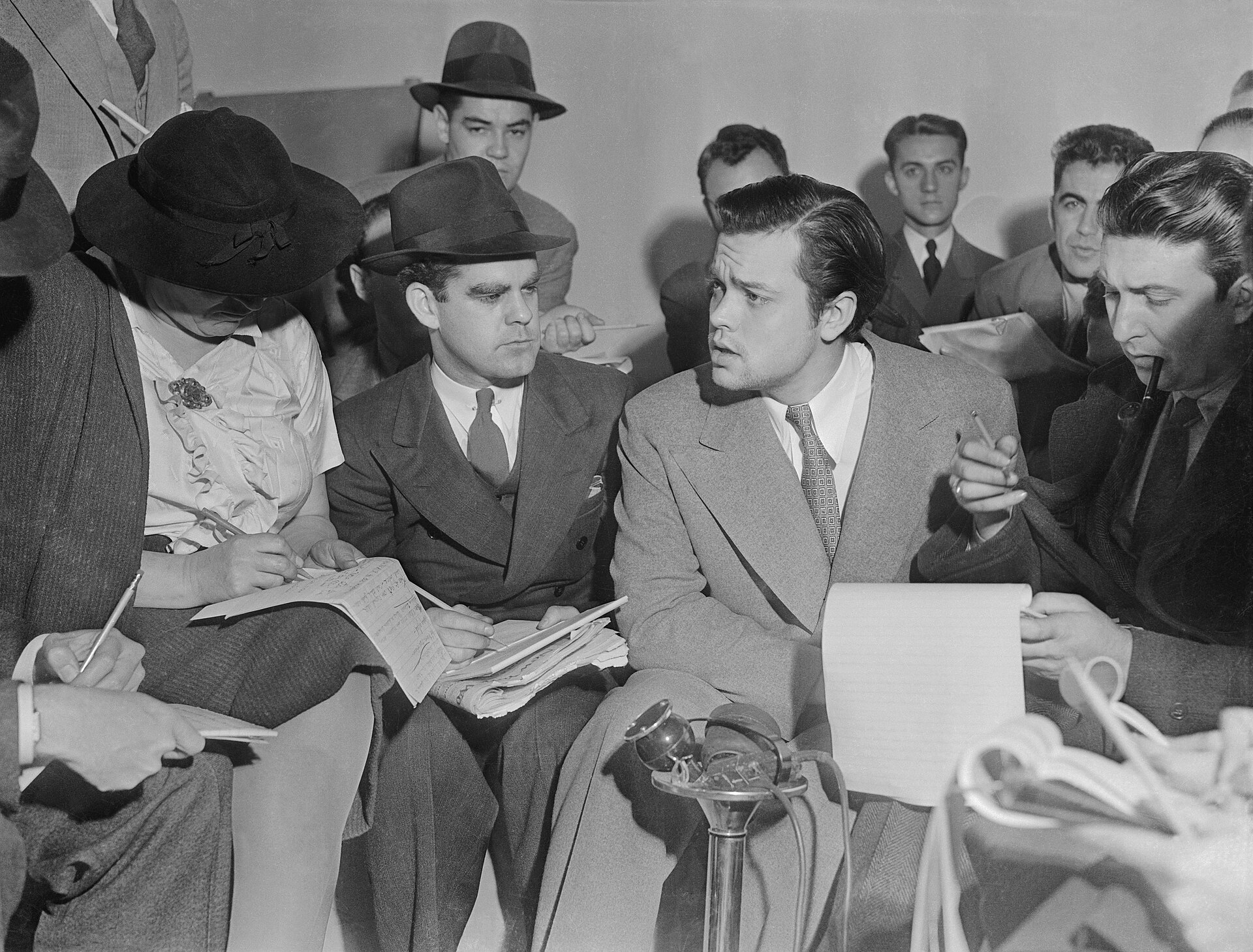
That Orson Welles' October 30, 1938 radio dramatization of The War of the Worlds deceived a huge national audience into believing Martians were actually invading, and that it triggered a genuine mass panic in which millions of Americans across the country fled their homes, choked roads with traffic, overwhelmed police and hospitals, and in some tellings died or were driven to suicide by fright.
Contradicted. The broadcast was real: on October 30, 1938, Orson Welles and the Mercury Theatre on the Air aired a fake-newscast adaptation of H. G. Wells on CBS, and a scattering of listeners were genuinely frightened. The claim we rate here is the legend that grew up around it, that the program touched off a mass, nationwide panic with millions fleeing their homes. That story is largely a myth. C. E. Hooper's ratings that night found only about 2 percent of the surveyed audience tuned to Welles; most were listening to Edgar Bergen on a rival network. No death was ever verified as caused by the show, hospitals reported no surge of shock cases, and the vivid tales of mass hysteria came overwhelmingly from newspapers that had a commercial motive to discredit radio. Hadley Cantril's influential 1940 study cemented the panic narrative on numbers later scholars judge inflated. Rated debunked as to the mass-panic claim, not the broadcast itself.
Believed by: Repeated as settled history for decades in textbooks, documentaries, and journalism; still widely believed today as a parable about the gullibility of radio-age audiences and the power of new media
The full story
What actually aired that night
On Sunday, October 30, 1938, the night before Halloween, CBS Radio carried the seventeenth episode of The Mercury Theatre on the Air, the prestige drama series fronted by a 23-year-old Orson Welles. The evening's play was an adaptation of H. G. Wells' 1898 novel The War of the Worlds, written for radio by Howard Koch. Koch made one decisive change: he moved the Martian invasion from Victorian England to the contemporary United States, and set the first landing at Grovers Mill, a real and otherwise unremarkable hamlet in West Windsor, New Jersey.
The famous stroke was one of form rather than plot. For its first half, the program abandoned ordinary storytelling and impersonated a live radio evening: light dance music from a hotel ballroom, interrupted again and again by increasingly urgent news bulletins describing a cylinder falling from the sky, a heat ray, and then a full Martian assault. To a listener who had settled in from the start, it was plainly a piece of theater, introduced as a Mercury Theatre drama and identified again at the station break. To a listener who spun the dial in partway through, it could sound, for a while, like the real thing.
All of that is genuine, and this case file does not dispute a word of it. The broadcast existed, the fake-newscast device was real and effective, and a scattering of people were sincerely unsettled by it. The question this file rates is not whether the program aired or whether anyone was ever frightened. It is whether that night produced the thing the legend insists on: a mass, nationwide panic.
The legend, and why it took hold
The story that hardened around the broadcast is one of the most durable in American popular memory. In the standard telling, Welles' Martians sent the country into collective hysteria: millions of listeners, convinced the invasion was real, are said to have fled their homes, packed highways with cars, jammed police and newspaper switchboards, armed themselves against the aliens, and in the most lurid versions suffered heart attacks or took their own lives in terror. It is a tale of a whole nation stampeded by a radio play.
It is worth taking seriously why this version was so believable, and why careful people repeated it for decades. It arrived, first, in the most authoritative venue of the day. The morning after the broadcast, newspapers across the country ran dramatic front-page accounts of terror and flight, many built from Associated Press wire copy that aggregated local reports into a seemingly national picture. When the papers of record say a panic happened, the panic becomes a fact.
It was then reinforced by scholarship. In 1940 the Princeton psychologist Hadley Cantril published The Invasion from Mars: A Study in the Psychology of Panic, which estimated that around six million people heard the show and that well over a million were frightened by it. Cantril's book became a foundational text in the new field of media-effects research, and its numbers, wrapped in the authority of social science, gave the panic story a precision and legitimacy that newspaper anecdote alone could not.
And it fit the anxieties of its moment. In 1938, with fascist propaganda pouring out of European radios and war approaching, the idea that a broadcast could seize and terrify a mass audience was not a comforting fantasy but a live fear. The columnist Dorothy Thompson made exactly that point days later, treating the episode as a demonstration of how easily people could be manipulated. The legend endured, in other words, because it confirmed something people already believed about the frightening new power of radio.
What the evidence actually shows
Start with the size of the audience, because everything else follows from it. On the night of the broadcast, the C. E. Hooper ratings service telephoned roughly 5,000 households to ask what they were listening to. Only about 2 percentnamed the Mercury Theatre program. The other 98 percent were tuned to something else or to nothing at all. Welles had the misfortune, or from a dramatist's view the challenge, of airing opposite Edgar Bergen's Chase and Sanborn Hour, one of the most popular shows on the air, and most of the country stayed with the ventriloquist and his dummy. A panic requires an audience, and the audience was small.
Next, the supposed casualties. The most sensational elements of the legend are deaths, suicides, and hospital wards filling with the shocked. None of it survives scrutiny. No fatality was ever verified as caused by the broadcast; a widely circulated heart-attack story could never be confirmed, and not a single genuine suicide was ever documented as connected to it. Tellingly, even the researchers working under Cantril, who were inclined to find panic, reported that a Newark hospital logged no shock admissions that night and that New York City hospitals saw no unusual surge. The physical wreckage at the heart of the story essentially did not happen.
The scale of the coverage, some 12,500 articles over two weeks, dwarfed the scale of any actual disturbance.
So where did the vivid picture come from? Largely from the newspapers themselves, and they were not disinterested witnesses. Through the Depression, radio had been steadily pulling advertising revenue away from print, and the newspaper industry had a clear commercial interest in portraying radio as irresponsible and unfit to be trusted with news. Welles handed them the perfect illustration. Much of the resulting coverage was thin and anecdotal, unverified local incidents swept together by the wire services into the appearance of a national emergency. The volume was enormous, roughly 12,500 articles over about two weeks, but volume is not verification.
Even Cantril's scholarly capstone, the study that lent the legend its academic weight, does not hold up on its central figures. His estimate of the audience ran more than twice as high as any other measurement of the period, and later analysts judge his tally of frightened listeners impossible against every independent gauge of who was actually tuned in. The work rested heavily on interviews conducted some six weeks after the broadcast and on data assembled quickly. When media historians Jefferson Pooley and Michael Socolow went back through the record in 2013, they concluded that the panic, as a mass national event, was essentially a fiction: real for a scattered few, imaginary for the millions the legend conscripts.
Why the myth outlived the facts
If the panic was so small, why has the myth proved so much larger and more durable than the event? Part of the answer is simply that it is a better story. A nation stampeded by a radio play is dramatic, ironic, and easy to tell in a sentence. The accurate version, that a minority of a modest audience was briefly and mostly locally alarmed, has no comparable hook. Between a thrilling myth and a nuanced truth, repetition tends to favor the myth.
It also enjoyed an unusually respectable pedigree. Most urban legends circulate as rumor; this one was printed on front pages, codified in a Princeton monograph, and then handed down through textbooks, encyclopedias, and documentaries, each generation citing the last. The citation chain looked like corroboration, when in fact it was mostly the same original overstatement being copied forward. A false claim with good footnotes is very hard to kill.
And the legend flatters everyone who repeats it. Told that listeners in 1938 fled their homes over a radio play, later audiences get to feel media-literate by comparison: we, surely, would never be so naive. That flattery is comfortable and false in equal measure, which is one reason the reassessment matters beyond the historical record. The real lesson of the broadcast is not that our grandparents were uniquely gullible. It is that a good story, repeated confidently by trusted institutions, can outrun the facts for the better part of a century, which is a caution the present has no business feeling smug about.
The panic was the myth
The claim on trial is the legend of a mass, nationwide panic, and on that claim the rating is debunked. The broadcast was real and a scattered minority of listeners was genuinely frightened, but the ratings show only a small audience, no death or suicide was ever verified, hospitals reported no surge of shock cases, and the vivid national picture came largely from newspapers with a motive to discredit radio and from a 1940 study whose numbers later scholarship has not been able to sustain. The panic that everyone remembers was, in aggregate, tiny; the panic that everyone describes never happened.
What survives the debunking is the more interesting story. The value of the case is not in catching one radio drama at fault but in watching how a modest event became an unshakable legend: printed by institutions with an interest in the drama, certified by science on shaky figures, and passed down because it was too good, and too flattering, to check. Welles' Martians never conquered New Jersey. The myth about them conquered American memory, and it took seventy-five years of careful work to begin taking it back.
What's still unexplained
- Debunking the mass panic does not mean nothing happened. Some listeners genuinely were frightened, some phoned police or relatives, and a handful of local disturbances are real. The honest open question is one of degree: exactly how many people were meaningfully alarmed is unrecoverable, because the contemporaneous measurements were poor and the later surveys were compromised. The evidence supports 'far smaller than the legend,' not a precise count.
- The broadcast's cultural impact was real even though the panic was not. It made Orson Welles famous, shaped decades of media-effects research, and became a permanent reference point for debates about misinformation and new technology. Separating the outsized influence of the story from the modest size of the actual event is part of what makes the case interesting rather than a simple correction.
- Later fake-invasion broadcasts abroad, notably a 1949 Quito, Ecuador adaptation that did end in real deadly violence, are sometimes folded into the 1938 legend. They are separate events with their own facts, and conflating them with the CBS broadcast is one of the ways the American panic myth keeps getting reinforced.
Point by point
The claim: Millions of Americans heard the broadcast and were swept up in it.
What the record shows: The audience was small. The C. E. Hooper telephone ratings service, calling roughly 5,000 households during the broadcast, found only about 2 percent tuned to the Mercury Theatre program. Ninety-eight percent were listening to something else or nothing at all. Welles aired opposite one of the most popular shows on radio, Edgar Bergen's Chase and Sanborn Hour, and most dial-turners stayed with Bergen. CBS's own research chief, Frank Stanton, later concluded that most Americans simply did not hear the show, and that those who did largely treated it as a prank.
The claim: The broadcast caused deaths, suicides, and a surge of people hospitalized for shock.
What the record shows: No death has ever been verified as caused by the broadcast. A widely repeated claim of a fatal heart attack could not be confirmed, and no genuine suicide was ever documented as connected to the program. Even Cantril's own researchers, sympathetic to the panic thesis, found that a Newark hospital reported no admissions for shock that night, and New York City hospitals recorded no unusual surge. The lurid physical toll that anchors the legend has essentially no verified basis in the record.
The claim: Newspapers were simply reporting the real chaos they witnessed.
What the record shows: The papers had a motive to exaggerate. Through the Depression, radio had siphoned advertising away from print, and the newspaper industry was eager to portray radio as reckless and untrustworthy to advertisers and regulators. Much of the coverage was thin and anecdotal, wire-service roundups of unverified local incidents, and few of the alarming reports were ever investigated or confirmed. The scale of the coverage, roughly 12,500 articles over two weeks, dwarfed the scale of any actual disturbance.
The claim: Hadley Cantril's 1940 Princeton study scientifically proved a mass panic.
What the record shows: Cantril's book is a serious work, but its central numbers do not hold up. His estimate of the audience was more than twice as high as any other measure from the period, and later scholars call his figure of roughly a million frightened listeners impossible against every other gauge of who was actually tuned in. The study leaned on interviews conducted about six weeks after the fact and on data assembled in haste. Pooley and Socolow's reanalysis concludes the book systematically overstated both the reach and the fright.
The claim: Nobody could tell it was fiction, so of course the country panicked.
What the record shows: The program was framed as drama at the top and identified again at the first break, and the great majority of listeners understood it as theater. Genuine confusion was concentrated among people who tuned in late and missed the framing, and even many of them checked other stations, called neighbors, or reasoned it out rather than fleeing. Real alarm existed; it was local, scattered, and short-lived, not the coordinated national stampede of legend.
Other readings
Angles that don't fit neatly into the claim or its rebuttal, laid out and weighed, not endorsed.
The 'kernel of truth' reading
A fair-minded skeptic can accept the debunk and still resist the tidy conclusion that nothing occurred. Thousands of letters reached CBS and the FCC, some describing real fear, and clusters of anxious phone calls are documented in a few places. This angle holds that the legend exaggerated a genuine if minor phenomenon rather than inventing one from nothing. It is correct, and it is exactly what this file argues: the disagreement with the myth is about scale, not existence.
The 'Welles engineered it' reading
A darker minority view casts Welles as a deliberate manipulator who set out to deceive and then profited from the notoriety. The record is mixed: the drama framing and station identifications cut against a pure hoax intent, though Welles clearly enjoyed and amplified the resulting fame afterward. This angle overstates premeditation, but it usefully flags that Welles was not a passive victim of a story others told about him; he helped keep the legend alive.
Timeline
- 1898H. G. Wells publishes the novel The War of the Worlds, depicting a Martian invasion of Victorian England. It becomes a touchstone of science fiction and the source material Welles' company would adapt four decades later.
- Oct 30, 1938The 17th episode of CBS Radio's The Mercury Theatre on the Air airs at 8 p.m. Eastern. Adapted by Howard Koch and narrated by Orson Welles, it relocates the invasion to Grovers Mill, an unincorporated village in West Windsor, New Jersey, and stages the first half as a sequence of realistic breaking-news bulletins interrupting dance music.
- Oct 30, 1938The program opens with a clear framing as a Mercury Theatre drama and carries further identification at the first station break, but a listener tuning in late, after the invasion was already underway, could miss those cues. Only a minority of the national audience was listening at all: the rest were on rival networks or off the dial.
- Oct 31, 1938Newspapers across the country run dramatic front-page stories describing terror, flight, and chaos. Wire-service copy, much of it aggregated by the Associated Press from scattered local reports, gives the impression that panic was widespread and nationwide.
- Nov 1938The Federal Communications Commission reviews the incident but declines to punish Welles or CBS, and later bars complaints about the broadcast from being raised at license-renewal time. Coverage continues for roughly two weeks, ultimately amounting to some 12,500 newspaper articles.
- Nov 2, 1938Syndicated columnist Dorothy Thompson, in her 'On the Record' column, treats the episode as proof of how easily propaganda could stampede a public, elevating a night of scattered alarm into a grand lesson about mass delusion, and helping fix the panic frame in elite opinion.
- 1940Princeton psychologist Hadley Cantril publishes The Invasion from Mars: A Study in the Psychology of Panic, estimating that some six million people heard the broadcast and that over a million were frightened. The book becomes a landmark of media-effects research and lends the panic story lasting academic authority.
- 2013Media historians Jefferson Pooley and Michael J. Socolow publish 'The Myth of the War of the Worlds Panic' in Slate, arguing from ratings data and the thinness of verified reports that the mass panic never happened. Their case, alongside A. Brad Schwartz's 2015 book Broadcast Hysteria, drives a broad reassessment of the legend.
Contradicted. The broadcast was real: on October 30, 1938, Orson Welles and the Mercury Theatre on the Air aired a fake-newscast adaptation of H. G. Wells on CBS, and a scattering of listeners were genuinely frightened. The claim we rate here is the legend that grew up around it, that the program touched off a mass, nationwide panic with millions fleeing their homes. That story is largely a myth. C. E. Hooper's ratings that night found only about 2 percent of the surveyed audience tuned to Welles; most were listening to Edgar Bergen on a rival network. No death was ever verified as caused by the show, hospitals reported no surge of shock cases, and the vivid tales of mass hysteria came overwhelmingly from newspapers that had a commercial motive to discredit radio. Hadley Cantril's influential 1940 study cemented the panic narrative on numbers later scholars judge inflated. Rated debunked as to the mass-panic claim, not the broadcast itself.
Reviewed by Colin Peterson · Last reviewed July 18, 2026 · How we rate
Common questions
Is War of the Worlds panic true?
Contradicted. The broadcast was real: on October 30, 1938, Orson Welles and the Mercury Theatre on the Air aired a fake-newscast adaptation of H. G. Wells on CBS, and a scattering of listeners were genuinely frightened. The claim we rate here is the legend that grew up around it, that the program touched off a mass, nationwide panic with millions fleeing their homes. That story is largely a myth. C. E. Hooper's ratings that night found only about 2 percent of the surveyed audience tuned to Welles; most were listening to Edgar Bergen on a rival network. No death was ever verified as caused by the show, hospitals reported no surge of shock cases, and the vivid tales of mass hysteria came overwhelmingly from newspapers that had a commercial motive to discredit radio. Hadley Cantril's influential 1940 study cemented the panic narrative on numbers later scholars judge inflated. Rated debunked as to the mass-panic claim, not the broadcast itself.
What is War of the Worlds panic?
On the night before Halloween in 1938, a 23-year-old Orson Welles adapted H. G. Wells' The War of the Worlds for CBS radio as a string of fake news bulletins reporting a Martian invasion of New Jersey. The broadcast is one of the most famous in American history, and the story attached to it is even more famous: that it plunged the nation…
What does the evidence show?
The audience was small. The C. E. Hooper telephone ratings service, calling roughly 5,000 households during the broadcast, found only about 2 percent tuned to the Mercury Theatre program. Ninety-eight percent were listening to something else or nothing at all. Welles aired opposite one of the most popular shows on radio, Edgar Bergen's C…
Why do people believe it?
The myth is a better story than the truth. A nation stampeded by a radio play is vivid, ironic, and morally tidy, while 'a small share of a modest audience was briefly worried' makes no headline. Once the dramatic version was in print, it was simply more repeatable.
What is still unresolved?
Debunking the mass panic does not mean nothing happened. Some listeners genuinely were frightened, some phoned police or relatives, and a handful of local disturbances are real. The honest open question is one of degree: exactly how many people were meaningfully alarmed is unrecoverable, because the contemporaneous measurements were poor…
Sources
- 1.The Myth of the War of the Worlds Panic: Orson Welles' infamous radio broadcast did not cause a nationwide hysteria, Jefferson Pooley & Michael J. Socolow, Slate (2013)
- 2.Did the 1938 Radio Broadcast of 'War of the Worlds' Cause a Nationwide Panic?, Snopes
- 3.75 Years Ago, 'War Of The Worlds' Started A Panic. Or Did It?, NPR (2013)
- 4.The Infamous 'War of the Worlds' Radio Broadcast Was a Magnificent Fluke, Smithsonian Magazine (2015)
- 5.Checking Up on The Invasion from Mars: Hadley Cantril, Paul F. Lazarsfeld, and the Making of a Misremembered Classic, Jefferson Pooley & Michael Socolow, International Journal of Communication (2013)
- 6.The Fake News of Orson Welles: The War of the Worlds at 80, A. Brad Schwartz, National Endowment for the Humanities (2018)
- 7.The War of the Worlds (1938 radio drama), Wikipedia
- 8.'War of the Worlds' didn't panic America. Newspapers did., Freethink (2022)
- 9.The Invasion from Mars: A Study in the Psychology of Panic, Hadley Cantril, Princeton University Press (1940)
- 10.Broadcast Hysteria: Orson Welles's War of the Worlds and the Art of Fake News, A. Brad Schwartz, Hill and Wang (2015)
Embed this verdict on your site
Paste this snippet to show our sourced verdict as a small card, with a link back to the full case file. Free to use.
<iframe src="https://theconspiratory.com/embed/war-of-the-worlds-panic" title="The Conspiratory verdict" width="520" height="190" style="border:0;max-width:100%" loading="lazy"></iframe>Help us investigate
This is a living case file. If you spot an error or know evidence we missed, tell us, and weigh in on where you land.
Where do you land?
Cast your read on this one.
Comments
Add your take. Comments are read and approved by a human before they appear, so keep it on topic and civil. Please do not accuse named, living people of crimes.