Pope John Paul I was murdered after 33 days to stop him cleaning up the Vatican Bank
By Colin PetersonJuly 12, 2026
Where the evidence lands →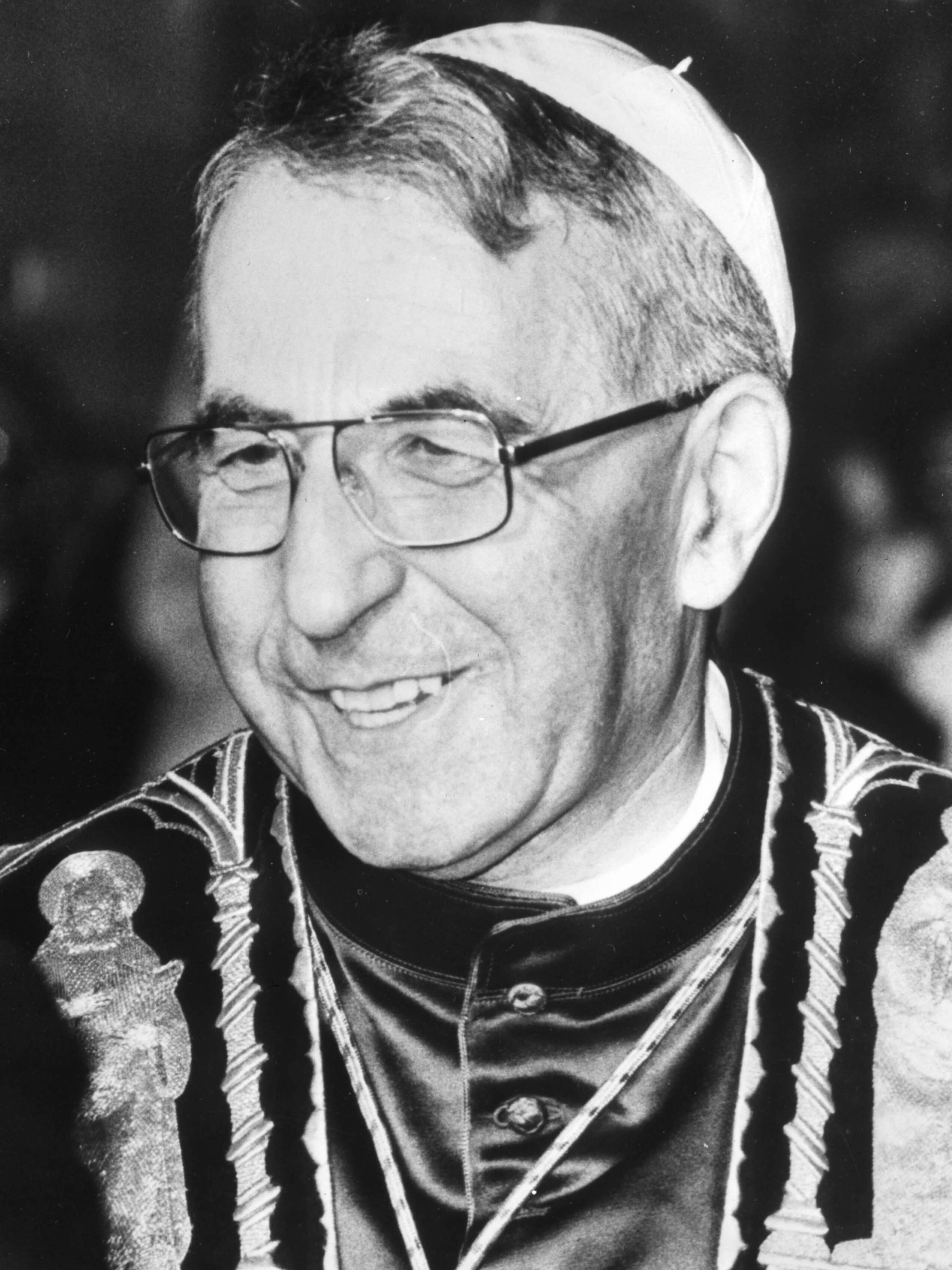
That Pope John Paul I did not die of natural causes but was murdered, most often said to be poisoned, because he intended to reform or expose corruption at the Institute for the Works of Religion (the Vatican Bank), which was entangled with the collapsing Banco Ambrosiano, with financier Roberto Calvi and Michele Sindona, and with the illegal Masonic lodge Propaganda Due (P2), and that Vatican and financial figures conspired to silence him before he could act.
The starting facts are real: Albino Luciani did die suddenly after only about 33 days as pope, no autopsy was performed, and the Vatican's early account of who found him and what he was doing was demonstrably wrong, which fed suspicion. The real financial world around the Vatican Bank was also genuinely corrupt and, in the years after, genuinely deadly. But the specific claim that the Pope was poisoned to halt a bank clean-up is unproven. The independent inquiry the Vatican itself commissioned, and later research by the postulator of his sainthood cause with access to the records, both concluded the death was natural, most likely a heart attack, in a man with documented health warnings. No toxicology, no plausible mechanism, and no witness has ever established murder.
Believed by: A durable global audience, sustained by best-selling books, television documentaries, and the genuine drama of the Banco Ambrosiano scandal that unfolded in the years that followed
The full story
Thirty-three days, and a story that changed
Albino Luciani was elected pope on 26 August 1978 and took the name John Paul I. Modest and quick to smile, he charmed the world in a matter of days. Then, on the morning of 28 September, about 33 days later, he was found dead in his bed. The Vatican said he had suffered a heart attack in the night. In keeping with long-standing custom, no autopsy was carried out.
That much is not seriously disputed. What turned a sudden death into a lasting mystery was what happened next. The Vatican's first account said the Pope had been found by his secretary and that he had died while reading a devotional book. Within a day both details had to be corrected. The body had actually been discovered by a nun of the papal household, Sister Vincenza Taffarel, and the Pope had been holding sheets of paper, not a book. Members of the household later said officials had shaded the story in part to avoid the awkwardness of admitting that a woman had entered the pope's bedroom.
From those real contradictions grew a far heavier charge: that John Paul I had not died at all of natural causes but had been murdered, poisoned, to stop him from cleaning up a corrupt Vatican Bank. The corruption around that bank was real. The murder of the Pope is a separate claim, and it is the one that has to be weighed on its own.
The case for suspicion
Steelman it fairly, because the raw material is not invented. A vigorous new pope was dead in about a month, and the institution charged with explaining it promptly told the world things that were untrue. When an authority lies about small, checkable facts surrounding a death, the reasonable instinct is to ask what else it is willing to lie about.
The financial backdrop gave that instinct a target. The Vatican's own bank, the Institute for the Works of Religion, was deeply entangled with Banco Ambrosiano, an Italian bank run by Roberto Calvi, nicknamed “God's Banker” for his Vatican ties. Behind them stood the financier Michele Sindona and the shadow of Propaganda Due (P2), an illegal Masonic lodge whose exposure in 1981 revealed hundreds of members across Italian public life. If a pope had meant to take a broom to that network, the theory runs, he had made powerful enemies fast.
Then came the deaths that seemed to confirm the pattern. In 1982, Calvi was found hanged beneath Blackfriars Bridge in London, bricks stuffed into his clothes, as Banco Ambrosiano collapsed with more than a billion dollars unaccounted for. In 1986, Sindona died in an Italian prison after drinking coffee laced with cyanide, two days into a life sentence. Archbishop Paul Marcinkus, who ran the Vatican Bank, was later named in an Italian arrest order as an accessory in the Ambrosiano collapse; the Vatican, an independent state, declined to hand him over, and he was never tried.
A banker hanged under a bridge, a financier poisoned in his cell, a bank collapsing with a fortune missing. In that company, a fourth suspicious death was easy to imagine.
None of this is a murder confession, and every one of these events came years afterthe Pope died. But they explain why the theory took hold and would not let go. This looked, from the outside, like a world in which inconvenient men did not always die of natural causes, and the Vatican's own fumbling had already forfeited the benefit of the doubt.
What the investigations actually found
The murder case was pressed hardest by David Yallop's 1984 best-seller In God's Name, which argued the Pope had been poisoned and named a cast of churchmen and financiers as the beneficiaries. The book sold enormously and fixed the theory in the public mind. It did not, however, produce the thing the charge required: evidence that a murder had taken place. It reasoned from motive and atmosphere to a conclusion, and reviewers and the Church rejected the central claim as unsubstantiated.
The most serious response came from the Vatican itself, which invited the British journalist John Cornwell to investigate with access to the household and the physicians. Cornwell was no apologist; his 1989 book A Thief in the Night was blistering about Vatican secrecy and about the poor medical care given to a frail pope. But on the core question he was clear: he found no evidence of murder. He concluded the death was natural, most plausibly the result of a cardiac or circulatory failure, made worse by overwork and by a Curia that had neglected the health of the man in its charge. Negligence, in his telling, not poison.
Decades later, Stefania Falasca, the deputy postulator of Luciani's sainthood cause, went back through the records and testimony with official access. Her research documented that Luciani had complained of chest pain the evening before he died, discomfort he seems to have mistaken for something minor, and it set out a medical and timeline account consistent with a natural death. She presented the work explicitly as a way to end the poisoning rumors rather than to feed them.
The recurring pillars of the murder theory each soften on inspection. The missing autopsy looks less sinister once you know that popes were not autopsied; the last known case was Pius VII in 1830, so its absence in 1978 followed custom. The changed story about who found the body traces to prudery and panic over a nun in the papal bedroom, not to a homicide. And the lurid later deaths of Calvi and Sindona, however dark, happened four to eight years afterward and cannot reach back to prove anything about September 1978.
The autopsy that was never done is the real gap. It is also the reason the case can be called unresolved without being called murder.
What remains genuinely open is narrow but honest: because no autopsy was performed, the precise cause of death was never confirmed by pathology, and the natural-death finding rests on strong circumstantial and medical evidence rather than a definitive forensic record. That is a reason to hold the verdict short of certainty. It is not a reason to assert a crime.
Why the suspicion endures
The theory survives because it grows from something true and answers a question people badly want answered: how could a healthy, beloved pope be gone in a month? “He was murdered” is, in an odd way, a more bearable answer than “a 65-year-old man with a weak heart died in his sleep,” because it supplies intention where there was only chance, and a villain where there was only loss.
The Vatican handed the theory its best evidence. An institution that issues false statements about a death, then quietly corrects them, teaches the public to disbelieve its official account, and no later clarification fully undoes that first impression. The secrecy that surrounded the body, the embalming, and the household all read, to a suspicious eye, like the mechanics of concealment rather than the reflexes of an old and defensive Curia.
And the surrounding scandal was real, which is what separates this case from pure invention. The Vatican Bank truly was mired in the Banco Ambrosiano affair; men connected to it truly did die violently; a secret Masonic lodge truly had burrowed into Italian institutions. When so much of the frame is documented, the untested picture in the center, the poisoned pope, borrows a credibility the evidence for it has never earned.
Two things have to be held at once here, out of respect for the man and for the facts. The financial corruption of that era deserves the scrutiny it has received; it was a genuine scandal with genuine victims. Albino Luciani's own death is a different matter, and the people who knew the case best, including an investigator the Vatican could not control and a postulator with every record in front of her, landed on the same undramatic conclusion.
The bottom line
The specific claim is that John Paul I was murdered to stop him cleaning up the Vatican Bank. The circumstances that gave rise to it are all documented: the death was sudden, the Vatican's early account was false, the missing autopsy left a real gap, and the financial world around the bank was corrupt and, in time, lethal. The case for murder has produced no mechanism, no toxicology, no witness, and no plan, only a plausible-sounding motive assembled largely from events that came years later.
The fair position keeps the two stories apart. The Banco Ambrosiano scandal, the deaths of Calvi and Sindona, the reach of P2: these belong to the established record and can be described from it. The poisoning of the Pope belongs to a separate ledger, and there the record points the other way. The independent inquiry the Vatican commissioned and the later research by his sainthood cause both concluded he died naturally, a frail man whose heart gave out, attended by a Curia that had cared for him badly and then explained his death worse. He was beatified in 2022. He deserves to be remembered as the person he was, not only as the mystery the institution's own carelessness made of his death.
What's still unexplained
- Because no autopsy was performed, the precise medical cause of death was never independently established. The natural-death conclusion rests on circumstantial and testimonial evidence and on Luciani's health history, which most experts find persuasive but which cannot be confirmed by pathology.
- Why the Vatican issued, and initially defended, demonstrably false details about the discovery of the body has been explained as prudery and panic, but the full internal decision-making has never been documented in a way that satisfies every critic.
- How exposed the Institute for the Works of Religion actually was in 1978, and how much Luciani knew or intended to do about it, remains only partly clear, and the surrounding financial record stayed murky for years.
Point by point
The claim: The Vatican lied about who found the body and what the Pope was doing, which only makes sense if it was hiding a murder.
What the record shows: The discrepancies are real and well documented, and the Vatican's early statements were false: it credited the discovery to the Pope's secretary and said he had been found reading a devotional work, when the body was actually found by Sister Vincenza Taffarel and he was holding papers. But false is not the same as homicidal. The accepted explanation is that a shy, tradition-bound Curia scrambled to manage an unexpected death and adjusted embarrassing details, above all the fact that a woman had entered the pope's bedroom. Sloppy, secretive, and defensive it certainly was; that behavior does not, by itself, evidence poison.
The claim: He was killed to stop him reforming or exposing the corrupt Vatican Bank.
What the record shows: The corruption of the world around the Institute for the Works of Religion was real, but the motive rests on inference, not record. There is no documented reform plan that Luciani had set in motion in 33 days, no order he had signed, and no evidence anyone believed he was about to move against the bank. The theory reasons backward from the later Banco Ambrosiano collapse to a murder that would have had to precede it by four years. A genuine scandal supplies a plausible-sounding motive; it does not supply proof that a crime against the Pope occurred.
The claim: The refusal to perform an autopsy proves the Vatican was concealing the true cause of death.
What the record shows: The absence of an autopsy is genuine and it is the reason the medical cause was never independently confirmed, which is a fair open question. But it is also consistent with long-standing Vatican practice: popes were not autopsied, the last known case being Pius VII in 1830. The custom means the missing autopsy cannot be read as unique concealment. It left a void that suspicion filled, without ever pointing to what, if anything, was being hidden.
The claim: The violent deaths of Calvi and Sindona show a murderous network around the Vatican Bank that would not have hesitated to kill a pope.
What the record shows: Those deaths are real and disturbing in their own right. Roberto Calvi was found hanged under a London bridge in 1982 in a case later treated as murder, and Michele Sindona died in prison in 1986 after drinking coffee laced with cyanide, two days after a life sentence. The Banco Ambrosiano scandal was one of the largest of its era. But all of it postdates the Pope's 1978 death by four to eight years. A milieu that later turned deadly over money does not retroactively establish that Luciani was poisoned; it shows why people found the idea believable, which is a different thing.
The claim: The papers found in his hands were a list of officials he was about to remove, proof he was on the verge of a purge that got him killed.
What the record shows: This reads far more into the papers than the record supports, and it grows out of the Vatican's own false first statement rather than any documented list. Officials initially said the Pope had died reading a devotional book; the correction, that he was in fact holding sheets of paper, made those papers seem suppressed and therefore significant. But the later household account and the research drawing on Luciani's private archive describe his writings as personal notes, homily drafts, Angelus and audience jottings, and spiritual reflections, the ordinary paperwork of a working pope, not a signed reshuffle order. No purge list from those 33 days has ever surfaced, and 'he was holding papers' is not evidence of what the papers were, still less of a motive for murder.
Timeline
- 1978-08-26Albino Luciani, the Patriarch of Venice, is elected pope after a short conclave and takes the name John Paul I. Warm and unassuming, he is quickly nicknamed 'the smiling pope'. He is 65 and has a documented history of fragile health, including earlier hospital stays and circulatory problems.
- 1978-09-28John Paul I is found dead in his bed early in the morning, about 33 days into his papacy. A Vatican doctor estimates death at around 11 p.m. the previous night. The official cause is given as myocardial infarction, a heart attack. Following Vatican custom, no autopsy is performed; the last pope known to have been autopsied was Pius VII in 1830.
- 1978-09-29The Vatican's account begins to unravel. It had said the Pope was found by his secretary, and that he had died reading a devotional book. In fact he was discovered by a nun of the household, Sister Vincenza Taffarel, and he had been holding sheets of paper. The household later said officials altered the story partly to avoid the impropriety of a woman being said to have entered the pope's bedroom.
- 1982-06-18Roberto Calvi, chairman of Banco Ambrosiano and known as 'God's Banker' for his dealings with the Vatican, is found hanged beneath Blackfriars Bridge in London with bricks stuffed into his clothing. Banco Ambrosiano, in which the Vatican Bank was a major shareholder, has just collapsed with well over a billion dollars missing. Calvi's death, first ruled suicide, is later widely treated as murder.
- 1984David Yallop publishes In God's Name, arguing the Pope was poisoned to protect the corrupt financial network around the Vatican Bank. Yallop names churchmen and financiers, including Archbishop Paul Marcinkus, Calvi, Sindona, and P2 grandmaster Licio Gelli. The book is a huge best-seller; reviewers and the Church dismiss its central charge as unsubstantiated.
- 1989Journalist John Cornwell, invited by the Vatican to investigate with access to witnesses, publishes A Thief in the Night. He rejects the murder theory but faults the Vatican for chaotic handling and poor medical care, concluding the death was natural, brought on or hastened by neglect and overwork.
- 2017Stefania Falasca, deputy postulator of Luciani's beatification cause, publishes research drawing on Vatican records and medical testimony. She documents that Luciani had felt chest pain the evening before, argues the evidence points firmly to a natural death, and says the study is meant to lay the poisoning rumors to rest.
- 2022-09-04Pope Francis beatifies John Paul I in St Peter's Square, the last formal step before possible sainthood, following recognition of a miracle attributed to his intercession: the unexplained 2011 recovery of a critically ill girl in Buenos Aires.
The starting facts are real: Albino Luciani did die suddenly after only about 33 days as pope, no autopsy was performed, and the Vatican's early account of who found him and what he was doing was demonstrably wrong, which fed suspicion. The real financial world around the Vatican Bank was also genuinely corrupt and, in the years after, genuinely deadly. But the specific claim that the Pope was poisoned to halt a bank clean-up is unproven. The independent inquiry the Vatican itself commissioned, and later research by the postulator of his sainthood cause with access to the records, both concluded the death was natural, most likely a heart attack, in a man with documented health warnings. No toxicology, no plausible mechanism, and no witness has ever established murder.
Reviewed by Colin Peterson · Last reviewed July 17, 2026 · How we rate
Common questions
Is Pope John Paul I's death true?
The starting facts are real: Albino Luciani did die suddenly after only about 33 days as pope, no autopsy was performed, and the Vatican's early account of who found him and what he was doing was demonstrably wrong, which fed suspicion. The real financial world around the Vatican Bank was also genuinely corrupt and, in the years after, genuinely deadly. But the specific claim that the Pope was poisoned to halt a bank clean-up is unproven. The independent inquiry the Vatican itself commissioned, and later research by the postulator of his sainthood cause with access to the records, both concluded the death was natural, most likely a heart attack, in a man with documented health warnings. No toxicology, no plausible mechanism, and no witness has ever established murder.
What is Pope John Paul I's death?
Albino Luciani, Pope John Paul I, was found dead in his bed on the morning of 28 September 1978, only about 33 days into his papacy. The Vatican said he had died of a heart attack, and no autopsy was performed. Then the details started to shift: the Vatican's first account of who discovered him and what he had been holding turned out to…
What does the evidence show?
The discrepancies are real and well documented, and the Vatican's early statements were false: it credited the discovery to the Pope's secretary and said he had been found reading a devotional work, when the body was actually found by Sister Vincenza Taffarel and he was holding papers. But false is not the same as homicidal. The accepted…
Why do people believe it?
The Vatican manufactured its own mystery. By issuing statements that were quickly shown to be false, about something as basic as who found the body, it destroyed its own credibility and made the innocent explanation look like the cover story.
What is still unresolved?
Because no autopsy was performed, the precise medical cause of death was never independently established. The natural-death conclusion rests on circumstantial and testimonial evidence and on Luciani's health history, which most experts find persuasive but which cannot be confirmed by pathology.
Sources
- 1.Blessed John Paul I (Biography), Encyclopaedia Britannica
- 2.Pope John Paul I: 'Beatification overcomes fake news about his death', Vatican News (2022)
- 3.'Crushed' by 2 papacies, John Paul I's death eclipsed life, Associated Press, via National Catholic Reporter (2022)
- 4.A Thief in the Night: The Death of Pope John Paul I, John Cornwell, Simon & Schuster (1989)
- 5.In God's Name: An Investigation into the Murder of Pope John Paul I, David Yallop (overview) (1984)
- 6.How a Journalist (and Her 2017 Italian Book) Propelled John Paul I's Path to Sainthood, Religion Unplugged (2022)
- 7.When the Apparent Suicide of 'God's Banker,' Roberto Calvi, Was Ruled a Murder, Forbes (2019)
- 8.Paul Marcinkus, Indicted in Bank Scandal, The Washington Post (2006)
- 9.New book reveals details of John Paul I's death, Catholic News Agency (2017)
Embed this case file on your site
Paste this snippet to show this case file as a small card, with a link back to the full write-up. Free to use.
<iframe src="https://theconspiratory.com/embed/pope-john-paul-i-death" title="The Conspiratory verdict" width="520" height="190" style="border:0;max-width:100%" loading="lazy"></iframe>Help us investigate
This is a living case file. If you spot an error or know evidence we missed, tell us, and weigh in on where you land.
Where do you land?
Cast your read on this one.
Comments
Add your take. Comments are read and approved by a human before they appear, so keep it on topic and civil. Please do not accuse named, living people of crimes.