Yale's Skull and Bones secret society covertly grooms and controls America's ruling elite
By Colin PetersonJuly 12, 2026
Where the evidence lands →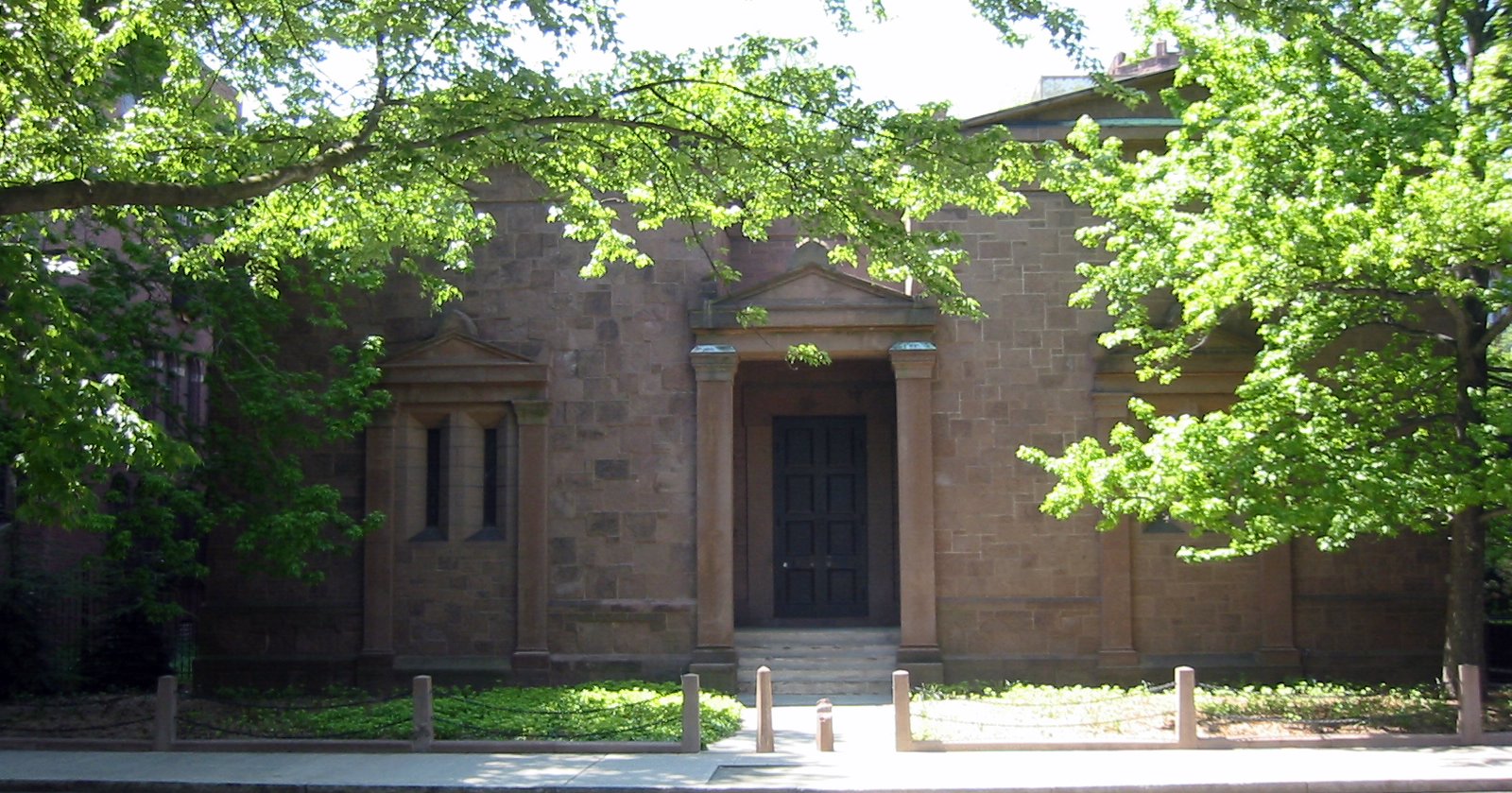
That Skull and Bones is not merely an elite college society but a covert engine of power: that it deliberately selects and grooms the future rulers of the United States, binds them by secret oaths, and uses its alumni network to coordinate control over finance, intelligence, media, and government as a single hidden ruling clique.
The kernel is entirely real: Skull and Bones is a genuine, unusually secretive Yale senior society, founded in 1832, that taps fifteen students a year and counts a startling number of powerful Americans among its alumni, including three presidents and, in 2004, both major-party nominees. That its members enjoy a lifelong elite network is documented and worth scrutiny. But the leap from a rich old-boys' network to a coordinated cabal that secretly grooms and runs the country is unproven. Elite feeder institutions produce elites; a shared clubhouse and a spooky ritual are not evidence of a unified hidden hand, and the theory is built so that ordinary privilege and any coincidence both read as proof.
Believed by: A broad audience spanning left and right, from anti-elite populists to New World Order and Illuminati circles, amplified by talk radio, documentary filmmakers, and social media
The full story
A real society, and a very theatrical one
Unlike many subjects in this archive, Skull and Bones is not a phantom invented online. It is a genuine institution with a street address. Founded at Yalein 1832 by William Huntington Russell and Alphonso Taft, it is the university's oldest senior secret society. Each spring it taps fifteen seniors, who meet in a heavy, windowless brownstone on High Street in New Haven that everyone calls the Tomb. Its emblem is a skull and crossbones over the number 322, and its property is held by a real incorporated entity, the Russell Trust Association, chartered in 1856.
The secrecy is real too, and so is the theater. Members decline to discuss the society in public. Initiations are reported to be deliberately macabre, involving a coffin and the recounting of a personal history to the assembled club. For nearly two centuries the society has cultivated exactly this air of mystery, and it has worked: few college clubs anywhere have generated more speculation.
What supercharges the speculation is the membership. Three American presidents were Bonesmen, and the roll runs thick with senators, cabinet officers, bankers, publishers, and early intelligence figures. From that undeniable concentration of power grows the claim this file weighs: that the society is not just an elite club but a covert engine that grooms and controlsAmerica's rulers. The club is documented. The engine is the part that has to be tested.
The case for suspicion
Steelman it, because the ingredients are not imagined. Look at the roster. The Bush family alone runs three generations deep: Prescott Bush, class of 1917, later a US senator; his son George H. W. Bush, tapped in 1948, who became director of central intelligence and then president; and his grandson George W. Bush, class of 1968, who became president too. William Howard Taft, an earlier president, was a member, as was the conservative founder William F. Buckley. Reporters and authors, most thoroughly the journalist Alexandra Robbins in her 2002 book Secrets of the Tomb, have documented how Bonesmen clustered in banking, law, and the early American intelligence establishment.
Then came the moment that made the theory impossible to ignore. In the 2004 presidential election, for the only time in the country's history, both major-party nominees were members of the same tiny secret society: the incumbent George W. Bush and Senator John Kerry, class of 1966. When each was asked about it on television, each declined to say much beyond acknowledging it was a secret. To many viewers, two rival candidates bound by the same silent oath looked less like democracy and more like a stage-managed choice between insiders.
And there is the Geronimostory, which lends the whole thing a genuinely sinister edge. A 1918 letter preserved in Yale's own archives has one member telling another that the club had exhumed remains said to be the Apache leader's and brought them to the Tomb. In 2009 Geronimo's descendants sued to get them back. A club that boasts in writing of grave-robbing a national figure is not a reassuring neighbor.
Two rival nominees, one clubhouse, one oath of silence. The 2004 coincidence is strange enough that suspicion of it is not, by itself, paranoid.
None of this is a conspiracy theory on its own. It is a fair account of why one takes root here so easily. The distance from “an elite club full of powerful men” to “the secret club that runs the country” feels short, precisely because the first half is true.
What a network is, and what it is not
The gap between “elite network” and “ruling cabal” is where the theory runs out of evidence, and the whole case turns on it. Start with the direction of causation. The society taps fifteen students a year from Yale, an institution that has funneled its graduates into American power for centuries. A club that selects from that pool will naturally be full of future senators and bankers, not because it manufactures them, but because it recruits among those already on the escalator. Elite feeders produce elites. That is the ordinary, unglamorous mechanism, and it explains the roster without any hidden hand.
Fifteen a year is also a small, leaky number to hang a national conspiracy on. Most Bonesmen never become powerful at all; the memorable names are the survivors of a wide funnel, not the guaranteed output of a grooming machine. And the society's most prominent members have spent their careers on opposite sides of the deepest divides in American life. The clearest proof is the one the believers cite: in 2004 the society did not unite behind a candidate, it fielded both of them. A machine for coordinated control that runs its own members against each other for the presidency is not behaving like a machine.
A cabal that fields both nominees in the same election is not a cabal. It is a network large and old enough to contain rivals.
The secrecy proves less than it seems, too. Collegiate secret societies have guarded theatrical rites for two hundred years as bonding and mystique. A coffin, an oath, a windowless hall, these are the furniture of an exclusive fraternity, not evidence of a governing agenda. Discretion about a clubhouse is exactly what an ordinary club of the powerful would maintain; reading it as concealment of world control is an inference the secrecy invites but does not support.
Even the Geronimo legend, on inspection, does not carry the larger claim. The society has never confirmed it holds any remains; historians doubt the bones, if they exist, are actually Geronimo's; and the 2009 lawsuit was dismissed on legal grounds without ever resolving the underlying facts. At most it points to a grim old boast inside a macabre club culture, a real ethical stain, and still a world away from proof that the club secretly steers the nation. What remains, when the inferences are stripped out, is a genuine and criticizable network of privilege, not a documented ruling body.
Why it persists
The theory travels because it starts from true things and answers a fair question: who really holds power, and how do they find one another? The raw membership list looks like a smoking gun. When three presidents, both 2004 nominees, spymasters, and bankers share one tiny clubhouse, the concentration feels like it must mean coordination, long before you account for the mundane fact that an elite society drawing from an elite university will naturally overflow with elites.
Secrecy does the rest. A club that will not explain its Tomb, its oaths, or its rituals leaves a vacuum, and vacuums fill with the darkest available story. The same discretion that is unremarkable for a private fraternity reads, from the outside, as the concealment of something worse. Add the society's own gothic branding, the skull, the crypt, the grave-robbing legend, and it practically invites the sinister interpretation.
The belief is also built to be unfalsifiable, which is what makes it durable. If a Bonesman wins power, the plan is working. If two Bonesmen run against each other, the contest is staged. If members deny everything, that is the oath of silence. Every possible outcome can be folded back in as confirmation, so nothing the world does can ever count against the theory. A claim that cannot be wrong is emotionally satisfying and epistemically empty.
Underneath it all sits a real grievance the theory speaks to. Inherited wealth, elite schooling, and old networks genuinely do reproduce power in America, often behind closed doors. “A secret society grooms the rulers” is a cleaner, more nameable story than the diffuse truth that privilege perpetuates itself through many channels with no single author. The society is a real symptom of that machinery. It is not the hidden control room the theory needs it to be.
Secretive, but not a cabal
On the core claim, that Skull and Bones covertly grooms and controls America's ruling elite as a coordinated hidden clique, the society is smaller than the story. The club is real, the secrecy is real, the alumni are genuinely powerful, and an elite network like this is a fair and even important subject for scrutiny. But the mechanism the theory requires, unified, concealed control, has never been documented, and the society's own history keeps contradicting it.
The honest position holds two things at once. There is a real network of privilege here, and it deserves examination: a tiny, secretive club has repeatedly placed its members at the summit of American finance, intelligence, and politics, and that concentration says something uncomfortable about how power reproduces itself. And the leap from that network to a governing cabal is not carried by the evidence. The members feud and compete and run against one another; the influence is the ordinary, legible advantage of an old-boys' network, not the hidden hand of a single plan. Scrutinize the privilege, criticize the secrecy, keep the Geronimo question open, and keep all of it separate from a puppet-master story the record cannot support.
What's still unexplained
- How much of elite advancement actually flows through ties like these, versus wealth, schooling, and family, is a genuine and unsettled question in the study of elites. The society is one node in a dense network of privilege, and disentangling its specific effect from the broader machinery of inherited advantage is hard and largely unquantified.
- Whether the remains described in the 1918 letter exist, and whether they are held in the Tomb, has never been publicly resolved. The society has not confirmed or produced them, the lawsuit was dismissed without a factual finding, and historians doubt the identification, so the concrete claim sits unanswered.
- How much the society's internal culture and rites have changed since it began admitting women in 1992 is largely unknown to outsiders, which keeps even basic descriptive questions about the modern society open to speculation.
Point by point
The claim: Skull and Bones deliberately selects the future rulers of America and grooms them for power.
What the record shows: The membership is genuinely striking, but the causation runs the other way. The society taps fifteen Yale seniors a year, and Yale has long been a feeder to American elites, so it draws from a pool already stacked with the ambitious and well-connected. Three US presidents (William Howard Taft, George H. W. Bush, and George W. Bush) were members, along with senators, cabinet officers, and finance and intelligence figures. That is what an elite institution selecting from an elite university produces. Fifteen taps a year, most of whom never become powerful, is a network, not a grooming program with a guaranteed output.
The claim: The society is bound by secret oaths and hidden rituals, proof it is concealing a sinister agenda.
What the record shows: The secrecy and the rituals are real; the sinister agenda is the unproven inference. Members meet in the windowless Tomb, decline to discuss the society publicly, and reportedly undergo macabre initiations, including lying in a coffin and recounting a personal history to assembled members. But collegiate secret societies have kept theatrical rites for two centuries as bonding and mystique, not as evidence of a governing conspiracy. Secrecy about a clubhouse is consistent with an ordinary fraternity of the powerful; it does not, by itself, demonstrate coordinated control of anything outside the Tomb.
The claim: Its alumni use the network to coordinate control over finance, intelligence, and government.
What the record shows: The network is documented; coordinated control is not. Bonesmen have indeed clustered in banking, law, publishing, and early US intelligence, and alumni have helped one another's careers, which is exactly what elite networks do and a fair subject for criticism. But there is no record of the society issuing directions, whipping votes, or acting as a bloc. Its most famous members have sat on opposite sides of the sharpest fights in American life; in 2004 two Bonesmen ran against each other for the presidency. A machine for unified control that fields both candidates in the same election is not behaving like a machine.
The claim: The Geronimo skull story shows the society is capable of dark, hidden deeds.
What the record shows: The legend is real and genuinely unsettling, but it does not establish a national conspiracy. A 1918 letter in Yale's archives, in members' own words, claims Bonesmen took remains said to be Geronimo's, and his descendants sued in 2009 to recover them. The society has never confirmed it holds any remains, historians doubt the bones are actually Geronimo's, and the lawsuit was dismissed on legal grounds without resolving the factual claim. At most it is evidence of an old grave-robbing boast within a macabre club culture, which is a serious ethical matter on its own terms and a very different thing from proof that the society secretly runs the country.
Timeline
- 1832William Huntington Russell and Alphonso Taft found the society at Yale, reportedly after a dispute over Phi Beta Kappa honors. Originally called the Eulogian Club, it becomes the university's oldest senior secret society, adopting a skull-and-crossbones emblem and the number 322.
- 1856The society builds its windowless brownstone hall on High Street in New Haven, known as the Tomb, and incorporates its business arm as the Russell Trust Association, the real legal entity that holds its property to this day.
- 1918According to a letter later found in Yale's archives, Bonesmen stationed at Fort Sill, Oklahoma, claimed to have exhumed remains said to be those of the Apache leader Geronimo and taken them back to the Tomb. The story, unverified but documented in the members' own words, becomes one of the society's most persistent legends.
- 1948George H. W. Bush is tapped, following his father, the banker and later senator Prescott Bush (class of 1917). The Bush family's multi-generational membership becomes the single most cited thread in the conspiracy narrative.
- 2002Journalist Alexandra Robbins publishes Secrets of the Tomb, drawing on interviews with roughly a hundred members. It documents the society's rituals, its Russell Trust structure, and its dense alumni network in finance, intelligence, and politics, while pointedly rejecting the grander cabal claims.
- 2004For the only time in US history, both major-party presidential nominees are Bonesmen: incumbent George W. Bush (class of 1968) and Senator John Kerry (class of 1966). Asked about it on television, both declined to discuss the society, and interest in the conspiracy theory surges.
- 2009On the centennial of Geronimo's death, his descendants, led by Harlyn Geronimo, sue Skull and Bones, the Russell Trust Association, and federal officials in Washington, seeking the return of the remains. The suit is later dismissed on legal grounds, and the society never confirms it holds any remains.
From the case file
The actual records: declassified, released, or leaked. We link straight to each document in its official archive, so you never have to take our word for it. Read the originals yourself.
Geronimo et al v. Obama et al, Civil Action No. 1:09-cv-00303 (D.D.C.)
The federal docket and 2010 memorandum opinion in the suit brought by twenty of Geronimo's descendants under the Native American Graves Protection and Repatriation Act against Yale, the Order of Skull and Bones, and federal officials, seeking return of remains said to have been taken to the Tomb in 1918. The court dismissed the case on legal grounds without resolving whether the society holds any remains.
Read the document: U.S. Courts via GovInfo →Russell Trust Association records (RU 1135)
Yale's catalogued archival collection for the Russell Trust Association, the incorporated business arm of Skull and Bones, holding scanned copies of the society's 1832 constitution, an 1866 building contract and architectural plan for the Tomb, and members' reminiscences. It documents the society's real legal and physical existence, distinct from the theory's claims about its reach.
Read the document: Archives at Yale →The kernel is entirely real: Skull and Bones is a genuine, unusually secretive Yale senior society, founded in 1832, that taps fifteen students a year and counts a startling number of powerful Americans among its alumni, including three presidents and, in 2004, both major-party nominees. That its members enjoy a lifelong elite network is documented and worth scrutiny. But the leap from a rich old-boys' network to a coordinated cabal that secretly grooms and runs the country is unproven. Elite feeder institutions produce elites; a shared clubhouse and a spooky ritual are not evidence of a unified hidden hand, and the theory is built so that ordinary privilege and any coincidence both read as proof.
Reviewed by Colin Peterson · Last reviewed July 12, 2026 · How we rate
Common questions
Is Skull and Bones true?
The kernel is entirely real: Skull and Bones is a genuine, unusually secretive Yale senior society, founded in 1832, that taps fifteen students a year and counts a startling number of powerful Americans among its alumni, including three presidents and, in 2004, both major-party nominees. That its members enjoy a lifelong elite network is documented and worth scrutiny. But the leap from a rich old-boys' network to a coordinated cabal that secretly grooms and runs the country is unproven. Elite feeder institutions produce elites; a shared clubhouse and a spooky ritual are not evidence of a unified hidden hand, and the theory is built so that ordinary privilege and any coincidence both read as proof.
What is Skull and Bones?
Skull and Bones is a real Yale secret society, and an unusually theatrical one: a windowless brownstone called the Tomb, macabre initiations, and a membership roll thick with senators, spies, bankers, and presidents. From those true facts grows a much bigger claim, that the society is a machine for secretly grooming and controlling Ameri…
What does the evidence show?
The membership is genuinely striking, but the causation runs the other way. The society taps fifteen Yale seniors a year, and Yale has long been a feeder to American elites, so it draws from a pool already stacked with the ambitious and well-connected. Three US presidents (William Howard Taft, George H. W. Bush, and George W. Bush) were…
Why do people believe it?
The raw membership list looks like a smoking gun. When three presidents, both 2004 nominees, senators, spymasters, and bankers share one tiny clubhouse, the concentration feels like it has to mean coordination, before you account for the fact that an elite society drawing from an elite university will naturally overflow with elites.
What is still unresolved?
How much of elite advancement actually flows through ties like these, versus wealth, schooling, and family, is a genuine and unsettled question in the study of elites. The society is one node in a dense network of privilege, and disentangling its specific effect from the broader machinery of inherited advantage is hard and largely unquan…
Sources
- 1.Skull and Bones, Encyclopaedia Britannica
- 2.Secrets of the Tomb: Skull and Bones, the Ivy League, and the Hidden Paths of Power, Alexandra Robbins, Little, Brown (2002)
- 3.'Bonesmen' for president, NBC News / Associated Press (2004)
- 4.Skull & Bones: The Secret Society That Unites John Kerry and President Bush, Democracy Now! (2004)
- 5.Geronimo's kin sue Skull and Bones over remains, NBC News / Associated Press (2009)
- 6.Skull & Bones sued for Geronimo's remains, Yale Daily News (2009)
- 7.Skull and Bones, or 7 Fast Facts About Yale's Secret Society, New England Historical Society
- 8.List of Skull and Bones members, Wikipedia
Embed this case file on your site
Paste this snippet to show this case file as a small card, with a link back to the full write-up. Free to use.
<iframe src="https://theconspiratory.com/embed/skull-and-bones" title="The Conspiratory verdict" width="520" height="190" style="border:0;max-width:100%" loading="lazy"></iframe>Help us investigate
This is a living case file. If you spot an error or know evidence we missed, tell us, and weigh in on where you land.
Where do you land?
Cast your read on this one.
Comments
Add your take. Comments are read and approved by a human before they appear, so keep it on topic and civil. Please do not accuse named, living people of crimes.