United Airlines Flight 93 was secretly shot down by a US military fighter jet over Shanksville, Pennsylvania
By Colin PetersonJuly 20, 2026
Where the evidence lands: Contradicted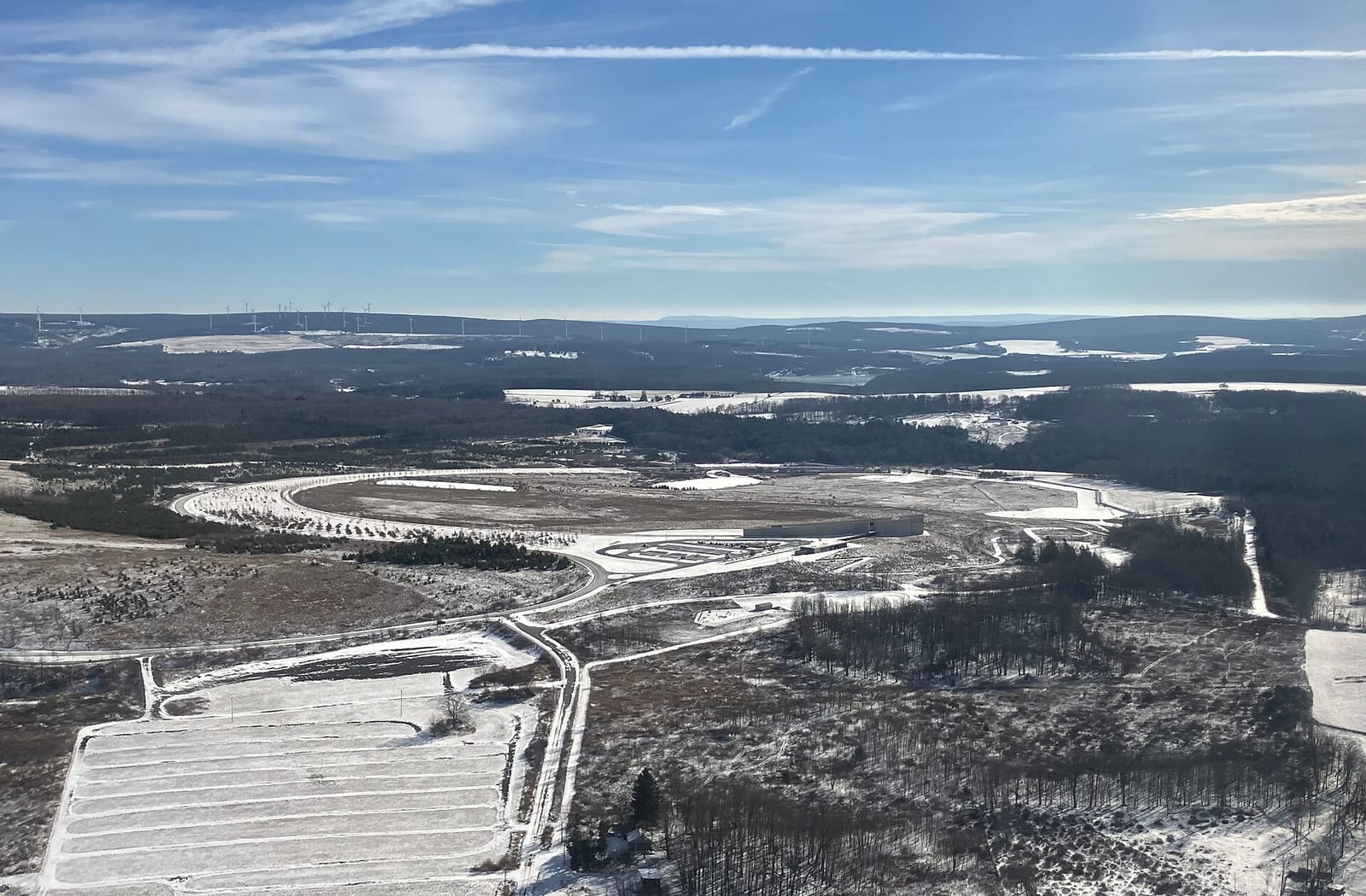
That United Airlines Flight 93 was not brought down by the struggle for the cockpit but was deliberately shot down by a US military aircraft, most often said to be an F-16, and that officials concealed the true cause behind the account of a passenger revolt. Proponents point to a mysterious second plane seen near the crash site, to debris reportedly found miles away (taken as a sign the aircraft broke up in the air), and to the fact that the government really had authorized shoot-downs that day.
Contradicted. The claim that a fighter jet shot down Flight 93 is contradicted by the physical and documentary record: the cockpit voice recorder captured the passenger revolt and the hijackers' decision to crash the plane, the 9/11 Commission found no US fighter was ever in position to engage it (the scrambled jets never came within about 60 miles), and the crash site is consistent with a near-vertical high-speed dive, not a mid-air kill. A real shoot-down authorization did exist that morning, but it never reached commanders until after the plane was already down. Rated debunked, while keeping the true authorization separate from the false claim that it was carried out.
Believed by: The shootdown story circulated within days of the crash and never fully faded. It was fed by early ambiguous remarks from officials (including a 2004 aside by Defense Secretary Donald Rumsfeld that the Pentagon walked back) and by eyewitness reports of a second aircraft and of debris found more than a mile away. Polls rarely isolate the Flight 93 question from broader 9/11 doubt, but the specific belief remains a fixture of the wider truther movement.
The full story
What is documented, and what is claimed
United Airlines Flight 93 left Newark late, and the delay decided its history. By the time four hijackers seized it at about 9:28 a.m. on 11 September 2001, the two attacks in New York and the strike on the Pentagon had already happened, and the 33 passengers and 7 crew aboard learned of them through calls to family and to airline staff on the ground. Knowing what the plane was likely meant for, a group of them decided to fight. At about 9:57 a.m. they began storming the cockpit. Six minutes later, at 10:03 a.m., the aircraft rolled inverted and dove into a reclaimed strip-mine field near Shanksville, Pennsylvania at roughly 560 miles per hour, killing everyone on board. It was the only one of the four hijacked planes that never reached its target.
That much is among the best-documented sequences of the entire day, reconstructed from dozens of phone calls, air traffic control tapes, the recovered flight recorders, and the physical site. The claim this file examines does not dispute that the plane crashed at Shanksville. It disputes why: it holds that Flight 93 was not brought down by the struggle in the cockpit but was secretly shot down by a US military fighter, usually said to be an F-16, and that the government hid the shootdown behind the story of the passenger revolt.
This is the specific counterpart to the broader 9/11 “inside job” theory, and it demands one discipline above all others: keeping apart two things that sound alike and are not. It is true and documented that a shoot-down authorization was issued that morning. It is false that the authorization was carried out on Flight 93. Almost every version of the theory survives by blurring those two sentences into one, so this file keeps pulling them back apart.
The case for a shootdown
Stated at its strongest, the theory is not built on nothing, and its best points are worth setting out honestly before answering them. Unlike many 9/11 claims, this one can begin with a fact the government itself confirms.
The shoot-down order was real. In the frantic hour after the towers were hit, with no one certain how many airliners had been turned into weapons, Vice President Dick Cheney, from a secure bunker beneath the White House, relayed authorization for military pilots to fire on hijacked civilian aircraft judged to be a threat. Officials have since said openly that had Flight 93 kept coming toward Washington, they might have had to use it. So the premise is not exotic: the United States really did, for a few hours that day, authorize shooting down its own passenger planes.
The government really did authorize shooting down hijacked airliners that morning. The whole theory lives in the gap between an order that existed and an order that was carried out.
Then there are the anomalies at the scene. Residents around Shanksville reported a small white jet circling near the crash, which sounds like an interceptor lingering over its kill. Debristurned up well away from the crater, at Indian Lake and, in some early accounts, miles beyond, which sounds like an aircraft that came apart in the air rather than one that struck the ground in a single field. And the government's own people muddied the water: in 2004 Defense Secretary Donald Rumsfeld, speaking to troops, referred to “the people who attacked the United States in New York, shot down the plane over Pennsylvania.” The Pentagon said he misspoke. To a skeptic, a cabinet secretary saying the plane was shot down is not a slip; it is the truth escaping.
Assemble the pieces (a genuine authorization, a mystery plane, scattered wreckage, and an official who said the words out loud) and it is easy to see how the shootdown story took hold and held. The question is whether the pieces survive contact with the recorders and the timeline.
What the recorders and the timeline show
They do not survive it. Start with the object at the center of the case, the cockpit voice recorder, recovered from the crater by the FBI. Its contents are documented, and they describe the crash from the inside. The recorder captures the hijackers in control, then the swelling noise of the passenger assault (shouting in English, shattering galley ware, a food cart shoved down the aisle), and finally the hijackers deliberately pitching the aircraft into the ground rather than let the passengers reach the controls. There is no sound of cannon fire, no missile, no explosion before impact, and no transmission from any intercepting fighter. The audio is sealed from public release out of respect for the families and because of the criminal proceedings that followed, but a transcript was played for the victims' relatives and entered into evidence at the Moussaoui trial. A sealed recording is not a hidden one; the reason it exists at all is that it survived the crash the theory says was something else.
Now the timeline, which is where the shootdown claim quietly collapses. The 9/11 Commission reconstructed the air defense response minute by minute. The fighters scrambled that morning from Langley Air Force Base were sent to guard Washington and were not tracking Flight 93 at all; NORAD had not been told in time that the plane was hijacked. Those jets never came within about 60 milesof it. And Cheney's authorization, the real one, did not reach the fighter pilots until roughly 10:31 a.m., nearly half an hour after Flight 93 was already down at 10:03. A plane cannot be shot down by an order that arrived twenty-eight minutes after it crashed, by aircraft that were sixty miles away and looking elsewhere. The Commission was blunt about this: it recorded that it did not believe NORAD's later claim it could have intercepted and downed the plane.
The scene evidence resolves the same way. Indian Lake is about a mile and a half from the impact crater, not the six or more that early reports imagined, and what was found there was light: paper, insulation, and small fragments. The wind that morning blew toward the southeast, straight toward the lake, and the fireball lofted lightweight material into it. The heavy pieces stayed put; one engine was recovered about 300 yards from the crater, along the flight path, exactly where the momentum of a high-speed impact would fling it. The white jet was a Dassault Falcon business aircraft that air traffic control asked to descend and pinpoint the smoke plume for rescuers after the crash. It was unarmed, civilian, and late to a crash it did not cause. And the compact crater with its shredded wreckage is the classic signature of a near-vertical dive at 560 miles per hour into soft, reclaimed mine ground, not of a mid-air breakup that would have strewn large sections across the landscape.
The order that existed, and the order that was never carried out
The honest core of this case is a distinction, so it deserves its own space. Two true things and one false thing keep getting welded together, and prying them apart is most of the work.
True: a shoot-down authorization was issued on the morning of 11 September 2001. Vice President Cheney relayed it, President Bush later confirmed approving it, and it was a genuine, grave decision to permit the military to fire on hijacked civilian airliners. True: officials have said since that if Flight 93 had continued toward Washington and a fighter had reached it, they would likely have had to use that authorization, and some who were in the chain of command have described bracing to give exactly that order. False:that the authorization was actually carried out on Flight 93. It was not. By the documented timeline, no interceptor was in range and the order had not even reached the pilots when the plane came down under the passengers' assault.
An authorization that was never executed is a decision, not an act. The plane was not shot down; it was crashed by hijackers who had just lost their grip on it.
This is why remarks like Rumsfeld's cause so much trouble and prove so little. That the United States wouldhave shot the plane down, and had cleared itself to, is a fact hovering just behind every retelling; it makes a loose phrase like “shot down the plane over Pennsylvania” sound like candor rather than error. But the counterfactual (what would have happened had the revolt failed and a fighter arrived) is not the event. The event is on the recorder and in the flight data: a group of passengers forced the hijackers' hand, and the plane went into a Pennsylvania field short of its target, with no military aircraft close enough to touch it.
Why the belief endures
If the timeline is this clear, why has the shootdown story lasted a quarter century? Part of the answer is that, unlike flimsier claims, this one keeps one foot on solid ground. There really was an order. Officials really were imprecise. Debris really did land more than a mile off. Each fact has a mundane explanation, but each was true before the explanation caught up, and a theory anchored to real facts is far harder to dislodge than one built on invention.
There is also a strange comfort in it. The documented account asks you to hold something almost unbearable: that forty ordinary people, understanding they would probably die, took a vote and charged an armed cockpit, and that their choice is why the plane fell where it did. A shootdown relocates that final decision to a distant fighter pilot and a chain of command, and in doing so it spares the imagination the passengers' last minutes. It should not be underestimated how much a theory can be sustained by the wish for it to hurt a little less.
And the claim does not travel alone. It rides inside the larger 9/11 truth movement, packaged in the same online documentaries and addressed to the same audience. For someone who already believes the towers were demolished or that officials let the attacks happen, a covered-up shootdown is not a leap but a natural next chapter, adopted on the strength of the surrounding story rather than its own evidence. Debunking it therefore means doing what the movement's format resists: slowing down, separating the true premise from the false conclusion, and letting the recorders and the clock speak.
What brought the plane down
On the physical and documentary record, the claim that Flight 93 was shot down is not merely unproven; it is contradicted. The cockpit voice recorder captured the passenger revolt and the hijackers' decision to crash the plane, with no gunfire or mid-air explosion on it. The 9/11 Commission's reconstruction found no fighter in position to engage the plane, with the nearest jets about sixty miles away and unaware of it, and the authorization to fire not reaching pilots until after the crash. The scene (light debris carried downwind, an engine 300 yards out, a compact crater, an identified civilian business jet overhead) matches a high-speed ground impact, not a shootdown. That is why the rating here is debunked.
What remains true is the part worth guarding against distortion: a shoot-down authorization did exist that day, issued in genuine fear of further attacks, and officials have been candid that they might have had to use it. Keeping that real decision distinct from the false claim that it was executed is the whole task. The record does not need a secret missile to explain Shanksville. It has forty passengers and crew who, with nothing to gain for themselves, turned their own deaths into the reason a fourth plane never reached Washington. Replacing them with a fighter jet does not deepen the story. It erases the people who were actually there.
In pictures
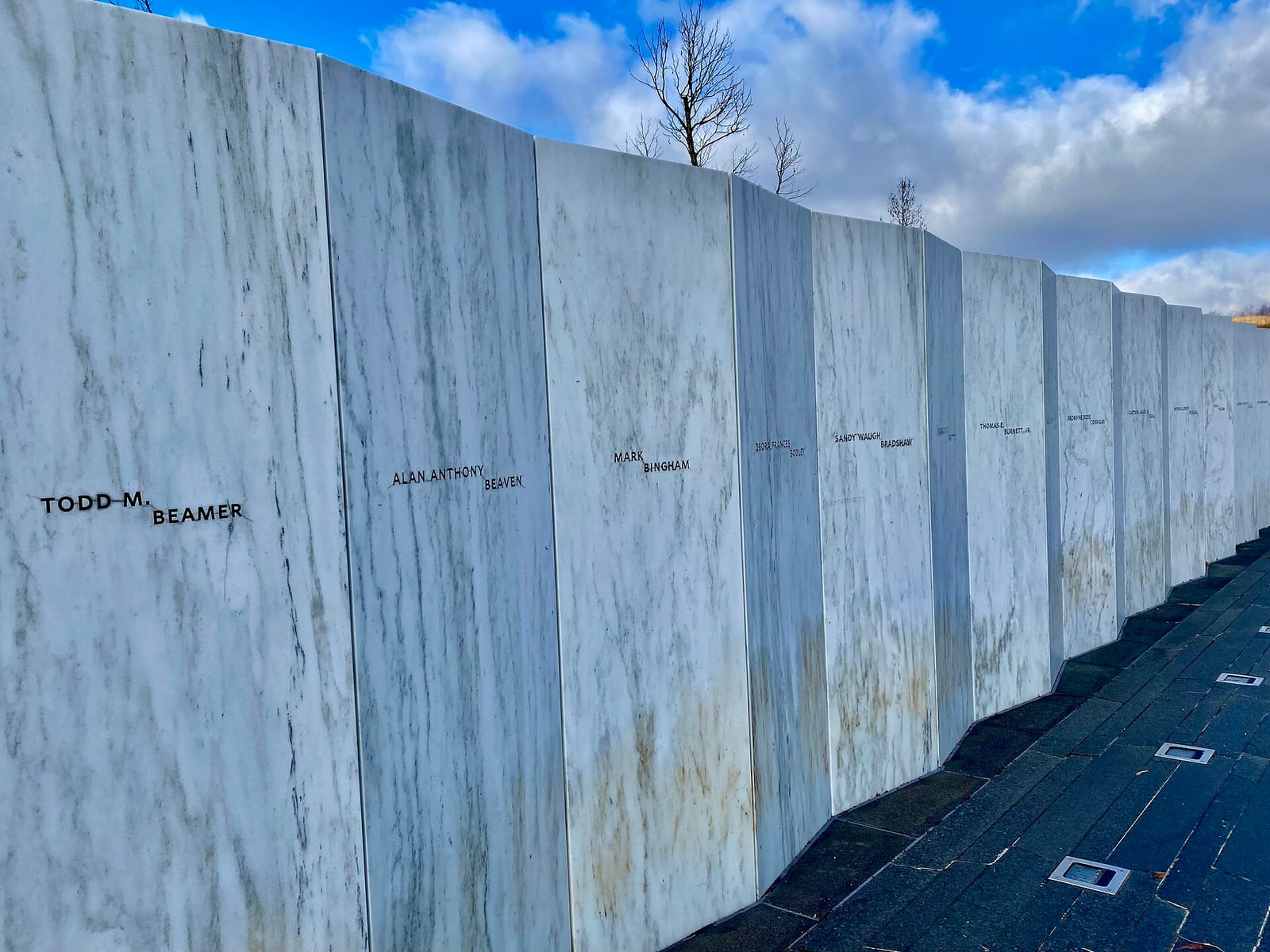
What's still unexplained
- Why were officials initially so imprecise about whether Flight 93 was intercepted or shot down? The confusion in the first hours and days (including conflicting military statements and Rumsfeld's later slip) is real, and it reflects a genuinely chaotic air defense response that the 9/11 Commission criticized. The imprecision is documented; it points to disorganization on the day, not to a concealed shootdown.
- Could the plane have been shot down if the revolt had failed? Almost certainly the authorization would have been used had an interceptor reached it in time, and officials have said as much. That counterfactual is historically interesting and entirely separate from what happened: the passengers brought the plane down first, before any fighter was in range.
- Why remain cautious about eyewitness accounts of a second plane or of 'explosions'? Human memory of a sudden catastrophe is notoriously unreliable, and some Shanksville witnesses did describe a second aircraft or unusual sounds. The identified business jet and the ground-impact fireball account for these reports, but honest treatment notes that eyewitness testimony was part of what kept the theory alive.
Point by point
The claim: The cockpit voice recorder would prove a shootdown or has been hidden because it does. The audio is sealed, which shows the government has something to conceal about how the plane really came down.
What the record shows: The recorder tells the opposite story, which is why it is central here. The CVR was recovered from the crater and its contents are documented: it captures the hijackers in control, then the rising sounds of the passenger assault on the cockpit (shouting, breaking galley ware, a food cart used as a battering ram), and finally the hijackers pitching the plane into the ground to keep the passengers from taking it. There is no gunfire, no explosion before impact, no radio call from an intercepting fighter. The audio itself is sealed from public broadcast at the families' request and because of ongoing prosecutions, but a transcript was played for the victims' relatives and introduced at the 2006 Zacarias Moussaoui trial. Sealing the graphic final minutes of a mass-murder recording is a matter of decency and legal process, not a cover for a shootdown the recording does not contain.
The claim: A US fighter shot the plane down, most likely an F-16. The military scrambled jets that morning and had every reason to stop a plane headed for Washington.
What the record shows: The 9/11 Commission's minute-by-minute reconstruction of the air defense response found no fighter was ever in position to engage Flight 93. The aircraft scrambled from Langley Air Force Base were sent to protect Washington and were not even tracking Flight 93; they never came within roughly 60 miles of it. NORAD had not been told the plane was hijacked in time to vector anyone onto it. The Commission went out of its way to say it did not accept NORAD's later assertion that it could have shot the plane down. A shootdown requires an interceptor within weapons range at the moment of the crash, and by the documented timeline there was none.
The claim: Debris was found scattered for miles, some as far as Indian Lake and New Baltimore. A plane that crashed intact in one field would not spread wreckage over that distance; a mid-air breakup from a missile would.
What the record shows: The distances were real but the inference is not. Indian Lake sits roughly a mile and a half from the impact crater as the crow flies, not the six or eight miles some early reports claimed. The material found there and farther out was overwhelmingly light: paper, insulation, and small foam and fabric fragments. On the morning of the crash the wind was blowing toward the southeast, straight toward Indian Lake, and the fireball's heat lofted lightweight debris into that wind. Heavy structural pieces stayed at the site; one of the engines was recovered only about 300 yards away, in line with the flight path and consistent with the momentum of a high-speed impact. Light debris carried downwind is what a ground crash into soft, reclaimed mine land produces, not evidence of a mid-air kill.
The claim: Witnesses saw a second, unmarked white jet near the crash site. That was the shooter, or a spotter for it.
What the record shows: There was a second plane, and it has been identified. A Dassault Falcon 20 business jet was in the area and was asked by air traffic control to descend and give the coordinates of the smoke plume shortly after the crash, to help responders locate the site. It was a civilian executive aircraft, not a military fighter, it carried no weapons, and it arrived after Flight 93 was already down. A business jet vectored in to mark a crash site for rescuers is a mundane and documented explanation for the 'mystery plane,' and it cannot be the cause of a crash it was only directed to locate.
The claim: The crash site itself proves it: the crater was small and the plane 'disintegrated,' which is what happens when a jet is blown apart in the air.
What the record shows: A near-vertical, high-speed dive into soft ground produces exactly this signature. Flight data show the plane inverted and descending at around 560 miles per hour when it hit; at that speed and angle an airliner buries and shreds itself, leaving a compact crater and highly fragmented wreckage rather than a broad debris trail or large intact sections. Investigators recovered the flight recorders, an engine, and identifiable human remains from the site, and the flight data recorder documents the final dive. The condition of the site matches the recorded trajectory. It is not the pattern a mid-air explosion and long fall would leave.
Timeline
- 2001-09-11Flight 93, delayed on the ground at Newark, is hijacked at about 9:28 a.m., well after the other three planes. Passengers and crew learn of the earlier attacks by phone. At about 9:57 a.m. they begin storming the cockpit; at 10:03 a.m. the plane rolls onto its back and dives into a field near Shanksville at roughly 560 miles per hour.
- 2001-09-11In the hour after the attacks, Vice President Dick Cheney, in a secure White House bunker, relays presidential authorization for military pilots to shoot down hijacked civilian airliners deemed a threat. The 9/11 Commission later finds the order did not reach NORAD's fighter pilots until about 10:31 a.m., nearly half an hour after Flight 93 had already crashed.
- 2001-09Within days, residents around Shanksville report a small white jet seen circling near the crash, and news accounts describe lightweight debris (mostly paper and insulation) recovered more than a mile away at Indian Lake and beyond. Both observations become anchors for the shootdown theory almost immediately.
- 2002The FBI's site investigation recovers the cockpit voice recorder and flight data recorder from the crater, along with human remains. The CVR captures the sounds of the passenger assault and the hijackers' decision to crash the plane rather than lose control of it. The audio is sealed, but a transcript is later played for families and entered as evidence.
- 2004-06The 9/11 Commission's staff monograph and public hearings reconstruct the FAA-NORAD timeline in detail, concluding that no fighter was ever positioned to intercept Flight 93 and that the scrambled aircraft never came closer than about 60 miles. The Commission writes plainly that it doubts NORAD's later claim it could have shot the plane down.
- 2004-12Defense Secretary Donald Rumsfeld, addressing troops in Iraq, refers in passing to 'the people who attacked the United States in New York, shot down the plane over Pennsylvania.' The Pentagon quickly says he misspoke; conspiracy proponents seize on the slip as a confession.
- 2006The release of the Hollywood film United 93 and the viral spread of online 'truther' documentaries push both the heroic-revolt account and the rival shootdown claim to a mass audience, hardening the two competing narratives.
From the case file
The actual records: declassified, released, or leaked. We link straight to each document in its official archive, so you never have to take our word for it. Read the originals yourself.
The 9/11 Commission Report (Chapter 1, 'We Have Some Planes,' and the FAA-NORAD air defense timeline)
The authoritative public reconstruction of the day's hijackings and the military response. It documents the passenger revolt aboard Flight 93, the shoot-down authorization relayed by Vice President Cheney, and the finding that no fighter was in position to engage Flight 93, which never had an interceptor closer than about 60 miles. The Commission recorded that it doubted NORAD's later claim it could have shot the plane down.
Read the document: U.S. Government Publishing Office (GovInfo) →United Airlines Flight 93 Cockpit Voice Recorder Transcript
The transcript of the plane's final 31 minutes, played for victims' families and introduced as evidence at the 2006 Moussaoui trial. It records the hijackers in control, the passengers' assault on the cockpit, and the hijackers' decision to crash the plane. It contains no gunfire, explosion, or intercepting-fighter transmission.
Read the document: Flight 93 National Memorial (NPS) →Other case files that cite the same sources
Contradicted. The claim that a fighter jet shot down Flight 93 is contradicted by the physical and documentary record: the cockpit voice recorder captured the passenger revolt and the hijackers' decision to crash the plane, the 9/11 Commission found no US fighter was ever in position to engage it (the scrambled jets never came within about 60 miles), and the crash site is consistent with a near-vertical high-speed dive, not a mid-air kill. A real shoot-down authorization did exist that morning, but it never reached commanders until after the plane was already down. Rated debunked, while keeping the true authorization separate from the false claim that it was carried out.
Reviewed by Colin Peterson · Last reviewed September 3, 2026 · How we rate
Common questions
Is Flight 93 shootdown true?
Contradicted. The claim that a fighter jet shot down Flight 93 is contradicted by the physical and documentary record: the cockpit voice recorder captured the passenger revolt and the hijackers' decision to crash the plane, the 9/11 Commission found no US fighter was ever in position to engage it (the scrambled jets never came within about 60 miles), and the crash site is consistent with a near-vertical high-speed dive, not a mid-air kill. A real shoot-down authorization did exist that morning, but it never reached commanders until after the plane was already down. Rated debunked, while keeping the true authorization separate from the false claim that it was carried out.
What is Flight 93 shootdown?
On the morning of 11 September 2001, United Airlines Flight 93 crashed into a reclaimed strip-mine field near Shanksville, Pennsylvania, killing all 40 passengers and crew and the four hijackers who had seized it. Unlike the three planes flown into the World Trade Center and the Pentagon, Flight 93 never reached its target: the passenger…
What does the evidence show?
The recorder tells the opposite story, which is why it is central here. The CVR was recovered from the crater and its contents are documented: it captures the hijackers in control, then the rising sounds of the passenger assault on the cockpit (shouting, breaking galley ware, a food cart used as a battering ram), and finally the hijacker…
Why do people believe it?
A real shoot-down order existed, and that single true fact does most of the work. Because the government genuinely did authorize downing hijacked airliners that morning, the leap to 'and they used it on Flight 93' feels small. The theory borrows credibility from a documented decision, even though the same documents show the order arrived…
What is still unresolved?
Why were officials initially so imprecise about whether Flight 93 was intercepted or shot down? The confusion in the first hours and days (including conflicting military statements and Rumsfeld's later slip) is real, and it reflects a genuinely chaotic air defense response that the 9/11 Commission criticized. The imprecision is documente…
Sources
- 1.The 9/11 Commission Report: Final Report of the National Commission on Terrorist Attacks Upon the United States, U.S. Government Publishing Office (GovInfo) (2004)
- 2.The 'Bumble Planes' Theory Says Passengers Were Swapped. Investigators Uncovered the Real Fate of Flight 93., Popular Mechanics (Hearst) (2025)
- 3.Cockpit Voice Recorder Transcript, Flight 93, Flight 93 National Memorial, National Park Service (2021)
- 4.Flight Data Recorder, Flight 93 National Memorial, National Park Service (2021)
- 5.On 9/11, Dick Cheney ordered military to shoot down hijacked U.S. airliners, The Washington Post (2020)
- 6.Behind the 9/11 White House Order to Shoot Down U.S. Airliners: 'It Had to be Done', HISTORY (A&E Television Networks) (2021)
- 7.Pentagon: Rumsfeld misspoke on Flight 93 crash, CNN (2004)
- 8.9/11 panel: Bid to intercept jets was flawed, NBC News / The Associated Press (2004)
- 9.How 9/11 Heralded Decades of Internet Conspiracy Theories, Snopes (2021)
- 10.United Airlines Flight 93, Wikipedia (2024)
Embed this verdict on your site
Paste this snippet to show our sourced verdict as a small card, with a link back to the full case file. Free to use.
<iframe src="https://theconspiratory.com/embed/flight-93-shootdown" title="The Conspiratory verdict" width="520" height="190" style="border:0;max-width:100%" loading="lazy"></iframe>Help us investigate
This is a living case file. If you spot an error or know evidence we missed, tell us, and weigh in on where you land.
Where do you land?
Cast your read on this one.
Comments
Add your take. Comments are read and approved by a human before they appear, so keep it on topic and civil. Please do not accuse named, living people of crimes.